Matox News

Truth Over Trends, always!

Millionaire encourages Lib Dems to support a wealth tax initiative.

A campaign group is gearing up to influence policymakers this autumn by advocating for an increase in taxes on the ultra-wealthy. This initiative aims to rally support around the idea of financial responsibility among the nation’s richest individuals, arguing that they should contribute a fairer share to the public good. This movement reflects growing sentiment among certain segments of the population, particularly younger voters, who are increasingly skeptical of income inequality and its impact on society.

As the government debates fiscal policy and budget allocations, proponents of higher taxes on the wealthiest argue that such measures could provide much-needed resources for essential public services. Educators, healthcare proponents, and advocates for social programs are citing evidence that higher tax rates on the rich can lead to more equitable funding for critical initiatives. This aligns with a broader desire among younger generations for a fairer economy that works for all, not just the elite few.

Critics, however, warn that higher taxes on the wealthy could deter investment and slow economic growth, potentially harming the very people these new policies aim to help. There’s a growing conversation about striking the right balance—ensuring that the wealthy pay their dues while also maintaining an environment that fosters innovation and job creation. This debate is crucial as it lays the groundwork for potential reforms that could shape the economy for decades.

As the campaign group gears up for a season of advocacy, it brings to the forefront the question of how to foster a fair economic landscape without stifling growth. Young voters have a significant stake in this issue, and understanding both sides of the tax debate is crucial as they engage with the electoral process. With their financial futures on the line, the coming months will be pivotal in determining how tax policy evolves, and whether it will prioritize equity or economic growth.

Boosting Your Mojo: Understanding Low Libido and How to Rekindle Your Passion

Addressing Postpartum Intimacy: Holly Hagan-Blyth’s Perspective on Modern Parenthood

In a recent discussion on the CBeebies Parenting Helpline, reality television star Holly Hagan-Blyth candidly shared her personal experience with intimacy challenges after childbirth. Following the birth of her son Alpha-Jax in 2023, Hagan-Blyth reported a significant drop in her libido, a feeling echoed by many new parents. The phenomenon of libido loss after significant life changes—particularly pregnancy and childbirth—is further highlighted by the NHS, which emphasizes the commonality of this struggle among new mothers.

Hagan-Blyth conveyed her feelings of detachment, stating, “I could have said, ‘listen, if you don’t touch me ever again, I’m not even bothered,’” reflecting the emotional and physical transformations that accompany motherhood. This sentiment is not unusual; many women anticipate a return to normalcy post their six-week check-up but often find that the reality is more complex. Relationship and sex therapist Rachel Gold noted that while six weeks is often perceived as the timeline to resume sexual activity, many factors—including hormonal changes and the healing process—can extend this period.

Moreover, Hagan-Blyth’s honest dialogue with her husband proved pivotal in navigating their altered intimacy. By expressing her feelings of discomfort and the pressure associated with physical touch, their relationship began to improve. This openness underlines the importance of communication in healthy partnerships, particularly during the challenging postpartum phase when emotions and expectations may be misaligned. Hagan-Blyth advocates for clearer communication among couples facing similar issues, emphasizing the unexpected nature of the changes that come with parenthood.

Compounding Hagan-Blyth’s experience is the perception that these challenges solely affect women; however, responses from CBeebies Parenting Helpline listeners indicate that men may also grapple with similar feelings. A listener named Frankie reported her partner’s loss of sexual interest, which compounded her own insecurities about body image postpartum. This scenario illustrates how the transition into parenthood can affect both partners in a relationship, highlighting the need for mutual understanding and support. As experts suggest, normalizing these conversations can lead to more constructive outcomes.

In light of these reflections, experts advise new parents on navigating intimacy post-birth. Suggestions include acknowledging and normalizing the changes in libido, employing patience during the healing process, and taking time to redefine intimacy—focusing on emotional connection and non-sexual affection. Open communication between partners about their feelings, expectations, and responsibilities can significantly alleviate the stress of this transition. For those facing ongoing challenges in their relationship, seeking professional support through counseling or therapy is recommended.

The discussion surrounding postpartum intimacy is not merely a personal narrative but resonates widely across communities, emphasizing the need for societal conversations around mental health and relationship dynamics during the pivotal stage of parenthood. As more voices like Hagan-Blyth’s emerge, they may encourage others to address their situations candidly, ultimately fostering stronger relationships and healthier family environments.

Autistic teen faces school exit as funds for travel are slashed

In a society that prides itself on fairness and compassion, the unfolding crisis in special educational needs and disability (Send) support exposes a harsh reality: families caring for children with complex needs are facing systemic neglect and social insensitivity. As communities increasingly rely on local governments to bridge gaps left by austerity-driven cutbacks, the stark disparities in support serve as a wake-up call to reevaluate societal priorities. The story of Luke, a fourteen-year-old autistic boy with sensory processing disorder and ADHD from Somerset, exemplifies how families are being left to shoulder the burden of inadequate social services, impacting not only the well-being of individual children but also the fabric of their families and communities.

With the transition to post-16 education, families like Luke’s find the support structures that once provided essential aid suddenly dissolving. Somerset Council’s decision to cease paying for Luke’s specialized transport—a taxi and in-car support worker—highlight the increasing disconnect between policy and human need. Now, his family faces a difficult choice: to bear the financial weight of costly travel alternatives or to risk safety by navigating unpredictable, unsupervised journeys. This shift not only endangers children like Luke but also underscores a broader societal failure to protect vulnerable youth. Social commentators and sociologists warn that when communities fail to provide adequate support, they risk fragmenting under the weight of inequality, with families bearing the brunt of systemic neglect.

‘Not safe’: The Human Cost of Systemic Austerity

Luke’s mother, Tatjana, describes her son as having “no road safety, no danger safety,” emphasizing that in his current state, he cannot transition to independent travel without significant risk. Her account sheds light on a fundamental moral challenge: the ethical obligation of society to safeguard its most vulnerable members. Since reaching age 16, Luke’s family has been offered a mere “Personal Travel Payment” of fifty pence per mile. Yet, with specialist taxi costs reaching nearly £97 per journey, this amount is grossly insufficient. The loss of dedicated, trained support for children with complex needs often translates into families sacrificing their financial stability and mental health.

Social historian Dr. Helen Miles notes the deterioration in support for families with special needs children, warning that “the long-term consequences threaten to erode social cohesion.” Families, especially those with physical or emotional hardships, become isolated as they struggle to fill the void left by underfunded government programs. Tatjana’s story—her partner’s spinal condition, her former husband’s leg amputation—epitomizes that the social safety net is fraying for those who need it most. Without sufficient support, children like Luke may face a future marred by instability, frustration, and the risk of educational failure, which inevitably impacts families’ stability and the community’s social fabric.

‘The system is broken’: Calls for reform and renewed hope

Former MP Gideon Amos articulates a bitter reality: “The Send system is broken.” His comments reflect a growing frustration among politicians, social workers, and families alike, who observe that “the current approach fails not just in policy but in moral substance.” The Department for Education’s promise to reform and “transform outcomes” signals an opportunity but also a challenge: society must reimagine how it cares for its children. Local authorities like Somerset claim they put “care and consideration” into decisions but admit their resources are stretched thin.

  • The current figures show approximately 120 post-16 Send children in Somerset rely on transport support, a number that is unlikely to decline given demographic trends.

This ongoing crisis is a stark reminder that without fundamental systemic overhaul, support for vulnerable children risks becoming a token gesture rather than a societal commitment.

As society stands at a crossroads, the question remains: will society’s collective moral conscience awaken to the plight of children like Luke? The stories behind policies are rooted in human faces—families torn between love and survival, children with dreams hindered by systemic neglect. The challenge ahead is not merely administrative but moral: to build a society where every child’s safety, potential, and dignity are prioritized, regardless of age or ability. In this moment of societal reflection, hope lies in collective action, reform, and an unwavering commitment to transform social failure into a future where every child can find their place. Only then can society truly claim to be just, compassionate, and resilient—qualities that define the strength of a civilization.


Wells Fargo Reflect® Card: Your Go-To for Debt Payoff, but Skip the Rewards

Unlocking the Best Credit Cards: Ratings That Matter

Hey there, savvy spenders! At Motley Fool Money, we’ve got your back when it comes to picking the right credit card. We rate them on a five-star scale—1 being a total dud and 5 shining like a beacon of financial wisdom. Our criteria? It’s all about that sweet spot of rewards, sizzling 0% intro APR offers, bonuses that knock the annual fees out of the park, and cool perks like travel credits and purchase protections.

Here’s What Makes Our Top Picks Shine:

  • High Value: Think impressive rewards and killer intro APR rates.
  • Attainable Welcome Bonuses: These bonuses can easily offset annual fees, making them worth your while.
  • Low Fees: We’re talking annual fees that won’t break the bank or a balance transfer fee capping at just 3%.
  • Top-Notch Perks: Look for purchase protections, no foreign transaction fees, travel credits, and even status upgrades.

We sift through the noise to ensure that our credit card recommendations come from reputable brands, evaluating both brand reputation and customer satisfaction. And just so you know, our editors curate the “Best for” categories, so one card might shine in multiple spots!

While the order of our lists can be influenced by advertiser compensation—yep, those prime placements can bump a card up the list—our recommendations are always free from sponsor bias. Want to dive deeper? Check out how we rate credit cards here.

So, gear up and choose wisely! Your next shopping adventure awaits.

Fed cuts rates, yet mortgage rates climb—what’s really happening?

The U.S. Treasury bond market is experiencing notable upheaval as long-term yields defy expectations following the Federal Reserve’s recent interest rate cut. Despite the Fed’s decision to lower the benchmark rate by a quarter percentage point to a range of 4.00% to 4.25%, bond traders responded with a surge in longer-dated treasury yields. The 10-year Treasury yield soared past 4.14%, after briefly dipping below 4%. Meanwhile, the 30-year treasury yield climbed above 4.76%, signaling a complex reaction to the Fed’s moves. This divergence indicates that market participants are trying to interpret the Fed’s policy signals within a broader context of market expectations and global economic signals, with consequential market impact on borrowing costs, stock valuations, and inflation outlooks.

Market analysts, including prominent economists like Peter Boockvar, emphasize that the bond market is “selling the news” — a phenomenon where investors, having anticipated the rate cut, now adjust their positions based on the perception that the Fed’s move may signal a shift in policy stance or underlying economic risks. Boockvar notes that the recent spike in yields reflects traders’ skepticism about the Fed’s intentions, especially considering its updated economic projections, which reveal that policymakers see a modest acceleration in inflation — slightly above the 2% target — into 2026. This outlook raises questions about the Fed’s commitment to inflation control, potentially easing policy tightening prematurely and paving the way for persistent inflationary pressures.

The implications for policy consequences are significant. The Fed’s rate cut was framed as a “risk management” move amidst softening labor market data, including weaker employment figures earlier this month. Fed Chair Jerome Powell indicated that the central bank remains cautious, prioritizing job market stability while trying to keep inflation in check. However, the pushback from bond traders suggests that the market perceives a disconnect between the Fed’s communication and the longer-term economic outlook. As Boockvar and fellow investors watch international developments — where yields globally are also trending higher — it becomes clear that the global economic environment is influencing U.S. bond dynamics, adding layers of complexity to the policy landscape.

Meanwhile, the housing sector reflects these broader market uncertainties. For instance, Lennar, one of the largest homebuilders, recently reported disappointing quarterly revenue and weak future guidance, citing “continued pressures” in the housing market driven by elevated interest rates. Such signals from the real estate sector reinforce concerns that persistent high yields and monetary policy tightening could hinder economic growth and the labor market. As economist Chris Rupkey warns, these rising bond yields may ironically signal tougher times ahead. He cautions that declines in bond yields often presage recessions, yet rising yields are currently driven by stable employment data, which might create a paradoxical environment where good labor markets inadvertently complicate monetary policy and dampen consumer confidence.

Looking forward, the bond market’s reactions underscore a fundamental truth: the economy is a living pulse that responds not just to current policies, but to perceptions of future policies and global shifts. The stage is set for a decisive period where the Fed’s next moves could reshape economic trajectories. Will they succeed in tightening inflation without stifling growth, or will markets push policymakers to revisit their approach amid mounting international pressures? One thing is clear: the bond yields act as a barometer of this complex dance — an epic display of economic forces shaping the very foundation of future power. As nations watch, the true test lies ahead: navigating the turbulent waters of inflation, growth, and global interconnectedness to forge the robust, resilient economy of tomorrow.

Germany Promised as Europe’s Growth Engine—Now Economists Have Doubts

Germany’s Economic Gambit: A Race Against the Clock

The global economic landscape remains a game of strategic moves, and Germany finds itself at a pivotal crossroads. Earlier this year, the nation embarked on an ambitious economic overhaul, backed by substantial fiscal reforms and record-setting investment pledges. The government aimed to ignite a domestic revival and serve as a catalyst for the beleaguered euro zone economy. Notable among these initiatives was the suspension of its long-standing debt brake, a policy that historically constrained government borrowing. This measure, combined with a €500 billion infrastructure and climate fund, seemed poised to electrify Germany’s sluggish economy and ripple positively across Europe’s markets and policies.

However, the initial optimism is now facing a sobering reality check. Despite the massive fiscal initiatives, recent data paints a subdued picture. While the first quarter of 2025 saw a modest 0.3% GDP growth, the subsequent quarter reversed course with a 0.3% contraction. These figures reveal the profound challenge policymakers face—a delayed impact of fiscal stimulus in a nation where “it takes time to spend money,” as noted by Berenberg’s chief economist Holger Schmieding. Although defense orders and infrastructure investments are witnessing a “major rise,” the actual output remains sluggish, indicating that Germany’s economy is struggling to translate promises into tangible results. The market impact is clear: investors and analysts are questioning whether Germany’s grand plan can achieve its transformative potential within the expected timeline, or if it risks falling short amid persistent structural headwinds.

Meanwhile, eligibility for fresh risks emerges from the broader policy landscape. As Franziska Palmas of Capital Economics highlights, the expansion of fiscal space—notably the additional government spending on pensions, healthcare, and social benefits—could push Germany’s deficits “much higher” than initially planned. This surge in borrowing and spending, while offering near-term growth, risks sowing seeds of long-term fiscal instability if not carefully managed. Economists warn that this expansion may be more a short-term boost than a sustainable path to prosperity, with some foreseeing a higher deficit over the coming years and a potential increase in inflationary pressures. As such, Germany’s shift toward more aggressive fiscal policies is a double-edged sword—offering an economic shot in the arm but raising questions about debt sustainability, policy credibility, and the risk of overheating an already fragile recovery.

Looking ahead, the prospects for Germany—and by extension, the euro zone—remain uncertain. Leading economic institutes have recently revised down their growth forecasts, now projecting a potential expansion of just over 1% in 2026. Berenberg and others estimate that even with the fiscal stimulus, Germany’s contribution to euro-zone growth might be modest—approximately 0.2-0.3% of additional growth—highlighting how complex and interconnected the European economy’s rebirth will be. The European Central Bank’s recent interest rate cuts and renewed optimism about Spain’s vibrant growth further complicate the picture, hinting that the EU’s recovery depends on a delicate balance of regional cooperation, fiscal discipline, and geopolitical stability. Still, the turning point remains clear: Germany’s ability to transition from a brief daze of recession to sustained growth could shape Europe’s future economic stratification and power dynamics.

As the pulse of national economies continues to beat, the global stage watches keenly—a testament to how critical short-term policy decisions are in shaping future power structures. The coming months will determine whether Germany harnesses its fiscal might into lasting prosperity or falls prey to the perils of overextension and untapped potential. In this fragile balance, the story of Germany is also the story of Europe and, ultimately, the epic quest for economic dominance in an era defined by swift change, fierce competition, and relentless innovation.

Please provide the feed content for the fact-checking headline.

Investigating the Truth Behind Rural Hospital Funding Claims in the New Healthcare Law

Amid the heated debates over the recently enacted One Big Beautiful Bill Act (OBBBA), a flood of claims has emerged about its impact on rural hospitals and healthcare funding. Officials like Health and Human Services Secretary Robert F. Kennedy Jr., and political figures such as Dr. Mehmet Oz, have portrayed the law as a historic victory that will infuse rural healthcare with a $50 billion fund, promising to “restore and revitalize” struggling rural communities. However, a closer look reveals a more complex picture, riddled with numerical inconsistencies and overlooked long-term implications.

At the core of the controversy is the discrepancy between the public claims of a 50% increase in Medicaid spending dedicated to rural hospitals and the publicly available estimates from independent experts and organizations. For example, Kennedy and Oz cite figures implying that the $50 billion rural health fund will significantly supplement Medicaid, framing it as a major boost for rural healthcare. Kennedy stated at a White House meeting that “we’re giving them an extra $10 billion a year,” suggesting this was a 50% increase over the current Medicaid expenditures for rural hospitals, which he cited as roughly $19 billion annually. But this interpretation conflates the fund’s purpose with actual increase figures, which are not directly additive to existing Medicaid spending figures.

  • KFF (Kaiser Family Foundation) estimates that the Medicaid provisions of the OBBBA will reduce federal Medicaid spending in rural areas by approximately $137 billion over 10 years.
  • Manatt LLP, representing the National Rural Health Association, estimates a more modest impact of about $58 billion in federal Medicaid funding reductions over a decade.
  • Both figures suggest that the actual Medicaid spending in rural areas post-law will be lower rather than higher, counter to claims of an infusion of cash.

Furthermore, the funding provided by the $50 billion Rural Health Transformation Program is intended as a short-term patch. Experts like Leonardo Cuello of Georgetown University highlight that while the fund might temporarily bolster rural hospital finances, the law’s broader Medicaid cuts are structured to persist indefinitely, potentially leading to more hospital closures and reduced access in the long run.

The distribution mechanism for the fund also raises questions. According to the law, 50% of the new funds will be allocated evenly among all approved applications, regardless of the size of a state’s rural population. This means that a state like Connecticut, with only three rural hospitals, could receive the same amount per hospital as Kansas with ninety. The remaining half will be distributed based on various factors, such as the percentage of rural population and healthcare needs. As Zachary Levinson from KFF explains, “it’s unclear what proportion of the fund will reach actual rural hospitals or how much impact it will have on the overall financial sustainability of rural healthcare.”

Additionally, the law prohibits states from increasing or instituting new provider taxes and limits certain payments—a move that could inadvertently exacerbate the financial struggles of rural hospitals. Independent analyses warn that such constraints may result in layoffs, mishandled investments, and closure threats, especially in states heavily reliant on Medicaid. For example, KFF estimates that Kentucky could see a $11 billion decrease in rural Medicaid funding over ten years, primarily impacting low-income, rural populations.

In light of these facts, the narrative pushed by Kennedy and others that the law provides an “unprecedented infusion” of rural healthcare funding appears misleading. It is crucial for responsible citizens and policymakers to understand the real numbers and long-term implications. The law’s short-term aid cannot mask the substantial, ongoing Medicaid spending cuts that threaten rural hospitals’ viability. Transparency and accurate data are vital components of a healthy democracy, ensuring that public debates are rooted in facts rather than inflated claims.

In conclusion, truth remains the foundation of informed citizenship and responsible governance. While the $50 billion fund might offer some temporary relief, the larger picture reveals ongoing financial challenges that need serious policy solutions. Misinformation only hampers effective decision-making—an obstacle we can and must overcome if we are to preserve the integrity of our healthcare system and the communities it serves.

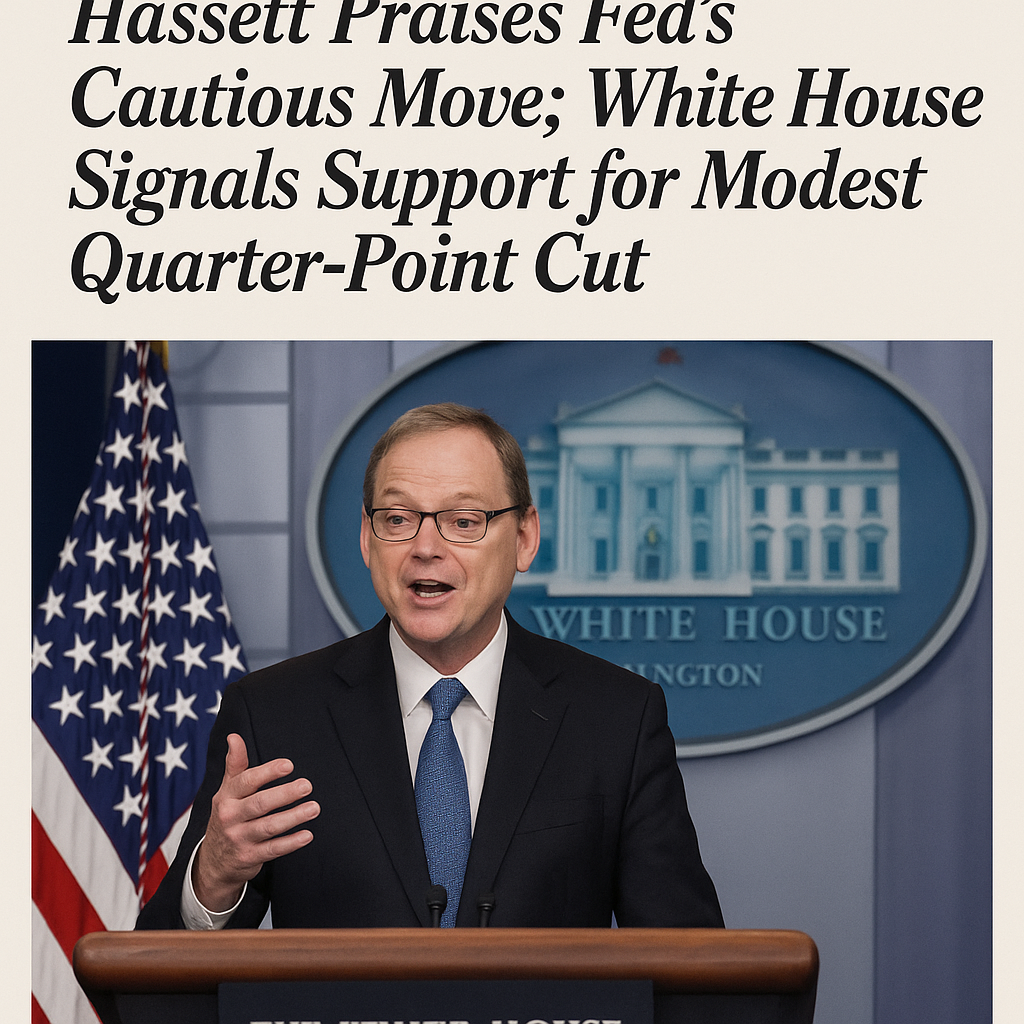
Hassett praises Fed’s cautious move; White House signals support for modest quarter-point cut

Federal Reserve’s Rate Cut Sparks Market Movements and Policy Debates

The Federal Reserve recently implemented a modest quarter-percentage-point cut to its key borrowing rate, signaling a cautious approach as it navigates a complex economic landscape. This decision, perceived by some as a step towards economic stabilization, comes amid shifting market sentiments and ongoing debates among policymakers, economists, and investors. As the global economy faces rising inflationary pressures yet remains resilient, the Fed’s move exemplifies the delicate balancing act it must perform—tamping inflation without stifling growth.

Notably, the White House expressed support for the Fed’s measured approach, with National Economic Council Director Kevin Hassett emphasizing the prudence of a “slow and steady” policy. While some within the administration advocated for a more aggressive half-point cut, the Fed’s decision reflects a consensus aimed at cautious optimism. The recent economic indicators show a robust third-quarter growth rate exceeding 3%, a figure that traditionally would argue against easing monetary policy. Still, inflation running above the Fed’s 2% target, combined with concerns about persistent financial risks, has prompted a nuanced response that favors gradualism over rapid cuts.

Market impacts from this decision are multifaceted. Investors remain vigilant, with equities, bonds, and commodities reacting to the delicate narrative of growth versus inflation control. The policy considerations extend beyond immediate market behavior, touching on policy consequences that could shape future economic stability. Analysts from think tanks and leading economists, including those linked to the Federal Reserve and major banks, indicate that this cautious move might set the stage for future rate adjustments. The decision also underscores ongoing debates about the policy trajectory—should the Fed prioritize containing inflation or supporting a thriving housing market and manageable debt levels?

Importantly, the political dimension persists, with President Donald Trump advocating for more aggressive cuts—arguing that the current rates are insufficient to boost the struggling housing sector and manage the national debt. Such political influences, though not directly altering Fed decisions, shape the policy environment and investor sentiment. As the Fed considers its next moves amid diverse economic signals, the broader implications for market impact and policy stability will be paramount. The coming months will test whether this measured approach will secure sustained growth or prompt future rallying cries for more rapid easing, reflecting the eternal tug-of-war at the heart of economic policy.

Looking ahead, the pulse of the economy remains a reflection of national strength and future global influence.

In this high-stakes game, where monetary policy acts as both shield and sword, the resilience of economies hinges on informed decision-making and bold leadership. Investors, policymakers, and citizens alike watch with anticipation, realizing that the economic landscape is a grand stage—an epic arena where the forces of innovation, policy, and global power collide. While uncertainties persist, the underlying momentum suggests that the future economy will be shaped by those willing to navigate its shifting tides with vision, precision, and resolve. This moment underscores the vital truth: **the economy is not merely a system of numbers, but the beating pulse of nations, heralding the dawn of a new era of global influence and economic ascendancy**.

Fact-Check: Viral claim about health benefits of supplement rated Mostly False

Investigative Report: Untangling the Viral Claims on Autism and Common Exposures

Amid a flurry of high-profile announcements and social media speculation, the question of what causes autism spectrum disorder (ASD) remains at the forefront of public concern. Recent reports suggest an impending federal review linking autism to environmental factors like Tylenol use during pregnancy and folate deficiencies. But a thorough examination reveals that these claims are often exaggerated or unsupported by current scientific evidence. As responsible citizens, understanding the facts—rather than falling for sensationalized narratives—is vital for safeguarding public health and maintaining trust in our democratic institutions.

Tylenol and Autism: Separating Fact from Fiction

Claimed connections between acetaminophen (Tylenol) use during pregnancy and autism have gained attention in recent discourse. Some reports, including articles from the Wall Street Journal, indicate that the Department of Health and Human Services (HHS) may soon suggest a link, hinting that Tylenol could be a culprit in the rising rates of autism. However, experts like Brian Lee, a professor of epidemiology at Drexel University’s Dornsife School of Public Health, assert that there is no credible scientific evidence to support this claim. Lee emphasizes that the majority of studies conducted so far do not find a causal relationship, and some even point away from Tylenol as a risk factor.

  • Major epidemiological studies have not demonstrated a clear causal link between maternal acetaminophen use and neurodevelopmental disorders, including autism.
  • The Coalition for Autism Scientists, comprising over 250 U.S.-based researchers, states that studies suggesting such a link are “difficult to interpret” because of methodological limitations and confounding factors.
  • Research often relies on retrospective parent surveys that are subject to recall bias and can be influenced by societal fears of vaccines and medications, further muddying conclusions.

Moreover, the FDA and ACOG (American College of Obstetricians and Gynecologists) recommend cautious but not avoidant use of acetaminophen during pregnancy, explicitly warning against untreated fever or pain, which pose their own risks. Dr. Christopher Zahn of ACOG notes that “the current evidence does not support a direct relationship” between acetaminophen and autism, emphasizing that the risks of untreated maternal fever outweigh the unproven risks of medication use.

Folate Deficiency and Autism: The Evidence Is Inconclusive

Similarly, claims about folate deficiency during pregnancy being a cause of autism have circulated but lack definitive scientific backing. Folic acid, a synthetic form of folate, has long been recommended for pregnant women to prevent neural tube defects, a well-established risk factor for birth anomalies. Experts like Dr. Brian Lee reiterate that there is no current evidence linking folic acid supplements to autism prevention or causation. While some preliminary studies suggest a possible connection between maternal folate status and neurodevelopmental outcomes, these are insufficient to alter ongoing medical advice or public health policies.

  • Folic acid supplementation is endorsed by major health authorities, including the CDC and WHO, as a safe and effective measure to prevent neural tube defects.
  • Research exploring a potential link between folate levels and autism remains preliminary; robust, randomized controlled trials are needed.
  • Genetics and broader environmental factors continue to be the primary focus of autism research, underscoring the complexity of the disorder’s causes.

While investigations into other forms of folate, such as folinic acid, are ongoing, experts like David S. Mandell caution that the evidence supporting such treatments for autism symptoms is very weak. Anecdotal reports and small, methodologically flawed studies should not be mistaken for rigorous scientific progress.

Why Accurate Information Matters for Democracy

As these debates unfold, it’s crucial for the public to scrutinize the sources and validity of claims surrounding autism. Misinformation can lead to unnecessary panic, misguided policy, and misplaced fearmongering about common medications and nutrients. Experts consistently remind us that sound science—rooted in carefully conducted research and transparent methodologies—is essential for responsible decision-making. Before jumping to conclusions, policymakers and citizens alike must rely on credible, peer-reviewed studies and avoid succumbing to sensational narratives that distort the truth.

In a democratic society, the pursuit of truth isn’t just an academic exercise—it’s the foundation of informed citizenship. By demanding transparency and evidence in public health debates, we uphold the principles of responsible governance and protect the integrity of scientific inquiry. The facts about Tylenol, folate, and autism are clear: current evidence does not support claims of causation. Recognizing the importance of rigorous science ensures that public health policies serve the best interests of everyone, grounded in reality rather than rumor or conjecture.

Fact-Check: New Study Finds Lower Smartphone Addiction Rates Among Teens

Investigating the Truth Behind Claims of Transgender Individuals as Mass Shooters

In recent debates surrounding gun violence and transgender rights, a recurring narrative suggests that transgender individuals are responsible for a disproportionate number of mass shootings in America. Prominent figures like Donald Trump Jr. and Sebastian Gorka have cited figures that imply a significant connection between gender identity and violent acts, with claims of dozens of mass shootings involving transgender perpetrators over the last few years. However, a rigorous review of available data from reputable sources reveals a starkly different reality. When scrutinized with precise definitions and verified data, the number of transgender mass shooters in the U.S. remains exceedingly small, accounting for less than 0.1% of incidents over the past decade.

According to the Gun Violence Archive (GVA), an independent organization that tracks gun-related incidents, only five mass shootings have been confirmed to involve transgender suspects since 2013. These incidents include the tragic Chattanooga church shooting, the Highland Ranch school shooting, the Memphis warehouse shooting, the Colorado Springs gay bar attack, and Minneapolis’ recent church shooting. Notably, in cases like that of Anderson Lee Aldrich in Colorado, who identified as nonbinary, the gender identity was verified during court proceedings. When comparing these five incidents against the thousands of annual shootings, the proportion remains negligible—less than 0.1%.

It’s crucial to emphasize that the term “transgender” encompasses a broad spectrum; not all—particularly nonbinary individuals—may identify as transgender. This nuance complicates any direct causal link. Experts like James Densley, co-founder of The Violence Project, clarify that transgender individuals are statistically underrepresented among known mass shooters. Their comprehensive database, which applies a stricter definition—such as four or more victims killed or injured in a public setting—documents 201 cases since 1966, with only a single confirmed transgender perpetrator. Moreover, Dr. Ragy Girgis, a psychiatrist specializing in mass violence, states plainly: “Being transgender is not a causative factor in mass shootings.” The data overwhelmingly support that violence is committed almost exclusively by men, with over 97% of mass shooters being cisgender males, well aligning with societal patterns rather than challenging them based on gender identity.

Despite the clear data, misinformation persists. Figures like Gorka or the claims of “many” transgender shooters tend to rely on loose definitions or anecdotes, which inflate the perception of a link where none exists. As one fact-checker summarized, “even if you expand the definitions, transgender individuals responsible for mass shootings remain a tiny fraction of such crimes, overshadowed by the broader trend of male perpetrators.” The numbers tell a straightforward story: most mass shootings are carried out by men, across all gender identities, and transgender individuals are statistically rare among these perpetrators. This accurate data is vital, not only for honest debate but also for upholding the integrity of our democratic discourse, where facts must guide policy and public understanding.

Conclusion

In a democracy, informed citizens are the backbone of responsible policy—especially on issues as consequential as gun laws and gender rights. The evidence demonstrates that the narrative linking transgender identity to mass violence is deeply misleading. It is essential that we differentiate between anecdotal claims and comprehensive, verified data. As experts confirm, the presence of transgender individuals among mass shooters is vanishingly small, making it clear that gender identity is not a factor in violent behavior. Only through accurate information can we foster a fair, informed debate that respects both facts and responsible citizenship, foundational to our shared democracy.

Social Media Auto Publish Powered By : XYZScripts.com