Matox News

Truth Over Trends, always!

Russia Targets All of Kyiv, Igniting Fires Across the City

Russian Escalation in Ukraine Sparks Global Concerns

In what analysts are now describing as a conspicuous escalation of the ongoing conflict, Russia launched a massive combined attack on Kyiv early Friday, striking multiple districts across Ukraine’s capital. The assault, involving drones and missile systems, resulted in fires, destruction, and at least 11 casualties, including civilians and vulnerable populations such as a pregnant woman. City officials confirmed widespread damage to residential buildings and critical infrastructure, with emergency crews responding tirelessly to contain fires and evacuate the injured. The attack signifies a potentially decisive moment in the open conflict, signaling Moscow’s willingness to commit further resources to dismantle Ukraine’s resilience.

This offensive not only underscores the persistent renewal of hostilities but also highlights the fragile geopolitical stance of Western allies supporting Ukraine. Kyiv’s mayor Vitali Klitschko reported damage to the city’s heating system, power outages, and water disruptions—conditions that threaten to deepen the humanitarian crisis amid winter’s approach. Several districts, including Darnytskyi, Dniprovskyi, and Podilskyi, bore the brunt of the attack, with debris igniting fires and causing widespread destruction. Regional authorities also reported civilian injuries in the Kyiv region and damage to private homes, reinforcing the toll on everyday life amid ongoing military tensions.

International institutions, from the European Union to NATO, have expressed grave concern over the latest assault, warning of the broader geopolitical impact that extends well beyond Ukraine’s borders. The EU, still haunted by questions of Kyiv’s EU accession prospects, has sought to balance support for Ukraine with efforts to curb corruption—a major precondition for integration. European officials, as reported recently, continue to pledge aid, but the message is clear: the path toward stability remains hindered by persistent internal vulnerabilities and external threats. According to security analysts, this wave of attack might foreshadow a tipping point that could reshape regional alliances and accelerate NATO’s strategic positioning in Eastern Europe.

This brutal act of warfare, captured vividly in social media images of flames and rubble, portends a dangerous new chapter in the U.S.-Russia proxy struggle. Historians warn that such brutal tactics are reminiscent of Cold War brinkmanship, where the balance of power hinges on each audacious move. As international organizations monitor Kyiv’s response, the question remains: how will this escalation influence diplomatic negotiations, and what future does this fractured region face? Despite diplomatic overtures, the weight of history presses heavily; the destiny of Ukraine, its people, and indeed the stability of Europe, continues to hang in the balance, as the shadows of past conflicts stretch into an uncertain tomorrow.

Young Stars Shine as Emerging Athletes Take Center Stage in Thrilling Championship Showdown

NFL Week Overview: Potential Matchups and Fantasy Insights

The National Football League (NFL) landscape is buzzing with excitement as fans gear up for another thrilling week of matchups. Coaches and analysts alike are diving deep into strategies, assessing which teams to exploit and which to avoid in fantasy lineups. With projected scores shaping expectations, the focus is firmly on making informed decisions that could lead to victory both on the field and in fantasy leagues.

As the week unfolds, some key matchups stand out. The perennial powerhouse, Tampa Bay Buccaneers, take on the resilient New Orleans Saints. A likely game-changing moment will hinge on the performance of Bucs’ quarterback Tom Brady, whose ability to read defenses has kept defenses guessing all season. Meanwhile, the Saints’ defense, led by the tenacious Cam Jordan, is poised to challenge Brady’s veteran prowess, making this a crucial encounter for fantasy managers who are considering ceiling-high players.

  • Top Player to Watch: Davante Adams of the Las Vegas Raiders is expected to have a breakout game against the struggling Jacksonville Jaguars.
  • Player Stats: DeAndre Hopkins of the Arizona Cardinals has averaged 100+ receiving yards in his last three outings, making him a must-start in fantasy rosters.
  • Projected Score: Analysts predict a nail-biter between the Seattle Seahawks and Los Angeles Rams, with a projected final score of 27-24.

Notable figures in the industry, such as NFL commentator Tony Romo, have emphasized that understanding these matchups is crucial. “Success in fantasy football hinges on analyzing player matchups and understanding what makes each team tick,” Romo stated during a recent segment. Coaches are not just strategizing for wins; they are crafting narratives that draw fans into the story of each game.

As the excitement mounts, one thing remains clear: while the numbers and statistics paint a compelling picture, the real beauty of sports lies in its ability to unite. This week, as fans rally in support of their teams, they are reminded that beyond the scoreboards, the NFL remains a tapestry weaving together communities and bridging divides. It is this connection that makes every catch, every touchdown, and every victory resonate far beyond the numbers.

Source link

Blue Origin booster lands safely, showing strength and innovation during launch

Blue Origin’s Historic Launch Signifies Shifting Power Dynamics in Space

In a notable development that signals the intensifying competition for supremacy beyond Earth’s atmosphere, Blue Origin, the space enterprise owned by billionaire Jeff Bezos, successfully launched its New Glenn rocket from Florida. This mission, which carried two NASA spacecraft destined for Mars, underscores the strategic importance of commercial space ventures as nations and corporations vie for dominance in the final frontier. The successful landing of Blue Origin’s reusable booster on a floating Atlantic platform marks a crucial milestone, echoing the pioneering spirit that has historically fueled geopolitical influence.

This event underscores a broader shift in international space policy and power. NASA and private companies like Blue Origin and SpaceX are increasingly at the forefront of space exploration, redefining the boundaries of global influence. While SpaceX pioneered reusable rocket technology in 2015, Blue Origin’s recent achievement signals a rapid evolution in the commercial space sector, intensifying the race to establish military, economic, and scientific dominance. Many analysts, including those from the International Space Institute, see this as a compelling reminder that space has become the latest theatre for geopolitical leverage, where control of extraterrestrial infrastructure could translate into future global power.

Consequences of Commercial Space Expansion

As nations and private entities expand their reach into space, the geopolitical landscape is shifting. Historically, the United States has maintained a strategic lead—first through NASA’s Apollo program and later through space shuttle missions. However, the entrance of corporations like Blue Origin suggests a new paradigm—where private enterprise is becoming a pivotal actor in shaping future international order. This decentralization of space exploration creates both opportunities and risks, particularly concerning the potential for weapons proliferation, resource extraction, and sovereignty claims in space. While the Outer Space Treaty of 1967 remains the baseline legal framework, many experts warn that current policies are ill-equipped to regulate the fast-paced development of commercial space activities, potentially leading to a new kind of global conflict with extraterrestrial stakes.

  • The successful launch of Blue Origin’s New Glenn represents more than technological progress; it reflects a strategic move that could tilt the balance of power, especially if space becomes a domain for military and economic competition.
  • Private companies’ advancements catalyze a geopolitical narrative where traditional superpowers must adapt rapidly or risk losing dominance.
  • Major international organizations, including the United Nations Office for Outer Space Affairs, are under mounting pressure to update treaties and enforcement measures, balancing innovation with security concerns.

Unfolding Narratives: The Future of Humanity’s Extraterrestrial Ambitions

With each launch, global powers are rewriting history—shaping a future where space exploration is not solely the pursuit of academia or government agencies, but a strategic chessboard for economic control and military advantage. Many see the recent Blue Origin milestone as a turning point: a reminder that the “final frontier” is becoming a contested domain where alliances shift and new actors emerge with each technological breakthrough. As the world watches this space race escalate, one question remains —will international cooperation prevail, or will the battlefield for celestial dominance turn into a new arena of conflict? The weights of history hang heavy as humanity’s gaze turns upward, where the seeds of peace or chaos are quietly sown in the silence of space, now a vital frontier for those daring to shape the destiny of nations and societies for generations to come.

Multiple ACT Schools Close Amid Asbestos Concerns Over Colored Sand Products

Australia Confronts a Public Health Crisis as Schools Shut Over Asbestos-Laced Children’s Play Sand

In a startling development that underscores the risks of global sourcing and the fragile safety of public health, Australia’s Capital Territory (ACT) has ordered the immediate closure of more than a dozen primary and preschools, following the detection of asbestos in imported children’s sand products. This decision, made in response to serious environmental health concerns, highlights an ongoing challenge for nations navigating the complex web of international trade, safety standards, and domestic regulation. The ACT’s education authorities, led by Education Minister Yvette Berry, have prioritized safety above all, shutting down 15 schools outright and partially closing five others, as testing and remediation efforts continue.

This crisis traces its roots back to the importation of colourful children’s sand products, primarily from China, which later proved to contain chrysotile asbestos—a substance linked to terminal diseases such as mesothelioma. Authorities identified a range of products, including “Kadink Sand,” “Educational Colours – Rainbow Sand,” and “Creatistics – Coloured Sand,” all sold at major retailers across Australia over the last five years. The Australian Competition and Consumer Commission (ACCC) issued a recall of these items, cautioning the public about the potential health risks. Despite assurances from WorkSafe ACT that risk exposure is low, the precautionary closures reflect a growing concern over how unchecked imports threaten societal safety, especially when children are involved.

Implications of International Trade in Public Safety

The incident reveals a broader geopolitical issue that resonates globally: the tension between free trade and safety standards. Australia, like many countries, relies heavily on international manufacturing hubs—particularly China—for affordable consumer products. However, these supply chains can often bypass stringent safety checks, especially for hazardous materials banned since 2003 in Australia. Historians and analysts warn that such lapses threaten not only health but also international trust in trade agreements. The fact that these products were sold across Australia from 2020 to 2025, including via local distributors like Educating Kids and Zart Art, underscores the systemic vulnerability in consumer safety protocols.

Global organizations such as the World Health Organization (WHO) have long issued warnings about asbestos, emphasizing that its carcinogenic effects are well understood and that its importation should be tightly controlled. Yet economic pressures and lax enforcement have allowed hazardous materials to slip through regulatory cracks. This episode serves as a stark reminder of how decisions made in international markets can ripple across societies, impacting everything from public health systems to educational environments. Accordingly, the geopolitical impact is profound: nations must strengthen their trade oversight and internal safeguards if they are to prevent such hazards from becoming a national crisis.

Domestic Response and Rising Concerns

The response by ACT authorities demonstrates a determined, albeit reactive, strategy: immediate school closures, thorough testing, and clear communication to parents and staff. The closure of Cranleigh School and others not only disrupts education but also raises questions about how preparedness measures are structured and enforced. With similar incidents tracing back to older sites in Sydney and Melbourne, where asbestos was historically buried or processed, the broader challenge becomes clear: legacy contamination and the risks associated with historically unsafe disposal practices are still haunting Australian cities. International organizations warn that such legacy issues complicate cleanup efforts, demanding concerted policy shifts and increased investment in environmental remediation.

Experts reveal that vigilance must extend beyond reactive measures. Governments should establish mandatory testing of imported consumer goods, especially those intended for children. Public education campaigns urging safe disposal and raising awareness regarding imported hazardous materials are crucial in preventing future crises. As the Australian government works to ensure that such risks are contained, citizens are left grappling with the uncertainty of what other unseen dangers may lurk in everyday products.

As this unfolding crisis exposes vulnerabilities in international trade and domestic regulation, history reminds us that the true measure of societal progress lies in the capacity to anticipate and prevent disaster. With the specter of asbestos—a material associated with silent, deadly threat—still casting its shadow over Australia’s safe spaces, the weight of history presses upon policymakers worldwide. The question remains: will this incident be merely a fleeting warning, or a catalyst for profound structural change that reshapes how nations safeguard their future? The answer lies in the unfolding stories of remediation and resilience yet to come, where decisions today forge the landscape of tomorrow’s history.

Switzerland steps up charm campaign to slash damaging Trump tariffs

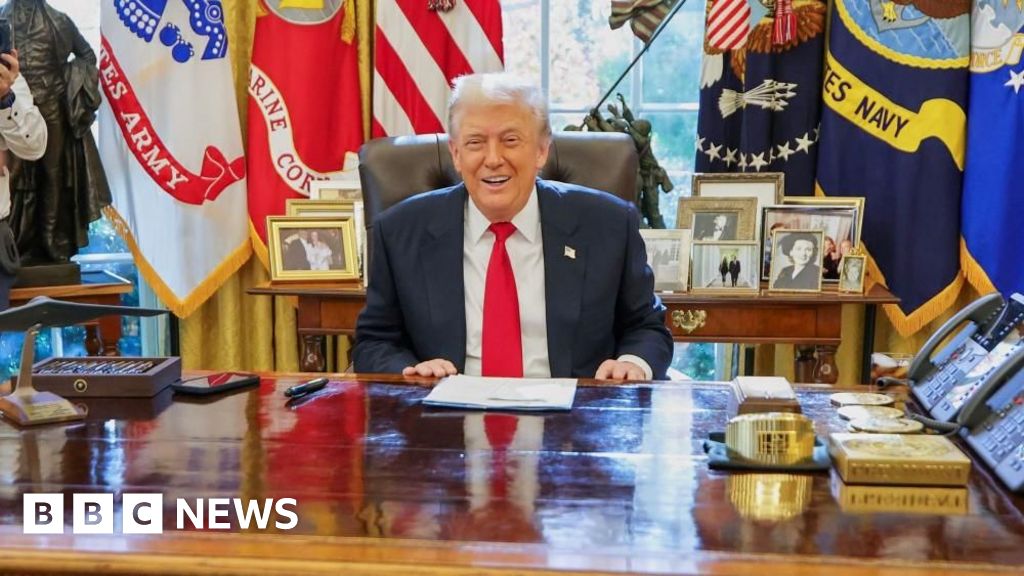
In a striking display of geopolitical influence and economic maneuvering, Switzerland has recently escalated efforts to negotiate a significant reduction of the steep 39% tariffs imposed by President Donald Trump on Swiss exports to the United States. These tariffs, reportedly the highest in Europe, have inflicted tangible damage on Swiss industries, especially the luxury goods and gold sectors. The diplomatic effort, which initially appeared to be a diplomatic dead end, took a decisive turn after a high-profile visit by Swiss business leaders bearing symbolic gifts—a rolex gold watch and engraved gold bar—from the Swiss-based gold refining company MKS. These gestures, viewed by analysts as an unconventional but strategic way to influence Trump’s decision, appear to have contributed to a shift in tone during recent negotiations, with a senior administrative official describing the talks as ‘very positive’ and ‘focused.’

The United States’ trade policy, under Trump, has been characterized by aggressive tariffs aimed at reducing trade deficits, often straining relationships with key allies. In this instance, the Swiss government’s diplomatic playbook was supplemented by an active corporate lobbying campaign, emphasizing the interconnectedness of international trade and national industry. Historians and trade analysts warn that this move could signal a broader realignment of U.S. trade policy—potentially opening the door for other nations to leverage similar tactics. As Swiss industries face potential relief, the global geopolitical impact could be profound, altering the supply chain landscape for luxury goods, pharmaceuticals, and commodities, with ripple effects reaching continents far beyond Europe and North America.

Meanwhile, the diplomatic dance extends beyond mere tariffs. The Swiss delegation’s visit to Washington was not solely about economic negotiations; it involved a display of diplomatic gift-giving, a tradition that underscores the importance of soft power in modern geopolitics. The presence of influential Swiss industry figures, including leaders from Richemont and MKS, alongside the Swiss economy minister Guy Parmelin, highlights a unified front aimed at safeguarding economic interests. Interestingly, Fifa president Gianni Infantino, a prominent Swiss citizen and a close friend of Trump’s, played a subtle but influential role—having previously handed over the World Cup trophy during an Oval Office visit—signaling that even sporting diplomacy could sway political decisions.

This evolving scenario exemplifies how decisions on tariffs are more than economic policies—they serve as a barometer of power, influence, and societal impact. The potential reduction of the tariffs, possibly down to 15%, would not only bolster Swiss exports but would also send a clear message: in today’s interconnected world, diplomatic ingenuity and strategic alliances are crucial in shaping national destinies. As Swiss industry anxiously awaits the outcome, the weight of history hangs in the balance, with the potential to reshape the narrative of U.S.-European economic relations.

Across the Atlantic and beyond, the story remains unwritten, yet undeniably consequential. As Trump’s policy shifts intertwine with international diplomacy—and as influential figures and nations navigate the treacherous waters of global influence—the echoes of these decisions will be felt for generations. Will this be a new dawn of diplomatic finesse, or yet another chapter in a saga of uncertain alliances? The answer, like history itself, continues to unfold amidst the relentless march of power and progress.

Blue Origin nails second try, lands New Glenn booster—proof of real progress

Blue Origin Achieves Milestone with Second-Stage Landing of New Glenn Rocket, Signaling Disruption in Space Launch Industry

In a remarkable display of technological innovation and launch system resilience, Jeff Bezos’ Blue Origin has successfully landed the booster of its New Glenn mega-rocket on a drone ship in the Atlantic Ocean, marking only its second-ever launch attempt. This achievement positions Blue Origin as a formidable competitor to SpaceX, which pioneered reusable rocket landing technology. Such a feat demonstrates the rapid advances in space transportation, fundamentally altering the commercial space landscape.

The October 12th flight from Launch Complex 36 in Cape Canaveral is a testament to Blue Origin’s commitment to innovation, as it illustrates their ability to develop reliable reusability at scale for heavy-lift vehicles — crucial for future payloads to the Moon, Mars, and beyond. The successful recovery of the 189-foot booster is significant not just as a milestone but as a disruptive breakthrough with potential to reduce costs and increase launch cadence across the industry. Meanwhile, the spacecraft payload, cargo for NASA consisting of twin spacecraft destined for Mars, underlines the capabilities of New Glenn as a platform for complex interplanetary missions—emphasizing its role in the emerging space economy.

Market Implications and Industry Disruption

While SpaceX led the charge in reusability, Blue Origin’s recent success is expected to accelerate the pace of industry-wide innovation. Experts from MIT and industry analysts like Gartner now see disruptive potential in heavy-lift reusable rockets, envisioning a future where multiple players provide competitive launch services with significant cost savings. The fact that Blue Origin’s booster successfully touched down after a previous failed attempt signals a clear shift in competitive dynamics, especially as new entrants and traditional players alike scramble to secure a foothold in this high-stakes market.

  • Potential for reduced launch costs, fostering new business models
  • Enhanced payload capacity for government and commercial missions
  • Accelerated development of lunar infrastructure and Mars exploration missions

Recent developments reinforce the idea that disruption is inevitable in space transportation. Companies now race toward sustainable and reusable platforms, with Blue Origin’s progress prompting increased investment and innovation. Elon Musk’s SpaceX has already set the bar high, but the latest success from Blue Origin indicates a broader industry shift towards more economical and reliable off-planet logistics. As Peter Thiel and other visionary investors note, the race for space dominance is entering a critical phase, with game-changing implications for global geopolitics and economic expansion.

Looking Ahead: The Future of Space Innovation

As the industry stands on the cusp of a new era, the urgency to innovate remains paramount. Reusability, payload flexibility, and cost-effective access to space are no longer aspirational goals but definitive markers of success. With Blue Origin’s recent advancements, stakeholders across government, academia, and private sectors must prepare for a future characterized by rapid technological evolution and unprecedented disruption. The upcoming years will be pivotal, as these emerging players push boundaries, challenge traditional monopolies, and unlock new economic opportunities beyond Earth’s orbit. Investors, policymakers, and entrepreneurs should heed the evolving landscape—with the clock ticking, tomorrow’s space economy is shaping today.

Germany moves toward conscription amid EU’s strongest army push in years

Germany’s Strategic Shift: Reintroducing Conscription in the Face of Rising Threats

In a decisive move emblematic of its shifting geopolitical posture, Germany has announced a comprehensive overhaul of its military policy, aiming to bolster its defenses and position itself as Europe’s most potent conventional force. After months of political debate and strategic recalibration, Berlin committed to reintroduce voluntary military service, starting with a mandatory assessment phase for 18-year-olds. From 2027, all eligible men will also undergo medical screenings, signaling a clear intention to expand the Bundeswehr’s active troop strength to between 255,000 and 260,000 over the next decade. This development underscores a broader realization within the German establishment: the continent’s peace cannot be taken for granted, especially with the evolving specter of conflict in Eastern Europe.

Underlying Drivers: The Geopolitical Chessboard

  • Earlier this year, German Defense Minister Boris Pistorius emphasized that there was “no cause for concern” despite the escalation of military readiness, yet international experts remain skeptical. Analyses from NATO allies warn that Russia could launch an attack within the next four years, according to top military officials like Gen Carsten Breuer. This stark warning has prompted Berlin’s ambitious drive to deepen its military capabilities, aligned with President Friedrich Merz’s assertion that “whatever it takes” is now the rule for German defense—an unprecedented stance considering Germany’s Cold War-era reluctance to show military might.
  • In tandem, Rheinmetall, Germany’s flagship defense firm, forecasts that the country’s goal to establish Europe’s strongest army is achievable within five years, largely due to soaring demand for military technology, ammunition, and satellite capabilities—driven by the ongoing crisis in Ukraine. Its CEO, Armin Papperger, highlights a rapidly expanding market for military hardware, fueled by rearmament initiatives across NATO nations, many of which have faced increased pressure from the White House to raise defense spending. Such moves not only reshape Europe’s military balance but also position Germany as a critical player in the new era of hybrid warfare.

Societal Reactions and Consequences

However, strong societal currents oppose these reforms. Surveys suggest that while a slight majority of Germans support a reintroduction of military service, opposition among young adults is significant. A recent Forsa poll indicates that 63% of 18- to 29-year-olds oppose compulsory conscription, citing fears of war and a desire for peace. Students like Jimi voice profound reservations: “I don’t want to go to war because I don’t want to die or be shot at,” he explains, reflecting a deep-rooted aversion to violence. Conversely, young recruits like Jason see the military as a means to defend democracy and impose a deterrent effect on potential adversaries, illustrating a divided societal stance that could shape Germany’s future security policies.

Impacts Beyond Germany: A New Geopolitical Arena

The decision to ramp up military strength in Germany resonates far beyond its borders, significantly affecting the European security landscape and altering the fabric of international relations. With NATO’s adversarial dialogue sharpening and Russian territorial ambitions expanding, Germany’s military revival acts as a key strategic pivot—balancing the scales of power among Western alliances and potentially igniting a new arms race on the continent. Historically cautious and post-Cold War reluctant to display its military power, Berlin now faces a pivotal moment in history—one where the choices made today will echo through generations as the continent trembles on the edge of an uncertain future.

As historians and analysts observe, the unfolding trajectory of Germany’s rearmament reflects a broader truth: in a geopolitical chess game dominated by shifting alliances, emerging threats, and the enduring legacy of past conflicts, the decisions made now could determine the course of 21st-century history. Will Europe see peace restored, or will the shadows of conflict lengthen anew? Only time will tell, but the weight of history presses relentlessly forward as nations grapple with the dawn of a new dangerous era.

Peers push back again to block assisted dying bill—our society’s values at stake

The ongoing legislative debate over assisted dying in the United Kingdom exemplifies the deep societal divisions that influence families, community cohesion, and how we approach aging and end-of-life care. The House of Lords this week is under intense scrutiny as nearly 1,000 amendments are tabled by a select group of peers, mostly opponents of the bill. This maneuver, described as a form of filibuster, underscores a broader societal conflict—one that pits progressive moral frameworks advocating for individual autonomy against traditional caution rooted in protecting vulnerable populations. The opposition reflects core fears that such legislation could erode the moral fabric built around human dignity, especially for families facing difficult choices about loved ones’ final days.

This debate’s ripple effects resonate strongly within families and communities. Critics, including figures like former Paralympian Tanni Grey-Thompson and ex-health secretary Thérèse Coffey, argue that the bill, as currently drafted, contains loopholes endangering vulnerable populations, notably people with disabilities and the elderly. The amendments they have proposed aim to tighten safeguards, emphasizing the moral responsibility to prevent harm and ensure that choices around death are free from coercion or systemic failure. Sociologists such as Dr. Alice Roberts warn that legislation perceived as hastening death can inadvertently stigmatize disability, foster familial guilt, and diminish community trust—factors that threaten the social fabric and the moral underpinnings of care for the most vulnerable. These fears, rooted in genuine concern, highlight the importance of resilient community structures that support families regardless of the legislation’s outcome.

The controversy also reveals the challenge of cultural shifts within our society—a nation grappling with how to reconcile the rapid pace of moral and technological change with age-old values. Supporters of the bill stress that public opinion favors reform, emphasizing that democratic mandates and the will of the electorate should shape the laws that govern our moral choices. Conversely, opponents argue that such societal change requires cautious, deliberate scrutiny. These prolonged debates reflect a societal tension—one that questions whether legislation that touches on mortality should be subject to political expediency or moral prudence. Leaders like he sociologists and historians warn that when policymaking sidesteps careful moral reflection, the fracture lines within society deepen, leaving vulnerable communities even more exposed to harm.

As the legislative process unfolds amidst accusations of partisanship and procedural delays, the enduring question remains: What kind of society do we want to be? One that places faith in the inherent dignity of each person, safeguarding the vulnerable while allowing individual choice? Or one that adheres to caution, prioritizing the collective moral standards that have long defined our social cohesion? Society’s greatest challenge is to forge a path that balances respect for personal agency with the collective responsibility to protect. The journey ahead demands not only legislative wisdom but a deep, moral reflection—on how we treat our families, nurture our communities, and uphold our shared humanity. As history teaches us, society’s true strength lies in its ability to confront difficult truths with compassion and resolve—nurturing hope that even amid divisions, a more equitable and humane future is within reach.

“Rising Stars Shine: Young Athletes Dominate in Latest Championship Showcase”

A.J. Brown Addresses Offensive Struggles of the Eagles

In a revealing moment during a press conference, A.J. Brown openly expressed his frustration with the offensive dynamics of the Philadelphia Eagles. The star wide receiver, whose candid comments circulated rapidly through social media, stated that the situation is “a s—show” in relation to the current state of the team’s offense. This statement has sparked discussions among fans and analysts about the overall effectiveness of the Eagles’ game plan as they navigate through the season.

Brown clarified his position, asserting that his remarks were not a reflection of his personal performance but rather aimed at the offensive strategies employed by the team. “It’s not just about me; it’s about how we can elevate our game collectively,” he emphasized. This sentiment echoes through the locker room, as many players look to band together and improve their on-field connection. The Eagles’ offense has struggled to make a significant impact, especially in high-pressure situations, resulting in mixed results this season.

Key Game Highlights

  • Quarterback Jalen Hurts has faced mounting pressure, leading to inconsistencies during matchups.
  • The offensive line has struggled with injuries, disrupting the team’s rhythm and flow.
  • Wide receiver DeVonta Smith has emerged as a bright spot, but team scoring opportunities remain limited.

Commentators and analysts have weighed in on this developing story, with names like Mike Lombardi expressing that the coaching staff must take a hard look at their strategies. Lombardi noted, “You can have all the talent in the world, but if the game plan doesn’t align, you’re going to end up with mismatches.” As pressure mounts, the ability for the Eagles to respond positively will hinge on their resolve as a unit.

As the NFL season progresses, it becomes ever more apparent that sports transcend the scoreboard, bringing communities together. This season, challenges persist in cities across America, but moments like these—where players voice their concerns and advocate for change—highlight how sports can unite individuals under a common banner. As the Eagles look to adjust their tactics and foster cohesion within the squad, fans will watch eagerly, hoping for a turnaround that not only elevates their team but galvanizes their community as well.

Source link

Serbia and Jared Kushner’s firm push quick deal to develop protected Belgrade site

In an unfolding chapter of Eastern European geopolitics, Serbia is quietly but decisively charting a course that could reshape its alliances and domestic landscape. Recent revelations underscore a calculated move by the Serbian government to partner with Atlantic Incubation Partners LLC, a property development firm led by Jared Kushner, Donald Trump’s son-in-law. This joint venture centers on redeveloping a historically and culturally significant site—the former headquarters of the Serbian armed forces in Belgrade—damaged during the NATO bombing in 1999. Despite protests and local resistance, the government passed a groundbreaking law in Parliament, fast-tracking the project and bypassing traditional regulatory hurdles that once halted plans to demolish the site.

This clandestine yet decisive move has horizons far beyond local real estate. Analysts highlight how this alignment signals a broader strategic pivot by Serbia, seeking to deepen ties with the United States amidst tense relations with Russia. The agreement’s stipulations—such as the land lease extending over 99 years and the potential for full ownership—imply not just a commercial agreement but a diplomatic overture, emphasizing Serbia’s intent to recalibrate its geopolitical orientation. Such a shift risks upsetting the delicate balance in the Balkans, where history and ethnic divisions have long kept sway over regional stability. The decision to demolish a protected cultural site, along with the controversial hastening of development, paints a picture of a nation balancing modern economic imperatives with the shadows of its turbulent past.

Meanwhile, international organizations and domestic critics have voiced concern. Historians and activists warn that cutting cultural protections—especially for a site linked to Serbia’s modernist heritage and its wartime trauma—sets a dangerous precedent. The move aligns with broader efforts by President Aleksandar Vučić’s administration to curry favor with Western allies, particularly after sanctions on Serbia’s oil company, NIS, linked to Russia’s Gazprom. These sanctions have caused disruptions in energy supplies, pressing Serbia into a strategic dilemma: align more closely with Western interests or risk entrenching reliance on Russian energy. The Serbian government’s recent threats to suppress independent media, including outlets like N1 and Radio Free Europe, further underscore a push towards controlling domestic narratives and stifling dissent—a move that foreign observers warn threatens the democratic fabric of the nation.

As protests flare and societal tensions mount, the question remains: how will Serbia’s decisions today shape its future? The move to privatize a significant cultural and historical site under the guise of a “project of importance” echoes a pattern seen in other regions—where economic development is used as a tool to cement political alliances, often at the expense of national heritage and sovereignty. The international community watches with cautious anticipation, with voices from Europe and beyond warning of the long-term repercussions. The unfolding story of Belgrade’s skyline—destined to be transformed by foreign interests—becomes a symbol of a nation at a crossroads. The stakes are high, and the pages of history are turning with relentless momentum, leaving future generations to grapple with the legacy forged today.

Social Media Auto Publish Powered By : XYZScripts.com