Matox News

Truth Over Trends, always!

US plans to deploy ICE agents at Winter Olympics, sparking Italian outrage

The United States has once again found itself at the center of an international controversy over its security policies, this time involving the presence of Immigration and Customs Enforcement (ICE) agents during the upcoming Winter Olympics in Milan, Italy. As the world prepares for the global event scheduled to run from February 6 to 22, a series of reports and diplomatic tensions have emerged, highlighting the far-reaching geopolitical impact of U.S. domestic security agencies extending their influence beyond American borders.

It was initially understood that the U.S. Department of Homeland Security (DHS) would provide support for security operations, a common practice at major international events. However, confirmation that ICE agents would be involved in support roles—distinct from direct law enforcement—prompted alarm among Italian officials and society. Milan’s Mayor Beppe Sala publicly condemned the move, likening the agents to a militia capable of deadly force and asserting they were “not welcome in Milan.” As images from Minneapolis surfaced, showing ICE agents involved in fatal shootings, the international community’s concern deepened. The controversy underscores a thorny question of sovereignty and how an internal U.S. agency’s actions can influence perceptions of Italy’s ability to guarantee its own security, especially when foreign agencies might operate on its streets.

The Italian government, eager to reassure allies and its citizens, insisted that “all security operations at the Olympics are directed and managed exclusively by Italian authorities.” Nonetheless, it became apparent that the US planned to set up an operations room at its Milan consulate, with various federal agencies ready to work jointly with Italian agencies to mitigate risks. Although official statements emphasized that ICE would only play a supportive, counter-terrorism role, the unsettling images and reports have ignited a wave of domestic dissent. Critics within Italy, including the opposition, have questioned the propriety of foreign agents operating within Italian territory, especially given the recent violent incidents involving ICE officers—most notably the fatal shooting of Pioneer Nicole Good in Minneapolis.

Analysts and international observers such as historians and think tanks warn that these incidents exemplify a broader erosion of sovereignty and a dangerous precedent for national security cooperation. The European Union and other global institutions are increasingly concerned about the United States’ expanding domestic security presence abroad, which some argue risks turning international events into potential battlegrounds for American agencies wielding lethal force. As Italy navigates the delicate balance of safeguarding its international reputation while hosting a major sporting event, the controversy leaves a lasting warning to the world about the consequences of unchecked transnational security policies. As the Winter Olympics commence, the weight of history remains heavy, reminding us all that the lines between national sovereignty and international cooperation are often blurred, and that decisions made today will ripple through the corridors of power for generations to come.

Matthieu Blazy’s Bold Launch: Chanel’s Haute Couture Dream Takes the Spotlight

In a world where fashion giants often cling to tradition and legacy, the emergence of Matthieu Blazy at Chanel signals a seismic shift. The 41-year-old Belgian designer, once a relatively unknown name outside the industry, is now steering one of the most iconic brands in history through a curious blend of tradition and innovation. His recent debut Haute Couture collection, hosted at Paris’s Grand Palais, did not just earn applause; it ignited a cultural wave that challenges entrenched notions of beauty, age, and the role of storytelling in fashion.

The show’s aesthetic was a masterclass in redefining luxury. From a boxy suit in tissue-thin mousseline to daring transparent jackets adorned with ropes of gems, Blazy’s designs showcased craftsmanship that is both heroic and warm. In a deliberate break from the typical high-gloss runway, he included multigenerational casting, intentionally featuring models of diverse ages and backgrounds—women who “have lived” and “have seen the world.” According to the designer, this shift in casting isn’t just about visual representation but a statement that beauty, wisdom, and life experience are integral to modern femininity. This cultural impact resonates with a generation increasingly questioning superficial standards, turning their gaze towards authenticity and lived-in stories.

The influence of influencers like Dua Lipa and industry icons such as Anna Wintour backstage underscores a societal desire for brands to connect deeply with personal narratives and individual identities. Blazy’s request for models to incorporate personal items—a love letter, initials, a word like “kindness”—stands out as an extension of this shift. These intimate touches, stitched into garments by Paris’s renowned Lesage embroiderers, elevate fashion beyond mere aesthetics, making it a vessel for emotional storytelling. This approach is part of a broader trend where consumers seek a more meaningful engagement with brands, echoing a societal craving for authenticity and depth amidst a superficial influencer-driven culture.

What truly sets Blazy apart—and hints at the future of fashion—is how he balances youthful boldness with a reverence for craftsmanship. His use of trompe l’œil techniques, painted denim mimicking casual wear, and leather feathers crafted into dresses, all echo a conscious effort to blend fantasy with reality. This ‘fairytale’ era—exemplified by animated previews with Snow White bluebirds—serves as a metaphor for a collective desire for escapism and renewal. Yet beneath the enchantment, there is a strategic, almost revolutionary statement: fashion’s power to reflect societal shifts and redefine identity. As Blazy’s Chanel appears to embrace a storybook aesthetic, a question lingers: Could this fairy-tale phase be the new standard for aspirational society? Or is it just a temporary chapter in a larger movement towards genuine self-expression?

Tom Cruise Mistook Me for Royalty—A Surprising Encounter with Hollywood’s Finest

In an era where the tide of globalism relentlessly seeks to erode local identities and traditions, the enduring role of culture as both shield and mirror of society cannot be overstated. Throughout history, the cultural fabric of a nation has been the vessel through which collective memory and moral values are transmitted, anchoring societies amidst the chaos of change. The recent story of Welsh singer Katherine Jenkins, a figure whose life intertwines with royal ceremonies and military honors, exemplifies how culture remains the vital link that sustains national identity. Her performances at events like the Queen’s Platinum Jubilee and Royal Variety shows are more than musical showcases—they are expressions of a shared heritage that venerates history, tradition, and societal continuity.

Jenkins’s narrative, with its roots in classical music and her close associations with the Royal Family, illustrates the importance of cultural icons in shaping a society’s moral and aesthetic compass. Her repeated invitations to perform for royalty, coupled with her dedication to military and charitable causes, resonate with the ideas of Ortega y Gasset, who emphasized that culture is the essential safeguard of a nation’s soul. Moreover, her recognition by the crown with an OBE underscores the symbiotic relationship between authority, tradition, and the arts—an alliance that reinforces social cohesion. In a world increasingly driven by transient trends, figures like Jenkins exemplify the resilience of rooted cultural symbols that serve as repositories of collective wisdom and pride.

Yet, the cultural narrative is not static; it is a prophecy and a mirror of human destiny. As Tocqueville observed, democracy and equality threaten to diminish the aristocratic and moral distinctions that underpin society’s structure. However, authentic culture—like Jenkins’s embodiment of classical art—serves as a counterbalance, reaffirming the importance of sovereignty over fleeting modernity. The arts remain a sanctuary where history’s echoes coalesce into a living dialogue, anchored in the enduring truths of a society’s values. In embracing the past’s heritage, we forge pathways toward a future rooted in continuity rather than rupture, ensuring that our collective memory guides us through the uncertainties ahead.

  • The vibrant music and performances that bridge tradition and contemporary life
  • The moral and social influence of cultural icons within the framework of national identity
  • The importance of heritage as both a foundation and a prophecy of societal resilience

In the grand tapestry of human history, culture is both the memory that preserves our essence and the prophecy that shapes our future. Like the great cathedral that endures through centuries, it stands as a testament to human striving and the divine spark that elevates our fleeting individual lives into the eternity of shared purpose. As we listen to the melodies of Jenkins or gaze upon the banners of tradition, let us remember: our culture, in its resilience and renewal, remains the living voice of our collective destiny, echoing through time, whispering that humanity’s greatest legacy is not only what we inherit but what we dare to imagine.”

Fact-Check: Viral claim about TikTok virus trend rated False.

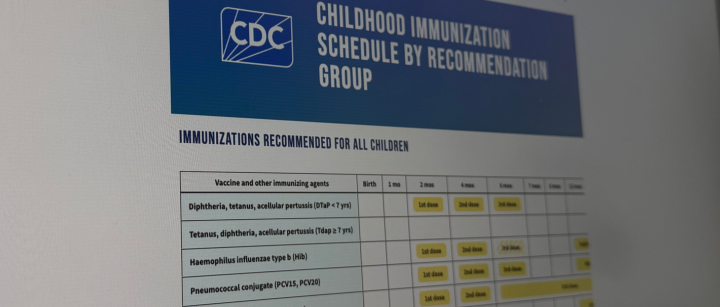
Unpacking the CDC’s Recent Vaccine Schedule Changes: What Facts Are Being Overlooked?

The recent overhaul of the childhood vaccine schedule by the Centers for Disease Control and Prevention (CDC) has sparked widespread discussion, with many questioning the motivations and the data behind these decisions. Notably, CDC Acting Director Jim O’Neill signed a memo on January 5th eliminating routine recommendations for vaccines against six diseases, shifting much of the responsibility for vaccination decisions from universal mandates to shared clinical decision-making. This shift, justified by officials as aligning with international consensus, warrants a closer examination of the underlying data, the process of decision-making, and the potential impacts on public health.

Primarily, the CDC’s new approach recommends vaccines against 11 diseases rather than 17. It is accurate that this reduction is driven by evaluations aiming to prioritize vaccines based on current disease prevalence, safety profiles, and international standards. However, claims surrounding the safety and efficacy of the vaccines that are no longer recommended universally are more complex. For example, the CDC and HHS officials justify the change citing a 33-page assessment prepared by political appointees, including Dr. Tracy Beth Høeg and biostatistician Martin Kulldorff. Critics argue that this document and the process contrast sharply with the traditional, transparent, evidence-based approach historically employed by the CDC’s Advisory Committee on Immunization Practices (ACIP), which involves rigorous review by multiple multiple experts across unique medical specialties.

Analyzing the Evidence and Process Behind the Changes

  • The CDC’s past process entailed months of evidence review, expert consultations, and public input before modifying schedule recommendations, ensuring decisions were rooted in robust scientific consensus.
  • The recent memo, in contrast, bypassed the ACIP’s usual procedures, leading critics—like pediatric vaccine expert Dr. Paul Offit—to suggest that these decisions lacked the transparency and broad expert consensus that historically guided vaccine policy.
  • The assessment utilized by HHS was authored mainly by political appointees rather than panels of independent experts, raising questions about the objectivity of the findings used to justify the schedule change.

Further complicating the issue, officials made claims that some vaccines—such as rotavirus, hepatitis A, meningococcal disease, and influenza—are less necessary given current disease trends. For example, the HHS described rotavirus as causing “almost no risk of mortality or chronic morbidity”—a statement that critics argue downplays the vaccine’s proven benefits. Prior to the vaccine’s widespread use, CDC data indicated that rotavirus caused between 55,000 to 70,000 hospitalizations annually, with hundreds of children dying from the disease. Dr. Paul Offit, a well-respected vaccine inventor and pediatrician, emphasizes that rotavirus vaccines have significantly reduced suffering, with tangible decreases in hospitalizations and severe dehydration cases.

Implications for Public Health and Vaccine Safety

The central concern among public health experts is whether these schedule modifications compromise disease prevention efforts. While some of the diseases are now rare in high-income countries, many experts believe that vaccination remains crucial for maintaining low incidence and preventing outbreaks. Dr. David Stephens of Emory University asserts that even with low current incidence, routine vaccination provides “significant herd immunity,” protecting unvaccinated populations and reducing the risk of disease resurgence. International comparisons, like those cited by HHS, are often presented as evidence that reduced vaccination strategies do not lead to higher disease rates; however, experts such as Dr. Jaime Fergie highlight that declines in disease incidence often predate vaccination programs, underscoring the multifaceted nature of disease control.

Regarding safety, critics contend that the assertion that safety data are limited without placebo-controlled trials is misleading. Dr. Noele Nelson from Cornell University confirms that hepatitis A vaccine trials were properly conducted, with no severe adverse events reported. Furthermore, the existing body of surveillance data affirms that vaccines like hepatitis A are very safe, with benefits far outweighing risks—contradicting assertions that safety is inadequately established, often made by anti-vaccine advocates.

The Broader Responsibility of Truth in Today’s Public Discourse

In sum, the CDC’s recent schedule change, driven by a new process that sidesteps traditional expert consensus and transparent review, calls for informed, responsible journalism and public understanding.

It is vital that we rely on factual, scientific evidence to guide health choices, especially when it comes to protecting vulnerable children. Vaccines have historically been among the most effective tools in preventing infectious disease and safeguarding public health. Disregarding the wealth of data demonstrating their safety and efficacy risks undermining the foundation of informed democracy and responsible citizenship.

Ensuring that decisions about health policies are rooted in scientifically sound evidence—not political or ideological agendas—is essential to preserve trust, protect public health, and uphold the democratic principles that underpin our society.

Border Patrol Chief to Depart Minneapolis Amid Alex Pretti Shooting Controversy

In a striking turn of events that extends beyond local Minneapolis tensions to the broader geopolitical landscape, recent shifts in United States immigration enforcement strategy reveal the resilience of a nation grappling with both internal unrest and international reputation. The White House has begun to modulate its aggressive approach, exemplified by the replacement of Gregory Bovino, the hardline border patrol commander, with Tom Homan, a seasoned figure known for his staunch stance on immigration control. This move comes amidst mounting criticism from civil liberties groups and Democrats, highlighting the White House’s challenge to balance urgent national security concerns with the image of lawful authority—an issue watched closely by global institutions seeking to interpret U.S. policy as a bellwether for Western democratic stability.

The decision to demote Bovino, a vocal supporter of the Trump administration’s deportation campaigns, accompanies a premature scaling back of federal military-style enforcement tactics in Minneapolis, where the tragic shooting of nurse Alex Pretti by federal agents has reignited protests. The White House’s shift, reportedly prompted by a series of deadly encounters and diplomatic pressures—such as calls from Minnesota’s Governor Tim Walz and Minneapolis Mayor Jacob Frey—signals an attempt at calibration in a tense geopolitical harbor. It underscores how domestic unrest dovetails with broader U.S. foreign policy narratives, affecting international perceptions of American law and order, especially when viewed through the persistent lens of the global community’s anxiety over rising authoritarian tactics versus democratic ideals.

Analysts from the Council on Foreign Relations and the Heritage Foundation emphasize that such internal reckonings are not isolated. They serve as turning points that ripple across the international stage. The Biden administration’s recent efforts to distance itself from the previous administration’s hardline policies, while still grappling with the consequences of aggressive enforcement, exemplify how leadership choices influence transnational efforts on migration and security. Meanwhile, global allies monitor *America’s internal policies*—such as the aggressive use of force, the legitimacy of police conduct, and the symbolism of leadership decisions—as reflective of the country’s ability to project soft power amidst chaos. Historically, similar internal crises have either fueled regional instability or prompted reform, depending on the collective response by civic institutions and the international community.

As the story unfolds, the tragic shooting of Alex Pretti and the subsequent political fallout remind the world that history is still writing its chapters. The pandemic of violence and division beckons a question that transcends borders: how long can a nation uphold the veneer of stability while grappling with the cracks beneath? With protests still echoing through the streets and leadership shifting in the corridors of power, it becomes clear that the United States stands at a pivotal crossroads—its choices echoing for generations to come, shaping a legacy of resilience or regression in the unfolding drama of history.

Minnesota Judge Calls Out Acting ICE Director, Warns of Consequences for Ignoring Court Orders

Judicial Authorities Push Back Against Federal Immigration Policies in Minnesota

The escalating tensions between federal immigration authorities and the judiciary in Minnesota underscore a rising confrontation that threatens to reshape the landscape of U.S. immigration enforcement. At the heart of this conflict is the recent intervention by the state’s top federal judge, Patrick Schiltz, who summoned the acting head of Immigration and Customs Enforcement (ICE), Todd Lyons, warning of contempt of court charges for defying judicial orders. This dramatic stance highlights an emerging crisis of authority, where individual judges are actively contesting federal directives, raising profound questions about the rule of law versus executive overreach.

The core issue stems from Operation Metro Surge, a sweeping and aggressive immigration crackdown initiated under the previous Trump administration. The operation has responded with a series of controversial and often unlawful detention practices targeting immigrants in Minnesota. Many detention cases have entered the judicial pipeline with emergency lawsuits filed on behalf of individuals claiming wrongful arrest and extended detention, often without proper legal process. Judge Schiltz and other federal judges have voiced concern that the administration’s disregard for court orders is causing “significant hardship,” with detainees being moved far from their homes or held in states like Texas despite clear court directives to keep them in Minnesota.

Legal Resistance Reflects Broader Geopolitical and Societal Shifts

  • Judicial rebukes have set the stage for potential *legal challenges* that could either restrain or halt federal immigration enforcement efforts in Minnesota entirely.
  • These developments symbolize a broader *conflict between state and federal authority*—a phenomenon that resonates beyond the borders of Minnesota and into the heart of U.S. sovereignty.
  • Internationally, critics interpret this clash as a reflection of America’s internal struggles over national identity, immigration policy, and the constitutional separation of powers, echoing debates that many analysts compare to volatile shifts currently unfolding in other global democracies.

Leading international organizations and senior analysts warn that ongoing resistance against federal directives could weaken the fabric of international rule of law, especially as the United States serves as a model for judicial independence and constitutional governance. Historians remind us, through echoes of past conflicts, that such internal disputes often signal profound societal transformations—sometimes for better, sometimes for worse. The ongoing confrontation in Minnesota is unlikely to remain isolated, with the potential to inspire or suppress similar resistance in other states facing federal immigration policies.

Implications for the Global Power Balance

As President Biden’s administration seeks to implement more humane immigration reforms, these legal battles expose a complex interstate power dynamic. The pushback from Minnesota’s judiciary complicates the *administration’s efforts* to craft a cohesive national immigration strategy, especially when faced with states that prioritize local policies like sanctuary jurisdictions. The potential for federal-state conflicts to escalate already hints at a fragmented approach to governance that could weaken U.S. credibility abroad. Many international observers see the situation as emblematic of a broader weakening of American institutional authority, which might undermine the country’s ability to project power and stability in the global arena.

This unfolding chapter in U.S. domestic politics bears resemblance to rising sovereigntism observed in other nations, where regional entities challenge centralized authority. The clash over immigration enforcement reveals a society fractured over the very definition of justice and national sovereignty—a duel that could define the United States’ future as a beacon of rule of law or a divided union struggling with internal discord. The weight of history hangs heavily as courts and federal agencies navigate this uncertainty, their decisions shaping the legacy of a nation facing its most defining test yet.

Storm Harry triggers massive landslide in Sicily, raising concerns for safety and resilience

In a stark reminder of climate-related instability, a 2.5-mile (4 km) section of coastline on the Italian island of Sicily has recently collapsed, following severe weather disruptions caused by Storm Harry. The disaster, which took place over the weekend, underscores the growing vulnerability of coastal regions to extreme weather events, a phenomenon increasingly attributed by scientists and environmental analysts to global climate change. The collapse has prompted a major emergency response, with over 1,000 residents evacuated from the towns of Niscemi as authorities scramble to assess the damage and prevent further tragedies.

The geological surveys underway reveal a troubling picture: aerial footage shows significant destruction, with buildings and vehicles destroyed or rendered inaccessible. While no fatalities have been reported, the potential for loss of life and livelihoods remains high, especially as parts of the cliff continue to *crumble*, reflecting ongoing instability in the area. This incident draws attention not just to local environmental conditions but also to overarching global concerns about climate resilience, coastal management, and international response strategies. Many analysts argue that such catastrophes are a warning sign of a changing world, where recent weather anomalies serve as a clarion call for policy shifts and technological innovations in disaster mitigation.

Historically, the Mediterranean region has been a crossroads of geopolitical tension, with Italy’s strategic position intertwined with broader European stability and security concerns. As regional communities grapple with the immediate aftermath of the landslide, experts warn of the broader, long-term implications: increased migration from vulnerable areas, economic disruptions, and the destabilization of tourism-dependent economies. The United Nations and other international institutions have called for enhanced cooperation and climate-adaptive infrastructure, but critics highlight that policy responses often lag behind the rapidly evolving threats posed by climate change.

Looking ahead, the situation in Sicily is a microcosm of a global challenge: how nations adapt to a **world where natural disasters are intensifying** and threatening societal stability. Historians and geopolitical analysts warn that decisions made in this critical era will shape the trajectory of international order. Will countries prioritize short-term economic gains over environmental sustainability? Or will they recognize that the cost of inaction far exceeds immediate sacrifices? As the climate continues to shift, impacting societies across the globe, humanity faces a moment of reckoning. The landslide in Sicily is more than a local tragedy—it is a gripping chapter in a larger story where the choices of today could either build resilience or lead to chaos, leaving the weight of history to be decided by the actions of tomorrow.

JudgeGPT Takes the Stand: AI’s Next Justice?

Legal Industry Faces Disruption as AI Revolutionizes Dispute Resolution and Judicial Processes

In a fast-paced technological era where innovation meets disruption, the legal industry’s landscape is undergoing a seismic shift. Leading institutions, such as the American Arbitration Association, are pioneering the integration of artificial intelligence (AI) tools like the AI Arbitrator, built upon OpenAI’s models, to streamline dispute resolution processes. This innovation promises to significantly lower costs and increase accessibility for civil litigants, especially in document-heavy cases. Unlike traditional judicial proceedings that can stretch over months—sometimes up to 75 days—these AI-driven systems are projected to cut resolution times to 30-45 days, reflecting a profound industry-wide push for efficiency and business model disruption.

Reimagining Judicial Functions with Large Language Models

The legislative and judicial sectors are still grappling with the potential and pitfalls of generative AI. Notable figures like Judge Kevin Newsom have suggested that, when appropriately assessed, LLMs (Large Language Models) could serve as auxiliary tools to analyze legal texts, interpret language, and assist in defining ambiguous contractual terms. For instance, a landmark case involving the classification of in-ground trampolines as “landscaping” demonstrated how AI could contribute a nuanced understanding of language — albeit with notable reservations about reliance and accuracy. Nonetheless, the prospect of AI providing multiple definitions and contextual insights offers a disruption of traditional textualist approaches that hinge solely on dictionaries.

  • Enhanced analysis of legal language and terminology
  • Potential reduction in bias introduced by human subjectivity
  • Facilitation of faster decision-making in routine cases

Despite these advancements, academic research warns that AI’s legal interpretations remain imperfect. Studies from institutions like Stanford have identified persistent issues such as hallucinations—the tendency of models to fabricate facts—and biases embedded within training data. The widespread concern is that over-reliance on these models could inadvertently reinforce inequalities or distort legal reasoning, thus threatening the foundational fairness of justice.

Challenges and Business Implications of AI in Justice

Leading legal tech firms like LexisNexis and Westlaw have responded to these concerns by deploying retrieval-augmented generation (RAG) systems designed to improve factual accuracy and reduce hallucinations. However, research in 2025 indicates that substantial challenges persist, especially in interpreting complex jurisprudence and case law, which continually evolve and require contextual understanding that AI has yet to master fully. These challenges underscore the need for rigorous validation and oversight, not static automation, to ensure trust and efficacy in legal AI tools.

The business implications are profound: Law firms and government agencies are increasingly investing in AI-powered systems to manage caseloads more efficiently, freeing human judges and attorneys for cases that warrant their specialized judgment. However, critics like former judge Paul Grimm emphasize that AI cannot replace human nuance and ethics, warning that these tools should serve as supplements rather than replacements. Disruption in this space is inevitable, but it hinges on careful regulation and transparent AI development that maintains the integrity of legal decision-making.

Future Outlook: The Urgency of Adaptation

The trajectory is clear: the legal industry must adapt swiftly to the AI-driven transformation, or risk obsolescence. As MIT researchers and industry leaders underscore, the time to innovate is now—especially with the potential to expand justice accessibility for under-resourced populations. Yet, the road ahead demands balancing ¬disruption with caution, ensuring AI enhances, rather than undermines, procedural fairness and societal trust. The window for policymakers, legal professionals, and tech entrepreneurs to shape this future is narrowing; delay could entrench biases and inaccuracies, prolonging the very injustices AI aims to solve.

In conclusion

With disruptive AI technologies poised to revolutionize the legal landscape, those who innovate boldly and regulate wisely will emerge as industry leaders. The coming years will determine whether AI becomes a driver of fairer, faster justice, or a threat to public confidence and the rule of law. For young entrepreneurs, tech visionaries, and policymakers alike, embracing the urgency and possibilities of this transformation is not just strategic—it’s essential for shaping the future of justice itself.

Future Stars Shine: Rising Athletes Make Waves in Latest Youth Sports Championships

Commanders Welcome Daronte Jones as New Defensive Coordinator

The Washington Commanders are making significant strides towards fortifying their defense as sources confirm they are finalizing a deal to hire Daronte Jones, the former pass game coordinator for the Minnesota Vikings, as their new defensive coordinator. This strategic move aims to address the pressing need for improved defensive performance heading into the next NFL season.

Coach Ron Rivera expressed confidence in the hiring, praising Jones’s track record of enhancing defensive schemes. Under Jones’s guidance last season, the Vikings displayed notable improvements in pass defense, a crucial stat that is expected to translate effectively for the Commanders. Commentator Mike Florio noted, “Jones’s ability to adapt his strategies according to the strengths of his players is what truly sets him apart in today’s competitive league.”

The Commanders’ decision to bring in Jones signals a commitment to not only bolster their defense but also to harness a more aggressive game plan. Washington’s struggles in the last season were highlighted by significant defensive lapses, which led to several missed opportunities in games that could have shifted their trajectory. With Jones at the helm, expectations are high. Early predictions suggest that his expertise could transform the defensive lineup into a formidable force in the upcoming season.

As the offseason progresses, fans are eager to witness how Jones’s tactics will shape the squad. The Commanders are hungry for success, and with Jones’s arrival, they might just be in a prime position to turn their aspirations into reality. This move is not just about improving statistics; it’s about restoring pride and unity within the team. In the world of sports, the scoreboard reflects more than just numbers; it embodies hope, determination, and the thrilling bond forged among players and fans alike.

As we watch this new chapter unfold, one thing remains clear: in the game of football, every play counts, and every decision can unite a community in ways beyond mere competition.

Source link

EU and India seal historic trade deal—big win for youth and the economy

The European Union has recently cemented a landmark victory in global trade negotiations by finalizing a comprehensive agreement with India. This deal, heralded as “the mother of all trade deals” by Ursula von der Leyen and praised by Prime Minister Narendra Modi for its historic scale, marks a pivotal moment in the shifting landscape of international commerce. With tariffs on cars set to plummet from as high as 110% to just 10% over five years, the accord opens up India’s protected market, promising a lucrative channel for EU exports worth over €180bn annually, and supporting nearly 800,000 European jobs. It is a testament to how geopolitical and economic considerations have converged at a defining juncture, with the EU seeking diversification amid strained relations with the United States and uncertain global trade dynamics.

Importantly, the significance of this agreement transcends mere tariffs. It embodies a strategic pivot by the European Union to strengthen alliances with emerging economic powerhouses at a time when global order is under redefinition. Analysts and historians emphasize that such a move signals a powerful shift toward multi-polarity, reducing reliance on traditionally dominant economies.

  • The accord connects more than 2 billion people into a single market, a rise in regional economic connectivity that could ripple across the globe}
  • It underscores Europe’s strategic effort to counterbalance the monopsony power of China and the unpredictability of the US under tariffs-driven policies
  • Historically, trade deals like this—long in the making—are often seen as precursors to broader geopolitical alliances

The broader geopolitical impact of operationalizing this deal cannot be understated. It sends a clear message to the world: as the global order is “being fundamentally reshaped,” Western powers are actively creating new blocs and partnerships that challenge the old hierarchy. Recent weeks have seen the EU sign a deal with Mercosur, after two and a half decades of negotiations, further illustrating a pattern of diversification away from US-centric trade reliance. Economists warn that such measures could deepen divides, foster new alliances, and ignite competition on a scale that history has rarely seen. Especially noteworthy is how Europe’s renewed engagement with India aligns with strategic interests beyond commerce, including security, defense, and geopolitical influence, in a period marked by rising tensions in Ukraine and disputes over Greenland’s strategic resources.

Finally, as the global chessboard continues to shift, the significance of these negotiations remains clear. They are not merely economic transactions but are cornerstones in the construction of a new geopolitical architecture. The decisions made today will set the tone for decades to come, echoing through history as pivotal moments where old world order gave way to new alliances and rivalries. The narrative of this era is still unfolding—each trade agreement, each diplomatic handshake, a page in the vast and complicated story of global power—leaving the modern world poised on the precipice of a new chapter that may redefine the very fabric of international society.

Social Media Auto Publish Powered By : XYZScripts.com