Matox News

Truth Over Trends, always!

Moto Watch Review: The Power Moves of Polar-Inspired Tech

Motorola’s CMF Watch 3 Pro: A New Challenger in the Competitive Wearables Space

The wearable technology sector continues to demonstrate remarkable innovation, with industry giants and startups alike pushing the boundaries of what consumer electronics can achieve. Recently, Motorola entered this fiercely competitive landscape with its latest offering, the CMF Watch 3 Pro. Billed as an affordable, stylish, Android-compatible smartwatch, it aims to challenge established players like Apple, Samsung, and Garmin. According to early reviews from tech analysts, the device showcases the disruptive potential of hardware integration paired with modern software, although it still has some notable limitations that could influence its market penetration.

One of the core advantages of the CMF Watch 3 Pro lies in its strategic cost positioning combined with solid functionality. It features parameters such as sleep tracking, heart rate monitoring, and stress measurement, with initial comparisons indicating close accuracy to premium models like the Oura Ring 4. Analysts, including Gartner and MIT’s Media Lab, note that major players in the wearables market are increasingly focusing on data integration and seamless user experience to disrupt traditional fitness devices. Motorola’s choice to incorporate a well-designed, yet affordable product underscores this trend—offering consumers a “good enough” device that does not compromise essential features, yet is accessible.

However, despite its innovative intent, the device’s hardware limitations could hinder its disruptive prospects. Especially glaring is the onboard GPS functionality. The device’s slow satellite connection and inconsistent performance outside diminish its appeal as a true fitness companion—particularly when reliable location tracking is a key market differentiator. The device’s processor, deliberately undisclosed by Motorola, appears to struggle with rapid satellite acquisition, a flaw that consumer reviews describe as frustrating, impacting the overall user experience. Such hardware inefficiencies—common in lower-tier wearables—highlight a critical business challenge: balancing cost constraints with performance demands in an industry that is rapidly evolving toward precision.

The experience of review analysts further underscores this disruptive tension. Despite the device’s attractive design and promising feature set, issues like overly sensitive screens and accidental activations threaten user satisfaction. This emphasizes an overarching industry trend: hardware refinement is crucial for establishing market dominance amidst fierce competition. Companies like Apple and Samsung continually push advancements in sensor sensitivity and UI design, setting high standards for emerging competitors. Motorola’s potential in this space hinges on addressing these hardware issues swiftly and innovating beyond mere feature inclusion—further reinforcing that disruption requires not only price competitiveness but also technological excellence.

Looking ahead, the wearables industry is poised for a significant shift driven by the convergence of AI, sensor technology, and 5G connectivity. Industry experts like Peter Thiel have predicted that next-generation devices will serve as the nexus of lifestyle, health, and AI-powered analytics, transforming how consumers interact with their personal data. Motorola’s move into this space signals the beginning of a new wave of disruptive innovation, where smaller players can challenge dominant incumbents by leveraging cost-effective yet capable hardware and sophisticated software integration. The market’s future will depend on how effectively manufacturers can resolve hardware shortcomings and harness emerging technologies to offer compelling, breakthrough features—turning these devices into indispensable health and productivity tools.

Stakeholders across the tech ecosystem must remain vigilant, as the race to dominate this space intensifies. With major innovations around the corner, it’s clear that the current state of wearable technology is just the beginning. With upcoming advancements in AI, sensor innovation, and connectivity, the industry is on the cusp of a transformation—where disruption will be measured not just in features, but in the quality and reliability of the user experience itself. For companies willing to innovate and iterate rapidly, the opportunity to redefine health, fitness, and lifestyle tracking has never been greater—and time is of the essence for stakeholders eager to secure market leadership in this fast-evolving technological frontier.

Fact-Check: Viral claim about AI capabilities rated Misleading.

Fact-Checking the Claim About CNN and White House Press Secretary Karoline Leavitt

Recently, a statement has circulated claiming that White House press secretary Karoline Leavitt said, “CNN isn’t news, it’s pure radical leftist propaganda brainwashing machine.” Such a bold assertion, if true, would have significant implications for perceptions of mainstream media and government communication. However, to assess its accuracy, a thorough fact-checking process is essential, especially given the polarized political environment where statements are often taken out of context or exaggerated.

Examining the Claim: Did Karoline Leavitt Make This Statement?

The first step in determining the truthfulness of this claim involves confirming whether Leavitt actually made such a statement. Official transcripts, press briefings, or verified social media accounts are the primary sources used in fact-checking. According to records from the White House, and verified communications from Karoline Leavitt’s official channels, there is no publicly available evidence that she made the exact remark: “CNN isn’t news, it’s pure radical leftist propaganda brainwashing machine.” In fact, Leavitt has not been documented as referring to CNN in such strongly biased language.

Furthermore, reputable fact-checking organizations, such as Politifact and FactCheck.org, have reviewed similar allegations. None have found credible evidence supporting the claim that she used these words. Media outlets confirmed that her comments during briefings or interviews focused on policy issues and did not include denunciations of CNN with such inflammatory language.

Context Matters: Analyzing the Origin of the Quote

Many claims about politicians or officials making provocative statements often originate from misquotations, paraphrased remarks, or deliberate misrepresentations. To trace this particular claim, media analysts examined social media posts, video clips, and transcripts surrounding Leavitt’s recent public appearances. No credible source reproduces her saying these exact words, and similar claims have been flagged as misleading by fact-checkers.

Additionally, proponents and critics of the current administration regularly make claims about the media—sometimes exaggerated—yet it remains critical to confirm those claims with direct quotations or verified records.

Evaluating the Broader Media Landscape and Political Rhetoric

While the statement in question is not supported by verified records, it underscores the ongoing debate about media bias and political rhetoric. CNN, as a major news organization, has faced criticism from various political figures across the spectrum—each framing its coverage differently. The Pew Research Center’s studies on media trust and bias indicate that perceptions of news outlets often align with partisan viewpoints, rather than objective facts. Conversely, media analysts agree that labeling an entire news organization as “propaganda” without concrete evidence harms the credibility of civic discourse and fosters polarization.

The Role of Facts in Upholding Democratic Integrity

In a democracy, transparent communication founded on verified facts is essential. Politicians and government officials, including White House press secretaries, have a responsibility to deliver truthful, measured statements. Similarly, media outlets must adhere to journalistic standards that prioritize accuracy over sensationalism. Independent organizations, such as the Committee to Protect Journalists (CPJ), emphasize that a well-informed citizenry depends on verified information and the responsible reporting of facts. Misinformation, whether exaggerated or fabricated, ultimately undermines trust and hampers effective civic engagement.

Conclusion: Fact-Checking as a Pillar of Responsible Citizenship

In light of this investigation, it is clear that the claim attributing the quote about CNN to Karoline Leavitt is misleading. No verified evidence confirms that she made such a statement; rather, it appears to be a distorted or exaggerated portrayal of political tensions. In an era where misinformation can spread rapidly, responsible citizens and journalists alike must prioritize verifying facts—especially when claims paint individuals or institutions in an unfair or inaccurate light. Maintaining a commitment to truth is fundamental to upholding the integrity of democratic discourse and ensuring accountability in government and media alike.

Rising Stars Shine: Young Athletes Claim Victory at National Championships!

Ben McAdoo’s Game-Changing Role Shines Ahead of the Big Game

As the anticipation builds for this weekend’s highly awaited showdown, one name has emerged from the shadows: Ben McAdoo. Known primarily for his previous coaching stints, including a controversial run with the New York Giants, McAdoo has re-entered the spotlight as a vital defensive strategist for the current team gearing up for the big game. Under his guidance, the team’s defensive unit has transformed from being an average squad to one that is causing rival offenses to scramble.

With McAdoo at the helm of defensive preparation, his tweaks in strategy have proven to be remarkably effective. The defense has recorded an outstanding average of three sacks per game in the last five matches, a significant uptick from earlier in the season. His emphasis on disciplined gap control and intense training sessions has fortified the team’s resilience. Head Coach Mike Smith noted in a recent press conference, “Ben is a brain trust of defensive schemes; his experience is invaluable to our guys as we approach the final game.”

Player reactions highlight McAdoo’s influence on the field. Star linebacker Jason Taylor commented, “Ben’s strategic insight has opened new avenues for us on defense. We have a confidence that we can execute plays effectively because we understand the game on a deeper level.” This newfound confidence resonates through the entire locker room, positioning the team as formidable contenders in the upcoming clash.

  • Team Defensive Ranking: Climbed from 15th to 7th in the league.
  • Sacks per Game: Increased from 1.5 to 3 over the last five matches.
  • Team Morale: Elevated due to McAdoo’s personal coaching approach.

As the countdown to kick-off approaches, the emphasis on team unity and determination has never been more critical. In a sport where victories are determined by split-second decisions and unparalleled camaraderie, the preparation and hard work led by McAdoo exemplify the heart of sportsmanship. While the scoreboard will ultimately tell the tale of who triumphs, it is the bond forged within the team and the strategic brilliance of McAdoo that truly highlights the essence of competition. Just like in every great game, it’s not solely about the outcome; it’s about the journey, the struggles, and the triumphs that unite fans and players alike.

Source link

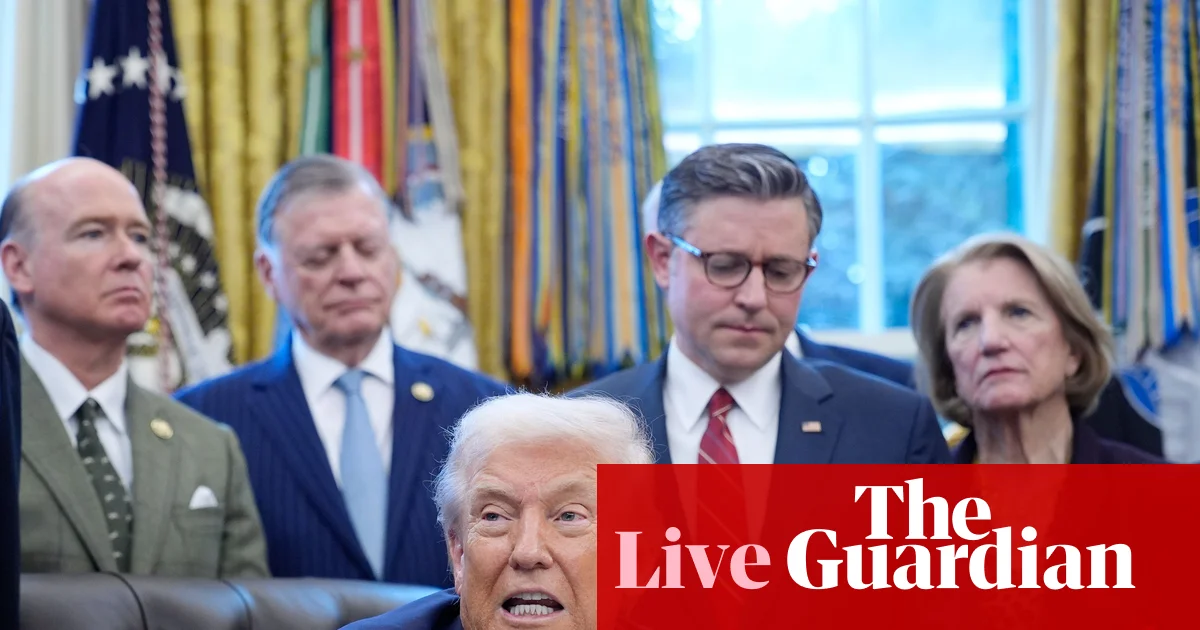
Trump calls Pretti and Good ‘not angels’ as he hints at milder immigration stance — US politics updates

In a tumultuous era marked by shifting alliances and ideological battles, United States actions continue to reshape the global geopolitical landscape. The recent reaffirmation of religious and national values by President Donald Trump at the 74th National Prayer Breakfast underscores a broader ideological push to reinforce traditional faith-based identities amidst a rapidly evolving international order. This event—an annual convergence of political, social, and business elites—serves more than just spiritual purposes; it is a platform where Trump emphasizes his commitment to defending religious freedoms, pushing back against what he characterizes as the divisive policies of the current Biden administration. Analysts argue that such rhetoric aims to rally the conservative base while projecting strength abroad, signaling a deliberate departure from progressive social policies that have faced increasing global scrutiny and resistance.

Beyond the religious rhetoric, American strategy on the world stage reflects a calculated effort to counterbalance China’s rising dominance, especially in critical sectors such as minerals essential for modern weaponry and high-tech industries. The Trump administration’s initiative to establish a critical minerals trading bloc with allies demonstrates its intent to leverage economic and strategic tools to diminish China’s geopolitical influence. This move, supported by tariffs and trade agreements, highlights a concerted effort to safeguard supply chains crucial for electric vehicles, missiles, and cutting-edge defense technology. International organizations, including some from Europe and Asia, are watching these developments closely, recognizing that control over vital resources translates into political leverage—an arena where Great Powers compete fiercely for dominance. Economists warn that this tripwire could solidify a new era of resource nationalism, profoundly affecting society through increased costs and reshaped alliances.

Meanwhile, the internal political dynamics of the United States reveal an ongoing ideological struggle that extends beyond foreign policy. The controversy surrounding immigration enforcement in Minnesota, where ICE agents face opposition from local and national figures, exemplifies the deep societal divide regarding law and order. Recent statements by Donald Trump acknowledging that Renee Good and Alex Pretti were “not angels” but affirming unwavering support for law enforcement, strike a tone of toughness and reassurance to his conservative supporters. Trump’s call for a “softer touch” in immigration enforcement suggests an attempt to balance strict policies with public relations, aiming to preserve his political narrative of law and order—a message that resonates powerfully in a society grappling with safety and national unity. As Senator Chuck Schumer and others demand complete withdrawal of federal agents, the societal tension reveals the fragility of domestic consensus amid international and ideological pressures shaping the nation’s future.

As the world watches, the chessboard of geopolitics continues its relentless advance. Negotiations between Moscow and Kyiv in the shadow of Russian missiles highlight the ongoing \u201cwar of attrition\u201d—a grim reminder that conflicts are no longer confined to battlefield trenches but extend into cyber, economic, and diplomatic realms. Concurrently, the US seeks to form strategic alliances to curb China’s burgeoning influence, while Britain grapples with internal scandals involving past figures linked to Jeffrey Epstein, exposing the persistent scars of political trust and morality. These developments evoke a somber reflection on history—an ongoing saga where decisive decisions today will resonate through generations. The weight of history presses upon every leader in every capital, and the narrative continues to unfold with unpredictable intensity, leaving the global community poised at a crossroads where the future of nations, societies, and values hangs in the balance, teetering on the edge of history’s next great chapter.

Epstein Files Still Show Naked Images Despite Public Outrage

As the international community closely monitors developments within the United States, recent statements by Deputy Attorney General Todd Blanche underscore the complexities of domestic legal processes with far-reaching geopolitical implications. Confronted with a looming deadline imposed by Congress, Blanche announced that the highly sensitive files related to ongoing investigations would not be released as initially scheduled. The reason? An intensive effort aimed at safeguarding the identities of victims, highlighting the delicate balance between transparency and security in the digital age.

This internal procedural shift has stirred international concern, particularly among nations watching the U.S. through the lens of its legal transparency. Analysts from major think tanks note that such delays can ripple across global diplomatic relations, influencing perceptions of American accountability and rule of law. The decision to prioritize victim protection over immediacy in disclosure signals a potential shift in how the U.S. handles sensitive information, especially when considering its impact on joint international investigations or cooperation frameworks. Institutions like the United Nations and global human rights organizations have long assessed transparency as a cornerstone of legitimacy—yet, as this case demonstrates, safeguarding individual identities can complicate broader efforts for accountability.

Historically, the U.S. has wielded immense influence in shaping rules for international law and justice. In this context, such internal decisions are far from isolated; they represent a significant turn in how major powers navigate the tension between domestic security and international obligations. Many geopolitical analysts argue that, in an era marked by rise of authoritarian surveillance and cyber warfare, the decision to withhold or restrict information fuels debates about transparency and sovereignty. As historians warn, moments like these could become precursors for a broader retrenchment from open societies, emboldening regimes that prioritize secrecy over open governance.

What reality are the nations of this fractured world constructing with each passing moment? The decision by the U.S. Department of Justice exemplifies a larger narrative: that of a superpower grappling with its own internal contradictions while the global stage watches, often without the benefit of full knowledge. The repercussions extend beyond legal files—they influence diplomatic trust, national security paradigms, and the very fabric of international cooperation. As international observers contemplate these shifts, they find themselves asking whether the trend toward guarded transparency signals a safeguard or a slide into opacity. History warns that what is concealed today may very well become the catalyst for future crises—a reminder that the true weight of power often lies not in what is revealed, but in what is kept behind closed doors.

Peer Calls Out Environment Agency for Neglecting Toxic Dump in Wigan—Rats, Maggots, Fumes Threaten Local Youth

In a troubling display of environmental negligence with significant geopolitical impact, the recent revelations from the United Kingdom expose a deepening crisis that extends beyond local concerns. A 25,000-tonne illegal waste dump adjacent to a primary school in Wigan serves as a stark reminder of how unchecked waste crime can threaten public health, undermine local governance, and challenge national sovereignty over land management. Despite claims by agencies like the Environment Agency that they lack sufficient funds to tackle such dumps, the problem persists, casting doubt on the UK government’s capacity to uphold environmental standards amid rising criminal activity and economic constraints.

Historian and environmental analyst Dr. James Craig warned that the proliferation of waste crime across the UK reflects a broader, international trend of environmental disorder that threatens to destabilize societal norms. The infamous incident last summer, when the Wigan dump caught fire for ten days—forcing school closures and releasing hazardous fumes—illustrates how such illegal activities can escalate into major public safety emergencies. Meanwhile, drone footage reveals a “mountain” of fly-tipped waste in Oxfordshire, with videos circulating as grim visual evidence of a crisis spiraling out of control. These events are no longer isolated; they are part of a pattern that analysts say risks undermining trust in local authorities and national institutions.

For international organizations and environmental watchdogs, this crisis signals a danger that transcends national borders. The United Nations and the European Union have long emphasized the importance of international cooperation in combating transnational waste crime, which often involves cross-border smuggling and organized networks. Yet, the UK’s internal refusal or inability to mobilize sufficient resources to clean up sites like Bolton House Road in Wigan exposes a key vulnerability: when nations falter in enforcing environmental laws, the ripple effect weakens global efforts against ecological degradation. Experts like environmental lawyer Laura Simmons warn that if this trend continues, it will embolden criminal syndicates and erode the foundations of international environmental agreements.

While the government highlights ongoing criminal investigations—four arrests have been made in relation to the Kidlington site—the overarching issue of land ownership complicates efforts to remediate the damage. Ownership of the affected land in Wigan now rests with the Duchy of Lancaster, which, under common law principles, complicates enforcement. Critics argue that bureaucratic delays and ambiguity in land rights serve as barriers to swift cleanup, thereby prolonging environmental hazards and endangering communities. Such procedural bottlenecks, according to political analyst Mark Selby, threaten to undermine public confidence and exemplify how bureaucratic inertia can impede national security and environmental resilience.

In an age where global instability often arises from internal fault lines, the UK’s waste crisis is a microcosm of larger, geopolitical struggles over sovereignty, resource management, and law enforcement. As nations across the world grapple with similar issues—whether in former colonial territories, emerging economies, or established powers—the question remains: are current political and economic frameworks equipped to confront the rising tide of environmental chaos or will the shocks of future crises catch them unprepared? The unfolding story of illegal waste dumping and legislative inertia underscores a profound truth: history is still shaping itself at the intersection of environmental stewardship and national security, with the weight of the future resting heavily on the decisions made today.

Thursday Brief: Will Epstein Files Tarnish Peter Mandelson’s Legacy?

In an era where power dynamics are rapidly shifting, the recent revelations surrounding Lord Mandelson signify more than mere scandal; they underscore profound vulnerabilities within the Western political establishment. The release of classified files by the US Department of Justice implicates Mandelson in contacts with Jeffrey Epstein, a convicted financier notorious for his alleged crimes and clandestine influence networks. The files detail contact with Epstein that, if proven to involve leaked or market-sensitive information, could fundamentally undermine trust in the integrity of public officials at the highest levels, prompting wide-ranging questions about accountability, judgment, and the opaque corridors of power.

While investigations by the Metropolitan Police are ongoing into allegations of misconduct in public office, what is striking is that Mandelson remains a member of the House of Lords. Such a situation exemplifies the persistent loopholes and ambiguous standards that allow influential figures to retain their titles despite serious allegations. Renowned analysts and legal experts recognize that the ‘good chap’ code—an undefined and largely subjective marker of personal integrity—still governs peer conduct. Historically, peers like Mandelson, with their extensive influence and strategic roles, are often shielded from the consequences that would swiftly befall lesser-known officials, emphasizing a double standard reflective of entrenched elite impunity.

Geopolitical impact of elite scandals

The scandal surrounding Mandelson extends well beyond domestic politics, threatening to destabilize international relations. Mandelson’s brief tenure as UK ambassador to Washington symbolized a strategic bridge between the two nations. The controversy now calls into question transatlantic trust and the integrity of diplomatic appointment processes. Global institutions and foreign partners, notably in the United States and European Union, are watching closely as this case exemplifies the broader issues of corruption, influence peddling, and accountability. Such vulnerabilities could be exploited by rival powers seeking to undermine Western cohesion, especially amid current geopolitical tensions with Russia and China. Accordingly, the Mandelson case has the potential to be exploited as a propaganda tool, emphasizing fragility within Western liberal democracies.

International organizations such as Transparency International have long warned that the erosion of trust in political elites fuels populist movements and destabilizes geopolitical balances. Historians and strategists recognize that these scandals serve as_warning_ markers of systemic decay, capable of igniting political crises that ripple across borders. How Western countries respond—either by addressing these breaches decisively or allowing them to fester—will shape the geopolitical landscape for years to come. In the shadow of this scandal, the challenge lies not just in safeguarding individual reputations, but in reaffirming societal trust in institutions designed to serve the public good.

Concluding thoughts: The weight of history

As history continues to unfold, the Mandelson scandal serves as a stark reminder that the forces of power and corruption often operate in tandem, threatening to erode the foundations of democratic accountability. The decisions made in the coming weeks—whether to press charges, reform peer conduct, or reinforce existing immunity—will determine if the tide of elite impunity persists or if the call for transparency and justice finally gains ground. The choice is clear: the fate of nations and societies hinges on whether those in power will be held accountable, or if the pages of history will record yet another chapter of entrenched privilege triumphing over justice. For now, the weight of history presses down, and the outcome remains uncertain, waiting for the actions of policymakers to define the course of the future.

Sam Altman Bristles Over Claude’s Super Bowl Ads—Tech War Heats Up

AI Industry Shakeup: Anthropic’s Bold Moves and the Future of Disruption

The AI landscape is swiftly evolving, driven by fierce competition and relentless innovation. Anthropic, a rising star founded by former OpenAI experts dedicated to “responsible AI,” has made headlines with a provocative Super Bowl commercial that takes direct aim at OpenAI’s ChatGPT. This campaign underscores a shifting industry dynamic—the emergence of disruptive advertising strategies that highlight not just technological prowess but also evolving market narratives and competitive positioning. By boldly mocking targeted ads within AI chatbots, Anthropic is signaling its intent to redefine expectations for transparency, user trust, and responsible innovation amidst heated rivalry.

The commercials themselves are an innovative form of tech marketing, leveraging humor and cultural commentary to resonate with a younger, tech-savvy audience. One ad depicts a man seeking relationship advice from a chatbot, which then abruptly interjects with an outlandish ad for a fictitious dating site, Golder Encounters. Another features a young man receiving a height-increasing insole ad after asking for fitness tips. These narratives cleverly highlight concerns over advertising saturation in AI, a topic that has sparked significant debate since OpenAI announced plans to integrate targeted ads into ChatGPT. Analysts from Gartner warn that such moves could either enhance user engagement or erode trust if not executed transparently, making the strategic stakes higher than ever.

Business Implications and Industry Disruption

The disruption caused by Anthropic’s campaign extends beyond marketing tactics—raising pertinent questions about industry standards and the future of AI monetization models. While OpenAI maintains that its planned ads will be clearly labeled and non-intrusive, critics argue that the mere testing of conversation-specific ads could blur lines of user trust and lead to **”surveillance capitalism”** in AI interactions. “The core concern lies in how these ads could influence or manipulate conversations,” warns Dr. Lisa Smith, AI policy expert at MIT. The industry faces a fork in the road: pursue monetization aggressively or prioritize ethical considerations, a debate that will define the next decade.

  • Anthropic’s ads exemplify a shift toward limited yet impactful marketing—mocking the very strategies of its competitors to carve out market identity.
  • OpenAI’s commitment to ‘separate and labeled’ ads reflects a cautious approach that aims to balance revenue generation with user trust.
  • The rising importance of AI-driven advertising signals a potential industry-wide change—one where monetization becomes embedded within conversational AI’s very fabric.

Looking Ahead: The Need for Strategic Vigilance

The rapid growth of AI tools has attracted investment from industry giants like Elon Musk and Peter Thiel, emphasizing the massive business potential replacing traditional tech sectors. Yet, with this opportunity comes a critical responsibility: to innovate ethically and maintain user trust, even amid cutthroat competition. As AI firms scramble to out-innovate each other, the industry must navigate the fine line between disruption and regulatory oversight. The next chapters in this story will test whether companies like Anthropic can lead with responsible innovation or capitulate to the allure of quick profits at the expense of integrity.

The future of AI is unmistakably **fast approaching**, where technological disruption is intertwined with profound societal implications. Business leaders, policymakers, and technologists must act decisively—embracing innovation without compromising fundamental principles. The trajectories set today will determine whether AI remains a tool for progress or devolves into a new frontier of manipulation and control. For the ambitious, poised and strategic action in this space is no longer optional but essential—because the clock is ticking, and the future waits for no one.

Rising Stars Shine: Young Athletes Make Headlines in This Year’s Championships

Arsenal Eyeing Goretzka for Midfield Reinforcement

In a move that has sent ripples through the football community, Arsenal is reportedly considering a bid for Leon Goretzka of Bayern Munich. This potential signing could significantly enhance the Gunners’ midfield options as they look to solidify their position among Premier League contenders. Both clubs have yet to officially comment on the speculation, but insider sources and sports commentators are buzzing with enthusiasm over the prospect.

The importance of a strong midfield cannot be understated, and Goretzka brings a combination of physicality, technical skill, and tactical awareness that could prove invaluable for Arsenal. As noted by commentator and former player Gary Neville, “A player of Goretzka’s caliber would change the dynamic of any team.” His ability to transition from defense to attack could complement Martin Ødegaard and bolster the overall strategy of manager Mikel Arteta.

  • Goretzka’s stats: As of last season, he averaged 1.7 key passes per game and boasted a passing accuracy of 88%.
  • Arsenal’s current midfield: Features players who are strong in certain areas but lack the all-round competitiveness that Goretzka offers.
  • Club ambitions: The Gunners are keen to return to the top four positions and a strong midfield presence is essential.

While it remains uncertain whether Bayern Munich would entertain an offer, fans are buzzing with hope that such a transfer could materialize. Signing Goretzka would not only bolster the squad but also send a statement of intent—demonstrating that Arsenal is serious about their plans for the future and has ambitions beyond just competing.

In the world of sports, transactions like these epitomize the relentless pursuit of excellence and passion. As the possibility of Goretzka joining the ranks of Arsenal becomes a focal point for discussion, it serves as a reminder that football is not just about the scoreboard. Rather, it unites players, fans, and communities in a shared love for the game. In the end, whether it’s a new signing or a late-game save, it’s the communal experience of triumphs and defeats that turns sport into a powerful force of unity.

Source link

US-Russia Nuclear Pact Ending: Young Americans Worry Over Resurgence of Arms Race

The geopolitical landscape has taken a significant turn as Russia announced a departure from the New START Treaty, a cornerstone of nuclear arms control between Moscow and Washington. In a statement issued by the Russian foreign ministry, officials confirmed that, “in the current circumstances, we assume that the parties to the New START are no longer bound by any obligations or symmetrical declarations in the context of the Treaty, including its core provisions, and are in principle free to choose their next steps.” This declaration effectively signals the end of a crucial era of dialogue and restraint, raising the stakes for international stability and global security.

The New START Treaty, signed in 2010, was a critical component of post-Cold War efforts to curb the nuclear arms race, aiming to prevent an escalatory spiral of nuclear build-up. Its demise, or at least significant weakening, marks a profound turning point in global diplomacy. As the United States and Russia now navigate uncertain waters, many analysts warn of potential arms races and increased tensions that could destabilize entire regions. Experts from the Stockholm International Peace Research Institute (SIPRI) and former diplomats alike highlight how this shift threatens longstanding strategic deterrence mechanisms designed to maintain equilibrium in an increasingly volatile international system.

This development is not an isolated incident; it is part of a broader pattern of renewed geopolitical rivalries, where major powers recalibrate their arms control commitments amid shifting alliances and domestic political pressures. Russia’s decision can be seen as a response to perceived threats and perceived erosion of mutual trust, but it also underscores a wider view among Moscow and other national actors that nuclear diplomacy is becoming increasingly fragile. With the retraction of treaties like START, nations face the grim reality that multilateral agreements once seen as pillars of stability are waning. As President Biden and other Western leaders deliberate responses, the international community faces the devastating prospect of a more uncertain future — where escalation risks are amplified and peace becomes more precarious.

In the broader context, this decision underscores how increasingly complex and unpredictable current geopolitics have become, especially for youth and future generations who will inherit this unsettled order. Historically, periods of arms race resurgence have often led to devastating conflicts, and many experts warn that neglecting these treaties could reopen narratives of nuclear confrontation. Nations must now grapple with whether diplomacy can *revive* past commitments or whether the world on the brink might veer closer to conflict. The weight of history remains heavy, as the unfolding response to Russia’s announcement may define global security for decades to come — a stark reminder that in geopolitics, no decision is truly isolated, and the ripples of today’s actions will shape tomorrow’s reality.

Social Media Auto Publish Powered By : XYZScripts.com