Matox News

Truth Over Trends, always!

Congressional Democrats Promise Justice for Americans Hurt by Immigration Agents: “You Deserve Peace” | US Congress

The recent congressional hearings in the United States have thrown a stark spotlight on the ongoing controversy surrounding the federal government’s aggressive immigration enforcement policies. Witnesses, including family members of victims and victims themselves, recounted harrowing encounters with federal agents, raising serious questions about the human rights abuses and accountability failures of agencies like Immigration and Customs Enforcement (ICE) and Border Patrol. This unflinching testimony reveals a deeply troubling picture: a government-authorized crackdown that has, in numerous cases, turned deadly, exposing the darker consequences of unchecked federal power. Such revelations have ignited a fierce debate about the geopolitical and social impact of U.S. immigration policies, with critics warning that these actions threaten to harm American societal fabric and international standing.

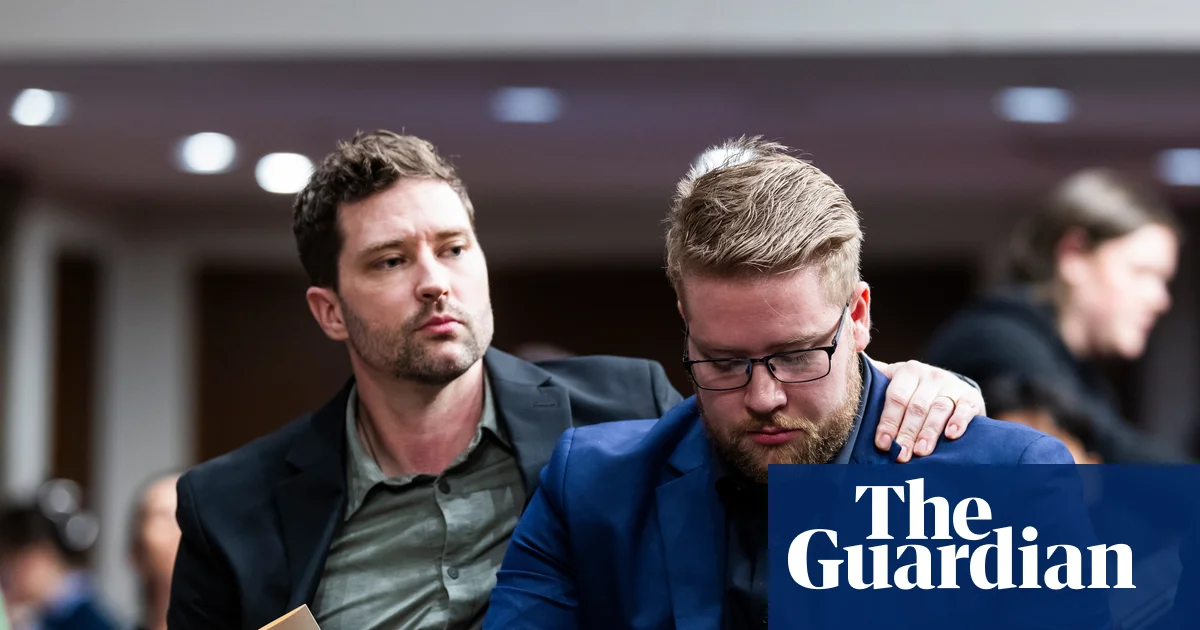
Key to the hearings was the emotional testimony of families who have lost loved ones in encounters with federal agents. Brothers Luke and Brent Ganger vividly described the death of their sister, Renee Good, shot by ICE officers during a routine traffic incident. Their grief was compounded by reports of further violence, including the fatal shooting of protester Alex Pretti by border patrol agents. These stories underscore a troubling pattern: federal agents engaging in violence with impunity, often with little oversight or accountability. Critics, including prominent analysts and international organizations, argue such conduct damages the credibility of the U.S. on the global stage, where it claims to champion human rights and the rule of law. Moreover, these incidents have far-reaching implications, fueling societal divisions and eroding faith in institutions meant to protect citizens and non-citizens alike.

The hearing also brought to light stories of trauma inflicted on ordinary Americans, such as Marimar Martinez and Aliya Rahman. Martinez, a Chicago native, was shot five times by a border patrol agent who later circulated her gruesome hospital images as trophies — an act exposing a culture of misconduct that seems embedded within certain enforcement arms. Meanwhile, Rahman, who suffers from autism and traumatic brain injury, was forcibly removed from her vehicle while trying to access medical care, with agents referencing her as a mere “body.” Her account highlights the dangers faced by vulnerable populations caught in the crossfire of national security policies. Such practices, often carried out with little regard for due process or human dignity, threaten to alienate communities, spread fear, and deepen societal fractures—facts acknowledged by many international watchdogs.

These revelations have stirred a powerful call for reform, with many voices from the political realm demanding justice. Richard Blumenthal, a senator from Connecticut, framed the testimonies as a “defining moral moment,” questioning the moral integrity of those responsible. Meanwhile, Alex Padilla pointed out the absence of Republican engagement, emphasizing the partisan divide that hampers bipartisan oversight of such crises. Critics argue that this political inaction emboldens agencies to operate above scrutiny, thus risking the destabilization of American values and the erosion of international credibility. As these stories unfold, historians and analysts warn that America faces a pivotal reckoning: whether to uphold its founding ideals of justice and human rights or to succumb to policies that, in the name of security, violate the very principles that underpin the nation’s identity. The weight of this moment falls heavily on the shoulders of policymakers — for the tide of history remains uncertain, yet undeniable: the choices made today will echo through generations, shaping the face of the nation and the global order for decades to come.


Police Investigate New Allegation Linking Andrew Mountbatten-Windsor to Epstein

In what continues to be a defining chapter for the British royal family, fresh allegations connecting Prince Andrew to Jeffrey Epstein’s nefarious activities threaten the very fabric of the monarchy’s credibility. As British police scrutinize claims that Epstein facilitated sexual encounters with the former prince—a revelation that surfaced amid the release of classified US Department of Justice documents—the international community watches with a mix of skepticism and concern. The recent move of Prince Andrew out of the Royal Lodge to a temporary residence on the Sandringham Estate underscores internal royal turmoil and a diminishing reputation that impacts global perceptions of Britain’s aristocracy. Such disclosures, amplified through leaked emails and photographs, spotlight the broader uprising of criminal investigations into elite power and the potential for scandal to ripple beyond national borders.

  • Allegations suggest Epstein’s operatives, including Jeffrey Epstein himself, may have trafficked women, including a woman claiming she was taken to Windsor in 2010 for sex with Prince Andrew.
  • US documents reveal disturbing correspondence and photographs linking the royal to Epstein’s circles, raising questions about the extent of royal-corporate-elite collusions.
  • While Thames Valley Police assess the allegations, critics argue that in the face of formidable international scrutiny, the royal family’s reputation is irrevocably compromised, threatening the UK’s political and social stability.

Historically, Britain’s monarchy has wielded soft power, symbolizing stability and tradition. Yet, these recent revelations threaten to fracture that narrative, inviting international skepticism about the accountability of the aristocracy. Many analysts suggest that, in an era driven by transparency and social justice, the royal family’s staunch secrecy only fuels suspicion. The United States has intensified its investigations, releasing over 3 million Epstein-related documents hinting at clandestine networks tying corporate, political, and high-society figures together. The release includes email references to Mountbatten-Windsor and his ex-wife, Sarah Ferguson, revealing continued contact with Epstein immediately after his 2010 house arrest—undermining official denials of involvement. Such evidence stokes fears that even the most established institutions may harbor complicity in the face of unchecked power.

As the international community grapples with the implications, voices within the UK and beyond warn of broader geopolitical fallout. The scandals threaten to weaken the soft diplomatic influence traditionally associated with the monarchy and raise questions about the unchecked freedoms of a class that often operates beyond scrutiny. As historian Dr. Gerald Matthews notes, “The royal family’s survival increasingly depends on its ability to adapt to the demands of accountability—failures here could usher in decades of decline.” Meanwhile, British lawmakers face mounting pressure to reevaluate the monarchy’s role amidst accusations of complicity and cover-up. Still, the defining fate of this scandal remains unresolved, casting a shadow over Britain’s image on the world stage. Will this be a turning point or merely another chapter in a long, tangled history of aristocratic excess? The answer may well determine the future trajectory of Britain’s place in an ever-changing international order.

As history continues to unfold, the weight of unresolved charges, leaked evidence, and shifting allegiances stands as a stark reminder that no institution, no matter how ascendant, can escape the relentless tide of truth. The spotlight now falls on elements larger than individual corruption—the fundamental questions of justice, morality, and the integrity of power itself. With every revelation, the world seems to hold its breath, waiting for the murmur of justice to swell into a clarion call that reshapes the landscape of global influence—an ongoing struggle where today’s secrets are tomorrow’s upheavals, and history’s verdict awaits in the shadows of the present.

Nintendo’s Switch Smashes Records as Highest-Selling Console Ever Among Young Gamers

The Nintendo Switch Sets New Milestones: A Cultural Game-Changer

In the ever-evolving landscape of gaming, Nintendo continues to demonstrate why it remains a cultural powerhouse among youth. The company recently announced that their beloved Nintendo Switch has surpassed 155 million units sold, making it the highest-selling hardware in Nintendo’s storied history. This milestone isn’t just a testament to technological innovation—it’s a reflection of a societal shift in how the younger generation engages with entertainment. Unlike traditional gaming consoles, the Switch’s hybrid design—combining portability with home console capabilities—has resonated deeply with today’s dynamic and on-the-go lifestyle, redefining what a gaming device can be.

What makes this success even more compelling is how it exemplifies a shift in social behavior and cultural relevance. The Nintendo Switch has become more than just a gaming platform; it’s a social hub for youth, a portal to shared experiences and online communities. With top influencers, TikTok challenges, and vibrant fan discussions, the console has embedded itself in the fabric of youth culture. According to gaming sociologists, this trend reflects a broader desire among young people for flexible, social, and accessible entertainment that fits into their fast-paced lives. It’s not just about gaming anymore—it’s about creating shared digital identities and cultural moments, a phenomenon that can shape social dynamics for years to come.

Besides its cultural impact, Nintendo’s innovation is also capturing market dynamics with surprising speed. Despite not holding the record for the overall best-selling gaming hardware (that’s the legendary PlayStation 2 at approximately 160 million units), the Switch’s current trajectory suggests it could eventually surpass that milestone, especially with the release of the highly anticipated Switch 2. In less than a year since its debut, the Switch 2 has already sold an impressive 17 million units, outstripping sales figures of past consoles like the Wii U, which struggled with market acceptance. This highlights a generation-driven demand for gaming that prioritizes versatility and innovation—factors that Nintendo has prioritized with aesthetic appeal and engaging gameplay experiences.

  • Top gaming influencers like Pokémon TikTok stars, and streamers on Twitch, have propelled the Switch to viral heights, making it a must-have for youth seeking social connectivity through gaming.
  • Multiple lifestyle brands are now leveraging Nintendo’s success, incorporating gaming aesthetics into fashion and tech accessories, further embedding the console into youth culture.
  • Sociological insights from analysts have noted that the Switch’s success underscores a societal shift: young consumers increasingly favor personalized, portable tech that enhances social bonding and community building.

As Nintendo’s movement demonstrates, this gaming evolution raises an intriguing question: in a hyper-connected, tech-driven society, will the next iteration of gaming hardware shift further into an even more social, lifestyle-integrated space? Could future consoles become less about hardware specs and more about connecting people through immersive experiences? Nintendo’s triumph with the Switch suggests that the hottest trend may not just be in processing power or graphics, but in fostering social engagement and cultural identity—especially among youth. As we look ahead, one thing is clear: the next big question isn’t just what gaming hardware will do next, but how it will shape the social fabric of the digital generation to come.

A New Beginning for Sundance: Fresh Perspectives and What’s Ahead for the 2026 Film Festival

The Evolving Spirit of Sundance: A Reflection on Culture, Identity, and the Promise of New Horizons

Once heralded as the heart of independent American cinema, the Sundance Film Festival has long embodied more than mere entertainment; it is an emblem of cultural authenticity, tradition, and societal identity. Founded by the iconic Robert Redford, Sundance was initially a celebration of the rugged frontier spirit, a platform for filmmakers who dared to challenge the mainstream and craft stories rooted in authenticity and local color. As Ortega y Gasset observed, “A culture is the incarnation of the ideals, troubles, aspirations, and contradictions of its people.” Sundance’s identity has always been intertwined with this philosophy—an ongoing dialogue between art and life, challenging the uniformity of Hollywood and fostering the distinct voices that shape a nation’s soul. As the festival shifts from Park City to Boulder, questions arise about whether this migration signifies a recalibration of cultural priorities, or a necessary evolution in an era demanding resilience and reinvention.

The festival’s historical relevance extends beyond the arts into the very fabric of societal change. It has historically celebrated films that grappled with American values, social justice, and identity politics, echoing Tocqueville’s insights on the importance of local cultures as the foundation of democracy. Films like Little Miss Sunshine or Whiplash serve as milestones—not just for their cinematic artistry but for their reflection of American resilience and the unyielding pursuit of excellence amidst adversity. Yet, today’s Sundance faces a paradox: while technological advancements have democratized film production, making independent filmmaking more accessible, access to distribution and slots in the festival are tightenings of a gate increasingly guarded by economic interests and corporate financiers. This shift underscores Gasset’s assertion that culture, once a collective expression, is now often filtered through economic and ideological lenses, risking the dilution of authentic voices in favor of market-driven narratives.

The Cultural Shift: From Authenticity to Commercial Opportunism

Recent years have witnessed a transformation, wherein the historic Sundance ideal—an incubator for raw, unpolished stories—has become entangled with the commercial pursuits of streamers and studios. The festival now often reflects a stratification: the real films that challenge convention and inspire discourse, versus those crafted within a calculated, factory-like process aimed at pleasing a broad, attention-starved audience. Philosophers like Chesterton warned of the danger of losing sight of the true in pursuit of the merely entertaining, and modern Sundance seems caught at this crossroads. The remarkable success of films like Josephine, which tackles harrowing subjects with originality, exemplifies the enduring relevance of art that speaks to the human condition beneath the veneer of commercial appeal. Such films remind us that culture is the memory of society and the prophecy of its future, a prophetic voice echoing through the shadows of contentious and uncomfortable truths.

As critics and audiences grapple with shifting tastes, the festival’s market dynamics reveal an underlying tension: the blurred lines between artistic integrity and financial viability. The absence of broad studio backing and limited sales post-festival reflect a conservative climate, where risks are minimized, and content is scrutinized through the lens of profitability. Yet, hope persists in the form of genuine cinematic art—films like Josephine—a film that not only confronts a tough subject yet does so with profound originality—embodying the quintessential Sundance spirit: challenging, daring, and purposeful.

Looking Forward: A New Horizon for Sundance and Society’s Cultural Mission

As Sundance prepares to relocate to Boulder, echoes of historical parallels resonate: just as great movements in art and thought have sought new ground—be it the Renaissance’s movement from Florence to Venice or the Harlem Renaissance’s cultural revival—so too must the festival redefine its cultural mission. The debate surrounding what Sundance should be—an incubator for authentic storytelling or a marketplace of commercially viable content—reflects a broader societal inquiry: what is the role of culture in forging identity and guiding society? To quote T.S. Eliot, “The progress of an artist is a continual self-sacrifice,” emphasizing that true cultural progress requires sacrifice, honesty, and resilience. The festival’s move offers an opportunity not merely for geographical change but for a renewal of purpose—balancing the demands of visibility and commerce with an unwavering commitment to the truthful and original voices of tomorrow.

In the end, culture remains a vital thread linking our past and future—a tapestry woven with memory, hope, and prophecy. Sundance, in its evolving form, may yet remind us that the true power of cinema lies not in its commercial success but in its ability to mirror humanity’s deepest struggles and aspirations. As we stand on the cusp of this new chapter, the enduring question remains: will we heed the wisdom of our cultural memory and listen for the prophetic voices whispering from the shadows? Perhaps, in their echoes, lies humanity’s most profound future—an enduring testament that from the ashes of change rises the future of art and identity intertwined in the sacred dance of tradition and innovation.

Intel gears up to disrupt GPU market from Nvidia’s grip

Intel’s Strategic Shift: Entering the GPU Arena to Challenge Nvidia’s Dominance

Despite ongoing efforts to streamline its core operations, Intel has announced a bold initiative to develop a new line of graphics processing units (GPUs), signaling a strategic disruption in an industry long dominated by Nvidia. With the leadership of Kevork Kechichian, an industry veteran from Intel’s data center group, the company is aiming to leverage its vast manufacturing capabilities to carve out a significant share in the rapidly evolving AI and gaming markets. This move marks a crucial pivot toward innovation and diversification that could reshape the competitive landscape, forcing incumbents like Nvidia to revisit their market strategies.

The company’s efforts have attracted attention from industry analysts and tech insiders, noting that Intel’s expansion into GPU development is not just a technological upgrade, but a calculated disruption aimed at challenging Nvidia’s market leader position. The hiring of Eric Demmers, formerly a senior VP at Qualcomm with over 13 years in engineering, underscores Intel’s commitment to building a high-caliber team capable of innovating at the chip level. As the project is in its early stages, Intel intends to align its development with customer demands and industry needs, signaling a pragmatic approach rooted in both technological prowess and strategic market positioning.

This move by Intel is more than just a product development milestone; it is a response to industry-wide shifts towards AI acceleration, cloud computing, and high-performance gaming—areas where GPUs are pivotal. While Nvidia’s GPUs have revolutionized AI and machine learning, with their advanced AI systems and market Command, recent market analyses from Gartner illustrate a fragile balance as Nvidia begins to face increased competition.

  • Intel’s entry could intensify market competition
  • Potential to lower prices and accelerate technological innovation
  • Possible reshuffling of market share among semiconductor giants

Historically, Intel has focused primarily on CPUs, but as industry disruptions accelerate, merging CPU and GPU innovations could unlock new business models and revenue streams. Disruptive technologies like integrated processing units and advanced chip architectures are reshaping industry standards—experts from MIT and other leading institutions predict that within the next five years, the semiconductor industry will see unprecedented levels of convergence and innovation. This shift presents both a challenge and an opportunity for Intel—a chance to disrupt established players and redefine the semiconductor landscape.

As the industry stands on the cusp of this technological evolution, the urgency for firms to innovate is paramount. With AI chips and high-performance graphics becoming critical to future tech ecosystems, Intel’s move signals the beginning of a new battleground—one where agility, innovation, and strategic disruption will determine supremacy. The upcoming TechCrunch event in Boston, scheduled for June 2026, will be a pivotal platform to observe Intel’s latest advancements and assess whether its gamble will reshape the future of computing. The race is on, and between the giants, only the most innovative will survive—and thrive—in this fierce new era.

Future Stars Shine: Young Athletes Make Waves in National Championships

Sports Unification: The Focus of Key Analysts

Recent insights from prominent sports analysts Tim Bontemps and Brian Windhorst have highlighted several key players and teams poised for notable performances this season. Both commentators emphasize the importance of watching specific athletes whose skills could change the course of their respective franchises.

In a recent discussion, Bontemps pinpointed the emerging talents within the NBA, particularly stressing the significance of young players stepping up in crucial moments. Notably, he mentioned that fresh considerations surrounding player efficiency ratings and clutch performance might showcase unexpected storylines this season. Key names like LaMelo Ball and Devin Booker are primed to lead their teams, with Bontemps stating, “It’s about who can take the pressure in the fourth quarter.”

Windhorst echoed these sentiments, indicating that teams like the Golden State Warriors and Milwaukee Bucks continue to be forces in the league. He noted that both teams have a blend of seasoned veterans and rising stars that could influence playoff outcomes significantly. “Game-changing moments are what define a season, and these teams are loaded with talent that thrives under pressure,” Windhorst commented during his analysis.

  • Highlight Player Stats: Look out for Stephen Curry and his three-point shooting prowess, alongside Giannis Antetokounmpo’s relentless defense.
  • Takeaways: Observing how these star athletes handle the challenges ahead could redefine their teams’ legacies.

As the season unfolds, it is evident that every game, and every highlight, transcends mere statistics and rivalries. Sports serve as a vital unifying force, bringing together fans from different backgrounds and inspiring them through shared hopes and dreams. As teams battle it out on the court, they are not just playing for victory; they are creating moments that resonate far beyond the final buzzer, reminding us all of our shared humanity and passion for the game. In this context, the narratives woven through the season will ultimately unify us, knitting a fabric of excitement and camaraderie that is the true essence of sports.

Source link

Met Police Investigate Leaked Emails Tied to Mandelson and Epstein

Metropolitan Police Launch Crime Investigation into Peter Mandelson’s Alleged Leaks to Jeffrey Epstein

London — In a development that has sent shockwaves through the political landscape of the United Kingdom, the Metropolitan Police has officially initiated a criminal investigation into allegations surrounding Peter Mandelson, the former government minister, accused of leaking sensitive UK government emails to the late financier Jeffrey Epstein. This move underscores the gravity of recent disclosures from Epstein’s trove of court documents, which rekindled longstanding questions about the potential influence of clandestine influences on UK policymaking during the Cameron and Brown eras.

The investigation is rooted in allegations that Mandelson, then Britain’s Business Secretary, transmitted confidential internal discussions to Epstein, a known sex offender, amidst the turbulent aftermath of the 2008 financial crash. Documents suggest Mandelson forwarded emails revealing plans related to bank bonuses and euro bailout strategies—information with undeniable market sensitivity. Such disclosures, if proven, could constitute misconduct in public office, a crime carrying a maximum penalty of life imprisonment, according to Scotland Yard officials. Though Mandelson has denied receiving any funds from Epstein, bank records apparently show otherwise, prompting further scrutiny into his dealings and motives.

Geopolitical Ramifications and Shifts in Power

This unfolding scandal has profound geopolitical impact, challenging the credibility of UK political elites and stirring concerns over potential foreign influence. Analysis by international oversight bodies warns that revelations of clandestine meetings and leaked negotiations threaten to undermine transatlantic alliances, particularly the UK–US relationship. Critics argue that if senior figures like Mandelson, once granted diplomatic posts—such as his recent appointment as US ambassador—were complicit in or unable to prevent such leaks, the trust in Britain’s diplomatic integrity risks erosion. The United States, too, watches closely, as the Epstein revelations expose a web of illicit connections involving power brokers on both sides of the Atlantic, stirring fears about secret alliances and covert influence peddling.

Historians and political analysts emphasize that this scandal could mark a turning point in UK politics, with the potential to ignite broader debates about transparency and accountability in governance. History teaches us that when societies allow clandestine influence to go unchecked, the fabric of democratic institutions can be seriously compromised. As investigations deepen, the UK’s leadership faces the challenge of balancing national security concerns with the demand for justice and public integrity. The fallout from this crisis may reshape public attitudes toward power, privilege, and the accountability of the ruling class for generations to come.

How Decisions and Disclosures Shape Societies and Global Stability

At the heart of this scandal lie fundamental questions about how decisions made behind closed doors influence not only domestic policy but also international stability. The leaked emails suggest Mandelson may have discussed influencing government policies on banking bonuses, the euro bailout, and other critical economic strategies—decisions with ripple effects across global markets. The potential involvement of Epstein, a figure associated with blackmail and illicit influence, raises alarms about the extent to which secret dealings can sway the course of nations with profound economic and geopolitical consequences. As government insiders and opposition leaders demand transparency, the moral fabric of leadership and its accountability to the people face a stern test.

With every new revelation, the fabric of the UK’s political reputation frays further, and the shadow of international influence and clandestinely brokered deals darkens the horizon. As the investigation advances, the world watches with wary eyes, wondering if the full truth will finally emerge or if more secrets will be buried in the recesses of a political system long suspected of corruption. This is a moment when history itself seems to hold its breath, waiting to see if justice and truth can prevail amid the chaos of compromised integrity.

Watch: BBC Reports on Colombian Commandos Staying Strong Against Persistent Drug Gangs

US-Colombia Summit Highlights Strategic Shifts in Latin America

In a significant display of diplomacy and alliance-building, President Joe Biden of the United States and President Gustavo Petro of Colombia recently convened to address shared challenges in the region, with a particular focus on regional security and drug trafficking. These high-level talks mark a renewed commitment from two nations deeply intertwined through history, now confronting contemporary issues with strategic resolve.

The summit occurred amidst an evolving geopolitical landscape, where the U.S. aims to assert its influence in Latin America against a backdrop of rising regional powers and shifting alliances. Critics argue that the meeting underscored the importance of maintaining American dominance through strategic partnerships, especially at a time when drug trafficking remains a persistent threat to stability and public health. The leaders discussed plans to bolster cooperation, including enhanced intelligence sharing, military aid, and joint operations targeting narcotrafficking networks.

In tandem with diplomatic engagements, on-the-ground intelligence operations continue to play a critical role. Recently, journalist Orla Guerin reported from within a Colombian police unit tasked with locating and destroying clandestine jungle cocaine labs—these remote operations are emblematic of the ongoing efforts to dismantle drug trafficking infrastructure. Such units face harsh terrain and sophisticated enemy defenses, illustrating the intensity of the clandestine battle that threatens to spill over international borders. Analysts suggest that these actions are crucial, not only for regional stability but also in curbing the flow of illegal substances into the United States and beyond.

Implications for Regional Security and International Relations

  • Enhanced cooperation between the U.S. and Colombia signals a strategic pivot toward more active counter-narcotics campaigns that incorporate both military and socio-economic measures.
  • The ongoing fight against drug cartels underscores the need for a comprehensive approach—military strikes, community engagement, and international legal cooperation—to effectively weaken these criminal networks.
  • Global institutions, such as the United Nations Office on Drugs and Crime, warn that failure to address these issues could lead to increased violence, migration crises, and regional destabilization, threatening broader international stability.

Internationally, the geopolitical impact of these developments extends beyond Latin America. As the U.S. seeks to maintain influence, some observers highlight the risk of militarization fueling local unrest or empowering authoritarian tendencies, especially in countries like Colombia where government legitimacy remains fragile. Historians and regional analysts caution that the decisions made today could shape the geopolitical fabric for decades to come. Should these collaborative efforts succeed, they could serve as a model for international cooperation against transnational crime. However, failure to adapt strategies or address socio-economic root causes risks entrenching instability and chaos.

As history continues to unfold in the dense jungles and political chambers of Latin America, the weight of choice hangs heavily. The battle against narco-trafficking is more than a fight over illegal substances; it is a defining moment to demonstrate resolve, sovereignty, and the capacity to shape the future. The world watches as these nations forge a fragile path toward stability—an uncertain journey marked by perseverance, diplomacy, and the relentless pursuit of order amid chaos. The next chapter remains unwritten, but its implications will resonate across generations to come.

Marwan Barghouti, ‘Palestine’s Mandela,’ to Release New Book from Prison

The detention of Marwan Barghouti, a senior Palestinian leader and influential advocate for a two-state solution, continues to resonate profoundly within the geopolitical landscape of the Middle East. His impending publication, Unbroken: In Pursuit of Freedom for Palestine, set for release on 5 November, offers a rare window into the personal and political journey of a man viewed by many Palestinians as a symbol of resilience and hope. Despite being incarcerated in Israeli prisons since 2002, Barghouti’s significance transcends his physical captivity—he remains the most popular Palestinian figure across Gaza and the West Bank, according to contemporary opinion polls. His sustained influence underscores the deep yearning among Palestinians for leadership that embodies their aspirations for dignity, sovereignty, and unity.

The international community’s response to Barghouti’s incarceration illustrates a broader story of contested justice and complex geopolitics. Detained after being accused—controversially—of orchestrating attacks that resulted in civilian deaths, Barghouti’s trial drew sharp criticism from organizations such as the Inter-Parliamentary Union, which argued that the proceedings breached international law and the Geneva conventions. His repeated denials of the charges amplify the debate over the legitimacy of his imprisonment, symbolizing the enduring clash of narratives surrounding the Israeli-Palestinian conflict. Meanwhile, allegations of inhumane treatment—extended periods of solitary confinement, limited family visits, and restrictions on international aid groups like the Red Cross—highlight violations that many experts consider breaches of modern human rights standards. These conditions have heightened calls from advocacy groups and international observers for the immediate release of a man many see as a de facto leader-in-waiting, which further complicates the geopolitical calculus of peace and conflict in the region.

Despite the political and legal disputes, Barghouti’s influence persists, largely due to his portrayal as a unifying figure capable of bridging the fractious Palestinian factions and reinvigorating the nationalist movement. His association with Fatah, a party often seen as more pragmatic than Hamas, positions him as a potential interlocutor capable of engaging with global powers on a pathway to peace. The layered complexity of his political stance—advocating for nonviolent resistance and diplomatic solutions—aligns with many international analysts’ assessments that his leadership could catalyze negotiations that are currently stalled. His enduring popularity, exemplified in successful protests and campaigns for his release across Western cities, resonates with a broader narrative of resistance against perceived injustices inflicted upon Palestinians. These demonstrations, which include distinguished figures from global culture and politics, serve as a reminder that Barghouti’s influence extends well beyond the prison walls—embodying a longstanding struggle for Palestinian self-determination in an era fraught with escalating tensions.

The unfolding story of Marwan Barghouti, set against the backdrop of ongoing conflict and diplomatic deadlock, underscores a crucial historical juncture. As the world navigates a shifting landscape where international institutions grapple with questions of justice and sovereignty, the fate of leaders like Barghouti will determine whether the quest for Palestinian independence remains a distant aspiration or gains tangible momentum. The publication of his memoir—comprising intimate letters, historical documents, and reflections—serves as a poignant reminder that the human dimension of this conflict is never far beneath the surface of geopolitics. As history continues to be written in the streets of Gaza, Ramallah, and global capitals, the weight of this narrative remains clear: in the shadows of prisons and conflicts, the long arc of justice, resistance, and hope bends towards destiny, no matter how profound the struggle or how distant the horizon.

School opens its doors to girls for the first time in 500 years—historic step toward equality

Educational Institutions and the Shaping of Societal Future

Recent statements from Magdalen College School highlight a growing trend within many elite educational institutions to position themselves as agents of societal enrichment. The school asserts that their initiatives will “enrich” their community “for generations to come,” a sentiment that underscores the evolving role of education as a catalyst for social cohesion and cultural preservation. While this rhetoric may sound benign, it raises profound questions about how contemporary schools influence families, social stratification, and community identity.

Historically, schools have operated as mirrors and molders of social values. Research by prominent sociologists such as Pierre Bourdieu demonstrates that educational settings often serve as gateways to social mobility or, conversely, reinforce existing class distinctions. In regions where educational policies increasingly focus on social enrichment and cultural identity, there is a discernible shift in the fabric of families and communities. These institutions often become focal points for cultural preservation, but they also risk diverting from the core goal of fostering universal access to quality education, potentially reinforcing divisions based on socio-economic backgrounds.

Societal Tensions and Cultural Shifts

The emphasis on “enriching” communities most often involves initiatives tailored toward *specific cultural narratives*. While such efforts aim to celebrate diversity and foster inclusiveness, critics argue they can inadvertently create social tensions and cultural enclaves that fragment homogeneous societal integration. In recent years, social commentators, including sociologist Charles Murray, have warned that a focus on cultural identity may deepen divides rather than bridge gaps, especially when education becomes a battleground for ideological influence.

This phenomenon impacts families profoundly, as parents navigate the complex terrain of cultural affirmations and their implications for their children’s futures. For some, these initiatives reinforce pride and belonging; for others, they evoke concern over the potential marginalization of traditional values or the marginalization of community voices that differ from the dominant cultural narrative. Such shifts influence educational priorities, societal cohesion, and the overall health of our civic fabric.

Addressing the Social Challenges and Building Resilient Communities

  • Inclusion and equity: Schools must strive to balance cultural specificity with universal values to ensure all families feel represented and empowered.
  • Community dialogue: Open, honest conversations between educators, families, and social leaders are essential to navigate cultural shifts and address misconceptions.
  • Educational reform: Policies that emphasize critical thinking, civic education, and character development can help young people appreciate diversity while fostering shared societal bonds.
  • Investment in local communities: Strengthening local institutions and supporting families creates resilient social networks that can withstand societal change.

Sociologists like Amartya Sen emphasize that true societal progress depends on *building social capital*, where families and communities work in harmony to sustain shared values amid diversity. As society grapples with rapid cultural transformations, public discourse must focus on creating inclusive, resilient communities where every child, regardless of background, can thrive within a common social fabric. Only by recognizing the importance of foundational social bonds—those that uphold personal dignity, shared history, and collective hope—can society navigate its present challenges and forge a future grounded in genuine unity and purpose.

In the end, society’s greatest challenge lies not just in reforming institutions but in nurturing a communal heart that values every individual’s journey. As society strides forward, perhaps the most profound promise remains: that through honest engagement and unwavering commitment, hope can blossom anew—transforming societal tensions into opportunities for enduring unity.

Social Media Auto Publish Powered By : XYZScripts.com