Matox News

Truth Over Trends, always!

Australia Politics: NSW Targets Illegal E-Bikes; Kate Chaney Demands Action After 1,000 Days of Gambling Ad Ban Delay

As the world navigates an era of rapid technological and geopolitical change, recent developments underscore the escalating tension between national sovereignty and international influence. Australia’s internal debates about the regulation of emerging technologies and societal issues serve as a microcosm of broader global dynamics. Key actions taken by the NSW government to crush illegal e-motorbikes, including seizing and crushing high-powered ebikes, reflect not merely a local safety initiative but also a cautious pushback against the unchecked proliferation of autonomous and potentially hazardous personal transport devices. This legislative move exemplifies a conservative approach aiming to safeguard public safety and societal order amid surging injuries and chaotic incidents, like the swarm of bikes on the Sydney Harbour Bridge.

Meanwhile, Australia’s domestic policy debates extend into the digital realm and societal health, revealing a nation grappling with the consequences of technological innovation and unchecked commercial influence. The Australian Medical Association has boldly warned that online gambling is causing “immeasurable harm” to Australian families, highlighting a troubling gap in governmental action. Despite a landmark report from late Labor MP Peta Murphy calling for a comprehensive ban on gambling advertisements, over 1,000 days have passed without meaningful legislative response, fueling frustration among progressive advocates and policymakers like independent MP Kate Chaney. Her push for a progressive bill to ban online gambling ads on all platforms over three years underscores the urgency for decisive action, reflecting a broader societal demand for protecting vulnerable populations—especially children—from predatory practices that profit from harm.

Internationally, this internal discord and regulatory inertia resonate across geopolitical borders, as the European Union inches closer to finalizing a landmark free-trade agreement with Australia. The EU’s engagement, led by Ursula von der Leyen, signals a rapprochement that could reshape economic alliances, but not without the strategic and political pressures all nations face. Simultaneously, the global energy crisis, described by Fatih Birol, head of the International Energy Agency, as “the greatest threat in history,” highlights a universe where energy security and access to affordable fuel become central battlegrounds. Australia’s military and foreign policy actors are feeling the heat as regional tensions with the Middle East escalate, adding fuel to an already tense international climate that demands firm national policies and strategic foresight.

In this ongoing saga of national resilience and international influence, the weight of history presses heavily. Leaders and citizens alike find themselves cast adrift in a sea of emerging threats and opportunities, with decisions made today echoing through generations. Will they stand firm in defending sovereignty, safety, and social cohesion? Or will economic interests and global pressures erode their resolve? As Australia and other nations chart their courses, the unfolding story remains one of profound consequence—one that defines the very fabric of their societies and the legacy they leave behind. The nexus of policies on AI, public health, safety, and international diplomacy paints a complex tableau; one, perhaps, where the true battle is for the soul of the nation.

Donut Lab’s new battery tech hits a snag after damage—hope for durability remains in question

Disruption in Energy Storage: Donut Lab Demonstrates Promising Safety in Solid-State Battery Testing

In a bold stride towards disrupting the electric vehicle (EV) and energy storage sectors, Donut Lab has released initial results from rigorous testing of its innovative solid-state battery. The tests, conducted by VTT Technical Research Centre in Finland—renowned for their extensive battery research—mark a crucial milestone in the pursuit of safer, more durable energy solutions. While traditional lithium-ion batteries have long grappled with safety concerns and limited cycle life, Donut’s latest experiments suggest that its proprietary technology could herald a new era of resilience and longevity.

During targeted high-stress simulations, the battery was subjected to conditions designed to mimic extreme real-world scenarios, including high temperatures and physical damage. Notably, the pouch encapsulating the battery lost its vacuum seal during the heat tests, a condition known to induce thermal runaway—an event that can cause fires or explosions in conventional lithium-ion cells. While the damage led to a significant capacity degradation—down from 24.7 Ah to approximately 11.2 Ah—public statements from Donut emphasize that the battery “fails gracefully,” avoiding catastrophic failures such as fire or thermal runaway. This safety profile starkly contrasts with the risks associated with traditional lithium-ion batteries, which remain vulnerable under similar conditions.

Implications for Industry and Market Disruption

The results underscore the potential for solid-state batteries like those developed by Donut to catalyze a fundamental shift in markets spanning EVs, portable devices, and renewable energy storage. Experts such as Gartner analysts highlight that solid-state technology’s disruption could dramatically lower safety concerns, reduce manufacturing costs, and extend product lifespans—addressing longstanding barriers that have hindered widespread adoption of battery-powered solutions. The company claims its batteries could endure up to 100,000 cycles—an astonishing figure translating to roughly 270 years—far surpassing the 1,000-2,000 cycles typical for current EV batteries.

  • Advantage: Significantly increased cycle life implies longer-lasting batteries, reducing waste and costs.
  • Innovation: Solid-state architecture inherently prevents liquid electrolyte failures, enhancing safety and performance.
  • Potential: Disrupts market dominance of traditional lithium-ion giants by providing safer, more durable solutions.

However, critical questions remain, especially regarding the long-term performance under repeated charge-discharge cycles, a test that remains unverified at this stage. The industry watches closely as Donut approaches this milestone, as iterative aging tests will determine whether this promising prototype can withstand real-world demands. As MIT researchers and tech analysts warn, the transition from promising lab results to commercial viability remains an arduous journey, often fraught with scaling and manufacturing hurdles. Nonetheless, the trajectory of Donut Lab’s innovation hints at a future where safer, longer-lasting batteries could redefine mobility and energy use worldwide.

The Road Ahead

As investment flows into next-generation energy storage, accelerated adoption of solid-state technology appears inevitable. Industry leaders such as Tesla and Apple are racing to develop their own versions, recognizing the game-changing potential of these batteries in creating more reliable and safer devices. The recent tests by Donut Lab serve as a stark reminder of the urgent need for technological disruption—stability, safety, and longevity are no longer optional but imperative in shaping the future energy landscape.

The next phase will be critical: validating long-term cycle durability and manufacturing scalability. If Donut’s claims hold true, the traditional battery paradigm will be irrevocably altered, ushering in an era dominated by innovation, disruption, and strategic advantage for those who lead the charge. The race to dominate this emerging market is on, and the future belongs to the agile, the daring, and the forward-thinking.

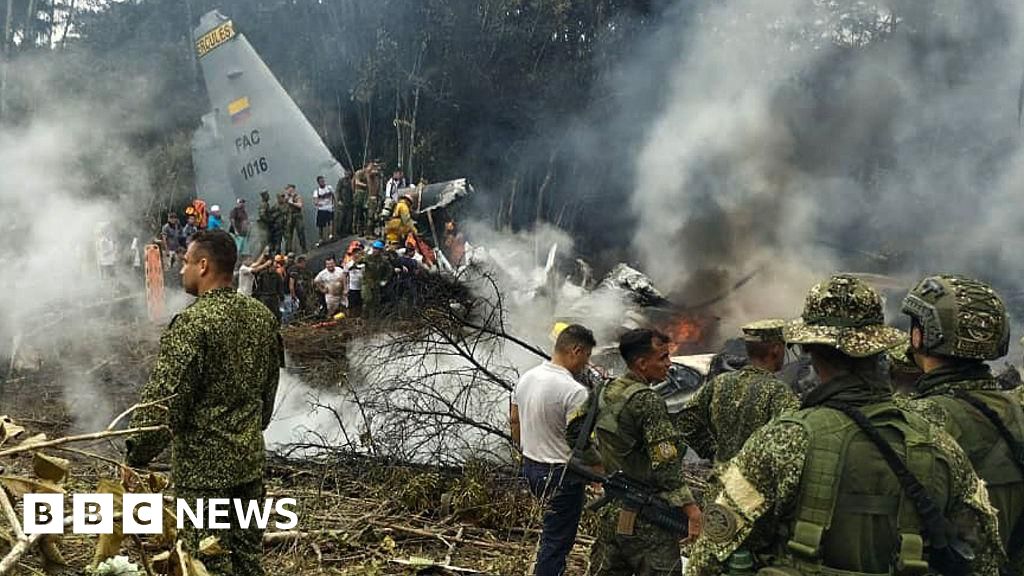
Colombian Air Force Plane Crashes, Dozens of Soldiers on Board

In a statement that has sent ripples through the international community, the Colombian government announced that a recent incident involving their military forces was a “tragic accident.” Although official details remain scarce, the ambiguity surrounding the event underscores the fragile stability in the region and the complexity of ongoing security challenges. As opposition voices call for transparency, the incident highlights the importance of accountability in addressing the underlying causes of conflict and unrest in Colombia.

Historically, Colombia has been embroiled in decades-long internal conflict, primarily fueled by the insurgent group FARC and various other guerrilla factions. The peace accords signed in 2016 marked a significant step toward stability; however, persistent violence and criminality continue to threaten societal progress. Officials and analysts worldwide are now scrutinizing whether this accident points to broader issues such as military miscalculations, operational deficiencies, or even external influences attempting to destabilize the country. This incident, while officially described as an unfortunate mishap, may serve as a stark reminder that the path to lasting peace remains fraught with unforeseen dangers.

The United Nations and regional bodies have expressed concern over recent developments, emphasizing that how Colombia responds will have profound geopolitical ramifications. The incident comes amid ongoing disputes over drug trafficking routes, cross-border agitation, and shifting alliances involving regional powers. Meanwhile, Venezuela’s ongoing instability and the presence of international actors seeking strategic advantage complicate Colombia’s security calculus. Analysts argue that such crises demonstrate the interconnectedness of modern conflicts—where the stability of one nation can ripple outward, affecting neighboring states and global stability at large.

Moreover, historians and geopolitical strategists warn that the decisions made now will shape the narrative of this region for decades. If transparency is lacking and underlying tensions are allowed to fester, Colombia could face a resurgence in violence and unrest, with consequences extending beyond its borders. International observers are calling for a calibrated, responsible approach—one that emphasizes diplomatic engagement, adherence to human rights, and respect for sovereignty. As the world watches, Colombia’s leadership stands at a pivotal crossroads: an opportunity to demonstrate resilience and forge a path back toward peace or succumb to the chaos that has long plagued its history.

In the shadows of the Andes and the Amazon, the echoes of unresolved conflict resonate. The unfolding story of this incident underscores the fragile fabric of order—where every decision, every revelation, has the power to alter the course of history. As the global community braces for what comes next, the core question remains: in a world marked by shifting alliances and enduring conflicts, who truly controls the future, and at what cost? The weight of history hangs heavily, awaiting the next chapter.

US and Iran face limited choices as war drags on longer

In a startling development that has reignited concerns over regional stability and global security, Iran reportedly launched two missile strikes towards the US-UK military base on Diego Garcia in the Indian Ocean. This event, occurring on a recent Saturday, marks a significant escalation in Iran’s military assertiveness, challenging the assumptions held by many analysts about the country’s missile capabilities. While the missiles failed to reach their intended target—stopping short of the 3,800 km distance—the incident has triggered alarm among international observers, who now question the true extent of Iran’s strategic threat.

The implication of this missile launch extends beyond regional borders. Historically, Iran’s missile range was believed to be capped at approximately 2,000 km, limiting its ability to project power far beyond its immediate neighborhood. However, the recent attempt, coupled with emerging intelligence indicating increased missile range, points to a potentially transformative shift in Iran’s military doctrine. Some experts, including military analysts and scholars in geopolitical strategy, suggest that the event signals Iran’s pursuit of a more offensive posture, aiming to extend its reach into critical global hotspots. This could reshape power dynamics in the Middle East and alter how Western nations plan their defense strategies in the face of a more capable Iran.

International organizations, including NATO and The United Nations, have responded cautiously but with heightened concern. The UN Security Council is under increasing pressure to assess whether this missile launch violates existing agreements and to formulate a coordinated response. Meanwhile, the Biden administration—along with allies in Britain—is reevaluating its military posture, emphasizing the need for robust deterrence measures. Critics argue that the incident exposes vulnerabilities in the current global security architecture, and some warn that Iran’s advancements could trigger a regional arms race, destabilizing an already volatile Middle East. Longer-term, the incident underlines the unpredictability of Iran’s shifting military capabilities, raising fears of miscalculations that could escalate into broader conflict.

Historians and international security analysts warn that this episode is not just a fleeting event but a turning point in Iran’s long-term strategic evolution. According to geopolitical experts, Iran’s actions demonstrate a desire to challenge the existing order, potentially undermining diplomatic efforts aimed at limiting its military development. As one senior analyst observed, “This missile launch is a message—an assertion of Iran’s intent to elevate its status as a regional power, regardless of international reservations.” The global community now faces a critical choice: continue with a policy of containment or confront Iran’s expanding military ambitions directly.

As history unfolds in real-time, the shadow of this missile incident looms large. Each decision made in response—whether diplomatic, military, or diplomatic—will shape the geopolitical landscape for decades to come. The world watches, knowing well that in the chess game of nations, today’s move could be tomorrow’s full-scale crisis. The stakes are high, and the outcome remains uncertain. What is certain is that the weight of history is once again shifting, and the path to stability has never been more perilous or more crucial to get right.

OnlyFans Owner Leonid Radvinsky Passes Away at 43—Industry Stalwart Gone Too Soon

In recent developments within the digital economy, OnlyFans has become emblematic of the evolving landscape of online content and social media platforms that blur the lines between entertainment, privacy, and legal oversight. The company’s ongoing legal battles reveal a broader undercurrent of concern among users over transparency and accountability within digital marketplaces. Specifically, cases have arisen where subscribers believed they were engaging directly with creators, only to discover that interactions were often mediated by low-paid third-party contractors, raising serious questions about the integrity and regulation of such platforms.

While these legal disputes have yet to yield decisive victories for consumers, they underscore the critical need for clearer standards and oversight in the burgeoning gig and digital economy sectors. Internationally, these issues have sparked debate among regulators, especially in regions where digital consumer protections are still evolving. Critics argue that platforms like OnlyFans operate in a legal gray area, prioritizing profit over the rights and welfare of users and creators alike. As such, many analysts foresee increased scrutiny by regulatory bodies aiming to enforce transparent practices that ensure users are not exploited or misled.”

The geopolitical impact extends beyond legal disputes. Governments worldwide are watching these developments as they grapple with the challenge of managing rapidly expanding digital economies. Countries with less developed regulatory frameworks face the risk of falling behind in safeguarding their citizens’ rights in the digital sphere. Conversely, nations with more regulations could see their platforms experience increased compliance costs, potentially stifling innovation and business growth. International organizations, like the United Nations and the World Trade Organization, are increasingly vocal about the need for global standards in digital commerce, emphasizing that the consequences of these decisions could shape international economic relations for decades to come.

Nevertheless, amid the legal and regulatory upheavals, the broader societal questions remain unresolved: How does society balance technological innovation with safeguarding individual rights? What responsibilities do corporations have in protecting vulnerable users? Historians and analysts warn that failures in regulation could lead to larger systemic issues, including widespread distrust in digital platforms and erosion of consumer rights. As international stakeholders debate, the story of OnlyFans and similar platforms is rapidly becoming a case study in the complexities of a digitized world that shows no signs of slowing down. What is clear is that the decisions made today will echo through the corridors of history, shaping societal norms and legal frameworks for generations to come.

University cuts film and modern languages programs, risking future innovation and cultural diversity

Recent developments in the educational sector have sparked widespread concern among families, educators, and community leaders. A labor union has issued a stark warning that as many as 300 students may face the withdrawal of offers—a consequence of recent policy decisions affecting school funding. This situation highlights the ongoing tensions between public resource allocation and the fundamental right to quality education. The ripple effects threaten not only individual futures but also the fabric of local communities, revealing how social issues wield a profound influence on the next generation.

Educational institutions serve as the backbone of societal growth, shaping future citizens and workforce members. When funding is restricted or diverted, the ripple effects on families and communities are palpable. Students experiencing the loss of opportunities face increased uncertainty about their academic and vocational trajectories—a challenge that often exacerbates existing inequalities. Sociologists like James Coleman have long underscored that disparities in educational access are directly linked to broader social stratification, perpetuating cycles of poverty and marginalization. As these cuts threaten to detach hundreds of students from essential resources, the very societal cohesion that relies on a well-educated populace is put at risk.

The decision appears to mirror a broader societal debate on prioritizing fiscal austerity over investment in human capital. Many social commentators argue that such cuts are shortsighted, disregarding the moral and ethical obligation to ensure equitable educational opportunities. For families, especially those in underserved communities, the prospect of losing access to programs or offers is more than an inconvenience—it signifies a widening socio-economic gap that undermines the principle of equal opportunity. Historically, policymakers have debated the social costs of austerity measures, but current developments underscore an urgent need to reevaluate priorities. Ensuring that no student’s future is sacrificed for short-term fiscal gains could pave the way for sustainable community development.

Furthermore, the stress placed on families and local communities cannot be overstated. When educational offers are rescinded, families are forced to grapple with new uncertainties—whether their children can continue their education uninterrupted or secure alternative pathways. Schools, which serve as community hubs and moral anchors, face increased pressures to fill in the gaps left by diminished resources. Social experts such as Robert Putnam have emphasized that strong social capital within communities is vital for resilience in times of crisis. The current situation tests whether community networks can foster collective solutions or whether societal divides will deepen, exacerbating social tensions and intergenerational discontent.

The challenges posed by such policy decisions demand a deliberate and compassionate response—one that balances fiscal responsibility with ethical stewardship of future generations. As history and social analysis remind us, societies that neglect their foundational institutions—like education—ultimately diminish their own prospects. Still, amid these pressing difficulties, there remains a flicker of hope. When communities rally to prioritize equity, access, and shared responsibility, society can forge a path forward. Much like the resilient stories of communities that endured and thrived during times of hardship, the question lingers: Will society choose a future built on division or one united by renewal and hope?

Rising Stars Shine as Local Youth League Kicks Off Exciting New Season

NBA Moves: A New Direction for Teams

The NBA offseason has been a whirlwind of trades and signings, capturing the attention of fans and analysts alike. One of the most talked-about potential moves is Bradley Beal landing with the Los Angeles Clippers. This acquisition could dramatically shift the balance of power in the Western Conference, bringing Beal’s elite scoring and playmaking ability to an already talented roster. The Clippers, led by head coach Tyronn Lue, are eager to make a deep playoff run after their recent struggles.

In a surprising twist, rookie guard Jared McCain is rumored to be heading to the Oklahoma City Thunder. This move has polarized fans and experts alike, with many questioning whether McCain can adapt to the demands of the NBA. Nevertheless, Thunder’s head coach Mark Daigneault is optimistic about McCain’s potential, citing his high basketball IQ and work ethic. Professional commentator Stephen A. Smith remarked, “This young blood could be the spark the Thunder need to shake off their rebuilding phase.”

Top Moves of the Offseason

  • Beal to the Clippers – Potentially a game-changer in the West.
  • McCain to the Thunder – A gamble that could pay off big for OKC.
  • More trades on the horizon – Expect teams to be aggressive as the season approaches.

Critics have ranked the offseason’s best and worst moves, recognizing the risks involved but also the dynamic potential these trades carry. The marriage of superstar talent with fresh, young rosters could lead to dramatic changes in team dynamics and league standings. As we approach the new season, discussions heat up around how these stars will mesh and compete for the elusive championship.

As the dust settles from these trades, one thing becomes clear: the heart of sports is not just found within statistics or team uniforms—it’s rooted in the shared narratives and experiences that unite fans. As Bradley Beal dons a Clippers jersey and Jared McCain takes his first steps in a Thunder uniform, they carry the hopes and dreams of their cities. In a world divided by many factors, sports remain a universal language, bringing together young and old, North and South, around a shared love for the game.

Source link

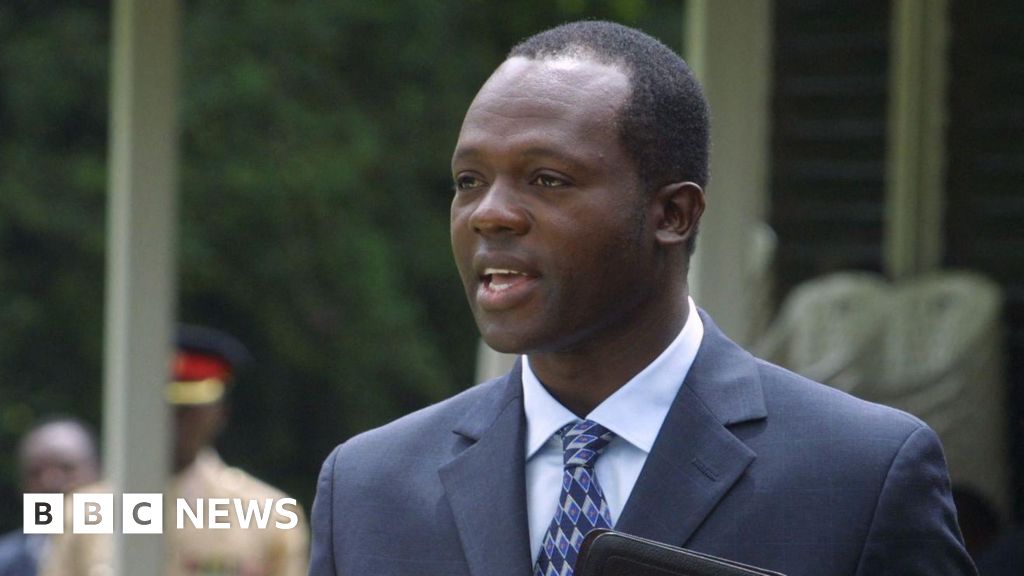
Kenyan ex-foreign minister returns after kidnapping scare, proving resilience

The recent reports surrounding Raphael Tuju, a prominent political figure, have sent shockwaves across both Kenya and the broader East African region. The mysterious disappearance of Tuju has sparked international concern, especially amid allegations that he may have been forcibly abducted. Such incidents extend beyond individual cases, illuminating the fragile state of security and political stability in a region often caught between internal strife and external influences.

This incident underscores the importance of rule of law and state sovereignty at a time when regional alliances and international organizations are grappling with the shifting landscape of influence. Analysts warn that the abduction claims could be a symptom of deeper political tensions, aimed at silencing dissent or intimidating emerging leaders challenging entrenched power structures. Such tactics threaten to undermine democratic processes and diminish public trust in government institutions, with potential repercussions that ripple far beyond Kenya.

Experts such as geopolitical scholars and organizations like the United Nations have long observed that instability within key nations often serves as a catalyst for broader regional upheaval. The disappearance of a political figure is not merely an isolated incident but is emblematic of a larger pattern of uncertainty and suppression that could destabilize neighboring countries. Historically, such acts have proven to be turning points—heralding periods of intensified unrest and international interventions—that reshape the geopolitical map of entire regions.

  • The incident has prompted calls for thorough investigations from human rights groups and regional leaders alike.
  • It raises pressing questions about respect for human rights and the limits of state authority amidst rising political tensions.
  • International actors worry that unresolved cases like this may embolden factions that reject democratic norms and promote authoritarianism.

As the world watches, the global community must recognize that the fate of individuals like Raphael Tuju is intertwined with the sovereignty and stability of nations. The decisions made in these critical moments will influence the future of governance, societal resilience, and regional security for years to come. With each passing day, history writes itself anew—its narrative shaped by actions taken, alliances forged, and the persistent pursuit of justice in the face of mounting adversity. The question remains: will international cooperation rise to safeguard the rights and dignity inherently owed to all, or will this be another chapter of silence and strategic silence amid the chaos of geopolitical realignment?

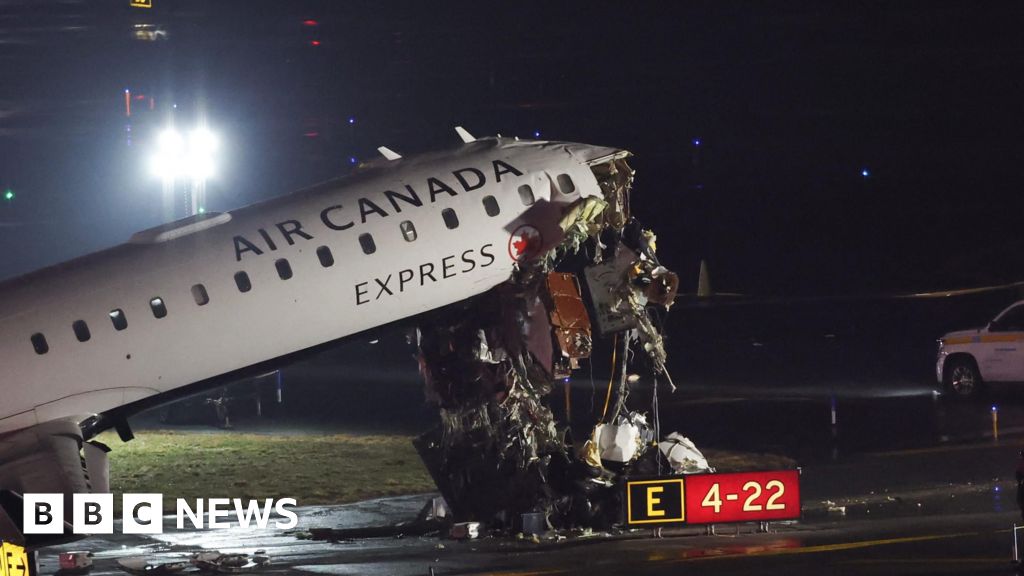
Two Pilots Killed in Crash Between Plane and Vehicle at LaGuardia

In a distressing incident that has captured global attention, a commercial aircraft arriving from Montreal was involved in a collision with a firefighting vehicle responding to an unrelated emergency. The crash unfolded amidst a complex web of international tensions, safety concerns, and the delicate balance of civil and emergency aviation operations. While initial reports indicate no fatalities, the incident has reignited debates over aviation security standards, emergency response protocols, and the geopolitical ramifications of such accidents.

Preliminary investigations suggest that the collision may have resulted from a lapse in communication or coordination between the aircraft’s pilots and ground emergency services. This event is not isolated but part of a broader narrative concerning the integrity of transportation infrastructure in volatile geopolitical climates. As international organizations and aviation safety agencies scrutinize the circumstances, analysts are drawing parallels to recent international incidents where safety mishaps have compounded regional tensions.

The geopolitical impact of this accident extends beyond the immediate safety concerns. Experts believe it underscores the importance of ensuring robust safety protocols amidst an increasingly turbulent geopolitical landscape. The incident has served as a reminder of how fragile our international safety nets are, especially when considering the heightened military and civilian tensions in many regions. States like Russia, China, and the United States have all faced criticism for their handling of aviation and emergency response systems, often accused of prioritizing strategic interests over safety and transparency.

International observers, including respected historians and geopolitical analysts, emphasize that such incidents often act as flashpoints that reveal deeper systemic vulnerabilities. While investigations proceed, there is a consensus that this event could have wider implications for international aviation treaties and cooperation. It serves as a stark warning that even in peacetime, the misalignment of safety protocols and emergency coordination can escalate tensions and undermine trust among nations. As the world watches, the decision-makers face the pressing challenge of addressing these vulnerabilities. The ongoing pursuit of enhanced safety standards must be balanced against geopolitical interests, a task more complex now than ever before.

As the dust begins to settle on this tragic mishap, the overarching narrative remains gravely unresolved. The incident is a stark reminder that in an interconnected world, a single collision—whether on land, sea, or sky—can reverberate through global power structures and societal perceptions. The weight of history presses heavy, urging nations to learn from this event and forge a future where safety is paramount, and catastrophic errors are relegated to history’s past. Yet, the shadow of unresolved tensions and future conflicts looms large, whispering that the unfolding chapter of history still holds many dark and uncertain pages.

SEC Ends Four-Year Probe into Faraday Future, Clearing the Way for Innovation

SEC Investigation Closure Sparks Industry Disruption and Highlights Innovation Challenges in Electric Vehicle Sector

In a significant turn of events for the electric vehicle (EV) industry, the U.S. Securities and Exchange Commission (SEC) has officially closed its nearly four-year investigation into Faraday Future. This closure, despite initial recommendations for enforcement actions last year, underscores the complex regulatory landscape confronting pioneering EV startups attempting to disrupt traditional automotive giants. The investigation uncovered allegations of misleading statements during the company’s 2021 SPAC merger and questioned the authenticity of its first vehicle sales, highlighting the perils of rapid innovation in a heavily scrutinized market.

This development marks a pivotal moment where disruption meets regulatory oversight. The SEC’s decision to dismiss charges, at a time when enforcement actions have notably declined—with only four cases initiated against public firms in fiscal 2025—signals a possible shift in how emerging EV players navigate compliance and investor transparency. Industry analysts, including those from Gartner and MIT’s autonomous vehicle research team, warn that the margins of error are narrowing, and the ability to maintain governance integrity will increasingly determine long-term viability. The closure signals that regulatory bodies might be recalibrating their stance, potentially offering a window for innovative companies to right course without facing drastic penalties.

Business Implications and Market Shifts

The strategic implications of this closure are profound. Faraday Future’s attempt to revitalize its brand by pivoting into cost-effective hybrid and electric commercial vehicles, as well as diversifying into robotics and crypto-focused investments, reflect a broader industry trend where EV startups diversify to sustain innovation momentum amidst regulatory and financial hurdles. Yet, these efforts seem insufficient to escape the ongoing financial and reputational turbulence. Market shifts are evident: the company’s stock remains under threat of delisting from Nasdaq, threatening investor confidence and market capitalization.

  • Acceleration of innovation through diversification into robotics and biotech, driven by the need to stay competitive
  • Increased importance of transparency and governance amid regulatory scrutiny
  • Potential for regulatory leniency fostering a more aggressive push into EV tech disruption

As research from industry giants suggests, disruptive innovations in EV technology continue to contest market share against legacy automakers. Yet, the regulatory landscape presents a significant hurdle; companies are now navigating a complex web of compliance that can make or break their disruptive potential. Experts such as Peter Thiel have long emphasized that foundational integrity is crucial for startups aiming to challenge incumbents. The recent SEC case resolution exemplifies a delicate balancing act between fostering innovation and ensuring investor protection.

Looking Ahead: A High-Stakes Race for Innovation and Credibility

The industry remains at a crossroads. As industry leaders like Elon Musk continue to push advancements in autonomous tech and clean energy integrations, the window for disruptive startups lies in rapid innovation coupled with transparency and resilient governance. The SEC’s recent softening may embolden companies to accelerate their technological pursuits, but the looming threat of regulatory action necessitates a careful, strategic approach.

In conclusion, the end of the SEC investigation into Faraday Future does not mark the end of regulatory challenges faced by EV innovators; rather, it signals that the era of unrestrained disruption requires more sophisticated compliance frameworks. As America’s EV landscape evolves, the urgency to innovate boldly—while maintaining accountability—has never been greater. The future belongs to those who can combine **cutting-edge technology, strategic agility, and regulatory literacy**, ensuring their place in the high-stakes race to redefine mobility in the 21st century.

Social Media Auto Publish Powered By : XYZScripts.com