
Matox News

Truth Over Trends, always!

Minister hints at support package as energy prices expected to climb in July—UK Politics Update

As the 21st century unfolds, geopolitical landscapes are rapidly transforming, driven by pivotal decisions that redefine alliances, influence societies, and shift global power dynamics. Recent developments highlight an international stage where traditional alignments are being challenged, and emerging powers are asserting new claims—most notably through strategic energy policies and diplomatic realignments. The significance of these shifts is not only in their immediate geopolitical impact but also in how they resonate across economies and societies, setting the stage for future conflicts and cooperation.

One of the most striking indicators of this transformation is the ongoing energy policy debate that echoes across Western and Eastern nations alike. The recent forecast by Cornwall Insight predicts an 18% rise in the energy price cap for UK households in July, indicating a looming escalation in domestic energy costs. This increase—anticipated to reach £1,929—comes amidst growing tensions over energy security and resource dependence. As analyst Craig Lowrey underscores, “how high prices go remains uncertain,” but the timing provides a temporary relief, given the reduction of demand during summer. Yet, the very debate reveals deeper geopolitical undercurrents, where control over energy supplies and access to resources are at the core of national security strategies, especially as regional conflicts threaten supply lines and increase volatility.

Alongside energy conflicts, diplomatic measures are reshaping international alliances. The UK’s decision to review its internal security policies, such as instructing police to cease recording non-crime hate incidents, illustrates a broader trend of governments recalibrating their social policies amid geopolitical pressures. The move, justified by the Home Office as a means to streamline police focus, sparks a debate about balancing societal cohesion with security interests. Empowered by recent reviews from Police Chiefs and policy analysts, this shift could influence how societies respond to internal threats, possibly reflecting a broader move by states to prioritize domestic security over social liberalization—an approach that aligns with a global pattern of assertive national sovereignty.

Priority shifts extend to the internal political arena as well. Keir Starmer chairs a Cobra emergency committee amid escalating tensions over the Iran war. Simultaneously, the Labour leader confronts a critical strike threat from resident doctors, with Prime Minister Rishi Sunak threatening to withdraw NHS training offers within a tight 48-hour window. Such domestic challenges underscore the intertwined nature of global and national crises, where foreign conflicts and economic stability directly impact social cohesion, workforce morale, and public trust. Experts warn that these decisions—particularly in healthcare and national security—can have long-term consequences, influencing societal attitudes and the stability of policy frameworks.

Global repercussions ripple through these domestic and diplomatic shifts, shaping a new international order where cooperation is often overshadowed by strategic competition. International organizations voice concern over the unpredictable energy market and the mounting internal tensions within and between nations. Historians like **Paul Kennedy** highlight that “the current era resembles past moments when resource scarcities and strategic rivalries precipitated prolonged conflicts.” As nations navigate a complex web of alliances, disputes, and internal challenges, the balance of power remains fragile. The unfolding narrative suggests that the decisions taken today—be it energy policies, security reforms, or diplomatic engagements—will not only determine geopolitical trajectories but also define the societal fabric of future generations.

In the shadow of these profound shifts, the world teeters on a precipice where the weight of history presses down. Every treaty, policy amendment, and diplomatic handshake becomes a chapter in a larger story—one of resilience, rivalry, and the persistent pursuit of national sovereignty amidst a volatile tapestry of global change. As history continues to be written, the question remains: which nations will emerge as the true architects of the future, and which will become mere footnotes in the ongoing saga of international power?
Next Gen Stars Shine as High School Championships Ignite Competition

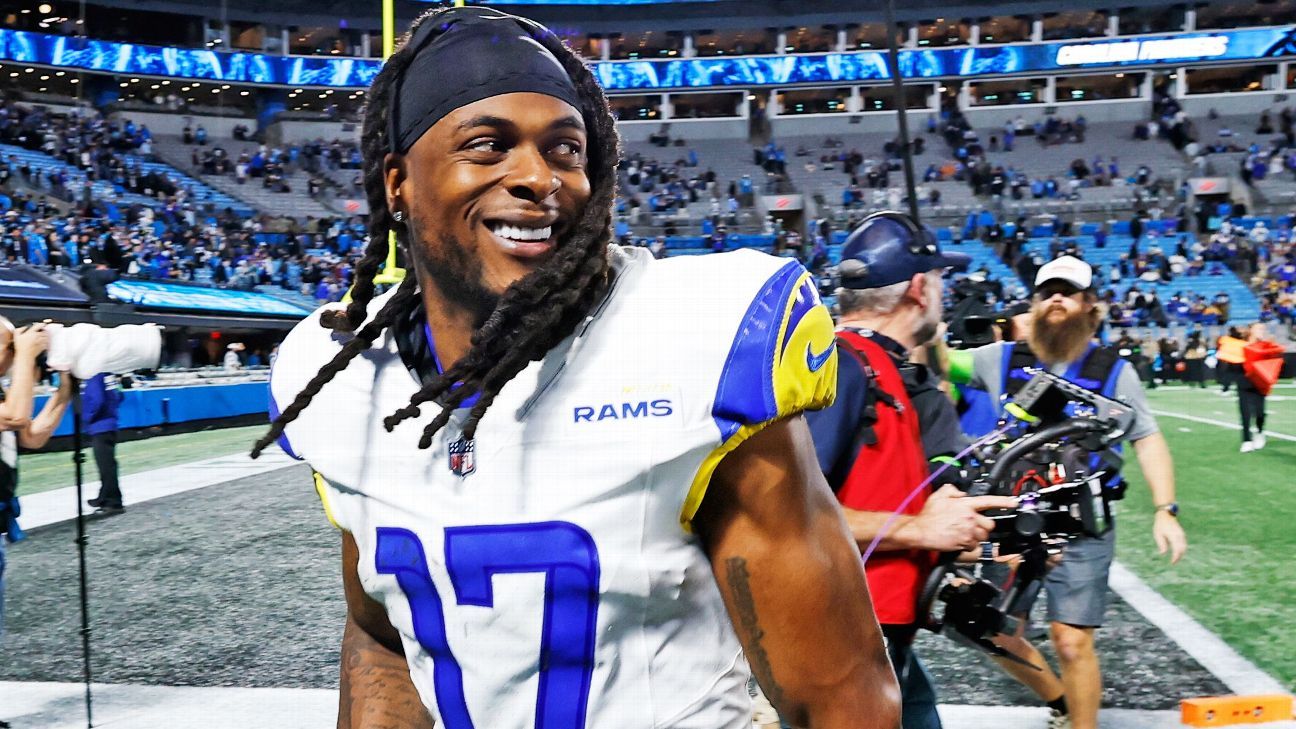
Rams’ McVay Reveals Trade Discussions Surrounding Adams

In a candid press conference, Los Angeles Rams head coach Sean McVay opened up about the team’s recent internal discussions regarding the potential trade of star wide receiver Davante Adams. Despite some consideration, McVay ultimately determined that trading Adams was not in the best interest of the franchise. This decision reflects the Rams’ commitment to retaining key players while building a competitive team in the NFC West.

The Rams have been active in the offseason, looking for ways to bolster their roster. McVay acknowledged, “We explored all possible avenues, including trades, but in the end, we believe keeping Davante is essential for our success.” This sentiment underscores the value that Adams brings not just as a receiver, but as a leader in the locker room. His experience and playmaking ability are seen as critical components for the Rams’ offensive strategy moving forward.

Adams, widely regarded as one of the top receivers in the league, has made a significant impact on the field since joining the Rams. In the most recent season, he achieved impressive statistics that only bolstered coach McVay’s confidence. His performance included:

  • 1,050 receiving yards
  • 13 touchdown receptions
  • 85 receptions

These numbers highlight not only his individual talent but also his ability to elevate the entire team. As the Rams aim for a deeper playoff run this year, keeping Adams in the fold serves to enhance their ambitions.

As the season progresses, fans can expect McVay and his coaching staff to continue making strategic decisions that prioritize long-term success over short-term gains. With unity at the core of their mission, the team’s focus on collaboration and shared goals is evident. In a world often divided, sports remain a remarkable medium that fosters camaraderie and togetherness among fans and players alike. The Rams, under McVay’s guidance, represent not just a successful franchise, but a vibrant community where triumphs are shared and celebrated, transcending the confines of the scoreboard.

Source link

Congressman urges King Charles to meet Epstein victims during US trip

As international attention shifts toward the evolving diplomatic landscape, reports suggest that King Charles III and Queen Camilla are planning a historic visit to the United States at the end of April. Though this trip remains unconfirmed officially, the implications of such a move could be profound, signaling a recalibration of the UK’s diplomatic priorities amidst a shifting global order. Historically, visits by monarchical figures have served as symbols of alliance and diplomacy, but in today’s geopolitical climate, they carry even greater weight as indicators of national intent and alliance strength.

This prospective visit comes at a time when international relations are fraught with tension, especially concerning the rising assertiveness of China and the ongoing conflicts in Eastern Europe. Analysts at the International Institute for Strategic Studies emphasize that such a diplomatic gesture could serve to bolster transatlantic ties faced with shared challenges. Traditionally, the United Kingdom has maintained close ties with the United States, and a royal visit could deepen this alliance, fostering unity at a time when global stability hangs in the balance.

Critics and supporters alike debate the geopolitical impact of this potential journey. Some analysts argue that the symbolism of a royal visit underscores the UK’s desire to remain relevant in the current international arena, especially as the monarchy continues to symbolize continuity and tradition amid rapid political change elsewhere. Others warn that such visits could be perceived as out of touch or unnecessary amid domestic challenges facing the UK, including economic uncertainties and political unrest.

  • Reports point to this visit as a potential attempt to revive and strengthen cultural and diplomatic ties post-Brexit, signaling a message of unwavering allegiance to the Atlantic alliance.
  • U.S. officials and lawmakers are reportedly preparing for the reception, viewing the engagement as a strategic gesture amidst ongoing global confrontation with authoritarian regimes.
  • Historical perspectives, from diplomatic scholars like Niall Ferguson, highlight that royal visits have historically served as pivotal moments in reinforcing alliances, but also as opportunities for soft power wielded on the international stage.

How these decisions ripple across nations and societies will be under scrutiny in the coming weeks. The UK and US, long-standing allies, now find their relationship tested and defined anew in this uncertain era. As the world watches with bated breath, the unlikely footprints of a royal delegation in the United States may yet mark a turning point—either as a symbol of enduring tradition or a harbinger of shifting alliances. The pages of history are turning, and the weight of what is yet to come remains uncertain, waiting to be written in the chronicles of the 21st century.

University Jobs Under Threat as Strike Vote Looms—Time to Stand Up

Impacts of University Funding Cuts on Society and Communities

The University and College Union has recently raised concerns over proposed funding cuts that threaten to weaken the foundational appeal of higher education institutions. These reductions, rooted in broader economic austerity measures, threaten to undermine not only the quality of academic offerings but also the social fabric that university communities foster. As universities serve as gateways for diverse demographic groups and catalysts for social mobility, such cuts pose a risk of deepening existing social disparities and fragmenting the fabric of our communities.

At the heart of the debate lie the repercussions for families, students, and educators. When funding diminishes, universities often resort to increased tuition fees, reduced course offerings, and cutbacks on essential student services. This cascade of austerity impacts families who may already grapple with economic hardships, placing higher education beyond their reach and fueling a cycle of marginalization. The social commentator Dr. Maria Lopez emphasizes that maintaining equitable access to education is crucial—not merely as an economic investment but as a moral imperative for societal cohesion. The erosion of educational quality and accessibility, she argues, threatens to create a generation divided along economic lines, weakening the social alliances that hold communities together.

Historians and sociologists note that universities have historically functioned as microcosms of societal diversity, fostering cross-cultural dialogue and social integration. Demographic shifts, driven by immigration and generational change, have enriched campus life, promoting inclusivity and mutual understanding. However, budget constraints threaten these social gains, risking a return to an era where access to higher education was a privilege reserved for the few. The social inequities exacerbated by such policies can ripple outward, trapping families in cycles of poverty and exclusion, thereby impeding societal progress at large. The potential decline in university appeal could deepen regional disparities and diminish the economic vitality of neighboring communities that rely on student populations and academic institutions as engines of growth.

  • Reduced funding may lead to layoffs for academic and support staff, weakening the campus environment and diminishing student support systems.
  • Financial barriers could discourage talented students from underprivileged backgrounds from pursuing higher education, creating a less diverse and dynamic society.
  • The decline in university programs and research initiatives could hamper innovation, with broad implications for societal advancement.

Solutions to this pressing challenge involve both political will and societal action. Advocates call for alternative funding models that prioritize public investment in education as a national priority. Community-led initiatives, public-private partnerships, and targeted grants could help sustain essential services and maintain the diverse, inclusive environments that universities are meant to be. As the sociologist Prof. Alan Mitchell notes, fostering resilient educational ecosystems is vital for nurturing the next generation of leaders capable of addressing complex social issues.

Ultimately, the societal fabric is woven from the aspirations, struggles, and successes of its communities. As families, educators, and students stand at a crossroads, the challenge is clear: preserve the cornerstone institutions that serve as beacons of opportunity. If society can muster the collective will to invest in educational equity and social cohesion, there remains hope—hope that future generations will inherit a society where knowledge is a bridge, not a barrier, and where hope persists amid ongoing struggle. For in the end, societal transformation begins not with grand gestures but with the quiet resolve to nurture the roots of community—roots that can withstand the storms of austerity and emerge stronger, more united, and more just.

Meet the Artemis II Crew: America’s Young Trailblazers to the Moon

Across the globe, the stories of accomplished **pilots, engineers, and scientists** are often overshadowed by the larger political and economic currents that shape our world. Yet, their sacrifices—whether it be personal family ties or the relentless pursuit of knowledge—highlight a universal truth: human achievement is inseparable from the geopolitical environment in which it unfolds. As these professionals reveal their hopes and fears, a pattern emerges, illustrating how individual stories are deeply intertwined with larger national and international narratives.

Recent disclosures by aerospace crews and scientific teams underscore the tension between progress and peril. These experts, often on the front lines of space exploration or technological innovation, frequently express a dual optimism and trepidation. Their hopes rest on breakthroughs that promise to elevate humanity, but fears linger—fears rooted in political instability or the threat of conflict. Historically, nations that lead in scientific and technological advancements—such as **the United States**, **Russia**, and **China**—have used these achievements as leverage in geopolitical struggles. Analyzing these patterns, scholars argue that the international competition for dominance in space and high-tech warfare is intensifying, with profound consequences for global security.

Analyzing the current geopolitical landscape, it becomes evident that critical alliances, treaties, and rivalries are dictating the pace and direction of human progress. The recent revocation of international treaties, such as those restricting nuclear proliferation and space militarization, signals a dangerous shift. The International Crisis Group warns that such decisions could usher in a new arms race, destabilizing regions and threatening global peace. Meanwhile, nations are increasingly viewing technological supremacy as a core component of national sovereignty and security. These developments affect societies not only on a strategic level but also in the daily realities of families sacrificed at the altar of geopolitical ambitions.

Experts like futurists and historians emphasize that how nations navigate these turbulent waters will determine the future of international relations. The sacrifices of skilled professionals—who risk everything to pursue discovery—are emblematic of broader societal commitments. As Tony Judt, a renowned historian, observed, “History is not merely about the actions of states, but also about how these actions echo through the lives of individuals.” Today, their hopes for a better future are shadowed by the looming threat of conflict, yet also serve as a testament to human resilience and the enduring desire to push beyond known frontiers.

As the world stands at a crossroads, shoulder to shoulder with ambition and uncertainty, the stories of courageous pilots, engineers, and scientists are more than personal accounts—they are the living essence of a relentless pursuit that shapes history. In the silent sky and among the starry void, the flicker of hope persists—yet the weight of decision-makers’ choices continues to unfold, leaving a narrative that is as unpredictable as it is profound. The future remains unwritten, and in these uncertain days, the echoes of sacrifice and aspiration resonate with the solemnity of history yet to be made.

Fact-Check: Viral claim about health breakthrough rated false

Investigating the Reality of Noncitizen Voting and Federal Identity Verification Tools

Claims by political figures such as Senator Mike Lee that there are “at least tens of thousands, probably hundreds of thousands” of noncitizens illegally registered to vote in the United States have stirred considerable debate. These assertions are primarily centered around the use of federal tools like the Systematic Alien Verification for Entitlements (SAVE) program, which reportedly flags potential noncitizens on voter rolls. However, an in-depth review of evidence from multiple sources suggests that the actual occurrence of noncitizen voting is exceedingly rare, and the tools used to detect such instances are fraught with inaccuracies and misinterpretations.

The New York Times, citing federal officials, reports that roughly 10,000 potential noncitizens were flagged out of approximately 49 million voter registrations checked across nearly two dozen states over the last year. Importantly, election officials found that a significant portion of these flagged names were, in fact, U.S. citizens. These misidentifications often resulted from data mismatches, outdated records, or unintentional errors by voters or election staff. For example, in Utah, a comprehensive citizenship review concluded that only a handful—less than 1,000—of 2 million registered voters could not be verified as citizens, and none had been found to vote illegally. Similarly, Texas’s initial assessment identified fewer than 3,000 potential noncitizens among over 18 million voters, but subsequent investigations revealed many of these were legitimate citizens.

Experts from the Brennan Center for Justice and Center for Election Innovation & Research have consistently highlighted the high rates of false positives associated with the SAVE program. Jasleen Singh, a senior counsel at the Brennan Center, emphasizes that “noncitizen voting is vanishingly rare”, and that the data flaws inherent in the system mean that many flagged individuals are actually eligible voters. Investigations show that a substantial percentage of flagged names are attributable to clerical errors, misunderstandings of registration questions, or outdated information—errors that lead to misplaced concerns about widespread fraud and border on the misleading. Moreover, as the Heritage Foundation has pointed out, prosecutions for noncitizens voting unlawfully are extremely uncommon, with fewer than 100 convictions reported since 1982, further undermining claims of systemic illegality.

Opponents argue that the push for the Save America Act—which would mandate all states to participate in federal identity verification—is based on overinflated claims and flawed data. In Utah, the state’s top election official reported that a rigorous review of their voter rolls, which included cross-referencing with the SAVE database, identified only one noncitizen who did not vote. Critics like Utah’s Lt. Gov. Deidre Henderson warn that the law could impose immediate burdens on election infrastructure and disenfranchise lawful voters, especially given the inaccuracies associated with the database used. Similar issues have surfaced in Texas, Louisiana, and Missouri, where initial flags of noncitizens were proven false upon detailed review, often revealing clerical mistakes or voter misunderstandings as the root causes.

Given these findings, it becomes clear that sensational claims of hundreds of thousands of illegal noncitizen voters are not supported by the available evidence. The data indicates that noncitizen voting is an extraordinarily rare event, and existing verification tools, including the SAVE program, require significant improvements to yield reliable results. Protecting the integrity of elections is fundamental to a vibrant democracy; however, doing so responsibly demands reliance on factual, thoroughly verified information. As investigations continue and the data is scrutinized, the truth underscores the fact that the risk of widespread noncitizen voting is virtually nonexistent, and policies based on misinformation threaten to undermine confidence, voter trust, and the democratic process itself.

Town reeling and relieved after intense seven-month manhunt for Dezi Freeman

In recent months, the quiet town of Porepunkah has unexpectedly returned to international headlines, not for its scenic landscapes or rural charm, but for a tragic act of violence that has captured the attention of governments and analysts worldwide. Last year, Dezi Freeman carried out a lethal attack, shooting dead two police officers—a development that has since stirred debates on security, mental health, and the fragile fabric of societal security in rural communities. This incident, though localized, resonates far beyond its borders, shedding light on the complex intersections of law enforcement, societal stability, and national security in an increasingly volatile global landscape.

The attack in Porepunkah served as a stark reminder to international institutions and regional security agencies of the ever-present risk of domestic extremism and unpredictable violence. While initial investigations and media coverage focused on the personal motives of Freeman, analysts pointed to a broader context of rising unrest and social fragmentation. Experts from organizations such as INTERPOL and regional security think tanks emphasized a need for enhanced vigilance, warning that such isolated acts of violence can act as catalysts, inciting fears of broader instability—especially in nations with similar rural communities facing economic decline or social shifts. How nations respond to these localized crises can alter the trajectory of internal security policies and international cooperation, impacting global stability.

From a geopolitical perspective, the incident underscores the importance of preventive measures and cross-border intelligence sharing. Countries like the United States, Canada, and European nations observe Australia’s internal security measures closely, recognizing that the ripple effects of domestic violence in one nation can influence diplomatic relations and security alliances. As historians and security analysts warn, the escalation of isolated but violent incidents threatens to undermine the perceived safety and sovereignty of nations, forcing governments into reactive, rather than proactive, security stances. This phenomenon emphasizes the critical importance of adapting law enforcement to evolving threats, especially those rooted in societal despair or ideological extremism, which can spill over and destabilize regional peace.

Ultimately, the Porepunkah tragedy functions as a dark chapter in the ongoing story of global insecurity—emphasizing that history is constantly being written in the trenches of local communities. As international observers watch, they understand that these events serve as both a warning and a call to action. Decisions made in the aftermath—how societies confront mental health crises, reform law enforcement frameworks, and foster social cohesion—will shape the coming decades. With every bullet fired and lives lost, the weight of history presses down, reminding us that the true test of stability lies in how nations learn from darkness and strive to forge a resilient future. In a world teetering on the brink, the lessons of Porepunkah continue to echo—an almost prophetic reminder that, in the grand tapestry of international security, each thread is vital.

Top Streaming Stick on Amazon Drops Near 50%—Don’t Miss Out!

Major Leap Forward: Fire TV Stick 4K Max Redefines Streaming Hardware

In an era where technology disruption and innovation are reshaping entire industries, Amazon continues to push the boundaries of consumer electronics with its latest Fire TV Stick 4K Max (2nd Generation). As streaming platforms diversify and consumer demands evolve, this device exemplifies how strategic enhancements can create a dominant position in the competitive landscape. Featuring a significant upgrade from its predecessor, the device now boasts 16 GB of storage—doubling the previous capacity—allowing users to retain more apps comfortably, a move that directly caters to the tech-savvy, on-demand generation.

One of the most compelling aspects of the Fire TV Stick 4K Max is its seamless integration of innovation in connectivity and content delivery. Equipped with Wi-Fi 6E support, the device delivers higher download speeds and streaming at elevated quality levels, reducing buffering and latency—an essential advantage for high-resolution content and gaming via cloud services like Xbox Game Pass. Analysts from Gartner highlight that these technological strides are not merely features but represent a paradigm shift in how consumer devices handle data-intensive applications, establishing a new benchmark for competitors. The device’s compatibility with leading streaming services, including Prime Video, Netflix, Disney+, and HBO Max, underscores its versatility and strategic positioning within a burgeoning ecosystem of digital entertainment.

Disruption and Business Implications

The disruption induced by Amazon’s latest streaming device extends beyond consumer convenience, challenging the very business models of traditional cable providers and legacy hardware manufacturers. By leveraging cloud streaming capabilities and advancements in Wi-Fi technology, market incumbents faced with declining cable subscriptions are compelled to reconsider their strategies. The Fire TV Stick 4K Max exemplifies how disruptive hardware paired with evolving software can erode longstanding income streams for cable firms while providing consumers with flexible, cost-effective alternatives.

  • Market Shift: Emphasis on portable, high-performance streaming sticks versus expensive set-top boxes.
  • Revenue Diversification: Amazon’s move encourages app developers and content providers to optimize for cloud-first devices, further consolidating its market dominance.
  • Consumer Power: The affordability (now down to $35 during promotional sales) democratizes high-quality streaming, further accelerating industry disruption.

Industry analysts, including experts from MIT’s Media Lab, suggest that these hardware innovations are making “ubiquitous, personalized entertainment accessible,” leading to a redefinition of consumer engagement and monetization strategies. This, coupled with Amazon’s integration of its Alexa ecosystem—enhancing voice controls and smart home connectivity—creates a compelling holistic user experience. Such integration signals a broader shift, with voice assistants evolving from simple tools to central hubs in the tech landscape, displacing traditional interfaces.

Future Outlook: Urgency in Innovation

The landscape of digital entertainment is entering a phase of unparalleled velocity and transformation. Companies failing to innovate risk obsolescence as the market favors integrated, cloud-oriented, high-performance devices. Companies like Google and Apple are undoubtedly ramping up their competitive responses, while industry watchers like Peter Thiel emphasize the importance of rampant innovation and game-changing disruption in the coming decade. The Fire TV Stick 4K Max is not just a product; it is a clarion call for brands to prioritize technological agility or face declining relevance.

In conclusion, Amazon’s latest offering embodies the broader trend: disruptive innovation integrated with strategic business models that threaten legacy paradigms and empower consumers. As the race for digital entertainment dominance accelerates, those who harness the power of hardware, cloud infrastructure, and seamless user ecosystems will shape the future. For industry incumbents and newcomers alike, time is of the essence—those who act quickly and innovatively will lead the next wave of disruption in a transforming digital era.

Today’s Hurdle Tips & Tricks: Your Ultimate Guide for March 31, 2026

In recent years, word puzzles like Hurdle and Wordle have morphed from casual pastime hobbies into a cultural phenomenon that speaks volumes about a shifting social landscape. These games, often simple in design yet richly layered in strategy, are captivating a new generation eager for short, engaging mental challenges. Their social relevance extends far beyond individual satisfaction—they are becoming emblematic of a collective craving for accessible yet stimulating entertainment amidst an increasingly digital age. Influencers and analysts now see these puzzles not merely as games but as reflections of society’s desire for connection, mental agility, and purpose. As TikTok and Instagram flood with puzzle challenges, it’s clear that this trend is redefining how youth engage with their leisure time, making cognitive fitness trendy and culturally significant.

At the heart of this movement are games like Hurdle, which features five interactive rounds where players guess words based on hints and previous clues. With clever mechanics—such as guessing the same answer from previous rounds to build on prior knowledge—these puzzles promote a sense of mastery and progression that appeals profoundly to young users craving instant feedback and achievement. Interestingly, the social fabric woven into these games is reinforced by a culture of sharing breakthroughs, hints, and strategies online. Influential accounts on platforms like TikTok and YouTube are now dedicating content to dissecting solutions, turning casual players into interactive communities. This dynamic transforms individual gaming into a collective experience, empowering youth to engage with puzzles as a form of social currency and identity.

This trend’s cultural impact extends beyond entertainment. It taps into a broader societal shift—the desire for quick mental stimulation in a world full of information overload. As psychologist Dr. Laura Stevens points out, these puzzles foster skills like pattern recognition, problem-solving, and resilience. They also serve as an accessible form of mental exercise that breaks down barriers of age or skill level. Notably, brands and media outlets have jumped in, offering daily hints, answer guides, and dedicated apps, making these puzzles a daily ritual for many. For example, the recent success of games like Mahjong, Sudoku, and crossword puzzles on Mashable’s platform exemplifies this trend’s mainstream embrace. The symbols and strategies behind these puzzles are subtly shaping the cultural narrative—one that values quick thinking, resilience, and shared experiences.

As the puzzle craze continues to grow, the next big question emerges: what does this say about future societal values? Are we heading toward a generation that prioritizes mental agility and communal problem-solving as core aspects of identity? Could this trend influence educational systems or workplace culture, favoring skills like adaptability and quick wit? Or might it evolve into a new form of social activism—using puzzles to unite communities around solutions to larger societal issues? The fun, engaging surface of games like Hurdle conceals a deeper narrative—one about how entertainment shapes our worldview and social bonds in the digital age. The answer, undoubtedly, is still unfolding, and in the world of youth culture and innovation, that’s what makes this puzzle so compelling.

Australia’s Hottest Double-Dairy Ice Cream Takes TikTok by Storm — But Does It Really Live Up to the Hype?

In a world where social media continues to redefine our culinary landscape, a new trend has taken hold—over-the-top food creations that prioritize visual appeal and shareability over traditional flavor profiles. Among these, butter-dipped soft serve has emerged as a fascinating, if controversial, example of this culinary shift. Originally inspired by creations from renowned New York chef Dominique Ansel—most famous for his viral cronut—the butter-soft serve is now making waves at events like the Sydney Royal Easter Show. Crafted with a rich butter infusion, this decadent treat symbolizes the cultural obsession with _aesthetic_ perfection and the thrill of capturing the “next big thing” in food.

On the surface, this trend is about more than just taste; it reflects a broader societal desire for visual stimulation in every aspect of life, including what we eat. As Vincent Yeow Lim, ambassador of the Easter Show’s Winning Bite food section, explains, “We have to eat with our eyeballs first.” This emphasis on presentation has propelled vendors to push the boundaries of conventional cuisine—creating visual spectacles designed to entice social media users and generate viral buzz. From soft serves with pale yellow shells to toppings dripping in butter, the spectacle becomes the star. Food creators like Dominique Ansel have demonstrated their knack for trendsetting, with innovations like the cronut and now, the butter soft serve—each serving as a testament to culinary creativity in the age of influencer-driven culture.

But as these trends gain popularity, questions about health implications inevitably surface. Nutrition experts such as dietician Danielle Shine note that a single serving of this butter-laden treat can contain roughly 10 to 17 grams of saturated fat—significantly more than the two to three grams found in a typical soft serve. Health guidelines, including those from Australia’s Healthdirect, recommend limiting saturated fat intake to less than 10% of daily calories, or about 20–25 grams for most adults. While this indulgence might bring moments of joy and inspiration, especially when shared with friends or captured for social media, it also serves as a reminder that moderation remains essential. The thrill of the visual experience and the immediate gratification of indulgence often overshadow the long-term health considerations—highlighting an ongoing societal balance between pleasure and well-being.

Ultimately, the rise of these sensational food trends invites us to reflect on our relationship with food and lifestyle. As social media continues to shape our habits and expectations, they challenge us to seek beauty, creativity, and inspiration not only in what we eat but in how we live. This journey, marked by moments of indulgence and mindfulness, encourages us to embrace a lifestyle that celebrates innovation while respecting our health. After all, life is a collection of fleeting experiences—best savored with balance, perspective, and a sense of wonder. As we navigate this evolving culinary landscape, we are reminded that the true flavor of life lies in the pursuit of harmony between enjoyment and wellness, a lesson as nourishing as it is inspiring.

Social Media Auto Publish Powered By : XYZScripts.com