Matox News

Truth Over Trends, always!

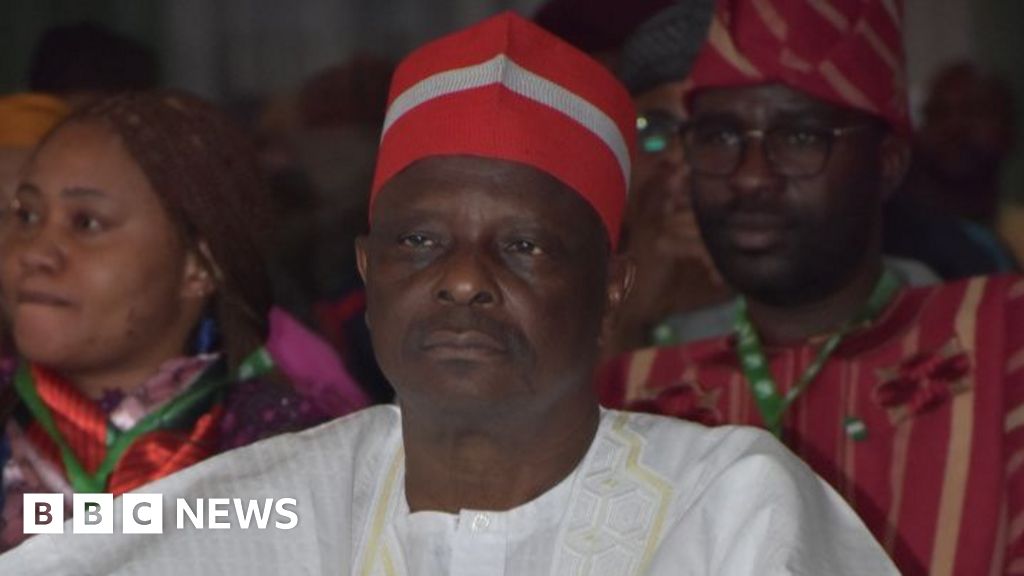
Nigerian President’s Opponents Score Big Win as Top Politician Joins Their Side

In a move that signals a significant shift in Nigeria’s complex political landscape, Rabiu Kwankwaso, a prominent figure in Nigerian politics and former governor of Kano State, has formally joined the African Democratic Congress (ADC). This decision aligns him with a coalition that aims to challenge the current administration of President Tinubu in the upcoming 2027 elections. As Nigeria’s political divides deepen amidst economic challenges and regional tensions, Kwankwaso’s move underscores a strategic effort to redefine the balance of power and influence within West Africa’s largest nation.

Heralded by analysts as a deliberate attempt to forge a formidable opposition front, Kwankwaso’s entry into the ADC is viewed as a bid to capitalize on widespread public sentiment demanding change. The coalition expects to galvanize support across Nigeria’s diverse ethnic and regional groups, leveraging Kwankwaso’s popularity in the North and his track record on infrastructure development. Such a consolidation of opposition figures and parties could have a *pivotal* impact on Nigeria’s electoral landscape. According to international political observers, this shift could trigger a recalibration of regional alliances, particularly as ethnic loyalties continue to color political alignments in Nigeria.

The geopolitical impact extends beyond Nigeria’s borders, with neighboring countries closely monitoring the unfolding power dynamics. Analysts from the African Union and global institutions warn about the broader implications of a fractured Nigerian political scene, emphasizing that instability in Abuja could ripple across West Africa, further destabilizing already fragile regional economies. Historically, Nigerian elections have served as a barometer for regional stability, given the country’s role as West Africa’s economic and political powerhouse. The new alliance signals a potential shift that could challenge President Tinubu’s plans to cement his legacy, while also reshaping alliances within Nigeria’s complex electoral arithmetic.

As the nation braces for a contentious electoral cycle, many experts highlight the importance of sound political governance and the influence of diaspora communities in shaping the outcome. The decision by Kwankwaso to abandon previous political alignments and join forces with the ADC underscores an *urgent* desire among opposition factions to unify against entrenched incumbency. Historians note that Nigeria’s history is replete with moments where opposition coalitions—though initially fractured—have ultimately reshaped the country’s trajectory. The current juncture appears poised to be another critical chapter in Nigeria’s ongoing saga of political contestation, with power balances delicately shifting with each campaign promise and geopolitical maneuvering.

Ultimately, the unfolding contest for Nigeria’s future remains a dramatic testament to the enduring fragility and resilience of its democracy. As voters prepare for what may be one of the most pivotal elections in recent history, the world watches with bated breath. In the corridors of power and across the bustling streets of Lagos and Kano alike, the echoes of history are stirring anew. The question remains: will Nigeria’s next chapter be one of renewed unity or enduring division? The answer lies in the choices made today, shaping a legacy that will define generations to come.


FCA to Reveal Compensation Plan for UK Car Finance Scandal—Protecting Young Drivers’ Rights

Millions of Drivers Await Compensation in the Wake of the UK Car Finance Scandal

The United Kingdom is currently embroiled in a high-stakes financial controversy that echoes beyond its borders, with regulators set to announce the details of a compensation scheme impacting approximately 14 million consumers. This scandal, rooted in controversial commission payments between car lenders and dealerships, has revealed the vulnerabilities within longstanding finance systems. The Financial Conduct Authority (FCA) has outlined an £11 billion scheme intended to address the overcharging of borrowers, a figure significantly lower than some analysts’ estimation of £44 billion in total damages. Nonetheless, this move underscores a broader international debate about consumer protection, regulatory oversight, and financial accountability.

Key to understanding the geopolitical impact is recognizing how economic decisions within a nation resonate globally. The UK’s move to implement a compensation scheme surfaces as one of the largest instances of financial redress in recent history, raising fears of ripple effects in the global car financing market. Industry stakeholders, including lenders and the Finance and Leasing Association (FLA), have expressed concern that the scheme’s generosity could destabilize the sector, leading to fewer loans or increased borrowing costs for consumers. As analysts from international financial watchdogs warn, such measures could set alarming precedents, encouraging other nations to adopt similar overregulation or, worse, risking financial instability. This is not merely a domestic issue; it offers a cautionary tale on the delicate balance between consumer protection and free-market economics, a debate echoing from Washington to Brussels and beyond.

Legal Challenges and Political Tensions Signal a Broader Struggle for Sovereignty and Economic Autonomy

The UK government and industry players are now preparing for potential legal battles that threaten to delay or circumvent the scheme’s implementation, with claims law firms and lenders signaling their readiness to challenge outcomes. Notably, a major claims law firm, Courmacs Legal, is planning a £66 million omnibus lawsuit representing thousands of borrowers, effectively pre-empting the FCA’s scheme and asserting a collective defense of consumer rights. This legal showdown is unfolding amidst strong political rhetoric that warns against excessive payouts, especially from the Chancellor Rachel Reeves, who has cautioned judges and warned against potential “overreach” in protecting consumers. Such actions illuminate how internal political tensions and industry lobbying are intertwined, revealing a broader struggle for sovereignty over financial regulation that could set precedents far beyond the UK’s borders.

International observers and historians warn that this is more than just a scandal confined to car finance; it’s a microcosm of rising tensions around global economic sovereignty. As regulatory agencies tighten controls in response to economic crises and consumer threats, the potential for conflict between national interests and international financial markets intensifies. The decisions made here—whether to uphold or challenge the scheme—will influence how nations manage similar crises and balance the scales of justice with economic stability. In this unfolding chapter of financial history, the UK’s resolve to redress a decade-long scandal will determine whether the world shifts towards empowered consumers or volatile markets prone to unchecked overreach.

As history continues to be written in the corridors of power, the forces of regulation, industry, and politics collide. The weight of this moment will echo into the future, shaping the balance of power, sovereignty, and societal stability in the face of a turbulent global economy. The question lingers: will justice be served, or will the costs of reform tip the scales towards chaos? The answer remains elusive, resonating as a stark reminder that history — like finance itself — is a delicate and uncertain dance, forever teetering on the brink of change.

Iran Blames US for Ground Strike Plot as Talks Continue

Global Power Play: Iran Warns US of Confrontation Amidst Rising Tensions

As the international community watches with concern, Iran has issued a stark warning to the United States, revealing that Tehran is prepared for a potential confrontation amidst ongoing conflicts in the Middle East. Marking 30 days since the outbreak of a devastating war, Iranian officials have accused the US of covert military strategizing. Mohammad Bagher Ghalibaf, the speaker of the Iranian parliament, publicly alleged that while the US publicly seeks negotiations, behind closed doors, plans are underway for a ground invasion. Such claims heighten fears of a broader regional war, fueling fears that the current conflict could spiral into a geopolitical powder keg with global repercussions.

This escalation has profound geopolitical impact. Analysts from the International Crisis Group warn that the escalating rhetoric and military posturing threaten to destabilize an already volatile area. Iran’s missile readiness and its warning that it is “waiting for American troops to set them on fire” send a clear message to Washington: any ground encroachment would meet fierce resistance. The leadership’s combative stance appears to be a bid to deter American military ambitions and to reaffirm Iran’s regional influence. This could reshape alliances in the Middle East, rallying some nations to Iran’s cause while others seek to avoid direct confrontation, yet all are aware that the risks of further escalation are deadly for global stability.

US Responses and Global Tensions

Adding fuel to the fire, recent statements by former US President Donald Trump reveal a significant shift in American posture. In an interview with the Financial Times, Trump expressed his willingness to pursue control of Iran’s vital oil resources, stating, “We could take [Kharg Island] very easily.” His explicit mentions of seizing Iran’s oil highlight an aggressive approach that could drastically alter international energy markets and escalate military tensions in the region. The notion of “taking” Iran’s oil is seen by analysts as a turning point that signals a return to a more confrontational US stance, risking conflagration with Tehran and its allies. The geopolitical consequences could include a reshuffling of regional power balances, with oil-rich states reacting to the potential for renewed conflict.

Meanwhile, other narratives are emerging globally. The European Union is under threat as civil liberties groups warn that governments in five member states are “innovatively eroding the rule of law,” raising questions about the resilience of democratic institutions across Europe. The potential for further authoritarian drift in Europe signifies a post-Cold War withdrawal from democracy, which could embolden more aggressive foreign policies and undermine international cooperation. As these internal struggles unfold, they further complicate responses to crises like Iran, illustrating how internal political stability directly influences international security considerations.

Turning Points and the Unfolding Future

In an age where power dynamics swiftly shift, the unfolding narrative around Iran and the US serves as a stark reminder of how history’s pivotal moments are shaped. The aspirations of superpowers to dominate energy resources, combined with ideological clashes and regional ambitions, threaten to ignite a conflict that could drag the world into chaos. As historians emphasize, the decisions made today—whether to pursue diplomacy or escalate military measures—will define the geopolitical landscape for generations. The weight of history presses heavily upon nations; their paths are fraught with peril, and the echoes of this crisis will resonate into the future, shaping global narratives of power and resistance.

Starcloud scores $170M to launch space-based data centers and reshape the future of tech

Starcloud Rockets into the Future of Space Computing with $1.1 Billion Valuation

In a remarkable demonstration of disruptive innovation in space technology, Starcloud, a burgeoning space compute enterprise, has secured a significant $200 million in its latest funding round, pushing its valuation to an impressive $1.1 billion—making it one of the fastest startups to reach unicorn status post-Y Combinator graduation. Led by Benchmark and EQT Ventures, this funding underscores growing investor confidence in orbit-based data centers as Earth-bound infrastructure grapples with geopolitical and resource constraints.

This bold move toward orbital data centers is driven by the potential to revolutionize cloud computing, AI processing, and data analytics—integral components of the emerging AI economy. But it’s not without significant technological hurdles. Starcloud’s recent launch of its first satellite equipped with an Nvidia H100 GPU signals a pioneering step, demonstrating that powerful terrestrial GPUs can operate in space. The company is already preparing for the deployment of Starcloud 2, which will incorporate multiple GPUs—including an Nvidia Blackwell chip and an AWS server blade—along with a bitcoin mining computer to optimize cost-efficiency and operational capability.

CEO Philip Johnston is optimistic about commercial viability, estimating that once launch costs decline to around $500 per kilogram, orbital data centers could match terrestrial prices of approximately $.05 per kw/hour of power. However, major industry challenges remain, chiefly the delay in SpaceX’s Starship flight schedule, which he expects will not become operational until 2028 or 2029. Until then, smaller rockets like Falcon 9 will have to suffice, potentially obfuscating the dream of cost-effective orbital data centers for the foreseeable future. Yet, Johnston remains undeterred, emphasizing that even incremental progress in launch frequency will catalyze a paradigm shift, disrupting the established terrestrial computing model and paving the way for unprecedented business opportunities.

The strategic focus for Starcloud extends beyond hardware. Its dual business approach involves selling processing power to other spacecraft—one example being its collaboration with Capella Space—and eventually pulling workloads from terrestrial data centers when orbital computing reaches scale. This vision is reinforced by the exponential growth in GPU deployments in space, with estimates suggesting dozens of advanced GPUs already in orbit— a stark contrast to Nvidia’s nearly 4 million GPUs sold on Earth in 2025. Such data positions Starcloud as a game-changer, leveraging the advantages of proximity to data sources—especially for AI training and real-time analytics—while pioneering the integration of the most cutting-edge hardware into space.

The implications for the business landscape are profound. Industry observers, including Gartner analysts and MIT researchers, emphasize that disrupting current cloud paradigms with space-based infrastructure could unlock new dimensions of speed, security, and resilience. Yet, competition looms large, particularly from giants like Google’s Project Suncatcher, Aetherflux, and Nvidia’s space-grade GPU initiatives. The looming presence of SpaceX, with plans to orbit a million satellites for distributed compute, represents a formidable challenge—yet Johnston sees coexistence rather than competition, recognizing that in the race for orbital dominance, timing, innovation, and strategic agility will be key differentiators.

Looking ahead, the road to a fully operational orbital data economy is fraught with technical and logistical hurdles, but the momentum is undeniable. As industry veterans like Elon Musk and Peter Thiel highlight, the next decade will define who dominates this frontier. With each satellite launched and each breakthrough in space computing technology, the question is no longer if but when orbital data centers will become integral to our digital infrastructure. The urgency for established and emerging players alike is clear: adapt quickly, innovate relentlessly, and prepare for a future where space becomes the new backbone of global digital services and AI-driven industries.

Tragic Collapse: Three Dead in Ghana Church Collapse During Service

In a developing story that underscores the complex realities of modern infrastructure projects, locals have reported that a school complex’s structure continues to be in use despite remaining unfinished for several years. This situation highlights the often overlooked socio-political challenges faced by many nations attempting to modernize their educational and civic infrastructure amidst economic constraints and bureaucratic hurdles.

According to eyewitness accounts, the partial construction of the school has not deterred community members from utilizing the facility for daily activities, revealing a remarkable resilience amid apparent administrative neglect. Officials have yet to clarify whether the ongoing use violates safety standards or if it is a temporary measure until full completion, sparking debate about governance and accountability. The incident has sparked broader discussions about how infrastructure projects are prioritized and the impact on local populations, especially in regions where education is a critical foundation for future development.

The geopolitical impact of such unfinished projects reaches beyond local concerns. Historians and international analysts assess that infrastructure development — or the lack thereof — often reflects broader political stability and strategic priorities. In many cases, unfinished facilities become symbols of governmental inefficiency and can inadvertently undermine national confidence on the international stage. As countries grapple with internal struggles, external actors frequently interpret these signs as indicators of deeper systemic vulnerabilities and unpredictability, which can influence diplomatic relations and foreign investment.

Moreover, international organizations, from the United Nations to regional development bodies, have repeatedly emphasized the importance of timely project completion as a vital component of social and economic stability. Yet, the persistent delay or abandonment of such initiatives frequently leaves communities and nations vulnerable to further destabilization. As political leaders weigh priorities amid shifting global alliances, the fate of unfinished structures serves as a stark reminder of how internal ambitions intertwine with external perceptions.

Ultimately, this ongoing story encapsulates the enduring tension between ambition and reality, faith and frustration. The unfinished school, now serving as a de facto community hub, is more than just a construction site—it is a living testament to the unresolved challenges that many nations face in striving for progress. As history continues to unfold, the question remains whether these developments will be viewed as emblematic of systemic neglect or catalysts for renewal, leaving future generations to evaluate the true cost of neglect and the relentless pursuit of progress amidst adversity.

Rising Stars Shine as Local High School Teams Battle for Championship Glory!

Tottenham’s Struggles: A Look at Their Fight for Survival

As the season progresses, the shadows of relegation loom larger for Tottenham Hotspur, a club with a storied legacy in English football. It has been nearly 50 years since the Spurs were last relegated from the top flight, yet the current season sees them battling for their survival in unprecedented fashion. The team’s decline raises serious questions about management decisions and player performances.

Under the guidance of head coach Angelo Pochettino, the expectation was to see a dynamic team competing for European spots. However, their dismal form has resulted in only two wins in their past twelve matches. This downward spiral can be attributed to poor defensive strategies, highlighted by their last match where they conceded three goals in just twenty minutes. Commentators have been quick to point out that the team is lacking not just in skill, but in morale as well.

  • Key Players Struggling: Star forwards like Harry Kane and Heung-min Son have found it increasingly difficult to find the back of the net this season, leading to disappointing showings from the usually potent attack.
  • Coaching Concerns: Questions about Pochettino’s tactical choices have arisen, as fans see a lack of adaptability in crucial match situations.
  • Defensive Weaknesses: The defense has been a sieve, allowing 28 goals this season alone, putting immense pressure on their goalkeepers.

Commenting on the dire circumstances, former Spurs player’s analyst Jamie Redknapp stated, “They need to come together as a unit, or they face a grim future.” The bleak outlook has sent shockwaves through the fanbase, leaving the supporters to wonder how this proud club has slipped into such disarray.

As the season nears its climax, the possibility of relegation serves as a poignant reminder of football’s inherent unpredictability. However, it also reinforces the community and passion that surrounds the game. Fans in the stands chant through thick and thin, and players risk it all, driven by the love of the game. The fact remains — no matter the stakes, sports possess the unique ability to unite people, transcending the boundaries of performance and results. In the heart of this fierce competition lies a powerful testament: the essence of football is about more than just goals on the scoreboard; it is about the spirit of perseverance and unity.

Source link

Teens Struggling with Brain Fog: The Rising Tide of Antidepressant Prescriptions in Society

In contemporary healthcare systems across many communities, an alarming trend has emerged—extended wait times that hinder prompt access to mental health and social support services. According to General Practitioners (GPs), these delays are contributing to a problematic shift in medical practice, where some doctors are compelled to prescribe medications outside established guidelines. Such developments encapsulate broader social tensions, exposing fundamental cracks in the fabric of community health and well-being.

Scholars and sociologists have long examined how strained healthcare resources disproportionately impact families and vulnerable populations. When consultation times are prolonged or support services are inaccessible, patients facing mental health crises — often young people grappling with transitional challenges — find themselves caught in a system that fails to meet their needs. This gap leaves families vulnerable to the collateral consequences of untreated conditions, including breakdowns in social cohesion and increased strain on social services. In some cases, doctors report feeling pressured to issue medications as a quick fix, circumventing best practices in favor of immediate relief, which raises ethical concerns and risks fostering dependency or adverse side effects.

The cultural shifts within healthcare practice reflect larger societal issues: an erosion of trust in the public health infrastructure and a tendency towards quick solutions over comprehensive care. Historically, sociologists like David Riesman have warned of the dangers of society’s reliance on pharmaceutical quick fixes, which can overlook underlying socio-economic factors exacerbating mental health struggles. Moreover, the emphasis on individual responsibility in a society increasingly driven by technological solutions tends to marginalize community-based approaches rooted in social support networks and preventative care. As these issues persist, families—particularly those in underprivileged or underserved communities—bear the brunt of systemic neglect.

Addressing this crisis calls for a confrontation of multifaceted challenges.

  • Investments in comprehensive mental health support structures
  • Streamlined access to community services
  • Enhanced training for GPs in managing complex cases without over-reliance on medication
  • Community outreach programs that reinforce local support networks

By prioritizing these solutions, society can foster environments where care is rooted in understanding and long-term resilience, rather than reactive measures driven by systemic shortcomings. The future of community health depends on rekindling trust and rebuilding pathways for genuine well-being, ensuring no family remains silenced or abandoned in the face of unseen crises.

As society navigates these turbulent waters of social and healthcare reform, the question remains: will we seize this moment as an opportunity for meaningful transformation, or allow the cracks to deepen into unbridgeable divides? Like a fragile thread woven into the tapestry of community life, hope persists—that through action, empathy, and accountability, we can restore the dignity and strength of our shared social fabric, ensuring that no one is left behind in the shadows of systemic neglect and hurried solutions.

Fact-Check: Social media claim about health benefits of supplement is Misleading

Uncovering the Truth Behind the Circulating Article: A Fact-Check

Amid the swirling currents of misinformation that often flood social media, it’s crucial for responsible citizens to verify claims before accepting them as fact. Recently, a screenshot circulating online claimed to feature an article published in Harper’s Weekly. However, closer inspection reveals that the text was actually traced back to a Maine newspaper. This discrepancy underscores the importance of scrutinizing sources and understanding the origins of such content.

Tracing the Origin of the Article

The viral screenshot depicted an article attributed to Harper’s Weekly, a historically significant publication known for its influential editorial stance. Yet, journalistic experts and media analysts who examined the text found inconsistencies that cast doubt on this attribution. Independent journalists utilized digital tools such as Google Reverse Image Search and database comparisons to verify the source. Their investigation revealed that the actual article originated from a Maine-based newspaper, contradicting the initial claim.

  • Digital forensics identified the article’s original publication in a local Maine newspaper.
  • Publication dates, author information, and stylistic cues matched the Maine newspaper’s archive.
  • Comparison of font, layout, and terminology aligned exclusively with the Maine publication.

This process highlights how image manipulation and source misattribution can mislead viewers into thinking content has broader or more prestigious origins than it actually does.

Assessing the Content and Its Implications

Beyond source verification, analysts examined the article’s content, which often forms the basis of misinformation. The Maine newspaper article, from which the viral image was derived, reported on local political issues and was not related to national or international affairs. Its tone, data points, and references differ significantly from what one would expect from Harper’s Weekly, which historically covered wide-ranging topics with a broad editorial perspective.

*“Misattributing local journalism to a nationally recognized publication can distort perceptions and foster unwarranted credibility,”* said Dr. Laura Simmons, a media literacy expert at the Institute for Responsible Media. This misrepresentation demonstrates how misinformation often leverages recognizable brand names to lend false authority to dubious content.

The Broader Significance and Responsibilities

This case exemplifies why vigilance and media literacy are essential in a functioning democracy. Misleading attributions not only distort information but also erode trust in credible journalism. As the Media Literacy Trust emphasizes, understanding the provenance of sources and fact-checking claims is fundamental. The false claim linking the Maine newspaper to Harper’s Weekly was quickly debunked, but it serves as a reminder that users must approach viral content with skepticism and a critical eye.

In conclusion

The dissemination of accurate information is the backbone of an engaged and informed citizenry. Truth must be protected from distortions and misattributions that threaten to undermine public trust. Recognizing false claims—such as the one linking a Maine newspaper article to Harper’s Weekly—is vital. Responsible media consumption and fact-checking uphold the integrity of our democratic process and ensure that citizens are equipped with genuine information needed for responsible decision-making.

Canada’s NDP Picks Avi Lewis to Lead the Charge for a Stronger Future

As the geopolitical landscape continues to evolve amidst mounting global tensions and economic uncertainties, recent political developments underscore a pivotal moment for international stability. Avi Lewis, a prominent advocate for progressive change, has launched a new campaign centered on revitalising a once-dominant left-leaning party, aiming to reshape domestic policy priorities with an emphasis on workers’ rights. While his platform addresses pressing social issues, it also signals a broader ideological shift that could influence regional alliances and ignite debates on economic sovereignty and the role of government in safeguarding national interests.

From an institutional perspective, the move comes at a critical juncture where international organizations such as the United Nations and World Economic Forum are closely monitoring how emerging political narratives challenge established global order. Historians and analysts caution that such campaigns, when rooted in efforts to empower the working class, could either foster national resilience or precipitate ideological polarization. The underlying question persists: how will domestic electoral shifts resonate beyond borders, especially in regions already fraught with geopolitical rivalry? Countries like China and Russia observe these developments meticulously, recognizing the potential for new alliances or even diplomatic realignments that could challenge their strategic objectives.

The impact of leadership decisions on societal structures remains profound, notably in how policy reforms could ripple across sectors such as trade, defence, and international diplomacy. As Avi Lewis’s campaign pushes for increased protections for workers, it also touches on broader themes of economic independence—a concept that resonates in many nations seeking to reduce dependence on global supply chains controlled by competing powers. Critics and supporters alike are analyzing the initiative’s potential to alter existing balances of power, especially in a world watching carefully as alliances are tested and reconfigured in response to new ideological currents.

In a world teetering on the edge of uncertainty, where each leadership move is scrutinized through a geopolitical lens, history’s pen is ever active, writing new chapters with each decision. As nations grapple with the consequences of internal reforms and external pressures, the global community stands at a crossroads. The unfolding narrative reminds us that every political shift not only reshapes national futures but also echoes across the fabric of international relations. The story of today’s leaders and their visions will echo for generations—each act a stroke in the timeless canvas of history, pushing humanity toward an unknowable tomorrow.

Pixel 10a drops the bump — sleek, clean, and fearless.

Google’s Pixel 10a Ushers in Innovation with Flat Design

The smartphone industry has long been dominated by incremental improvements, often culminating in larger camera bumps that compromise usability and sleekness. However, Google’s latest release, Pixel 10a, signifies a disruptive shift in mobile hardware design by eliminating the camera bump altogether—a bold move that challenges established industry standards. This innovation not only enhances the aesthetics of mid-range devices but also sets a new precedent for disrupting traditional smartphone form factors. Hardware experts and design analysts at MIT and Gartner have highlighted that reducing physical obstructions on smartphones drives a more seamless integration of form and function, aligning with the emerging trend of minimalist yet highly functional devices.

Though the Pixel 10a retains most of its predecessor’s core specifications, its game-changing feature is the flat surface design, allowing the phone to sit flush on surfaces, regardless of orientation. This alteration not only improves usability but also influences manufacturing paradigms, compelling competitors to reconsider balance and camera module placement. The device employs the Google Tensor G4 processor, matching previous models but with a key emphasis on AI-driven features that leverage on-device computing power. Despite its hardware limitations—such as missing out on the latest GPT-enabled AI capabilities—the Pixel 10a introduces practical features like the camera coach AI and Auto Best Take, which significantly enhance photography, especially for casual users. These features exemplify Google’s strategy of innovation-driven disruption, where AI integration becomes a core differentiator in a competitive landscape populated by manufacturers like Nothing and Samsung.

From a business perspective, cost-driven innovation manifests in the Pixel 10a’s competitive pricing at $499, offering high-value features such as a brighter 3,000 nits display with 120Hz refresh rate, a substantial 5,100 mAh battery with faster 30W charging, and a durable build with Gorilla Glass 7i on the front. This affordability combined with design disruption is likely to shake up the mid-range segment—prompting other brands to accelerate their innovation cycles. However, industry experts warn that the reliance on older AI chipsets limits the device’s on-device AI capabilities, potentially hindering its appeal in an AI arms race driven by powerhouse models like Gemini Nano. Nevertheless, Google’s approach of rolling out AI features through periodic Pixel Drops demonstrates a shifting industry paradigm where software updates extend hardware lifespan and value—an important trend that savvy consumers and investors should monitor.

Looking forward, the Pixel 10a’s flat design breakthrough signals an urgent call for industry players to rethink the balance between form, functionality, and consumer preferences. As competition intensifies with offerings like the Nothing Phone 4a Pro, which boasts faster charging, a telephoto lens, and a larger display, Google’s move indicates that innovation is not just about hardware specs but also about redefining user interaction and aesthetic appeal. With the convergence of AI, minimalist design, and strategic pricing, the smartphone market stands on the cusp of a new wave—where disruptive design could become the standard rather than exception. Industry leaders and startups alike must now prioritize innovation that aligns with these evolving consumer expectations, or risk obsolescence in an era where disruption is the new norm.

Social Media Auto Publish Powered By : XYZScripts.com