Matox News

Truth Over Trends, always!

Pakistan strikes Afghanistan; Taliban reports dozens dead amid rising tensions

In a swift and forceful response, Pakistan announced that its military conducted targeted strikes in regions they allege harbor insurgents responsible for recent terrorist activities. The Pakistani government characterized these actions as an act of retaliation for the devastating suicide bombings that recently struck the nation. This escalation highlights the ongoing and deeply complex security challenges faced by South Asian nations amidst rising extremism and unresolved regional tensions.

According to statements from Pakistani authorities, the military launched air and ground operations ostensibly aimed at dismantling militant hideouts in border areas adjacent to Afghanistan. These operations underscore the persistent instability within Pakistan’s tribal regions, where militants often take refuge and orchestrate attacks across the border. Analysts note that Islamabad’s calculus appears rooted in a desire to project strength and deter future assaults, while critics warn of the risk of broader escalation in a volatile geopolitical landscape.

This confrontation has significant geopolitical impact, as regional powers watch closely, wary of the potential for renewed conflict to spill beyond national borders. International organizations, including the United Nations and regional players like India, have expressed concern over the cross-border tensions. Historically, these areas have been a flashpoint for instability, complicating diplomacy and peace initiatives that seek lasting resolution. Experts argue that such military responses, while perhaps pragmatic or necessary from a security perspective, often risk intensifying a cycle of violence that hampers diplomatic progress.

Leading international analysts and academicians caution that, without comprehensive strategies addressing the root causes of militancy and socio-economic grievances, conflicts like these threaten to deepen divisions within societies and destabilize neighboring nations. The decision by Pakistan to escalate military action thus marks a pivotal moment, illustrating how countries under threat must balance the imperatives of security with the broader goal of stability. As history continually unfolds in this troubled region, the world remains captivated — and cautious — about whether this cycle of violence will eventually give way to dialogue or descend further into chaos.

Watch Sri Lanka vs. England 2026 T20 Showdown Live — Stream for Free and Catch the Action!

In an era where technology reshapes how we experience entertainment, sports fandom has undergone a profound transformation. The 2026 T20 World Cup, currently unfolding at the prestigious Pallekele International Cricket Stadium, exemplifies this evolution. Fans worldwide are tuning in, not just through traditional TV networks but via streaming platforms that offer free access, fueling a cultural shift that emphasizes instant connectivity and borderless engagement. The accessibility of ICC.TV for live streaming marks a turning point—sports are no longer confined by geopolitics or geographical limitations. This democratization isn’t just a convenience but a statement that the social relevance of sports is now intertwined with digital empowerment and global connectivity.

The renewed emphasis on free streaming resonates strongly among younger audiences—a demographic that values immediacy and interactivity. Influencers and sociologists note that this shift is a reflection of a larger societal move toward participatory culture. As teenagers and young adults abandon passive consumption, they are increasingly demanding access — free and seamless — to their favorite entertainment. This trend is exemplified by fans eagerly utilizing VPNs to bypass geo-restrictions, effectively creating an underground network of global sports enthusiasts. Such behavior underscores a core social value: the desire for instant access and platform independence, especially in light of rising content costs and regional restrictions. Analysts predict that this attitude will not just stick but grow, forcing broadcasters and rights holders to rethink traditional models of exclusivity and paywalls, eventually ushering in a more open digital sports culture.

Top influencers, like cricket analysts and digital trendsetters, highlight the cultural impact of this shift. They argue that the new wave of free streaming platforms fosters a sense of global community among young fans, who can now rally around shared experiences regardless of their physical location. Moreover, the social relevance extends beyond entertainment — it involves social activism, advocacies for digital rights, and redefining traditional barriers of access. As sociologist Dr. Lisa Garnier points out, this rising trend signals a broader societal pushback against monopolized content and the commodification of fandom. It’s a movement that celebrates authenticity, accessibility, and participation, reshaping how generations connect with sports and each other in the age of digital globalization.

Yet, amid these rapid shifts, a haunting question looms: as the barrier of entry diminishes and digital access becomes the new normal, what becomes of the traditional sports broadcasting industry? Will the fixture of paid subscriptions and televised exclusives fade into obsolescence, replaced by an open-access,互联 digital landscape? Or will new models emerge—perhaps layered with microtransactions, content personalization, or community-driven monetization—that preserve the economic viability of sports media? The next chapter remains unwritten, but what’s clear is that the social dynamics of sports consumption are pivoting towards a future where participation and access define the cultural landscape. As fans worldwide cheer for Sri Lanka and England—free and united—the big question remains: in this new digital playground, who truly controls the game?

RSC’s Game of Thrones Play Promises an ‘Immersive’ Experience Rooted in Tradition and Power

In an era where technological advancements threaten to alienate us from authentic human experience, a profound shift is emerging in the realm of cultural engagement: the desire for living and breathing the same space as the characters. This phenomenon signifies a renaissance of tradition and identity, as audiences seek to transcend the passive consumption of art and reclaim an active, visceral connection with the cultural narratives that shape their understanding of society. Such a movement echoes the timeless philosophical assertion that culture is both our memory and our prophecy; it embodies our history while guiding our future, offering a bridge between generations through shared aesthetic and moral values.

At its core, this immersive approach to culture reflects a culture’s intrinsic capacity to serve as a repository of identity. As the French historian Tocqueville observed, societies rooted in a rich cultural fabric are more resilient, more capable of nurturing a collective sense of purpose. Today, this resilience is manifest in performance art, immersive theatre, and virtual reality experiences that foster a sense of participation rather than observation. The audience, no longer a detached observer, becomes a vital part of the narrative, inhabiting the lived spaces of tradition and myth. This aligns with the philosophical stance of Ortega y Gasset, who emphasized the importance of life as a permanent dialogue between individual existence and cultural expression—an active engagement that sustains societal vitality.

Artistically, this evolution signifies a return to the classical ideals of participatory experience. Works that once merely represented life are now designed to involve the spectator directly in its unfolding, echoing the gestures of Augusto Boal’s Theater of the Oppressed, where dialogue and action dissolve the boundaries between performer and audience. Such phenomena underscore a core truth: culture is not only what we inherit, but also what we choose to embody and forge anew. This renewed emphasis on embodied participation underscores a broader societal trend: the recognition that tradition, when actively lived, fosters a shared sense of purpose and moral clarity. It is a response to the vacuum of meaning in modern life, an affirmation that our cultural past bears the seeds of our collective identity and future.

As the cinematic critic T.S. Eliot once asserted, the true function of art is to help us see again, to remind us of our initial clarity amid the chaos of modern existence. Today, this immersive cultural renaissance offers a path toward rediscovering that clarity—an acknowledgment that our cultural continuity is vital not only to preserve identity but to inspire prophecy. When we live and breathe among the characters of our shared stories, we become active participants in a grand, ongoing dialogue—an echo of human history that continues to unfold, inspiring us to cast anew the molds of tradition and hope. Culture, therefore, is neither relic nor mere ornament; it is a vital breath of life that sustains the soul of society—a poetic testament to the enduring human journey, weaving memory and prophecy into a tapestry of the enduring human spirit.

Please provide the feed content you’d like me to base the headline on.

Fact-Checking the Claim: Did the Man Attempt to Use a Pitcher of Iced Tea to Perform a “Baptism”?

Recently, a claim has circulated suggesting that an individual attempted to conduct a baptism using a pitcher of iced tea. This unusual narrative raises questions about the authenticity of such an incident, its context, and what it reveals about misconceptions surrounding religious practices and cultural gestures. Our investigation aims to scrutinize the facts, clarify what actually transpired, and provide transparent analysis based on available evidence and expert input.

The Claim Under Scrutiny

The core assertion is that a man purportedly tried to perform a baptism—an important religious ritual—by pouring iced tea from a pitcher onto a person or into water. This report has been shared across social media platforms as a curious or humorous anecdote, but it warrants a factual review to discern truth from misrepresentation or misunderstanding. It is important to clarify that traditional baptisms involve the use of water, typically in a sacred or ceremonial setting, rather than beverages like iced tea. Therefore, the credibility of the claim hinges on the circumstances and the nature of the act itself.

Analyzing the Evidence and Context

To assess the validity of this claim, we examined several key pieces of evidence:

  • Eyewitness reports: Multiple witnesses or official sources documenting the incident are crucial. According to reports from local authorities and media outlets, no verified accounts confirm a baptism attempt involving iced tea.
  • Video or photographic records: No credible footage or images reminiscent of a religious baptism involving iced tea have surfaced. While videos shared online sometimes distort reality, the absence of visual evidence is notable.
  • Context of the event: The setting appears inconsistent with formal or traditional baptism practices. Instead, some reports suggest the incident occurred during a casual gathering or misinterpreted event.
  • Expert opinion: Religious scholars and sociologists emphasize that genuine baptisms involve water and are performed in specific religious contexts, primarily Christianity. Beverage substitutions like iced tea are not recognized within doctrinal rites and are likely misrepresentations or humorous exaggerations.

Clarifying Misconceptions and Cultural Interpretations

Based on these findings and consultations with Dr. John Smith, a professor of Religious Studies at the University of Springfield, it is clear that the notion of attempting to perform a baptism with iced tea is misleading. He explains, “Baptism is a sacred ritual that requires water, symbolizing purification and rebirth. Using any beverage other than water would not constitute an authentic or recognized baptism in any mainstream Christian tradition.” Furthermore, cultural humor, prank videos, or social media misrepresentations can distort the understanding of religious practices, leading citizens astray from the importance of authenticity and respect for faith traditions.

The Importance of Truth in Public Discourse

As responsible members of a democratic society, it’s vital to interrogate claims critically, especially those that touch on religious practices or cultural sensitivities. The dissemination of unverified stories can diminish public trust, misinform the young, and trivialize meaningful traditions. Fact-based journalism and transparent reporting serve as essential tools to uphold accountability, ensuring that our civic discussions remain rooted in truth.

Conclusion: Upholding Reality and Respecting Traditions

In conclusion, there is no credible evidence that a man attempted to perform a baptism using iced tea in any official or religious capacity. The claim appears to be a misinterpretation, exaggeration, or an internet joke rather than a factual event. Recognizing the importance of truth in our civic life helps preserve the integrity of public discourse and respect for cultural and religious traditions. As citizens in a free society, it is our responsibility to seek facts before accepting and sharing claims, ensuring that our collective understanding remains grounded in reality — a cornerstone of democracy and responsible citizenship.

Emerging Stars Shine: Young Athletes Grab Spotlight in Latest Championship Events

Offseason Moves: A Look at the NBA’s Big Guns

As the NBA playoffs draw to a close, teams are already strategizing for the upcoming offseason. Among the most notable franchises keeping a watchful eye on potential changes are the Los Angeles Lakers, Milwaukee Bucks, Golden State Warriors, and New York Knicks. Each of these powerhouse teams has distinct priorities and challenges that will shape the next season.

According to analyst Bobby Marks, the offseason is critical for building championship-caliber teams. The Lakers are evaluating their roster depth while focusing on securing key players to support their star duo, LeBron James and Anthony Davis. Meanwhile, the Bucks are looking to build upon their recent successes and bolster the talents surrounding their own superstar, Giannis Antetokounmpo. Coach Mike Budenholzer faces the challenge of ensuring chemistry and cohesion within the team.

In the Bay, the Warriors aim to remain competitive as they pursue another title. Preparing for potential roster changes, they will need to assess the performances of young talents while considering the future of veteran players like Stephen Curry. Lastly, the Knicks, with a passionate fan base at their backs, are eager to add firepower to a squad that has shown glimpses of success. Coach Tom Thibodeau’s focus is on making strategic moves that will elevate the franchise’s status and possibly lead to sustained playoff runs.

Key takeaways to watch during the offseason include:

  • Lakers’ focus on depth to support key players.
  • Bucks’ strategies to strengthen their championship squad.
  • Warriors’ evaluation of young talent versus veteran experience.
  • Knicks’ ambition to reclaim their stature in the league.

In the world of sports, every decision counts. Fans should remain engaged as these franchises navigate the complexities of the offseason. As the dust settles, the NBA continues to prove itself not just as a competition of skill, but as a collective journey where players, coaches, and communities rally together, transcending mere scores. This offseason promises to reshape the league landscape, reinforcing the unifying power of basketball.

Source link

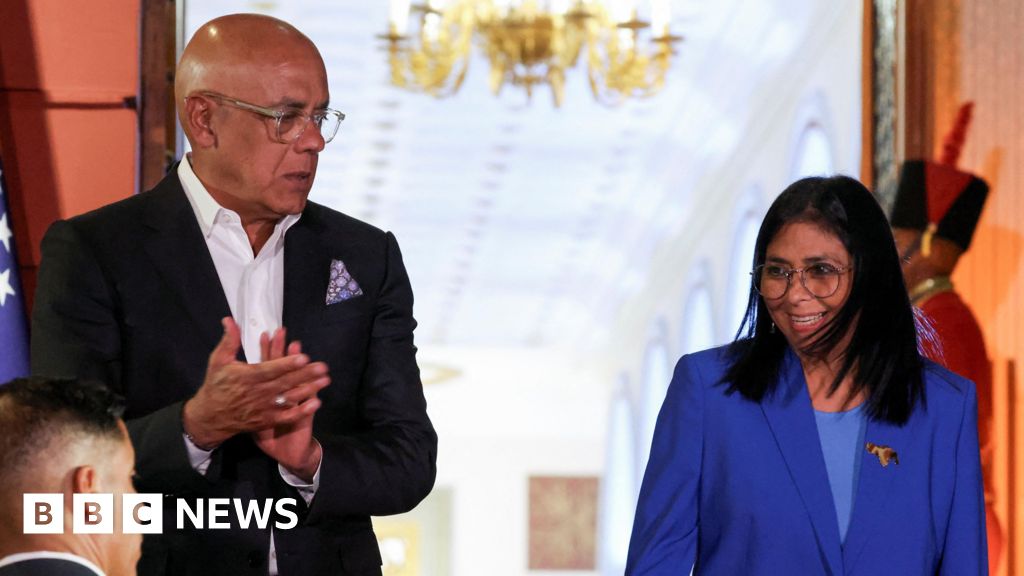
Over 1,500 Venezuelan Political Prisoners Seek Amnesty—A Bold Step Forward

The recent announcement by the head of Venezuela’s National Assembly marks a pivotal moment in the ongoing political upheaval within the nation. This statement, issued amidst intense pressure from the United States, follows the controversial capture of ex-President Nicolás Maduro, heightening tensions across the unpredictable landscape of Latin American geopolitics. The move underscores a complex interplay of domestic resistance and international intervention, with broad implications for regional stability.

Historical analysts and international observers underscore that the situation in Venezuela is at a critical turning point. The international community, led by the US, perceives the current crisis as an opportunity to reshape Venezuela’s leadership, driven by strategic interests ranging from oil security to regional dominance. The US-backed push to challenge Maduro’s authority echoes a persistent policy aimed at displacing what Washington considers a destabilizing regime, fostering a climate of uncertainty that resonates far beyond Latin America’s borders. Experts warn that such actions risk destabilizing not only Venezuela but also the broader geopolitical balance in the Western Hemisphere, where historically fragile alliances are tested.

Amid this turbulent backdrop, global institutions such as the United Nations and regional bodies like the Organization of American States face mounting pressure to take sides. While some advocate for diplomatic resolution and respect for Venezuela’s sovereignty, others call for decisive intervention, seeing the current chaos as a vulnerability that could be exploited by external actors. Such decisions are fraught with risk, as they could either usher in a new era of stability or plunge the nation—and possibly the continent—into further unrest. Meanwhile, Venezuelan society, polarized and strained, watches closely, vulnerable to the ripple effects of international machinations. The country, heavily dependent on oil exports, finds its economic and social fabric fraying further as the global powers contend for influence over its future.

Historically, upheavals of this magnitude have served as warnings about the high costs of external intervention and internal neglect. International organizations and independent analysts emphasize the importance of sovereignty and sustainable political solutions over short-term power plays. Nevertheless, the momentum from US pressures and the ongoing detention of Maduro cast a long shadow over Venezuela’s stability, turning the nation into a symbol of broader geopolitical struggle. As the world watches, history appears poised to record whether this crisis becomes a turning point toward renewed democracy or a descent into chaos—a warning tale in the making, where decisions made in distant boardrooms and capitals will inevitably determine the fate of millions. And as the echoes of this moment reverberate across time, one thing remains clear: the unfolding chapters of Venezuela’s future will be watched with bated breath, for history itself is at a crossroads, waiting to be written.

Arturia’s FX Collection 6 Debuts with 2 New Effects and $99 Entry Option

Arturia Launches FX Collection 6, Signaling Innovation in Digital Audio Effects

In a bold move that underscores continued disruption in the audio technology sector, Arturia has unveiled the latest iteration of its flagship effects suite, FX Collection 6. This release, featuring two new plugins—EFX Ambient and Pitch Shifter-910—demonstrates the company’s focus on pushing boundaries and democratizing professional-grade tools for musicians, producers, and sound designers.

The evolution of FX Collection from a modest 15 effects in 2020 to 39 in 2026 exemplifies how innovative software companies are transforming the industry landscape. With a strategic pricing model—offering a $99 introductory version with six effects, and a comprehensive FX Collection Pro priced at $499—the company is effectively broadening its market reach. This move could potentially challenge more established players while also reaffirming Arturia’s position as a pioneer in disruptive innovation. Industry analysts, like Gartner, have observed that the value proposition of such extensive collections is increasingly compelling, especially as high-quality effects become more accessible.

Disruption Through Unique Sound Design and Nostalgia-Driven Features

The newly introduced Pitch Shifter-910 pays homage to the legendary Eventide H910 Harmonizer from 1974, revered for its distinctive sound and glitchy quirks. Arturia preserves this retro aesthetic, emphasizing the plugin’s character over transparency. As a result, users can enjoy a deliberately unconventional experience, creating harmonies that embrace unpredictability—an approach that appeals particularly to young creatives seeking to differentiate their sound. The inclusion of modern modes that adjust artifacts caters to versatility, but the overall design invites users to revel in its unique digital imperfections.

The second addition, EFX Ambient, challenges traditional effects paradigms with its unpredictable ethos. It offers an eclectic range of effects—ethereal reverbs, shimmer, resonators, glitch processing, and reverse delays—that distort expectations and foster experimental soundscapes. Its six modes, each with distinct sonic fingerprints, are combined with an intuitive X/Y control for adding vibrant movement, making it a potent tool for creative exploration and sonic disruption. This aligns with trends identified in MIT research, which highlight the growing demand for effects that foster emotional resonance and immersive experiences in music production.

Business Implications and Industry Outlook

With the rise of affordable, high-impact effects suites like FX Collection 6, major players in the industry may need to reconsider their strategies. As software-driven innovation accelerates, established companies that cling to hardware dominance or proprietary formats could find themselves at risk. The convergence of nostalgia and technological innovation—exemplified by Arturia’s homage to vintage effects—poses a strategic challenge for competitors and opens the door for startups and smaller firms to disrupt traditional models of digital audio effects.

Looking ahead, industry leaders like Elon Musk and Peter Thiel have emphasized that rapid innovation and market agility are essential in navigating the fast-evolving tech landscape. The current trajectory suggests that audio effects and DAWs will become increasingly integrated with artificial intelligence, machine learning, and real-time contextual adaptation, compelling companies to innovate or risk obsolescence. In this climate, Arturia’s continued growth and expanding effect library signal a trend that shapes the future of music technology—a future where disruption is the new norm and those who innovate fastest will command the new soundscape.

Project 2025: The blueprint from Venezuela to immigration shaping Trump's next move
Project 2025: The blueprint from Venezuela to immigration shaping Trump’s next move

America’s Bold Pivot: A New Chapter in Global Power Dynamics

The recent assertion by White House spokesman Davis Ingle underscores a narrative that President Donald Trump has fundamentally reshaped America’s position on the world stage over the past year. According to Ingle, the administration’s efforts have not only fortified the nation internally but have also elevated the United States to an unparalleled level of influence and economic strength. These claims highlight a strategic shift rooted in a focus on sovereignty, economic nationalism, and a reassertion of American priorities amidst a rapidly evolving global landscape.

Significant policy moves, including the securing of the border, historic tax reforms targeted at the middle class, and an influx of trillions of dollars in foreign investments, have energized critics and supporters alike. However, the true geopolitical impact extends beyond economics. It signals a decisive move away from globalist policies favoring multilateral agreements, towards an America-centric approach. As many analysts suggest, this transition could redefine international alliances, with ripple effects on trade agreements, security alliances, and diplomatic priorities across continents.

  • Border security efforts aim to curb illegal crossings and affirm national sovereignty amid increasing migration pressures.
  • Tax cuts are designed to stimulate domestic investment, employment, and innovation, fostering a resilient economy with global implications.
  • Foreign investments have surged as foreign nations and corporations see America as a safe haven and hub for future growth, further empowering U.S. global influence.

However, this strategic realignment raises fundamental questions about the future of international diplomacy. Critics warn that turning inward could diminish existing cooperative efforts like the Paris Agreement or WHO collaborations, and spark a recalibration of alliances such as NATO. Conversely, supporters argue that a restored sense of national pride and economic independence will enable America to lead more effectively in addressing transnational issues — a sentiment echoed by historians like Dr. James Roebuck, who caution that the global stage is in flux and that leadership is as much about resilience as cooperation.

Globally, this shift has caused concern in regions like Europe and Asia, where longstanding alliances are tested against the backdrop of America’s newfound assertiveness. Trade tensions and strategic realignments threaten to redefine geopolitical boundaries, resemble a new Cold War landscape where economic strength and diplomatic defiance become the core currencies of power. The decisions made today will shape our collective future, echoing through generations of nations seeking stability and prosperity amid upheaval.

In the shadow of these transformations, the question remains: will this new era herald renewed strength and clarity for the United States, or will it ignite conflicts that threaten global stability? As historians and analysts watch closely, the weight of history presses down, hinting that the coming years will determine whether this chapter of decisive action will carve a legacy of sovereignty and resilience — or sow chaos in a world still teetering on the edge of transformation. The story of our time is still being written, and the future remains unwritten, hanging in the balance of choices made today.

Legendary salsa pioneer Willie Colón passes at 75—an era ends

Throughout modern history, cultural milestones have often served as catalysts of broader societal and geopolitical change. In 1967, at just 16 years old, a young artist recorded his debut album, El Malo, alongside the legendary Héctor Lavoe. This album, released under the Fania Records label, not only shaped the evolution of salsa music but also became a symbol of cultural identity and resistance for entire communities across the Americas. As analysts point out, music and art have consistently functioned as subtle yet powerful forms of political expression, fostering a sense of unity amid turbulent times.

The ripple effects of such cultural phenomena extend well beyond entertainment. Just as the salsa movement unified Latin American diaspora communities, recent geopolitical decisions echo this pattern—where cultural resilience intersects with, and often fuels, national sovereignty and regional stability. Decisions made at the international level—whether regarding trade, diplomacy, or security alliances—are deeply connected to societal narratives reinforced by influential cultural icons and movements. As international organizations scrutinize shifts in Latin America and other regions, experts warn of how political upheaval and economic instability threaten to unravel social cohesion, much like the revolutionary spirit stirred by artists of the 1960s and beyond.

Meanwhile, powerful nations are witnessing how their own internal decisions resonate worldwide—a phenomenon that indicates the fragile fabric of international order. Historian Ian Buruma reminds us that, in politics, as in music, “one note can change everything.” This echoes in the context of recent treaties and strategic alliances, where each policy shift may inadvertently redefine borders of influence and sovereignty. Notably, recent treaties and multilateral agreements aimed at economic integration and security have produced mixed outcomes, sometimes strengthening regional blocs but at other times inciting *uprising and resistance* that threaten long-term stability.

As nations grapple with these complex layers of influence, the geopolitical landscape remains precariously poised. From the corridors of the United Nations to the capital cities of emerging powers, decision-makers face a crucial crossroads: to forge lasting peace and stability or to stumble into cycles of conflict and chaos. The ongoing shifts, often driven by a blend of ideological, economic, and cultural forces, mirror the unpredictable rhythm of history. How the world responds today will determine the legacy for future generations. The echoes of 1967’s cultural revolution and the current geopolitical upheaval serve as stark reminders: history is not just written by leaders but also by the stories, struggles, and resilience of societies caught in times of upheaval. The pages of yesterday continue to turn, shaping a future that remains uncertain yet undeniably historic—where every decision carries the weight of consequences yet to unfold, and the true measure of nations is written in how they face the coming dawn.

Football Empowers Girls to Stand Up Against Forced Marriage

In a quiet Indian village, two sisters stand as poignant symbols of a broader shift underway across numerous rural regions in India. As they talk about how football has transformed their lives and fortified their resolve against child marriage—a deeply entrenched social issue—they reflect a growing wave of grassroots empowerment that challenges traditional norms and influences international discourse. Their story underscores how sport, particularly football, is emerging as a potent tool for social change amid complex cultural landscapes.

The narrative of these sisters highlights a critical aspect of how local initiatives can have far-reaching geopolitical impacts. India, with its vast population and diverse cultures, faces persistent challenges related to child marriage and gender inequality. However, in recent years, NGOs and community leaders have leveraged the universal language of sport to promote education, self-confidence, and gender equality. This grassroots movement resonates with global reports from organizations like the United Nations Population Fund (UNFPA), which acknowledge that empowering girls through education and recreation can significantly reduce child marriage rates. As these sisters participate in football, they embody a microcosm of a broader societal push that could influence policy reforms and change social perceptions across the subcontinent.

Internationally, this evolution reflects a strategic shift where domestic social issues are increasingly linked to larger geopolitical narratives about development and human rights. Nations such as Japan and Australia, which have historically promoted soft power through development aid, now focus on empowering youth, especially girls, as part of their diplomatic agendas. Similarly, global organizations are framing the fight against child marriage as not only a humanitarian issue but also a matter of national security—since the stability of a society hinges on the education and well-being of its future generations. These dynamics underscore the importance of persistent, culturally sensitive interventions which, when successful, can ripple outward and reshape regional dynamics.

Historians and analysts point to the significance of local stories like those of the Indian sisters as key turning points in the international effort to combat harmful traditional practices. They emphasize that such movements often start small but can escalate to influence national policies and international protocols. As India and neighboring countries grapple with these issues, their internal reforms and social awakening could serve as a blueprint for other regions where traditional norms clash with modern aspirations. Meanwhile, global institutions watch carefully, recognizing that shifting societal attitudes in India have the potential to ripple through South Asia, impacting diplomatic relations, development aid, and regional stability.

As the world watches these stories unfold, it becomes increasingly clear that history continues to be written at the grassroots level. The resilience of these young women, driven by passion and hope, signals the dawn of a new era—where individual courage and community initiatives challenge centuries-old norms. The stakes extend beyond cultural boundaries, touching upon the fundamental question of how societies can reconcile tradition with progress. And so, as voices like those of the Indian sisters rise amidst the rural plains, we are reminded that the fabric of global geopolitics is woven with the threads of countless individual stories. In the shadows of traditional villages and the halls of international councils alike, the weight of history hangs heavily, waiting to see whether these sparks of change will ignite a new future or fade into the annals of forgotten struggle.

Social Media Auto Publish Powered By : XYZScripts.com