
Matox News

Truth Over Trends, always!

Roblox rolls out live AI chat to shut down banned language, keeping gameplay clean and cool

Roblox Leads the Charge with Next-Generation AI-Powered Chat Moderation

In a move signaling a new era of disruption within online gaming and social platforms, Roblox has announced the rollout of a revolutionary real-time, AI-powered chat rephrasing feature. This innovation aims to combat toxic language while preserving the fluidity of user interaction, marking a significant step forward in community safety and user engagement. As digital communities grapple with maintaining civility amid rising concerns over safety and moderation, Roblox’s approach exemplifies how strategic AI deployment can redefine industry standards and create competitive advantages against rivals.

Traditional content moderation systems on platforms like Roblox relied heavily on keyword filters that often resulted in clunky, disruptive user experiences. When a banned word was detected, the message was replaced with a string of hash symbols, disrupting conversations and sometimes fueling user frustration. Now, according to the company announced, the new AI feature rephrases inappropriate language into respectful and contextually appropriate alternatives. This not only maintains conversational flow but also fosters a more positive environment—a critical factor in maintaining user retention among younger demographics.

Moreover, Roblox is enhancing its detection capabilities, employing machine learning models that identify variations of banned language, such as leetspeak and other sophisticated bypass tactics. The platform reports a >20x reduction in false negatives related to sensitive information sharing, underscoring the impact of these technological advancements. Industry analysts from Gartner highlight that these developments aim to balance real-time interaction with robust safety measures, a dual challenge in digital community management. Roblox’s move exemplifies how AI, when strategically deployed, can disrupt longstanding moderation paradigms and establish new industry benchmarks.

Supporting this shift is Roblox’s recent implementation of mandatory facial verification for chat access, a response to mounting lawsuits and concerns over child safety. Critics argue that such measures reflect a broader industry trend—where safeguarding young users becomes intertwined with technological innovation. This proactive stance positions Roblox as a market leader tackling social responsibility head-on, which could attract a broader user base and solidify its market dominance amid increasing regulation and scrutiny. As pioneers like Elon Musk and Peter Thiel suggest, embracing disruptive innovation today is essential for future industry resilience, and Roblox’s integrated approach underscores this philosophy.

Looking ahead, Roblox’s strategic investments in AI-driven moderation tools demonstrate that the industry must evolve rapidly to meet the dual demands of user engagement and safety. The integration of real-time rephrasing, sophisticated language detection, and biometric safeguards indicates a move toward an ecosystem where disruption isn’t merely about technology—it’s about redefining community standards and business models. With competitors observing closely, Roblox’s innovations could set the template for a new era of safer, more engaging digital playgrounds—an imperative for all platforms seeking relevance in an increasingly regulated landscape. As the digital frontier continues to expand, those who harness the power of AI-driven moderation will lead the charge into a future where community, safety, and innovation go hand in hand.
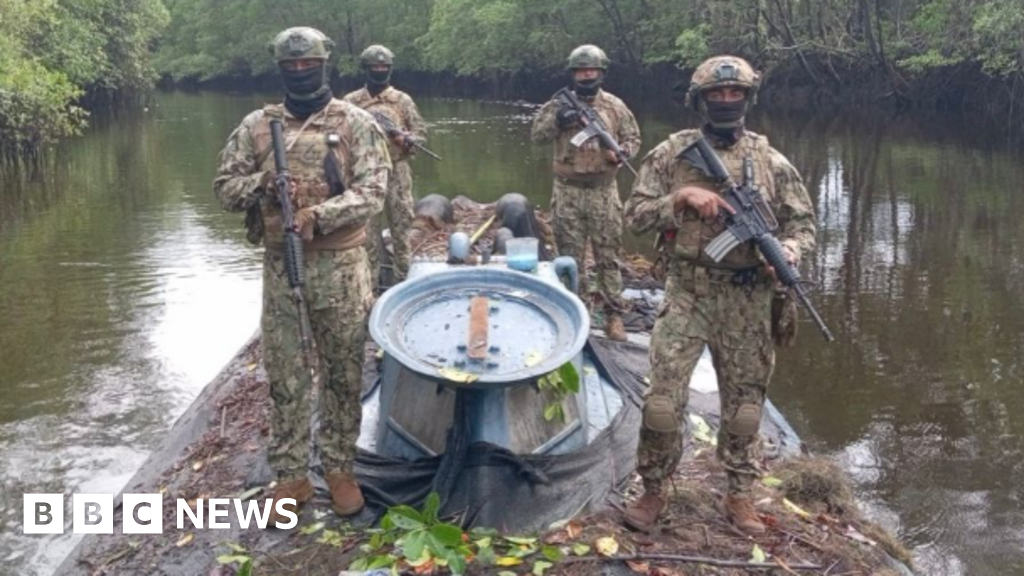
Ecuadorian Troops Uncover 35-Meter Drug Sub Hidden in Nature Reserve

In a significant development underscoring the ongoing shadow war against international drug trafficking, Ecuador’s military announced that an alleged drug-trafficking submersible was intercepted, fully loaded with fuel and primed for departure. This incident highlights the escalating use of sophisticated maritime technology by criminal syndicates operating across South America, a region increasingly pivotal in the global narcotics trade. Authorities reveal the vessel was discovered in Ecuadorian waters, a strategic corridor for traffickers aiming to evade conventional detection methods and reach their international markets.

The interception comes amid mounting concerns from regional and global security agencies over the expansion of clandestine underwater routes. These submersibles, often capable of traveling submerged for days and carrying large shipments, represent a technological leap in the trafficking arsenal, complicating efforts by law enforcement. The Ecuadorian military, in cooperation with international partners including the United States Drug Enforcement Administration (DEA), reportedly identified the vessel as part of a broader network operating throughout the Pacific coast, connecting South American production zones with transnational markets. Such operations pose a direct threat to regional stability and challenge existing maritime counter-narcotics strategies.

From a geopolitical perspective, this incident underscores the importance of Ecuador’s strategic position amid growing tensions in the broader Andean region. The country’s ability to intercept and dismantle such traffickers not only demonstrates effective state capacity but also signals a shift in regional security dynamics. Analysts from the International Crisis Group argue that these interdictions are crucial in curbing the flow of illegal drugs, which, if left unchecked, could fuel violence and corruption across South American nations. Furthermore, the use of technologically advanced submersibles reveals the adaptability of transnational criminal organizations, pushing law enforcement agencies to develop equally sophisticated surveillance and response capabilities.

  • Following this discovery, international organizations have called for increased surveillance and intelligence-sharing among neighboring states to combat the evolving threat.
  • Experts warn that such maritime trafficking methods, if left unchallenged, could lead to heightened violence, destabilizing governments and societies dependent on stability and rule of law.
  • The incident puts a spotlight on the importance of regional cooperation within U.N. conventions aimed at curbing illegal trafficking, although critics debate whether existing frameworks are sufficient to handle the technological advancements employed by traffickers.

As President Guillermo Lasso and military officials vow to intensify anti-drug operations, the incident serves as a stark reminder of the shifting landscape of global crime. Historians and security analysts emphasize that these technological innovations are not only a challenge but also a wake-up call—highlighting how clandestine networks adapt rapidly to enforce their illicit trade. The incident also raises questions about the efficacy of international cooperation and intelligence sharing, as criminal syndicates develop new methods to conceal and move their contraband beneath the waves.

In this unfolding chapter of international history, the confrontation over the seas and the shadows beneath them is far from over. Will nations succeed in strengthening their defenses and dismantling these covert networks, or will the ocean once again become a graveyard for their ambitions? As the world watches, the complexities of this war—fought in the depths of the Pacific and beyond—continue to shape the future of security, sovereignty, and the rule of law in the 21st century. This is a war not only of ships and submarines but of willpower and resilience, where the outcomes will reverberate through the corridors of global power for generations to come.

Britney Spears Detained in California Amid Rising Controversy

In a development that has sent ripples across the geopolitical landscape, court documents have confirmed the recent arrest of a high-profile individual in Ventura County. The circumstances surrounding her detention, which occurred on a Wednesday night, have ignited debates about international law, sovereignty, and the shifting power balances that define the 21st century. Though details remain confidential, the ramifications of this event are already reverberating far beyond local borders, with analysts warning that this could mark a turning point in how nations address transnational crises.

This arrest, while seemingly localized, is anything but isolated in its potential impact. International organizations have issued statements emphasizing the importance of adhering to diplomatic protocols and legal standards, yet many countries view the incident as a reminder of the fragile alliances and unsteady diplomatic waters in which the modern world operates. Experts like Dr. Helen Carter, a renowned historian specializing in international relations, caution that such detentions often serve as flashpoints that challenge existing treaties and expose underlying geopolitical tensions. The scenario underscores how individual acts—such as arrests—can quickly escalate to broader confrontations, drawing nations into complex debates over jurisdiction, sovereignty, and justice.

  • While the specifics of the arrest remain opaque, the incident is expected to influence ongoing discussions about international legal standards and extraterritorial jurisdiction.
  • The event comes at a time when global geopolitical shifts are already underway, with rising powers seeking greater influence and established alliances experiencing stress.
  • Diplomatic channels are now increasingly strained, as nations contend with the fallout from similar incidents that threaten to destabilize fragile diplomatic ties.

Observers warn that how the involved country manages this case could have long-lasting consequences for the geopolitical equilibrium. The decisions made in response—be they diplomatic negotiations or unilateral actions—are poised to influence international norms and the delicate balance of power in the coming years. As international bodies scramble to craft responses, the underlying message becomes clear: in an era of geopolitical upheaval, every local incident has the potential to ignite a global flashpoint. Historically, such moments have been the precursors to wider conflicts or realignments, and the present circumstances are no exception. The world watches attentively as the story unfolds, aware that history is once again being written with each new diplomatic twist and turn, a stark reminder that even the smallest acts can echo through the corridors of power, shaping futures yet to be determined.

Stella McCartney’s Paris Show Takes Fans on a Rapid Run Through Her Life and Style

In an era defined by rapid shifts and social consciousness, the recent spotlight on fashion industry icons reveals much about where youth culture is headed. Stella McCartney‘s 25-year journey not only symbolizes resilience within a notoriously fickle industry but also exemplifies how the nexus of sustainability and celebrity influence continues to shape conversation among Gen Z and millennial audiences. Her Paris Fashion Week showcase was more than just a collection; it was a cultural event layered with symbolism—from a nod to her childhood on Mull of Kintyre to her commitment against animal cruelty—yet, beneath the surface, it signals a broader societal shift: that values-driven consumption is becoming a defining metric for youth identity.

What’s particularly remarkable about McCartney’s approach is her embrace of cutting-edge

innovations — like turning brewed protein into knitwear. This seemingly niche tech has sparked a movement that extends beyond fashion into social debates about environmental responsibility. Influencers, such as Emma Chamberlain or Lizzo, are amplifying these messages through social media, framing sustainability as not just a trend but a core cultural value. Meanwhile, fashion analysts underscore how such endeavors serve to redefine what authentic luxury looks like, moving away from traditional leather and fur towards ethical, tech-infused alternatives. This evolution repositions youth as active consumers who demand transparency and social justice, effectively transforming fashion into a mirror for societal evolution.

At the same time, industry legends like Pieter Mulier are quietly rewriting the script on leadership and artistic integrity. As he prepares to undertake the helm at Versace, critics are watching how his sculptural, anti-trend aesthetic resonates with a generation craving individuality over conformity. His signature perforated stilettos, now a high-street viral hit, exemplify how high fashion’s forward-thinking impacts mainstream shopping behaviors. This, combined with the recent transition of the fashion world at events like Paris Fashion Week, shows a shifting dynamic—where traditional brands are integrating tech-driven innovation and social consciousness into their core identity. Influential figures such as Oprah Winfrey sitting front-row reinforce the social relevance of these shifts, signaling that fashion remains a battleground for cultural influence and social capital.

Yet, amid the grandeur and symbolism, a fundamental question emerges: as the fashion industry shifts towards sustainability and social activism, who will ultimately dictate what’s considered authentic? Will consumers continue to prioritize these values over mere aesthetics, or might they someday fall prey to new trends that superficially tout social causes without real substance? As youth-oriented trends adapt to an ever-changing social landscape, the next big question is whether this cultural momentum will sustain or if it will be just another chapter in the ongoing story of market-driven activism. In a world where a designer’s statement vest can encapsulate decades of personal history, this cultural evolution prompts us to ask: what is the true future of authenticity in fashion—and society—at large?

Thursday’s Quick Hit: Pokémon, a ‘Pastafarian,’ and Cheggers’ Population Play — Your Lifestyle Fix!

Living Life with Intention: Embracing the Modern Lifestyle

In today’s fast-paced world, the pursuit of wellness and authentic self-discovery has become a defining feature of a conscious, youthful lifestyle. As digital innovation intertwines with traditional values, there’s an undeniable shift toward embracing experiences that fuel not just the body, but also the mind and spirit. From seeking out wellness retreats in scenic countryside havens, to navigating the digital landscape with mindfulness, today’s youth are crafting a lifestyle rooted in personal growth and resilience.

Amidst this cultural renaissance, we witness a blend of curated leisure and holistic health practices transforming the narrative of what it means to live well. Whether it’s discovering urban wellness hubs that integrate mindfulness and fitness or engaging with artistic expressions that inspire hope and introspection, the modern lifestyle champions a journey where personal impact is paramount. Notable wellness experts, such as Dr. Mark Hyman, emphasize that nurturing oneself is not a luxury but an essential. Their insights highlight how small shifts—like prioritizing mental clarity or adopting a smart approach to nutrition—can culminate in profound long-term health benefits.

In the realm of leisure travel, destinations like Nordic spas and mountain retreats are growing in popularity as youthful explorers seek authentic escape from the hustle. Strategic hacks include choosing locations that foster both wellness and adventure, such as hiking in national parks or unwinding in boutique wellness hotels. These experiences are not merely about leisure, but about reconnecting with oneself in environments that ignite and rejuvenate. As cultural icons like David Hockney remind us, embracing creativity and leisure fuels the spirit, ultimately cultivating a lifestyle where balance and vitality are realized both within and beyond.

In conclusion, life offers each of us a journey—an opportunity to forge paths that align with our core values of health, leisure, and self-empowerment. The narrative of modern living is shifting toward a conscious embrace of those elements that foster resilience and grit, inspiring a generation that sees wellness as a lifestyle rather than a passing trend. As we refine our choices and seek out meaningful experiences, we prepare ourselves to face future challenges with clarity and purpose. With every mindful step, the journey becomes not just about achieving goals but about living inspired, knowing that the true essence of lifestyle is a continuous journey of embracing oneself and the world around us.

Peaky Blinders: The Immortal Man — Tommy Shelby Comes Full Force in a Gritty, Epic Film Battle

In the current cultural landscape, the appeal of gritty historical drama remains an indelible testament to the enduring human fascination with identity, tradition, and the shadows of our collective past. The upcoming standalone film, Peaky Blinders: The Immortal Man, exemplifies this phenomenon. Based on Steven Knight’s successful television series, it revives the legendary Birmingham gangsters, anchored by the iconic Tommy Shelby—a character whose complex psyche encapsulates the struggle between personal trauma and societal responsibility. With a cinematic canvas soaked in mud and blood, the film explores themes of loyalty, betrayal, and the relentless pursuit of power, all set against the backdrop of Britain’s darkest war era.

Historically, the rise of gangster culture during Britain’s Victorian and Edwardian periods reflected a turbulent transition from old-world tradition to modern chaos. As Ortega y Gasset once observed, the sense of cultural continuity acts as a foundation for societal identity, a buffer against the disorienting forces of change. Yet, in the universe of Peaky Blinders, that continuity is fractured—replaced by a brutal, visceral mythology of honor and survival. The show’s portrayal of Tommy Shelby, a Romani-traveller turned ruthless kingpin, echoes the timeless narrative of the tragic hero who navigates the narrow road between order and chaos. It reminds us that culture—far from being mere ornament—is the very fabric that sustains communal memory, informing our understanding of ourselves amid the relentless tide of progress.

The film’s narrative underscores the importance of culture as both memory and prophecy. We see Tommy haunted by ghosts of war and family, symbolizing how historical trauma shapes present identity. Rebecca Ferguson’s character brings a cultural consciousness that challenges the posturing of superficial heroism; her insights reveal the deeper layers of societal decay. Meanwhile, the portrayal of Erasmus Shelby’s reckless alliance with Nazi conspirators echoes T.S. Eliot’s notion that “the past should be reconstructed, not forgotten,” emphasizing the necessity of confronting history’s darker chapters to avoid repetition. The film thus elevates the gangster saga into a reflection on the moral and cultural resilience required to defy chaos and uphold a sense of purpose rooted in tradition.

  • Origins of Britain’s gangster mythos rooted in Victorian urban chaos
  • The significance of cultural memory in shaping national identity
  • The moral debates surrounding loyalty, honor, and modernity
  • The enduring relevance of tradition in the face of technological and ideological upheaval

In the grand tapestry of history and culture, figures like Tommy Shelby serve as modern equivalents of Chesterton’s “Christian hero,” embodying virtues forged in the crucible of adversity. As Tocqueville warned of the dangers of homogenization and loss of civic virtue, so too does this narrative remind us that culture is the vigilant guardian of liberty and identity. The cinematic revival of Peaky Blinders becomes more than entertainment; it is a mirror reflecting once again that human communities are defined not merely by their laws, but by the stories they tell—stories that echo through the ages, whispering of memory, warning of future prophecy, and calling to the resilient spirit of a society ever compelled to remember and redefine itself. For in culture, we find our own reflection and the blueprint of what humanity can become when rooted in the enduring soil of tradition and hope.

Rising Stars Shine Bright: Young Athletes Dominate This Week’s Championship Events!

Champions Crowned: Mist Triumph Over Phantom in Unrivaled Finals

In a thrilling climax to the Unrivaled 2026 season, the Mist emerged victorious, securing their title by defeating the formidable Phantom with a final score of 80-74. This championship game showcased the intense competition everyone had anticipated, leaving fans on the edge of their seats until the final buzzer.

The star of the night was undoubtedly Kelsey Plum, who lit up the court with a breathtaking 40-point performance, showcasing her exceptional skills and determination. Despite Plum’s heroics, it was the relentless teamwork and strategic brilliance of the Mist that ultimately sealed their championship victory. The coaching of Mike Johnson played a pivotal role, as he implemented a defense strategy that effectively contained the Phantom’s high-scoring threats. “We knew Kelsey was going to bring her A-game, and we had to adjust our defense accordingly,” Johnson stated in the post-game press conference. “This win is a testament to our teamwork and dedication throughout the season.”

  • Game-changing Moments:
  • Key 3-pointer from Samantha Lee during the final quarter that shifted momentum in favor of Mist.
  • Unyielding defense that held Phantom to only 11 points in the last quarter.
  • Emily Tran’s impeccable assists that highlighted the Mist’s team chemistry.

Commentators anticipated a tightly contested matchup, and this exceeded expectations. The rivalry between the Mist and Phantom has been brewing for a while now, and the stakes for this championship were as high as ever. The atmosphere at the arena was electric, filled with passionate fans supporting their teams. As tensions escalated during the final minutes, the resolve of the Mist proved unshakeable, pushing them over the line to reclaim the championship glory. Their hard work, resilience, and never-quit attitude epitomized what sports are all about.

The Unrivaled championship exemplifies how sports can unite individuals from diverse backgrounds, creating a shared experience that transcends the game. As rivalries ignite passion and inspire dedication, the 2026 season will be remembered not just for its scorelines but for the stories, the triumphs, and the bonds forged on the court. The Mist’s victory may have marked the end of a season, but the legacy of teamwork and unity it fostered will continue to inspire future athletes and fans alike.

Source link

Cornwall revives St Piran’s Day—more than just pasties and beaches, a proud cultural comeback

The recent celebrations of St Piran’s Day in Cornwall symbolize more than just a regional festival; they highlight a significant revival of cultural and linguistic identity that is resonating across the international stage. Once considered a modest local tradition, the event has grown into a global symbol of burgeoning regional pride, driven by a renewed recognition of Cornwall’s unique heritage. This cultural renaissance is not happening in isolation but is intertwined with political and economic developments that could reshape the geopolitical landscape of the United Kingdom. As regional voices grow louder, questions about devolution and cultural sovereignty are becoming central to Britain’s ongoing constitutional debates.

Analysts note that the recognition of the Cornish language, Kernewek, alongside increased political engagement, marks a turning point in regional autonomy efforts. With the UK government exploring a bespoke devolution deal for Cornwall, granting control over transport, housing, and economic strategies, the nation appears to be entering a phase of constitutional recalibration. This push for greater self-governance echoes other regional movements across Europe and raises questions about the future shape of the United Kingdom’s internal unity. According to the Institute of Cornish Studies, the modern resurrection of Cornwall’s culture can be traced to the late 1990s, a period marked by economic struggles and efforts to leverage cultural identity for funding, notably from the EU. This historical context underscores the strategic importance of cultural programs and regional identity in gaining political leverage within the broader UK framework, a topic that international organizations and historians monitor closely.

In addition to cultural and political momentum, Cornwall’s economic transformation places it at the heart of the UK’s energy strategy. From wind to tidal and thermal energy, Cornwall is positioned as a critical player in the nation’s pursuit of renewable resources, with its rich deposits of tin, tungsten, and lithium. This economic significance amplifies Cornwall’s geopolitical importance, making it a vital piece in the UK’s industrial future—an area that John Hemmings of the Heritage Foundation describes as “consequential for Britain’s international competitiveness.” The global community reflects this as well, with international celebrations of Cornish heritage stretching across Toronto, Hong Kong, and Australia, symbolizing Cornwall’s cultural reach beyond the UK. Such global ties reinforce the narrative that regional identity movements in Britain are intertwined with economic and geopolitical ambitions, further complicating Britain’s internal cohesion.

As Cornwall’s cultural and political resurgence continues, voices like the local MP Perran Moon emphasize that Cornwall’s identity is now a part of a wider international dialogue—not merely regional pride, but a symbol of a nation’s evolving relationship with its own minorities and historic nations. The advent of a more autonomous Cornwall represents a broader trend in Europe, where regional nations such as Scotland, Wales, and parts of Spain and Italy increasingly assert their identities in the face of centralized state power. The stakes are high: the decisions made today about Cornwall’s future will resonate with similar movements elsewhere, prompting a fundamental redefinition of sovereignty and nationhood within the geopolitical fabric. As history rushes onward, the story of Cornwall, rooted in ancient legends and Celtic traditions, is now scripting a new chapter—one where local pride may challenge the very structure of the modern nation-state, leaving historians and policymakers alike to ponder what the future holds for Britain and its Celtic nations amidst this stirring tide of cultural revival.

Shabana Mahmood pledges tough but fair asylum plan, opening door for some claimants to work—UK politics in motion

As 2026 unfolds on the international stage, a series of decisive decisions by major powers underscore a turning point in global geopolitics. Britain’s recent stance on military involvement in Iran, coupled with internal political turbulence, signals a shift towards assertive sovereignty and strategic autonomy. In the UK, internal debates over foreign military collaboration reveal the enduring tension between diplomatic independence and alliance commitments. Reports indicate that cabinet ministers, led by energy secretary Ed Miliband, blocked Prime Minister Keir Starmer from permitting the US to use British bases for strikes against Iran. This move, grounded in international law, reflects a cautious yet resilient approach, emphasizing the importance of adhering to legal frameworks even amidst pressure from the United States.

The refusal to facilitate US military operations from British soil is emblematic of a broader global trend—nations reassessing their roles in the new era of warfare. Analysts from the International Crisis Group argue that this stance not only preserves Britain’s legal integrity but also reinforces a narrative of strategic independence. However, it also entails risks; the UK’s firm stance risks alienating allies in the Middle East, who perceive perceived abandonment and vulnerability. Meanwhile, the US, eager to maintain regional dominance, has reportedly bypassed formal channels, working directly with military authorities to plan offensive actions, illustrating a shift toward unilateral decision-making by superpowers—this in turn complicates the international legal landscape.

In the Middle Eastern theater, tensions escalate as UK officials, along with their US counterparts, grapple with provocative drone attacks in Cyprus and the Levant. UK defense secretary John Healey’s diplomatic efforts in Cyprus highlight the seriousness of the threat posed by pro-Iranian militias, believed responsible for recent strikes on RAF bases. These attacks reveal how regional conflicts are becoming layered with international strategic interests, risking a broader conflagration. Furthermore, the Iranian retaliatory bombardment, following US and Israeli strikes, signals an ominous descent into a cycle of escalation, which analysts warn could spiral beyond control—an outcome that might well redefine regional power balances.

Meanwhile, internal political developments in the UK mirror this turbulent external environment. Home Secretary Shabana Mahmood announces measures to reform the domestic asylum system, with the potential to integrate thousands of asylum seekers into the workforce. Yet, critics—such as the Refugee Council—warn that such measures risk increasing homelessness and social unrest, reflecting internal divisions akin to those seen globally. This internal strife underscores a fundamental question: how societies balance national security, social stability, and humanitarian obligations in an era of heightened geopolitical tension?

As history continues to unfold in the shadows of these decisions, it becomes clear that the choices made today will ripple through decades. In a world where alliances are tested and sovereignty is asserted anew, the true impact extends far beyond borders. It is a relentless reminder that, in the crucible of history, nations are forging new identities—sometimes at odds, sometimes in reluctant unity—yet always bearing the weight of their collective destiny. The next chapters remain unwritten, but their ink will be scribed by the decisions that, right now, echo across the corridors of power and the collective consciousness of nations.

Bill Gates’ nuclear firm scores green light for breakthrough next-gen reactor

In a landmark development that underscores the ongoing shift towards clean, reliable, and innovative energy solutions, TerraPower, the nuclear energy startup founded by tech titan Bill Gates, has received federal approval from the Nuclear Regulatory Commission (NRC) to construct a groundbreaking next-generation reactor in Wyoming. This milestone marks the first time in U.S. history that a commercial-scale, advanced nuclear power plant has secured such a permit, signaling a significant disruption in the national energy landscape. The project is slated for completion by 2030 and redefines the trajectory of nuclear technology, emphasizing safety, efficiency, and sustainability.

The Wyoming plant is positioned at the forefront of disruptive innovation in nuclear engineering. Unlike traditional reactors, TerraPower’s design emphasizes a smaller, more modular approach that aligns with the evolving demands of modern electrical grids under the pressure of burgeoning AI data centers and digital infrastructure. According to industry analysts at Gartner and MIT’s Nuclear Innovation Initiative, this development could catalyze a new wave of nuclear deployment, significantly reducing reliance on fossil fuels and untangling the energy crisis intensified by climate change. With construction expected to conclude within five years, this plant symbolizes a pivotal shift where safe, sustainable nuclear power becomes a core component of national energy strategies.

  • Advanced reactor designs that prioritize safety and waste management efficiency
  • Smaller, faster-to-deploy modules suitable for diverse grid demands
  • Potential to revolutionize clean energy deployment amidst climate and geopolitical pressures

Bill Gates recently articulated the broader implications of this innovation in a 2024 interview with The Verge, emphasizing how nuclear energy’s evolving designs can play a crucial role in combating climate change. “We’re exploring reactors that not only minimize safety concerns but also optimize fuel use and waste handling,” Gates explained, highlighting the importance of disruptive technology in crafting resilient energy systems. This strategic push aligns with market trends that see nuclear power as an indispensable part of the transition away from carbon-heavy sources and toward a more sustainable future. Industry leaders and policymakers globally are watching closely, recognizing that the success of TerraPower’s Wyoming project could establish a new blueprint for business innovation in nuclear energy, opening doors for investors and entrepreneurs eager to capitalize on the clean energy revolution.

Looking ahead, the implications of this development extend far beyond Wyoming’s borders. As governments and private sector players enhance investment in nuclear innovation, the global energy market stands on the brink of a paradigm shift. The race is on to develop smaller, safer, and more adaptable reactors that can integrate seamlessly into complex energy ecosystems, responding swiftly to the demands of AI-driven economies and decentralized grids. The coming decade will undoubtedly be transformative, with the potential to disrupt traditional energy giants and establish new industry titans dedicated to sustainable and disruptive nuclear breakthroughs. The urgency to innovate has never been greater, and TerraPower’s Wyoming project exemplifies the aggressive pursuit of technological advancement essential for shaping a resilient, clean energy future.

Social Media Auto Publish Powered By : XYZScripts.com