Matox News

Truth Over Trends, always!

Gisèle Pelicot speaks out to BBC Newsnight

The recent revelations from France have shockwaves resonating across the international stage, highlighting the profound intersection of justice, societal values, and geopolitical stability. Gisèle Pelicot’s courageous decision to publicly expose her harrowing experiences, despite the personal risks involved, underscores a broader shift in how victims of systemic abuse are challenging traditional norms and demanding accountability. Her declaration that her strength derives from her “DNA” echoes a rising global narrative—one that emphasizes resilience and truth-telling in the face of grave injustice.

This case, which has now culminated in the largest rape trial in French history, exposes disturbing facets of exploitation facilitated by the dark corners of the internet. Over nearly a decade, Ms. Pelicot was allegedly drugged and assaulted by her then-husband, Dominique Pelicot, who reportedly recruited dozens of men online to carry out these crimes. International observers, including human rights groups and legal experts, view this case as a stark warning about the accessibility of illicit online networks and their devastating impact on vulnerable individuals. By making her identity known, Ms. Pelicot has challenged the French legal system’s traditional approach, which often limited victims’ voices, and set a powerful precedent for transparency and victim advocacy across Europe and beyond.

  • Her decision to forgo anonymity before the trial signifies a bold stand against the culture of silence surrounding abuse, which many analysts argue perpetuates cycles of violence and impunity in various societies.
  • International organizations, including Amnesty International and Interpol, are closely monitoring the case, emphasizing the importance of strong legal responses to internet-facilitated crimes and the need for international cooperation.
  • Legal scholars note that her act of defiance could influence reforms in victim protection laws, challenging states to balance individual rights with societal safety more effectively.

Arab, European, and North American nations are all watching this case with a keen eye, recognizing its potential to reshape international norms about justice and online accountability. The global community continues to grapple with the security challenges posed by transnational digital networks, and many argue this case exemplifies the importance of proactive legal frameworks. As historians will likely remember as a turning point, the fight against online exploitation demands international resolve and unwavering moral clarity. These emerging realities signal a pivotal moment where nations must confront their shortcomings and forge new alliances—lest the dark shadow of impunity expands unchecked.

In the grand narrative of history, this case stands as a stark reminder of the battle for human dignity in an increasingly interconnected world. As the world watches with bated breath, the weight of justice presses down on those in power. The decisions made in these courtrooms today will ripple through generations, shaping societies’ ability to protect and empower the vulnerable. The unfolding story persists—reminding us that, in the face of darkness, the resolve of the human spirit and the pursuit of justice remain our most potent defenses. Yet, the question remains: how much longer will societies ignore the creeping tide of online exploitation before decisive, global action is finally taken?


Police urged to investigate: Will Prince Andrew face questions over Epstein ties?

The unfolding revelations surrounding Prince Andrew and his alleged connections to Jeffrey Epstein have ignited a firestorm across international political landscapes, revealing the darker underbelly of elites and the far-reaching geopolitical impact of scandal and secrecy. As investigations intensify, questions about How deep character and institutional complicity run threaten to redefine perceptions of royal authority, diplomacy, and Britain’s global standing. Academic analysts and organizations like Interpol and Amnesty International warn that such exposures could undermine *public trust* in both monarchy and democratic institutions—a formidable challenge for nations that value transparency but are reluctant to confront their shadows.

The UK is at a pivotal crossroads. Growing pressure from lawmakers, international partners, and victim advocacy groups compels a reconsideration of longstanding narratives surrounding the royal family’s immunity. Evidence uncovered by investigative journalists suggests links between Mountbatten-Windsor and clandestine flight operations through UK airports, allegedly involving vulnerable women transferred via private planes owned by Epstein. Former Victims’ Commissioner Vera Baird emphasized that *the police must pursue these leads vigorously*, warning that *political inaction or institutional cover-ups* could fatally erode **faith in democratic systems**. The repercussions extend beyond Britain, affecting alliances with Commonwealth nations and influencing perceptions of Western governance on the world stage.

This scandal also strikes a blow to the monarchy. During a week marked by intense scrutiny, King Charles and his courtiers publicly declared a *“profound concern”* while asserting their willingness to cooperate with law enforcement. Yet, critics—including human rights advocates and anti-monarchy activists—highlight that *the royal family’s historical distance from accountability* complicates efforts for justice. As multiple emails and photographs come to light, depicting Prince Andrew in compromising situations, experts warn that *the very institutions that once shielded royal misconduct are now under siege*. The question of whether elite privilege can withstand the weight of these allegations remains an open, and unsettling, one.

Meanwhile, international organizations warn that this scandal illustrates the **new geopolitical terrain**, where *private wealth, power, and influence are intertwined with criminal activities*. The情况 shows how *transnational networks* operate under the veneer of diplomatic missions and global business, with China and Hong Kong among critical nodes in Epstein’s complex web—an area now being scrutinized for possible foreign influence and corruption. Historian Dr. Thomas Gray notes that *these scandals highlight the erosion of soft power* when elites abuse their positions, marking a dangerous turning point where diplomatic relations could falter. As investigations broaden, the world watches, awaiting the verdict that might reconfigure international diplomacy and the very narrative of justice itself.

As the pages of history continue to turn, the weight of these revelations lingers—an ominous reminder that *the truth often emerges from the shadows in moments of crisis*. The ongoing inquiry into Prince Andrew’s dealings, and those linked to Epstein, becomes more than a tale of individual misconduct; it is an unfolding saga that questions the integrity of power structures, the resilience of accountability, and the destiny of societies at their crossroads. Will this be a turning point—a moment to confront the shadows and forge a new path toward justice? Or will it fade into the silence of history’s forgotten corridors, as the forces of privilege and denial attempt to preserve their legacy? Only time will tell, but the future remains unwritten, and the echoes of these events will undoubtedly resound for generations to come.

Rising Stars Shine as Youth Sports League Kicks Off Exciting Season

The Impact of Non-Moves on Playoff Prospects

In the fast-paced world of professional sports, the trade deadline often brings a mix of excitement and disappointment. This year, several teams opted for a quieter approach, raising eyebrows and prompting discussions about their playoff strategies. As teams like the New York Knicks and Denver Nuggets decided against major trades, fans began to question what these non-moves mean for their playoff forecasts.

For many organizations, the decision to not make significant changes stems from a belief in their current roster. Coach Tom Thibodeau of the Knicks commented, “We have a strong core, and the continuity can be beneficial as we head into the playoffs.” This sentiment is echoed across the league, as teams prioritize chemistry over high-profile trades. The challenges of integrating new players mid-season cannot be underestimated, as highlighted by their successful run the previous year, where team cohesion played a vital role in their playoff performance.

  • The Knicks are currently positioned as a dark horse in the Eastern Conference, with key players like Julius Randle and Jalen Brunson showcasing impressive stats.
  • Denver Nuggets maintain their status with superstar Nikola Jokic, whose average of 26 points and 13 rebounds per game is pivotal in their playoff ambitions.
  • In contrast, teams like the Los Angeles Lakers made headlines with stunning trades, but their new roster has yet to gel effectively.

As commentators dissect the financial implications and strategic elements of these decisions, one undeniable fact remains: these players have delivered thrilling moments on the court. Sports analyst Stephen A. Smith remarked, “Consistency can sometimes outweigh the splashy headline; these teams could prove everyone wrong by sticking with what they have.” The success of trusting their core could serve as a testament to the adage that sometimes, silence speaks volumes.

As the playoffs loom, the stakes have never been higher. The atmosphere surrounding these teams has transformed into one of anticipation, proving that while the scoreboard dictates success, it is the unity and resilience of a team that truly defines greatness. It is this spirit that turns a collection of athletes into a family, united by passion and the relentless pursuit of victory. In the grand arena of sports, while we cheer for points and wins, it is the journey—the shared highs and lows—that brings us together as fans.

Source link

Mark Carney sides with opposition leader to honor victims of Tumbler Ridge school shooting

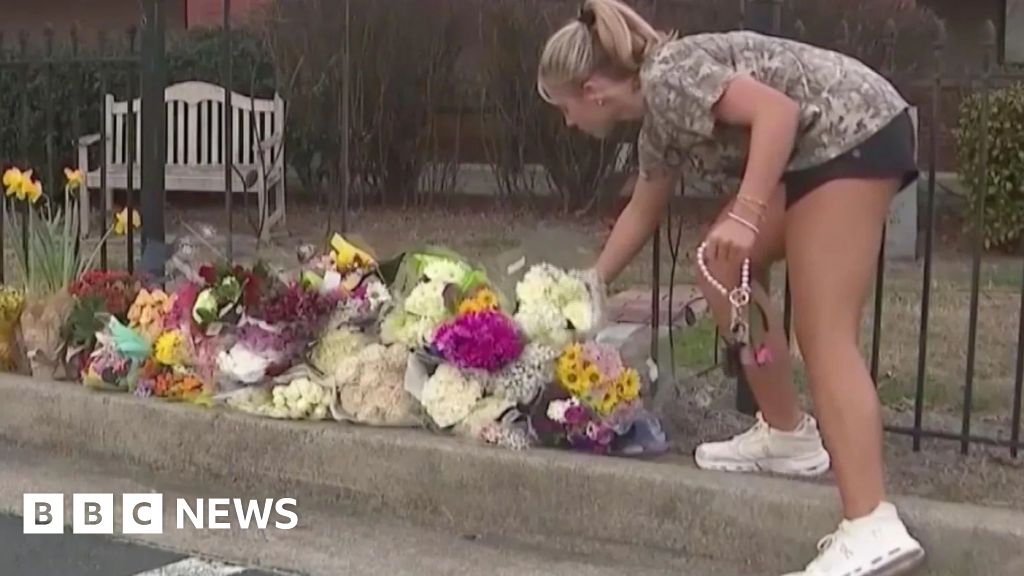
In a stark reminder of the persistent challenges facing societies worldwide, the recent tragedy in Tumbler Ridge, Canada, has drawn international attention and provoked a wave of reflection on how nations respond to internal crises. During a solemn candlelight vigil, Prime Minister Mark Carney—a figure traditionally associated with financial diplomacy—offered heartfelt words of solidarity to the devastated community. His presence, alongside opposition leader Pierre Poilievre and indigenous leaders, signified a rare moment of political unity amid a deeply painful national event. This tragedy, now etched into the annals of Canadian history, spotlighted the domestic implications of violence and their reverberations across global geopolitical landscapes.

  • The attacker, an 18-year-old transgender woman, opened fire at Tumbler Ridge Secondary School, claiming five students and a teacher before taking her own life.
  • Victims’ families and community members received briefings and condolences from political leaders, emphasizing the importance of national cohesion in the face of internal strife.
  • Canadian authorities described the incident as a case of the perpetrator “hunting,” and police confirmed the chaos was not targeted at specific individuals but rather indiscriminate in its violence.

Despite the tragic details, international analysts underline a broader geopolitical resonance — especially as Canada grapples with internal divisions and its role on the global stage. The unity displayed by Carney and Poilievre, who momentarily set aside partisan differences, has been lauded as essential to preserving societal stability. Historically, moments of national trauma have tested the resilience of democracies and their ability to project strength abroad. As noted by geopolitical scholars, these internal fissures can be exploited by foreign adversaries to weaken a nation’s standing, particularly in a world growing more multipolar and volatile.

International organizations have watched closely, with some questioning whether domestic tragedies will influence Canada’s foreign policy or its diplomatic posture. The incident underscores how internal security issues are intertwined with international perceptions of a country’s stability. The recent upheaval in Tumbler Ridge acts as a microcosm of the challenges faced by Western democracies—balancing civil liberties and public safety. Former historians and analysts warn that such events serve as pivotal moments that could swing national policies, fuel security measures, and influence the narrative in international forums.

Looking forward, the community’s resilience, exemplified by the local leaders’ call for grace and perseverance, signals an enduring struggle with the social fabric of modern societies. As British Columbia’s Premier David Eby emphasized, the commitment to providing a safe environment for students to return to school reflects a broader commitment to national stability. Still, the scars of this tragedy remain, and the weight of history looms large. Will these events catalyze meaningful change or be overshadowed by future crises? Only time will tell. In the echoes of this tragedy, the world witnesses not just a nation mourning its children but a society at a crossroads—one extension of history’s long, turbulent journey toward understanding, strength, and enduring resolve.

Officials probe DNA links at Nancy Guthrie’s home in recent investigation

In a development that could have far-reaching geopolitical repercussions, local authorities have announced that they are working to identify an individual through genetic evidence, though details about the evidence’s exact origin remain undisclosed. The sheriff’s department has emphasized that the investigation is ongoing, but the ambiguity surrounding the source of the DNA raises questions that echo in international corridors of power, especially as this incident intersects with broader issues of security, sovereignty, and global cooperation.

The uncertainty surrounding the unidentified DNA underscores the challenges faced by law enforcement agencies tasked with safeguarding national security in an increasingly interconnected world. While officials have refused to disclose where the DNA was recovered, experts suggest that such evidence, if linked to criminal activity or clandestine crossings, could potentially involve international actors. Analysts from organizations like INTERPOL warn that insufficient transparency in these investigations can complicate efforts to identify threats and foster trust among nations. The failure to reveal the geographic origin of the evidence hints at an underlying sensitivity that could suggest involvement or implications extending beyond local jurisdiction, possibly touching upon transnational criminal networks or foreign interference.

Historically, DNA evidence has been pivotal in defining security contours, especially when linked to international conflicts or covert activities. Experts like renowned historian Dr. Maria Jensen have noted that such incidents often serve as “early warning signals for larger geopolitical shifts,” emphasizing that *the response of nations to these unidentified threats often reflects underlying tensions and strategic ambitions.* The global community remains alert to how small pieces of evidence—such as an undisclosed DNA sample—can ignite disputes, escalate tensions, or provoke geopolitical realignments. In effect, this seemingly minor investigation may serve as a catalyst for conversations about border integrity, surveillance, and international law enforcement cooperation, especially amidst rising geopolitical hostilities elsewhere.

Organizations such as United Nations and regional bodies are closely observing developments, understanding that decisions made in local jurisdictions ripple outward across international borders. The incident highlights the delicate balance between a nation’s right to investigate internal matters and the collective responsibility to maintain global stability. As voices within the geopolitical community debate whether this discovery signifies a new form of threat or is merely a routine investigation, the broader implications remain open-ended. This is a reminder that the fabric of history is woven with these small yet significant threads—each discovery potentially shifting the balance of power. As nations grapple with these uncertainties, the weight of unpredictable geopolitical currents continues to surge beneath the surface—unseen yet undeniably powerful—poised to reshape the future in ways yet to be understood.

Remembering John Donnelly: A Legacy in Architecture and Society

In an era marked by rapid urbanization and cultural shifts, the life and work of John Donnelly serve as a poignant reminder of the profound role that dedicated professionals play in shaping our communities and preserving our heritage. A distinguished architect, educator, and conservationist, Donnelly’s contributions extended beyond brick and mortar to the social fabric that binds families and influences the education of future generations. His meticulous approach to design and deep appreciation for human skill exemplify a moral ethic that underscores the importance of integrity and community-centered planning in an increasingly fragmented society.

Throughout his career, Donnelly was deeply involved in projects that directly impact families and local communities. His work ranged from

  • housing schemes in London and Kent
  • waterside redevelopment
  • the sensitive conservation of historic buildings

, all of which have a lasting influence on the social cohesion and economic stability of the areas they serve. Sociologists and urban thinkers emphasize that well-designed spaces foster social interaction, support mental health, and create a sense of belonging — factors that are vital in an age of rising social tensions and demographic upheavals. As Donnelly often collaborated with fellow architects and heritage conservation efforts, his work epitomized a balanced approach that prioritizes community needs, cultural continuity, and environmental resilience.

The importance of such work extends into the realm of education. As a tutor and mentor at various polytechnics and art schools, Donnelly influenced generations of architects who carry forward his values of precision, fairness, and dedication to societal betterment. His teaching emphasized that building for people requires moral responsibility and a nuanced understanding of social issues—something sociologists like Herbert Gans and Leslie White have long highlighted as crucial for fostering healthy urban environments. In a world where social disparities are often reflected in the condition of our built environment, Donnelly’s emphasis on beauty, function, and respect for history underscores the need for future professionals to prioritize community well-being over superficial trends.

The social challenges faced today—ranging from housing crises to cultural identity tensions—demand not only innovative ideas but also a moral compass rooted in respect and fairness. The insights of social commentators reveal that the fabric of society is woven through our shared spaces, stories, and collective memories. Donnelly’s legacy reminds us that cultural preservation and thoughtful urban planning can serve as anchors amidst social upheaval, fostering stability for families and inspiring hope for a more harmonious society. As communities grapple with change, the enduring lesson is that architecture and conservation are not merely technical pursuits but moral acts—acts that redefine how society perceives itself and its future.

Looking forward, society faces the ongoing challenge of reconciling demographic shifts and cultural tensions with a shared commitment to dignity and inclusion. The hope lies in embracing the values exemplified by individuals like Donnelly: a dedication to craftsmanship, fairness, and a love for community. These qualities can serve as a moral compass guiding policymakers, educators, and citizens alike. As the twilight of our societal sunset approaches, perhaps the most vital reflection is this: that through the honest effort to build and preserve with integrity, we can forge a society resilient enough to confront its deepest challenges and compassionate enough to nurture hope for generations to come.

4chan’s Founder Denies Epstein Linked to Launch of Alt-Right Hub /pol/

Tech Industry Faces Disruption and Challenges in the Digital Age

Recent developments highlight the ever-evolving landscape of technology, where innovation often walks a tightrope between progress and controversy. The emergence of new platforms and shifts in online community dynamics are shaping how businesses adapt to an increasingly complex digital ecosystem. Notably, reports of decision-making processes surrounding controversial online spaces, such as **4chan**, illustrate the delicate balance companies must strike between innovation and societal impact.

Efforts to reintroduce a politics board to 4chan sparked debate about accountability and influence in digital communities. Although Epstein’s simplistic association with the decision was dismissed as inaccurate, the incident underscores the rapid dissemination of information and misinformation that can amplify or distort industry narratives. Such episodes are a stark reminder that digital platforms are not just tech products but catalysts for societal change. As industry leaders like **Meta** and **Twitter** grapple with moderation and user engagement, the potential for **disruptive innovations** to either stabilize or destabilize societal norms remains significant.

The tech sector’s key focus continues to pivot around leading-edge technologies, including artificial intelligence, blockchain, and the next generation of social media platforms. Innovators like **Tesla**’s Elon Musk and **Palantir**’s data algorithms are pushing boundaries that could revolutionize everything from autonomous vehicles to secure communications. According to analysts from Gartner and MIT, these shifts represent not just technological milestones but profound upheavals that threaten established models of business operation and user engagement. The acceleration of such technologies hints at a future where disruption is the new normal.

With every breakthrough, there are questions about regulation, market saturation, and ethical boundaries. Companies that lead in innovation and disruption will have to navigate a maze of legal, social, and economic challenges. As Peter Thiel and other forward-thinking investors emphasize, adaptability and vision will be crucial. The urgency to innovate outweighs the caution of yesterday’s standards, creating a landscape where only the most agile will thrive. Looking ahead, the industry must prepare for a future where technological advancements will not just transform industries but your daily life—demanding a strategic approach rooted in foresight and resilience.

7 Killer Horror Films That’ll Make You Glad You’re Flying Solo

Horror Movies: The Unexpected Cultural Statement for Today’s Single Youth

In a world driven by relentless streaming and cultural shifts, a fascinating redefinition of horror has emerged—one that resonates particularly with America’s single and youthful demographic. Traditionally, horror has been the domain of monsters, supernatural scares, and post-apocalyptic chaos. But lately, we see a cultural pivot: horror films now also serve as reflections of modern social dynamics, especially for those navigating the complex terrain of being single. Movies like It Follows, Get Out, and Ready or Not have tapped into the subconscious fears and societal attitudes surrounding independence and solitude, transforming horror into a social commentary as much as a thrill ride.

Within this context, the cultural impact is profound. These films aren’t just about scares—they embody the social anxiety of modern romantic and social relationships. Influencers and sociologists alike recognize a trend: the younger generation, often labeled as “digital natives,” increasingly find their social reality intertwined with themes of fear of rejection, societal pressure, and the unknown. For instance, the viral popularity of It Follows isn’t just about the supernatural entity—it symbolizes the dread of emotional baggage, transmitted not through sex but through the fear of intimacy itself. Similarly, Get Out mirrors the societal fears of assimilation and racial tension, becoming a modern myth that amplifies societal apprehensions through a horror lens.

  • It Follows: An allegory for the stress of dating and the fear of emotional attach ment.
  • Get Out: A reflection of societal fears about race, identity, and the nervousness of meeting new family members.
  • Ready or Not: The paranoia surrounding in-laws, tradition, and the illusion of safety within familial ties.

Building on this, many social analysts note that these films have a shared social relevance: they validate the fears of a generation that often feels overwhelmed by the pressures to conform, find “the one,” or even just date without repercussions. Viral influencers have started using these movies as part of their online narratives, turning horror into a form of *lifestyle protest*—an expression of independence and the rejection of societal expectations. The social relevance of this trend isn’t lost on brands either, as streaming services and streaming-oriented brands like Fandango and Prime Video increasingly cater to this demographic with curated horror collections and social media campaigns that emphasize a “single and fearless” lifestyle.

As these movies flood social feeds, a more profound question emerges: Are horror films now serving as a mirror of the societal sovereignty of single youth? They challenge the assumptions about relationships, turning fears into a form of cultural identity. These films are not just entertainment—they are messages, alliances, and even subtle acts of rebellion. The next big question: will this cinematic trend evolve into a broader cultural movement that redefines how society views independence, fear, and social connection in the digital age? Perhaps, as social media continues to amplify individual narratives and new social norms, the horror genre might just become an important lens through which we understand the future of social identity among youth—single, fearless, and forging their own paths in a spooky, yet intriguing world.

Top 8 winter jackets for guys: Expert-approved gear to keep you stylish and warm all season long

As winter’s final days loom, the quest for the perfect, long-lasting winter jacket becomes more than just a fashion choice; it’s a lifestyle necessity for those who spend significant time outdoors—be it explorers, professionals in extreme environments, or dedicated enthusiasts braving the elements. Recent insights from experts who have experienced the cold firsthand reveal that choosing a high-performance, ultra-warm jacket is not only about comfort but also about personal health and resilience. Whether you’re navigating icy terrains in the Arctic, reporting live from Toronto’s brisk streets, or simply enduring America’s colder regions, the right gear can define your winter experience, making style and function a seamless blend.

In a landscape where brands like Canada Goose, Shackleton, and Scandinavian-inspired Rains dominate the premium winter wear scene, the focus has shifted toward jackets that combine elegance, sustainability, and unprecedented warmth. For instance, Canada’s infamous cold climate has cultivated a tradition of serious outdoor apparel, and their models like the Langford Parka have become iconic not only for their durability but also for their understated style. As Winston Sih, a seasoned broadcast journalist in frigid environments, points out, a jacket that holds up in extreme conditions—with generous coverage and insulation—becomes essential when your outside time exceeds a few minutes.

Furthermore, innovation meets lifestyle with eco-friendly options like the WeatherWool All-Around Jacket. Made from 100% wool sourced locally in Connecticut, this jacket exemplifies an era where sustainability and quiet comfort are prioritized. Such pieces appeal strongly to a new generation of outdoor lovers eager to maintain their personal impact on the environment without sacrificing high-level performance. As Carl Murawski, a licensed electrician and outdoor gear reviewer, emphasizes, wool’s water resistance, strength, and warmth—qualities far superior to cotton—make it a standout choice for the socially conscious and adventurous alike. These jackets serve not just as attire but symbolize a lifestyle rooted in authentic connection to nature and responsibility.

The evolution of winter fashion is also about finding the perfect blend of luxury and utility. Premium options like the Goldwin Pertex Quantum Down Jacket or the Shackleton Titan Challenger exemplify jackets that are lightweight yet capable of withstanding the harshest cold snaps—ideal for those who view their outdoor gear as a personal statement of resilience. Such apparel, often transforming packability into an art form, allows wearers to move fluidly from winter hikes to urban commutes—embracing a lifestyle that prioritizes versatility, durability, and self-expression. As fashion historian Elizabeth Semmelhack describes, the modern jacket is an extension of individual identity, a reflection of values that include adventure, sustainability, and the pursuit of well-being—motifs that define the contemporary outdoor ethos.

In embracing these lifestyle shifts, young explorers and outdoor enthusiasts are creating a narrative where quality over quantity and personal impact become compass points. It’s about understanding that the ‘journey’—whether through winter storms or urban landscapes—is a pursuit of authenticity, strength, and wellness. By selecting apparel crafted with intention—be it from resilient wool, innovative down, or Scandinavian design—individuals are not merely dressing for the cold but consciously shaping their identity in a world that values a resilient spirit and self-reliance. As we look to the horizons of resilience and stylish practicality, it becomes clear that true outdoor lifestyle is not just about gear but about the commitment to forge a path where personal wellness and environmental consciousness walk hand in hand.

  • Invest in versatile, _weather-resistant jackets_ that serve multiple environments.
  • Prioritize _sustainable and ethically-made_ options to minimize impact.
  • Choose long-length, well-insulated pieces to ensure _core warmth_ during extended outdoor activities.
  • Remember, your clothing is a _reflection of your lifestyle_, resilience, and values—make it count.

The journey to embracing winter is ultimately a metaphor for life itself: a path requiring strength, choice, and adaptation. Every layer, every fabric, becomes more than just protection against cold—it embodies a desire to live intentionally, to challenge oneself, and to find joy in resilience. In a world where climate and culture intersect to forge our identities, these jackets stand as silent witnesses to our personal impact, guiding us not only into the cold but into a life of purpose and self-reliance.

Catherine Zeta-Jones Embraces Art Collecting as She Prepares for Exciting New Role

In an era increasingly defined by fleeting trends and superficial pursuits, the assertion that a prominent actress spends more time with New York “art people” than with her Hollywood counterparts signals a revival of a profound cultural truth: culture is the bedrock of identity, tradition, and societal cohesion. While the allure of bustling film sets may dazzle the masses, it is the quieter, often underappreciated world of arts, philosophy, and—most critically—culture as a living, breathing entity that sustains the soul of a nation. As Ortega y Gasset proclaimed, “Without a cultural foundation, a society cannot sustain itself; it becomes a mere collection of individuals without shared meaning.”

This statement from the actress invites us to reflect on the enduring importance of culture beyond the ephemeral glare of Hollywood fame. New York’s art scene, with its galleries, residencies, and avant-garde cafes, embodies a tradition rooted in the cultivation of the human spirit—an arena where ideas are challenged and values forged. Such spaces echo the spirit of the great Renaissance traditions and the Enlightenment rationality, reminding us that progress is ultimately rooted in the cultural dialogues that shape our understanding of the world. Philosophers like T.S. Eliot have emphasized that true culture is not mere ornament, but the vital fabric connecting past, present, and future—a continual process of self-renewal that keeps society resilient against the corrosion of nihilism.

In this context, the actress’s preference underscores a vital cultural truth: that a vibrant, ongoing dialogue with the arts—whether through the visual, literary, or performing arts—is essential for fostering a sense of community and continuity. The arts serve as—not merely a reflection of current mores— but as the guardians of tradition, transmitting values that bind generations of citizens. Historical figures like Chesterton have illustrated how genuine culture, rooted in tradition, resists the disintegration of societal fabric. When public figures champion this principle, they remind society that the arts are not frivolous pursuits but the very essence of a healthy civilization.

Moreover, this focus on cultural roots acts as a form of defiance against the homogenizing forces of globalization. It is a conscious choice to nurture local traditions and practices that define a community’s identity. Tocqueville observed that democracies often risk losing their soul if they do not actively preserve their cultural distinctiveness amidst the “tyranny of the majority.” Today, in a relentless march towards sameness, the act of engaging with local art scenes becomes an act of patriotic resilience—an affirmation that cultural memory and shared values are what turn a mere population into a society.

In closing, the act of an actress choosing to spend her time immersed in New York’s artistic circles symbolizes a broader truth: that culture is both the memory of humanity and its prophecy—an unfolding story that bridges our past and beckons towards our future. As humanity’s collective canvas is painted across generations, it is the enduring dialogue between tradition and innovation that keeps the human spirit vital and forward-looking. For in the quiet echoes of the arts, and in their preservation, lies the promise that our societies, much like their creators, are destined to continue evolving—not as slaves of conformity, but as heirs of a timeless cultural legacy, resilient and unbowed amid the tumult of history.

Social Media Auto Publish Powered By : XYZScripts.com