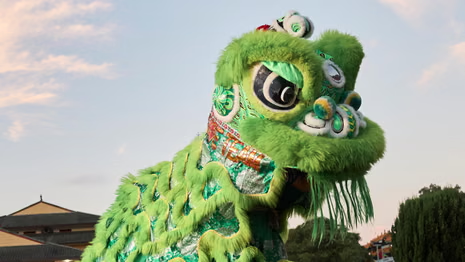
In an era where global influences are woven into the fabric of our daily lives, the latest trend on TikTok may seem like harmless cultural curiosity—but beneath the surface, it reveals an ongoing battle over identity, national pride, and soft power. Enter Chinamaxxing, a phenomenon where younger generations are immersing themselves in Chinese customs, language, and aesthetics as a form of playful cultural exchange. From practicing qigong stretches to binge-watching Chinese period dramas, fans are seeking a sense of connection in an increasingly polarized world. While some hail this as an inspiring embrace of multiculturalism, others see it as a subtle challenge to Western dominance, stirring debates about loyalty, influence, and the future of national identity.
This trend highlights a broader cultural shift—one that champions *personal impact* through self-expression, leisure, and newfound curiosity. At its core, wellness and lifestyle are no longer confined to traditional norms or solely Western paradigms. Influencers on platforms like TikTok are showcasing how infusing their routines with Chinese philosophies and aesthetics can be a form of *personal empowerment*. Think of it as a quest to “become Chinese” through learning Mandarin on Duolingo or adopting habits like drinking hot water every morning. To many young people, such practices symbolize an act of rebellious individuality—an assertion that identity can be fluid, adaptable, and deeply personal in our interconnected yet divided world.
Yet, this enthusiasm has ignited a political undertone. Critics from across the ideological spectrum argue that soft power has tangible implications; some view it as a subtle form of influence that could reshape perceptions of loyalty. The New York Post describes Chinamaxxing as not just a lifestyle choice but a potential “aesthetic defect,” warning that many influencers may be *denigrating* their own country while elevating another superpower. Meanwhile, outlets like Fox News explore concerns over the glamorization of living in communist China, framing it as a dangerous drift away from American values. This tension illustrates how culture, once an intangible force, now occupies a front row seat in geopolitical dialogues. The phenomenon underscores the importance of a *nuanced view*: cultural fascination should inspire curiosity rather than suspicion, but it also reminds us that soft power can be a tool wielded intentionally—sometimes, subtly, and often unconsciously.
As the debate unfolds, it offers a potent reminder that our cultural influences—whether from Hollywood, London, or Beijing—are a reflection of our deepest values, aspirations, and fears. The youthful pursuit of understanding other cultures does more than broaden horizons; it challenges us to confront how identity evolves in a complex global landscape. When viewed through the lens of lifestyle and personal growth, this movement reveals an inspiring truth: that embracing change, curiosity, and cultural exchange can become a beacon for resilience and authenticity. In every ritual, language, or tradition that a young individual adopts, there lies a quiet act of rebellion—a testament to the enduring power of culture to shape not just our habits, but our very outlook on what it means to be part of something greater. Ultimately, lifestyle is not merely a personal journey—it is a journey to discover and redefine ourselves in a shifting world, guided by the timeless principle that *our greatest strength lies in our ability to adapt, learn, and grow*.