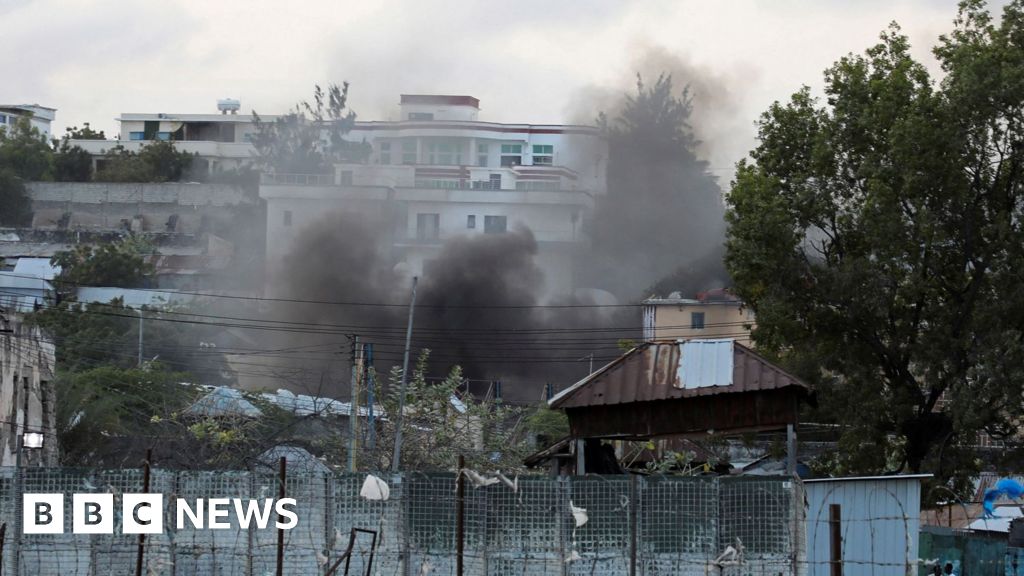
In a dramatic escalation of Somalia’s ongoing security crisis, seven al-Shabab militants were reportedly killed after an audacious attack on one of Mogadishu’s most secure detention facilities. The Godka Jilicow prison, located near the presidential palace and managed by the nation’s National Intelligence and Security Agency (NISA), became the battleground in a daring assault that underscores the persistent threat posed by the insurgent group. Despite claims by al-Shabab to have released all Muslim prisoners and inflicted heavy casualties, the Somali government affirmed that the perpetrators were eliminated, highlighting the resilience of state security forces amid ongoing turmoil.
The attack began around 16:40 local time, characterized by a powerful explosion followed by intense gunfire, as militants disguised themselves as soldiers in an attempt to breach the facility’s defenses. The incident, unfolding near the heart of the capital, underscores how al-Shabab continues to threaten Somalia’s fragile stability. The group, linked to al-Qaeda, has waged a near two-decade insurgency, relentlessly attacking government institutions and security forces in an effort to destabilize the country and enforce its brutal interpretation of Islamic law. Hours prior to the attack, the government had reopened previously closed key roads, citing improvements in security—an acknowledgment that the threat remains unmitigated and fluid.
Analysts and international organizations observe that these security breaches reveal a larger geopolitical challenge: the failure to fully eradicate insurgent networks that thrive in Somalia’s lawless corridors and dysfunctional governance. UN reports and independent observers note that while Somalia’s government claims to have regained some control, al-Shabab remains a potent force—capable of executing daring high-profile operations without significant deterrence. The attack’s proximity to the presidency symbolically embodies the ongoing struggle between the Somali state and insurgent elements, which continue to test the limits of national sovereignty and international patience.
- The assault on the prison not only signifies a tactical victory for al-Shabab but also highlights the failure of recent security measures intended to stabilize Mogadishu.
- With the group now claiming to have freed prisoners and inflicted casualties, the broader implications for regional security are profound—a reminder that peace remains elusive in the Horn of Africa.
- Critics argue that, despite international support and local efforts, Somalia’s political and military institutions are not yet resilient enough to counteract the insurgency’s resilience.
As the world watches Somalia’s fragile state teetering on the edge, the echoes of history ring louder: insurgencies fueled by radical ideologies, weak governance, and foreign intervention have often led to chaos and violence. The recent attack underscores how deeply entrenched the conflict remains, with no clear end in sight. It serves as a stark warning to policymakers—until the root causes of instability are addressed, the cycle of violence will continue, leaving a scar on the nation’s future. With history’s pen poised, the question remains: can Somalia, or the international community, forge a path toward lasting peace, or will this chapter in Africa’s history be yet another open wound that stubbornly refuses to heal?