Investigating the Claims of Democratic Rhetoric Inspiring Violence
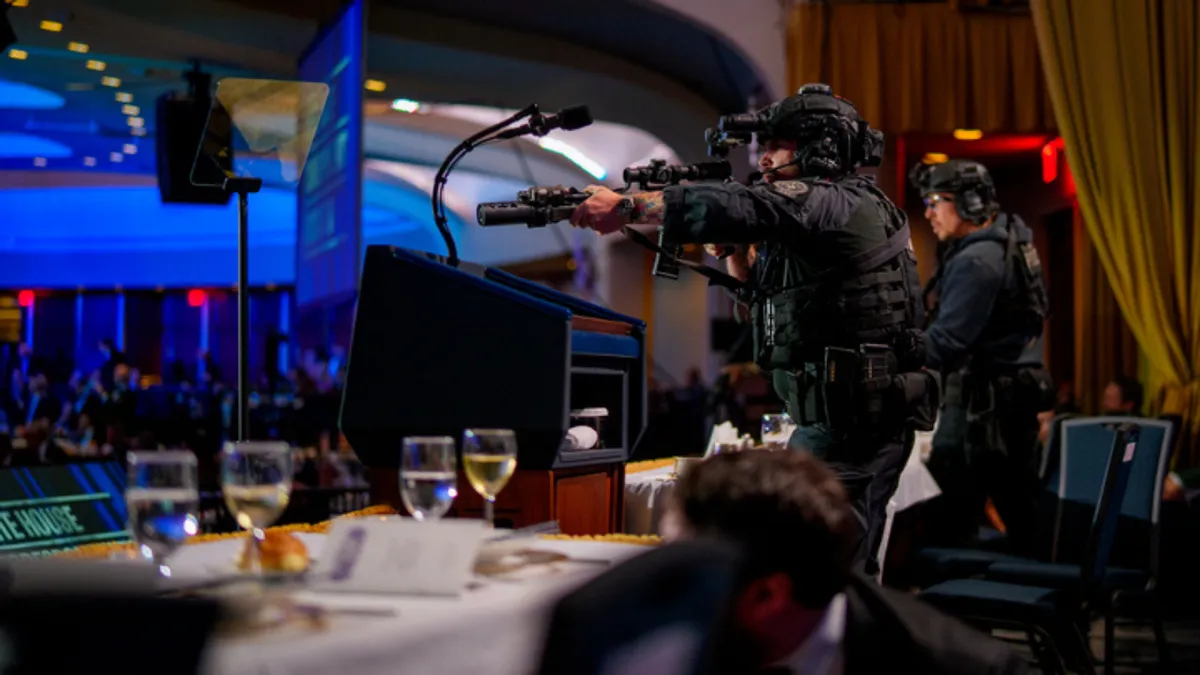
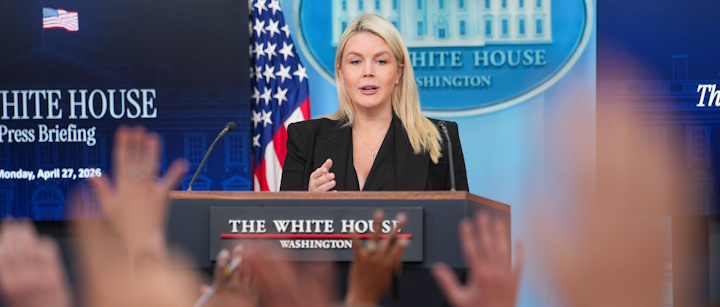
Recently, White House Press Secretary Karoline Leavitt accused several Democratic figures of engaging in “hateful and violent rhetoric” that she claims directly “inspired violence” against President Donald Trump and Republicans. These assertions stem from a briefing following an incident involving an armed individual attempting to access the White House Correspondents’ Association dinner. While the connection between inflammatory political speech and violence warrants scrutiny, it is essential to examine the evidence and context behind these claims.
Assessing the Statements Cited by Leavitt
Leavitt highlighted remarks by individuals like House Democratic Leader Hakeem Jeffries and others, suggesting their language encourages violence. However, her presentation stripped context from these statements. For instance, Leavitt quoted Jeffries describing an “era of maximum warfare, everywhere, all the time,” as reflecting a political strategy; but this remark was made within a broader discussion condemning political violence and promoting electoral and legislative action. Jeffries himself clarified that his comments referred to partisan redistricting battles and that he condemned violence.
- Jeffries’s “maximum warfare” comment, originally from a 2025 New York Times article, was part of a strategic discourse on redistricting, not an endorsement of violent acts.
- Jimmy Kimmel’s controversial joke about Melania Trump was a satirical comment on age, not a threat. When criticized, Kimmel explicitly stated it was “obviously” a joke about their age difference, not inciting violence.
- Statements by other Democrats, such as Pressley’s mention of “seeing you in the streets,” have been previously involved in debates over protest and civil disobedience but do not constitute calls for violence.
The Role of Context and Interpretation in Political Speech
Expert analyses from political communication specialists highlight that many of these remarks are taken out of or lacking full context. Social scientists emphasize that political speech often uses hyperbolic or metaphorical language that, when isolated, can be misconstrued as inciting violence. Therefore, it’s vital to assess statements within their complete discourse. For example, Senator Elizabeth Warren’s description of Trump as making the country seem like a “fascist state” is a political critique, not a call to action.
Moreover, some remarks—such as Pritzker’s call for “mass protests and disruptions”—have been characterized by critics as provocative. But in speech analysis and legal standards, establishing intent to incite violence requires more explicit language than political rhetoric, which often remains within the bounds of protected free speech. The mere presence of heated language does not automatically translate into actionable threats or incitement, a point corroborated by First Amendment scholars.
Conclusion: Ensuring Accurate Discourse in a Democratic Society
While responsible citizens and policymakers must monitor rhetoric that could potentially escalate into violence, it is equally crucial to maintain accurate representations of political statements. Misrepresenting or decontextualizing remarks fosters division and undermines democratic dialogue. As experts from institutions like the Annenberg Public Policy Center and First Amendment think tanks assert, truth and context are foundational to a healthy democracy.
In a nation founded on free expression, it is imperative that accusations of inciting violence are based on clear evidence and comprehensive understanding. Falsely attributing violent intent to political rhetoric not only distorts reality but also risks weaponizing information against opponents. The path forward demands vigilance and integrity—core principles that uphold democratic governance and the responsible exercise of free speech.