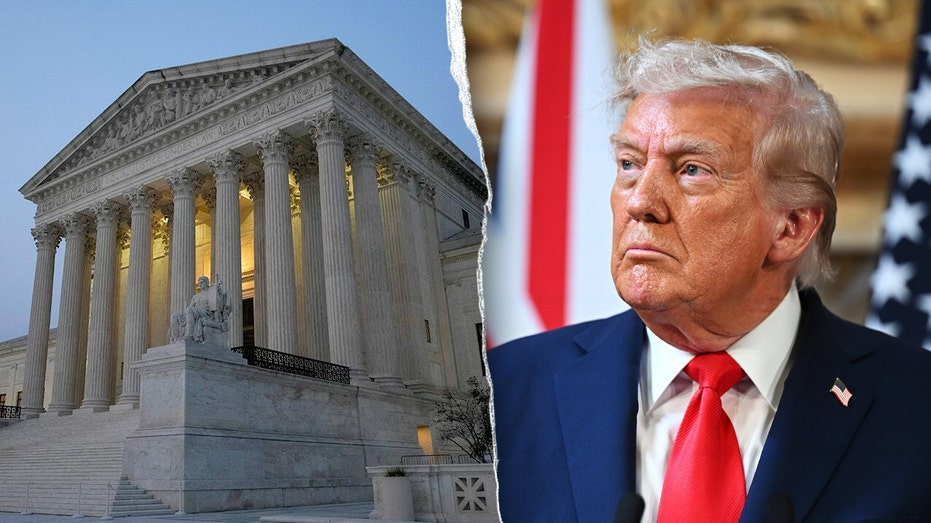
A significant legislative maneuver unfolded in South Carolina this week as a group of state senators, including five Republicans, successfully blocked a proposal aimed at redrawing the state’s congressional district map. The unexpected defiance came despite a public warning from former President Donald Trump, who declared he would be ‘watching closely’ as lawmakers considered the redistricting changes.
The setback marks a notable moment of intra-party division within the GOP-dominated legislature and carries substantial implications for the upcoming midterm elections, where the Republican Party is defending a razor-thin House majority. The proposed changes sought to eliminate the state’s only Democrat-dominated U.S. House seat, currently held by longtime Representative Jim Clyburn.
Legislative Defiance and National Stakes
The pivotal vote saw five Republican state senators align with Democrats to defeat a measure that would have allowed the chamber to vote on redistricting after the current legislative session concludes later this week. This alliance effectively stalled the redrawing process, making it considerably more difficult for South Carolina to join other southern states like Tennessee, Alabama, and Louisiana, which are actively altering their maps to consolidate Republican power.
The broader national context for these redistricting battles stems from a recent decision by the Supreme Court’s conservative majority, which curtailed a key protection within the landmark 1965 Voting Rights Act. The justices ruled that race should not be the primary factor dictating the redrawing of legislative district maps, a decision that has emboldened Republican efforts to reshape electoral boundaries nationwide.
“This legislative outcome underscores the complexities of balancing partisan objectives with institutional processes, even under intense national scrutiny.” – Matox News Editorial Board
Impact on South Carolina’s Political Map
The primary target of the proposed South Carolina redistricting was the district held by Representative Jim Clyburn, a prominent Democrat. The aim was to create a new map that could potentially put Clyburn’s seat in jeopardy. Despite these efforts, Clyburn has expressed optimism about his chances for re-election, indicating a confidence that may now be bolstered by the legislative block.
The debate over congressional maps is not merely about lines on a chart; it fundamentally shapes voter representation and the balance of power in Washington. For a state like South Carolina, which has largely leaned Republican in recent federal elections, the preservation of its single Democratic-held seat is a significant outcome for political diversity within its delegation.
What Lies Ahead for Redistricting Efforts?
With the current legislative session nearing its close, the defeat of this proposal means that any further attempts to redraw the maps will face significant procedural hurdles. The immediate consequence is that the existing congressional map will likely remain in place for the upcoming midterm elections, a development that complicates the Republican Party’s national strategy to solidify its control of the House.
The episode highlights the ongoing tension between partisan ambitions and the institutional mechanisms of governance. While the desire to gain electoral advantage is a constant in politics, the ability of a bipartisan group to resist such pressure speaks to the enduring checks and balances within the legislative process. As reported by News Desk, this development will undoubtedly fuel further debate on electoral fairness and representation.
The outcome in South Carolina serves as a potent reminder that even with significant national attention and party pressure, legislative bodies can sometimes chart their own course, prioritizing immediate procedural integrity over long-term partisan aims. The battle for the House majority continues, but South Carolina’s map, for now, remains unchanged.