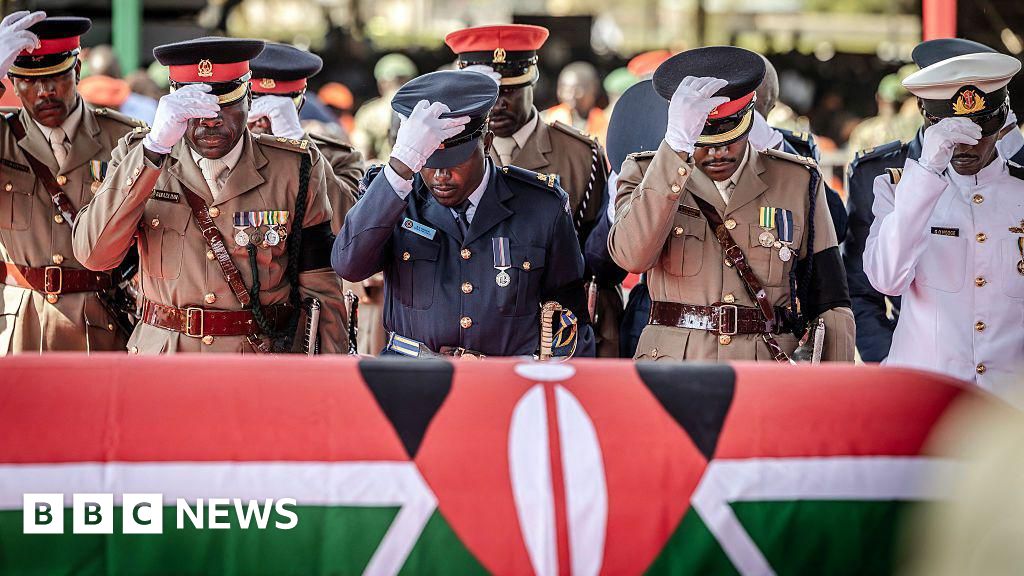
Kenya bid farewell to one of its most influential political figures, Raila Odinga, whose death at age 80 marked the end of an era defined by intense struggle, resilience, and unwavering dedication to justice and democracy. Odinga, a revered opposition leader and former prime minister, was laid to rest in his native Western Kenya, after days of mournful ceremonies that intertwined national pride with underlying tensions that continue to shape Kenyan politics. His funeral, attended by thousands and supported by prominent figures including President William Ruto, underscored the country’s ongoing voyage through complex democratic reforms and societal challenges.
<p>The life of Odinga was emblematic of Kenya’s tumultuous political landscape, where contested elections and deep social divides have often led to upheaval. Starting with his role following the disputed <u>2007 election</u>, which plunged Kenya into violence before he assumed the role of prime minister as part of a fragile power-sharing agreement, Odinga became a symbol of resistance against authoritarian tendencies. His repeated bids for the presidency—five campaigns in total—though ultimately unsuccessful, cemented his status as a leader who fought tirelessly for the country's democratic institutions. Analysis by <em>international political analysts</em> suggests that Odinga’s influence shaped Kenya's political trajectory, making him a figure pivotal not just nationally but within East Africa’s broader geopolitics.</p>

<p>However, Odinga’s passing exposes the delicate balance Kenya must maintain amidst evolving internal and external pressures. His supporters, especially in Western Kenya, see him as a patriot who embodied the fight for justice and unity, echoing the sentiments of figures like <strong>Barack Obama</strong>, who called him a “true champion of democracy.” Yet, the funerary rites were marred by chaos, with police firing on mourners at a public viewing, leading to casualties. Such scenes reveal deep-rooted social fissures and the ongoing struggle between state authority and civil discontent—dynamics that significantly influence the geopolitical stability of Kenya and its neighbors. According to <em>global security think tanks</em>, these incidents serve as a stark reminder of the fragility of Kenya’s stability, which is intertwined with regional security and economic development initiatives.</p>

<p>The <u>international community</u>, including the <strong>United Nations</strong> and regional bodies like the <strong> East African Community</strong>, monitors Kenya’s evolving political landscape closely. As Kenya navigates this period of mourning and transition, analysts warn that the choices made in the coming months could either strengthen democratic norms or deepen divisions that threaten regional stability. Odinga’s legacy, infused with dreams of unity and justice, continues to influence Kenyan society at its core. Historians emphasize that history often hinges on moments of collective memory, and the current memorials—marked by both reverence and chaos—may serve as a turning point in Kenya’s journey towards enduring national cohesion.</p>

<p>As the nation honors <strong>Raila Odinga</strong>, the weight of history presses heavily on its shoulders. His burial at the family mausoleum near his father’s homestead is a poignant symbol of the lasting power of legacy and sacrifice. The unfolding story of Kenya’s future remains uncertain, yet it is clear that in the shadows of loss, there lurks the potential for renewal—*a pivotal moment where the decisions of today will echo through generations*. For now, the nation mourns its hero, but it also steels itself for the tumultuous road ahead—an uncharted chapter where the spirit of resilience must endure against the darkness of division and despair.</p>