Alabama’s leadership is actively preparing for potential federal court rulings on its electoral districts, underscoring the state’s commitment to implementing its legislatively approved maps.
Governor Kay Ivey has taken a decisive step, signing legislation that paves the way for special primary elections should federal courts permit Alabama to utilize its 2023 congressional district lines. This move comes as the state presses the U.S. Supreme Court for clarity on a contentious redistricting battle, aiming to assert local control over electoral boundaries. The future of the Alabama congressional map now largely hinges on the nation’s highest judicial authority.
Proactive Legislative Measures
Governor Ivey’s recent signing of legislation on Friday demonstrates a proactive strategy by Alabama to be fully prepared for any favorable court decisions. This measure specifically targets U.S. House districts, with similar legislation also enacted for state Senate districts from 2021. The governor’s office emphasized the swift action by the legislature during a special session called to address the issue.
“Alabama knows our state, our people and our districts best.” – Governor Kay Ivey
Governor Ivey expressed gratitude for the legislative body’s responsiveness, stating, “With this special session successfully behind us, Alabama now stands ready to quickly act, should the courts issue favorable rulings in our ongoing redistricting cases.” She added, “I thank the Legislature for answering my call to address the issue in fast order. I am grateful to Speaker Ledbetter and Pro Tem Gudger for their strong leadership and focus this week.”
Federal Court Blocks and State’s Supreme Court Appeal
The state’s efforts to implement its preferred Alabama congressional map have faced recent setbacks in lower federal courts. A federal court on Friday denied an emergency motion for a stay in the congressional redistricting case. The court cited a lack of authority to “upend Alabama’s status quo” while the injunction establishing that status quo is well under review by the Supreme Court.
In response, Alabama’s legal team is intensifying its appeal to the U.S. Supreme Court, seeking a definitive ruling that would allow the state to proceed with its legislatively approved boundaries. State Attorney General Steve Marshall reaffirmed the state’s commitment, stating, “I will continue to fight for Alabama to be able to use the congressional map the people’s elected representatives enacted.” Marshall, whose comments were highlighted in reporting from Fox News Digital, further asserted that the map was drawn based on “lawful policy goals.”
Upholding Institutional Integrity and State Sovereignty
This ongoing legal challenge highlights a significant institutional power struggle between state legislative authority and federal judicial oversight. For Alabama, the core of the argument rests on the principle that elected state representatives are best positioned to determine district lines, reflecting the unique demographics and priorities of their constituents.
The proactive steps taken by Governor Ivey and the state legislature underscore a commitment to maintaining order and ensuring that the democratic process, as defined by state law, can proceed without undue delay. The outcome of this case will not only shape Alabama’s political landscape for future elections but could also set precedents for other states grappling with similar redistricting disputes, emphasizing the importance of state sovereignty in electoral matters.
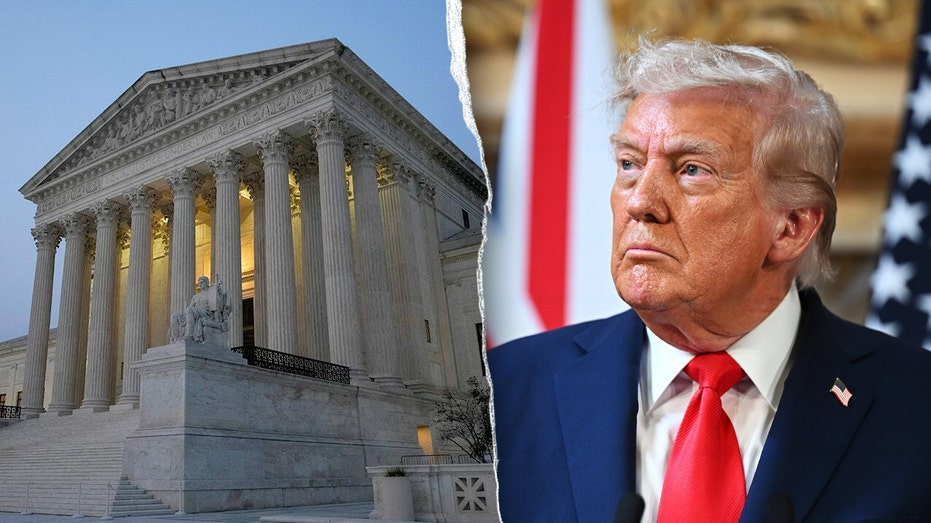
As the legal process unfolds, Alabama’s leadership remains steadfast in its defense of the maps, asserting the fundamental right of the people’s representatives to define their electoral future. All eyes now turn to the U.S. Supreme Court, whose impending decision will either greenlight Alabama’s carefully crafted redistricting plan or prolong the legal uncertainty surrounding its electoral boundaries.