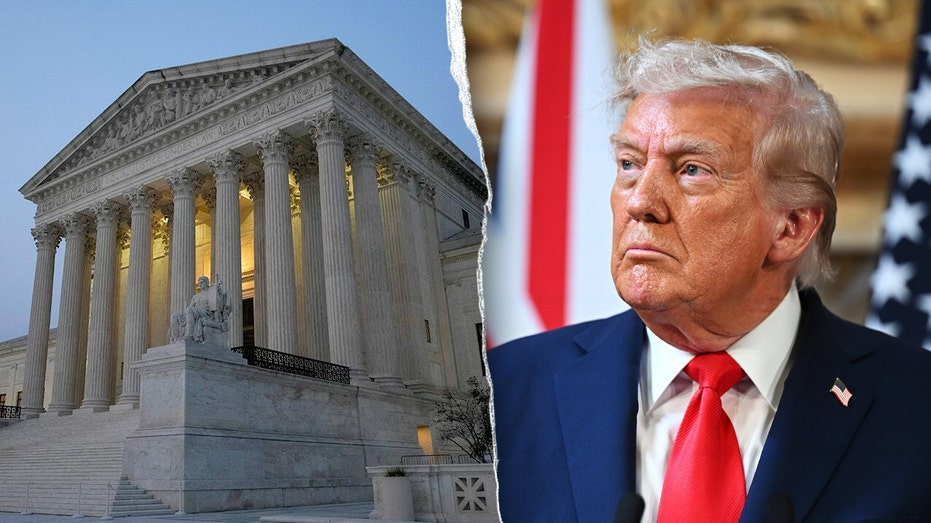
Alabama’s Attorney General, Steve Marshall, has initiated a significant legal challenge before the Supreme Court, aiming to reverse a prior ruling that imposed limitations on the state’s decennial redistricting process. This strategic maneuver follows a recent Louisiana Supreme Court decision, which Marshall believes fundamentally alters the legal landscape for how states can legitimately defend their legislative maps. The initiative signals a renewed and potentially decisive phase in the ongoing national debate over electoral boundaries, the role of race in district drawing, and the balance of institutional power. This aggressive posture aligns with a commitment to upholding established principles of governance and electoral integrity.
The “Callais” Catalyst and Alabama’s Stand
The core of Alabama’s ambitious argument hinges on the recent Louisiana “Callais” ruling. This decision by the Louisiana Supreme Court struck down that state’s congressional map, specifically impacting districts centered on New Orleans and a narrow majority-minority corridor. For Alabama, the “Callais” decision is seen as a pivotal development, suggesting that the Supreme Court’s previous stance, which some argue overemphasized racial factors in requiring the creation of specific districts, may now be open to re-evaluation. Attorney General Marshall posits that the Louisiana outcome offers a crucial new interpretation, providing states like Alabama a clearer path to prioritize historical redistricting criteria.
Defending Traditional Principles Against Judicial Overreach
Attorney General Marshall expressed considerable enthusiasm for this legal development, telling the Matox News source, Fox News Digital, that the “Callais” ruling provides a robust framework for Alabama to defend its maps drawn in both 2021 and 2023. He staunchly emphasized that these maps were constructed based on long-standing, historical redistricting principles. In his view, the Louisiana decision now clarifies that these traditional methods represent “constitutional exercises of that authority,” free from the undue influence of racial predominance. Marshall highlighted the Supreme Court’s broader, consistent analysis that race should not be the singular or predominant factor in drawing congressional districts — a principle he believes was unfortunately undermined in Alabama’s previous legal battles. This push underscores a commitment to electoral maps that reflect geography and community, not solely demographic composition.
Navigating the Legal Labyrinth Post-“Allen v. Milligan”
The state of Alabama currently operates under an injunction against its prior redistricting map, a direct consequence of the Supreme Court’s earlier “Allen v. Milligan” ruling. That landmark decision invalidated Alabama’s initial redistricting effort, with critics contending the ruling wrongly weighted racial factors in mandating the creation of what became a second Democratic-favored district within the traditionally conservative state. Marshall noted a critical distinction: unlike Louisiana, which was able to secure direct relief through the “Callais” decision, Alabama must now actively seek removal from its existing injunction by a three-judge panel. This procedural step is absolutely crucial for the state to either revert to its originally challenged map or empower the legislature to draw a new one, aligning with what Marshall perceives as the now-clarified constitutional framework. The stakes are exceptionally high for the state’s legislative autonomy.
“Now they have a framework for Alabama to directly defend what the legislature did both in 2021 and 2023… drawing maps based on historical redistricting principles that now I think Callais makes clear were constitutional exercises of that authority.”
This renewed legal offensive by Alabama’s Attorney General underscores the persistent and complex challenges surrounding redistricting nationwide. The state’s aggressive posture signals a firm commitment to upholding what its leaders interpret as constitutionally sound methods for drawing electoral maps, potentially setting a significant precedent for other states grappling with similar issues. The outcome of this Supreme Court gambit could redefine the delicate balance between traditional redistricting principles and interpretations of the Voting Rights Act, with profound implications for future elections, legislative representation, and the very structure of democratic governance across the country.