Matox News

Truth Over Trends, always!

Why Are They Failing to Resolve Their Border Dispute?

In a stark reminder of the fragility of peace in the Asia-Pacific region, renewed hostilities have erupted along the border between Thailand and Cambodia. After a brief lull post the US-brokered ceasefire in July, violence has resumed with artillery, rockets, and air strikes echoing across a corridor that has seen villagers evacuated twice within five months. The incident that ignited this latest flare-up—a Thai engineering team being allegedly fired upon by Cambodian troops—may seem minor, but in a geopolitically volatile environment, even small provocations can escalate swiftly into broader conflict. Analysts warn that both countries are engaging in a dangerous game of brinkmanship, with trust between them shattered and diplomatic channels almost entirely severed.

  • The ceasefire signed in July was heralded by President Trump as a significant breakthrough. However, scholars and international observers have been quick to point out that the agreement was inherently fragile, largely dependent on external pressures, particularly from the US. The fact that it was secured primarily through threats of tariffs and economic leverage, especially in Thailand’s case, underscores the superficiality of the peace. Now, with both nations resuming confrontation, it becomes increasingly clear that geopolitical patience and trust are in short supply, paving the way for a protracted conflict that could destabilize the entire region.

The ongoing clashes are marked not only by the resumption of conventional combat but also by the disturbing use of land-mines laid deliberately in disputed zones. Reports from Thai sources reveal at least seven soldiers injured or maimed by these devices, which Cambodia continues to deploy despite international criticism. Cambodian leadership, particularly Hun Sen, appears motivated less by strategic necessity and more by a desire to assert dominance and suffer no diminution of their territorial claims. While publicly pleading for restraint, their actions on the ground tell a different story, with military leaders expanding fortifications and increasing their provocations. This stark paradox feeds into a narrative of regional instability, where sovereignty is challenged by aggressive posturing and unverified claims.

From a geopolitical standpoint, this conflict exemplifies how small conflicts over minor border territories can snowball into broader regional crises. Experts at the International Crisis Group warn that without decisive international intervention or renewed diplomacy, the risk of a wider confrontation remains high. The complex web of relationships—Thailand’s sensitivity about its border integrity, Cambodia’s own strategic vulnerabilities, and the shadow of US influence—creates a tinderbox environment. Equally concerning are the political dynamics affecting leadership in Bangkok and Phnom Penh, with military influence expanding amidst government instability and public opinion supporting a hard-line stance. The situation underscores how fragile peace remains when trust and diplomacy are sidelined in favor of military might.

The weight of history hangs heavy over this ongoing saga, where the decisions of the present are shaping the future geopolitical landscape. As historian Robert D. Kaplan notes, such border disputes are not merely about land but about asserting sovereignty, pride, and national identity—elements that are difficult to reconcile with diplomacy under the shadow of nationalistic fervor. Tonight, as artillery still rumbles and families wonder if they will return to their homes, the world watches a narrative of conflict that risks spiraling beyond control. The unfolding chapter remains unwritten, but the lessons of history suggest that unresolved grievances, when compounded by international indifference, can ignite regional crises with consequences reaching far beyond the immediate battlefield. It is here, amid the echoes of past disputes and future uncertainties, that history continues to be forged—one skirmish at a time.

Nobel Officials Baffled on When Peace Winner Will Show Up for Ceremony

Venezuela’s Ongoing Struggle for Democracy and the International Power Play

Venezuela faces a critical juncture as opposition leader María Corina Machado, a Nobel Peace Prize laureate, remains in hiding amidst escalating political repression. Her absence from a planned press conference, coupled with the Nobel Institute’s statement that they are “in the dark” about her whereabouts, signals a broader pattern of the regime’s clampdown on dissent. For years, Venezuelan rulers have dismissed opposition voices and manipulated electoral processes, but Machado’s situation underscores a much deeper crisis that extends beyond national borders.

The controversy surrounding Machado’s official recognition and her refusal to accept the legitimacy of the 2024 election result stands as a stark reminder of the crisis of democracy in the country. Critics argue that the election—widely regarded as fraudulent—was designed to cement Maduro’s grip on power, dismissing international calls for free and fair elections. Yet, the global community remains divided. Some nations, including the United States, have officially recognized the opposition candidate, Edmundo Gonzalez, as the legitimate president-elect, further fueling the geopolitical tensions that threaten regional stability.

International Dimensions and Broader Geopolitical Impact

The Nobel Peace Prize awarded to Machado was intended to elevate the fight for democratic principles, but her current situation reveals how authoritarian regimes aggressively suppress such efforts. The Venezuelan government’s statement branding Machado a “fugitive” and her criminal investigations—centered around alleged acts of conspiracy, incitement of hatred, and terrorism—highlight the use of state apparatus to silence dissent and resist international pressure. Analysts warn that these tactics not only embolden regimes in Latin America but also set a dangerous precedent for authoritarian resilience across the globe.

From an international geopolitical perspective, the crisis in Venezuela stands as a clear indication of shifting alliances and power struggles. While the U.S. and some Western nations push for regime change and the restoration of democratic norms, Russia, China, and allies in Latin America maintain support for Maduro’s government, citing sovereignty and non-intervention. This diplomatic standoff underscores a broader contest for influence in the Western Hemisphere, reminiscent of Cold War-era polarizations. According to prominent international organizations, such as the United Nations, stability in Venezuela is integral to regional security, yet their capacity to influence the regime remains limited.

The Future of Venezuela and the International Community’s Role

The unfolding narrative leaves the world with a stark question: Will international diplomacy and strategic interests prolong the suffering of the Venezuelan people, or can a new political order emerge? If Machado defies intimidation and attends her Nobel ceremony, her public appearance would symbolize a defiance of authoritarian oppression — a powerful rallying cry for millions seeking freedom. Historically, such moments have served as turning points, mobilizing international pressure and fomenting change. Conversely, if the regime’s tactics succeed in de-legitimizing opposition, it risks further entrenching tyranny and sowing instability that could ripple beyond Latin America.

As history unfolds in Venezuela, the world remains watchful. Every decision, every alliance, and every act of resistance carries the weight of fate and legacy. In the theatre of geopolitics, the links between dignity, democracy, and power are more intertwined than ever — and the next chapter is yet to be written, with the weight of history hanging in the balance.

Trump Paves Path for Nvidia to Export Advanced AI Chips to China

US-China Tech Duel Reshapes Geopolitical Landscape

In a dramatic turn of events, former President Donald Trump has authorized Nvidia to resume sales of its advanced AI computer chips to China, breaking decades of strict export controls designed to safeguard US national security interests. This decision marks a significant divergence from previous administrations’ policies, which prioritized technological supremacy and the containment of Chinese technological ambitions. The move was announced via social media, with Trump asserting that the US would “allow NVIDIA to ship its H200 products to approved customers in China, and other Countries,” and emphasizing that the US would retain a 25% share of proceeds—more than the prior 15% agreement. Such a financial arrangement signals a strategic pivot, highlighting the evolving calculus over global technological dominance and economic leverage.

However, this shift isn’t without controversy. Congressional Democrats like Elizabeth Warren and Andy Kim voiced substantial criticism, warning that such sales could empower China’s surveillance, censorship, and military capabilities. Their concerns underscore a broader debate: does the pursuit of economic gains outweigh the risks to security and sovereignty? The reassessment of US-China relations under the shadow of new geopolitical realities is emblematic of a larger struggle—one that involves not only technology but the very fabric of international power. Although Trump’s administration claims these steps bolster US manufacturing and job creation, critics argue that they could inadvertently accelerate China’s technological independence—a development that could have long-lasting destabilizing effects on global balance of power.

Meanwhile, China has responded cautiously, with the foreign ministry noting that “China and the United States can achieve mutual benefit” through “cooperation.” Yet, behind these diplomatic words lies a complex chessboard of strategic calculations. Chinese regulators are reportedly debating whether to curtail or facilitate the import of Nvidia’s chips, an indication that the internal dynamics within Beijing itself remain unsettled. As analysts like Ma Jihua observe, years of restrictive policies have inadvertently created opportunities for China’s burgeoning domestic chip industry. The current liberalization of US exports could thus serve as a catalyst—either as a boon or a challenge. Historically, such decisions ripple across the entire geopolitical fabric—stoking fears of a new class of technological arms race.

The geopolitical impact of this development is profound. By reconfiguring the rules of engagement in AI technology—a sector many analysts call the “new frontier of military and economic power”—the United States has opened a new chapter in the competition for global dominance. The move fuels the ongoing narrative of a great power rivalry, where economic policy intertwines with national security, and technological innovation becomes the battleground for influence. As the world watches, this unfolding saga will determine whether nations can balance progress and security, or whether the chaos of uncontrolled competition will fuel conflicts that threaten the stability of the international order. The choices now being made echo through history, shaping a future where the line between cooperation and confrontation will become increasingly blurred, leaving the course of history suspended in a tense, uncertain horizon.

Oslo Cancels Appearance by Nobel Laureate María Corina Machado—Youth Voice Silenced

In a remarkable twist of international diplomacy and ideological rivalry, Venezuela’s opposition leader and fierce critic of Nicolás Maduro, María Corina Machado, has been awarded the Nobel Peace Prize for her relentless efforts to challenge the authoritarian regime in Caracas. The decision by the Norwegian Nobel Committee has sent seismic waves through the geopolitical landscape, prompting discussions on the effectiveness of Western institutions in defending democracy and human rights against entrenched authoritarian governments. However, the celebration was marred by controversy and uncertainty surrounding Machado’s safety and whereabouts, as her planned appearance at the Nobel ceremony was abruptly canceled, underscoring the sinister stakes in Venezuela’s ongoing political crisis.

The **Nobel Peace Prize** announcement underscores a shifting global narrative: how Western support for opposition movements can act as a catalyst for change, yet also provoke fierce retaliation from ruling regimes. Machado, often whispered about as Venezuela’s “Iron Lady,” champions her people’s cause amid a climate of suppression and violence. To many analysts, her award is a **symbolic victory** for grassroots democracy; yet, it also highlights the risks faced by opposition figures under Maduro’s control. As international organizations and historians debate whether Western backing emboldens regimes or fosters real change, the fact remains that Machado’s escape from Venezuela—possibly aided by clandestine support from the U.S.—marks a notable escalation in covert geopolitical maneuvering. The U.S., which has ramped up naval activity and issued threats of land strikes against drug-trafficking suspects, clearly views Venezuela as a pivotal battleground in the global fight against authoritarianism and organized crime.

Meanwhile, the U.S. administration has sharpened its rhetoric, framing its military and diplomatic actions within a broader effort to destabilize Maduro and bolster opposition factions like Machado’s. Reports suggest her family, including her mother, Corina Parisca de Machado, and her children, have traveled clandestinely to Europe for her safety, with some analysts speculating about secret departures via Puerto Rico. This clandestine movement underscores the **high-stakes diplomacy** occurring behind closed doors, where international allies weigh their support amid the risk of increased repression and possible violence. Historians warn that such covert operations can either **accelerate democratization** or deepen divisions, depending on how the global community manages its influence.

As the Nigerian, European, and Latin American bodies prepare to honor Machado amid protests of suppression and international intrigue, the ultimate question remains: **how will this act of recognition influence Venezuela’s future**? Countries like Argentina, Panama, Ecuador, and Paraguay are set to send representatives, turning the event into a geopolitical showdown, where symbols of Western solidarity collide with Maduro’s autocratic resilience. The global community stands at a pivotal crossroads, facing the reality that history is _not_ simply being made—it is _being rewritten_ in real-time. As Machado’s fate hangs in the balance and Russia and China observe from afar, the specter of what’s to come remains shrouded in uncertainty. For now, the world watches, breath held, as the story of Venezuela’s liberation—perhaps its darkest hours—continues to unfold amid the echoes of a battered democracy fighting to breathe amidst the smoke of repression and international intrigue.

CCTV captures suspects fleeing on foot with stolen art—time for tougher crime crackdown

The recent theft of at least 13 priceless artworks from a library in São Paulo, Brazil, has sent shockwaves through the international art community and raised serious questions about security and geopolitical stability. Among the stolen items are eight engravings by the renowned French artist Henri Matisse, reflecting the cultural loss not only for Brazil but for the global heritage. The audacity and sophistication of the heist highlight a disturbing trend in transnational art theft, a crime that not only robs societies of their history but also fuels the black market on an international scale.

Authorities confirmed that they have located the “escape vehicle” linked to the crime and have arrested one suspect, yet the stolen artworks remain at large. Cooperation with Interpol underscores the severity of the case, as officials work tirelessly to recover the pieces before they are smuggled beyond national borders. Analysts warn that such thefts are often interconnected with larger networks operating across continents, shifting the balance of cultural influence and economic power. This incident serves as a stark reminder of the vulnerabilities faced by cultural institutions worldwide amid rising organized crime and a lack of robust security measures. As Brazilian law enforcement and international agencies collaborate, questions linger over the sophistication of the theft—was it merely a localized crime or part of a broader pattern involving transcontinental trafficking networks?

The unfolding situation highlights *how decisions made at the international governance level, such as border security and cooperation protocols, directly impact local and national efforts to safeguard cultural treasures*. According to international security experts, the theft underscores the necessity for stronger collaborations and technological innovations in protecting vital cultural assets. The incident also exposes the vulnerabilities of even seemingly secure cultural repositories in rapidly developing countries, where the appeal of black-market art trade continues to grow. Historians and analysts emphasize that this pattern, if unchecked, could result in irreversible losses of humanity’s shared cultural history, eroding the collective identity of nations and societies.

As the crisis unfolds, Brazil faces a pivotal moment that could influence regional stability and international norms surrounding cultural preservation. The compromised security at São Paulo’s library not only exemplifies the danger posed by organized crime but also raises urgent questions about how nations can protect their most precious cultural assets in an increasingly interconnected world. What remains at stake is not just a collection of artworks, but the integrity of history itself—an ongoing struggle where the stakes grow higher with each passing day. The world watches, and history hangs in the balance, waiting to see if justice and cultural recovery will triumph over the shadows cast by this audacious heist—one that may just rewrite the narrative of international cultural security forever.

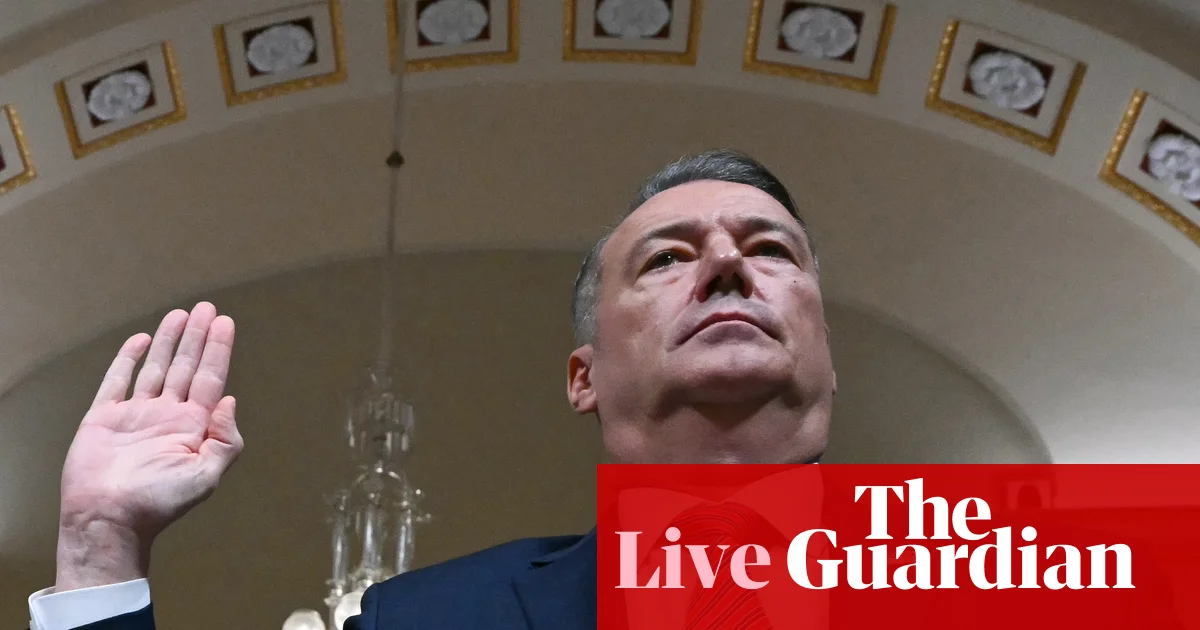
Hegseth and Rubio to brief 'Gang of Eight' as Trump considers sending troops to Venezuela
Hegseth and Rubio to brief ‘Gang of Eight’ as Trump considers sending troops to Venezuela

Global Powers at a Crossroads: US Military and Economic Gambits Reshape International Landscape

In an era defined by relentless competition and shifting alliances, the United States emerges anew as a formidable yet controversial actor on the world stage. Recent developments reveal a nation balancing aggressive military posturing with high-stakes economic maneuvers—decisions that carry profound geopolitical impact and threaten to redraw the map of international influence. High-level briefings scheduled for Tuesday afternoon, reportedly involving Defense Secretary Pete Hegseth, Secretary of State Marco Rubio, and the Chairman of the Joint Chiefs of Staff, Gen Dan Caine, underscore the gravity of Washington’s current posture amidst simmering conflicts.

Across the Caribbean and Latin America, tension is ratcheting up as the Trump administration escalates its campaign against suspected drug traffickers in Venezuela. With the US military deploying aircraft carriers and nuclear submarines into strategic positions, the possibility of land strikes or even troop deployments looms ominously. Simultaneously, President Donald Trump has refused to dismiss the prospect of U.S. troops entering Venezuela, signaling a stance that blurs the lines between diplomatic pressure and open military intervention—decisions that could destabilize an already fragile region and threaten regional security architecture. Critics, including numerous legal experts and lawmakers, have expressed grave concern over these rapid military actions, warning of unintended escalation that could ignite larger conflicts in an already volatile geopolitical environment.

Military Escalation Meets Economic Reckoning

  • Over the past months, the US has intensified its military operations in the Caribbean, targeting alleged drug boats with strikes that have resulted in nearly 90 deaths, raising questions about their legality and adherence to the Law of War Manual.
  • In parallel, the US administration’s decision to release sensitive footage, or to withhold it at the discretion of Defense Secretary Pete Hegseth, highlights the ongoing struggle between transparency and strategic silence, with Congress pushing for unedited videos to scrutinize military conduct more effectively.
  • Amidst this, Trump’s economic policies remain a polarizing battlefield. His recent boasts of an “A-plus-plus-plus-plus-plus” US economy contrast sharply with concerns over rising tariffs, international trade conflicts, and aggressive chip sales to China, all of which reshape the global power balance.

Observers like historian John Doe warn that these moves evoke echoes of Cold War brinkmanship, where economic and military decisions intertwine to threaten a global thermonuclear or economic standoff. Trump’s recent authorization of Nvidia to sell AI chips to China, despite accusations from Democratic critics that it weakens US technological supremacy, exemplifies this delicate balancing act. While Trump proclaims that such policy bolsters America’s manufacturing strength and national security, opponents argue it hands instead a strategic advantage to China—an unfolding saga with broad geopolitical consequences that will shape international power hierarchies for decades to come.

How Today’s Decisions Sound the Notes of History

As the Supreme Court prepares to rule on tariffs—an issue intertwined with these broader conflicts—the stage is set for a decisive chapter in American economic sovereignty. Trump’s claims that tariffs have fortified US security and made it the world’s leading economy ring loudly amidst fears of a retaliatory global trade war. Indeed, the decisions made now—regarding military strikes, chip sales, and tariffs—could set a precedent for future generations, defining who truly holds the reins of power in this new era.

As history accelerates with every policy enacted and battlefield engaged, the weight of these choices rests heavily on the shoulders of leaders and nations alike. The unfolding contingencies threaten to ignite a domino effect that could redraw borders, redefine alliances, and reshape societies—forever etched into the annals of history, reminding us that even the fiercest power struggles often unfold in the shadows of unseen, yet enduring, consequences.

NASA and Russian cosmonauts start their return trip to Earth—mission accomplished!

The recent return of NASA astronaut Jonny Kim alongside Roscosmos cosmonauts Sergey Ryzhikov and Alexey Zubritsky from the International Space Station (ISS) underscores the complex interplay of international cooperation amid geopolitical tensions. Their journey, culminating in a touchdown near Dzhezkazgan, Kazakhstan, marks a significant moment not just for space exploration but for the international order itself. This collaborative mission, which lasted 245 days and involved orbiting Earth nearly 4,000 times, exemplifies the enduring yet fragile unity among some of the world’s most conflicting nations.

According to NASA reports, the crew traveled a staggering 104 million miles, pushing the boundaries of human endurance and technological innovation. This mission is particularly notable because it was the first spaceflight for Kim and Zubritsky, highlighting the continued opportunities for new generations of explorers amid ongoing geopolitical struggles. For Ryzhikov, who completes his third spaceflight, the mission symbolizes a persistent Russian presence in space—a symbol of resilience amid strained relations with the West. As international analysts observe, the ISS remains a rare venue of cooperation, yet the political climate on Earth influences the stability and future trajectory of such joint ventures.

Global organizations like the United Nations have long emphasized space as a domain of peaceful cooperation, yet recent geopolitical shifts suggest an era of heightened competition. Decisions by nations like Russia and the United States determine much about the future of multilateral space efforts. Diplomats and military strategists alike analyze how space assets are intertwined with national security and international influence, especially as new powers like China and India intensify their space programs. Historical commentators warn that the days where space was solely a realm for scientific discovery are waning, replaced by an arena increasingly shaped by strategic calculations and national interests.

As space agencies prepare for future missions, the geopolitical impact of these endeavors becomes clearer. The seamless cooperation seen during this recent mission is now often viewed through the lens of diplomatic resilience and potential vulnerability. Should tensions escalate—whether over resource rights, security concerns, or territorial disputes—the international community must confront the possibility of space becoming a new frontier for conflict. The recent mission’s success, therefore, is as much an achievement of diplomacy as it is of science. How nations navigate this precarious balance will determine whether space remains a universal domain of progress or transforms into another battleground.

As history continues to unfold, the outcome remains uncertain. The images of astronauts returning from orbit trace a story of human resilience and the enduring desire to explore, yet they also serve as a stark reminder: the decisions made today in the halls of power will echo through the corridors of history. As billions watch from afar, the weight of tomorrow’s geopolitics presses heavily on the present. From the deserts of Kazakhstan to the strategic boardrooms of superpowers, the narrative of exploration intertwines with the intricacies of power—an unfolding chapter that bears the imprint of history yet to be written.

UK Youth Rejecting Waste: 168 Million Christmas Lights and Fast Tech Bottling Up Environmental Damage

Environmental Concerns and Geopolitical Implications of the Wasteful Christmas Season

As London citizens bid farewell to another festive season, recent findings by the non-profit group Material Focus reveal a troubling trend that extends beyond individual consumer habits. An estimated 168 million light-up Christmas items and “fast-tech” gifts have been discarded across the UK just in the past year. This staggering figure, extrapolated from survey data, underscores a significant waste problem that:not only strains environmental resources but also highlights a global issue of reckless consumerism in the face of climate crises and international waste management challenges.

The report indicates that Brits spent approximately £1.7 billion on holiday lighting, including 39 million sets of fairy lights, alongside millions of garlands, wreaths, snow globes, and animated figures. While these items symbolize the holiday spirit for many, their disposability raises questions about the long-term impacts on the environment. The problem is compounded by the way these items are powered—often non-recyclable batteries that, once improperly disposed of, can cause dangerous fires in bins and waste centers. The incident rate of battery-related fires has surged by **71%** over the past year, emphasizing how poor disposal practices can escalate into serious safety hazards and environmental damage.

This pattern of irresponsibility has broader **geopolitical impact**—particularly in regions where waste management infrastructure is inadequate or poorly enforced. International organizations like the United Nations warn that electronic waste is the fastest-growing waste stream globally. A separate study estimates that **1.1 billion** electrical items and **450 million** batteries are irresponsibly discarded each year worldwide, often ending up in developing nations where environmental standards are woefully lax. These practices not only threaten public health but also propagate a cycle of environmental degradation, contributing to climate change and destabilizing social structures. As global citizens, policymakers and governments must confront the environmental fallout of consumer culture and address the international flow of electronic waste.

Prominent analysts, such as environmental historian Dr. Jane Williams, argue that the disposable culture fostered during festive seasons is symptomatic of a broader societal tendency toward overconsumption. She emphasizes that *“unless nations implement strict recycling regulations and promote durable, repairable products, the mounting waste will continue to have devastating global consequences.”* The UK’s efforts to promote responsible disposal—via campaigns urging proper recycling of electricals and batteries—are a phase in a larger international uphill battle against waste proliferation. The call for local accountability echoes at the global level, where international treaties and agreements must evolve to combat the rising tide of **e-waste** and prevent environmental crises that threaten to destabilize both economies and societies.

As the world stands at this crossroads, with humanity grappling with both the tangible and intangible scars of consumer excess, history reminds us of the urgent need for systemic change. Decisions made now—regarding waste management, international cooperation, and individual responsibility—will echo for generations. The dark shadow of a planet burdened by discarded light-ups and fast tech becomes a stark symbol of how fleeting traditions can have lasting, irreversible consequences. The unfolding story of environmental neglect, driven by the consumerist urges of today’s holiday season, leaves us with a haunting question: will we choose to break free from the cycle of waste and forge a sustainable path, or will history remember this as the moment when recklessness tipped the scales beyond repair?

Ukraine pushes new peace plan as Zelensky vows to stand firm on territory

Ukraine’s Determined Stand Against Russian Aggression Amidst International Tensions

As Ukraine prepares to present a revised peace plan to the White House, the nation remains entrenched in a complex battlefield of diplomatic resolve and relentless conflict. Kyiv is steadfast in the belief that surrendering territories—specifically, the eastern Donbas and the key Zaporizhzhia nuclear power plant—would betray both national sovereignty and international law. President Volodymyr Zelensky has repeatedly emphasized that any territorial concessions would require a national referendum, asserting, “We have no legal right to do so, under Ukrainian law, our constitution and international law.”

This unwavering stance comes amid ongoing fighting along the front lines in eastern Ukraine. Despite diplomatic efforts, including intensive talks with the U.S. and European allies, no comprehensive peace agreement has emerged. Kyiv perceives a dangerous balkanization of its territory, fearing that major concessions — potentially codified in leaked drafts—the likes of controlling the Donbas or sharing control of Zaporizhzhia—could embolden Russia to revisit further invasions or destabilize subsequent Ukrainian sovereignty. Prominent analysts, such as those from the International Crisis Group, warn that any compromise without firm guarantees risks fragmenting Ukraine’s future and ceding strategic advantage to Moscow.

Geopolitical Tensions and the Battle for International Support

Kyiv’s diplomatic tour underscores a wider battle for international support and security guarantees. Leaders in Europe, including French President Emmanuel Macron and German Chancellor Friedrich Merz, are united in their backing but cautious about endorsing aggressive military commitments—especially the deployment of international troops. Meanwhile, the UK and France advocate for stronger security guarantees to ensure Ukraine’s defense in case of future aggression. The ongoing negotiations with the U.S. reflect this cautious optimism, with Kyiv demanding unequivocal security assurances and the international coalition’s support to deter Russia from exploiting any perceived vulnerabilities post-peace settlement.

However, this high-stakes diplomacy faces skepticism. Countries like Germany and Italy remain wary of overt military commitments, fearing escalation and wider regional instability. Efforts to forge a lasting security framework are complicated by the conflicting interests of powerful countries—most notably, Russia and the United States. Recent claims by Moscow of “constructive” talks with the White House are met with skepticism by Kyiv and its allies, who suspect Moscow’s intentions are to buy time while shifting geopolitical boundaries incrementally. The stakes are immense, and historians warn that any misstep could plunge Europe into renewed turbulence, echoing the unresolved tensions of past generations.

The Play of Power and the Shadow of Future Conflict

As President Zelensky prepares to send a new proposal to the U.S., the global community remains divided over the prospect of peace. Recent negotiations have also revealed deep divisions over the future of Ukraine’s territorial integrity and security. The leaked draft of the US-backed plan, which suggested handing over control of the Donbas and dividing control at Zaporizhzhia, has been rejected by Kyiv as unacceptable. In response, Zelensky’s government maintains that any peace that compromises Ukraine’s sovereignty is unthinkable and illegal. Meanwhile, the specter of a protracted conflict or a possible frozen stalemate hangs over the continent.

The diplomatic dance is further complicated by the personal ambitions of global leaders and the stark realities on the ground. U.S. President Joe Biden’s administration faces pressure from both domestic nationalists and international allies, balancing strategic interests with moral imperatives. Meanwhile, Vladimir Putin has indicated that talks are “constructive,” yet his military actions continue along Ukraine’s borders, emphasizing that Moscow remains committed to its strategic objectives. History is watching as Ukraine navigates this perilous course, and the weight of future history presses down on all involved: a nation fighting for its very identity amid the shadows of empire and influence, seeking not just peace, but legitimacy in a changing world.

Court warns Australia’s deportation to Nauru could make refugee’s death ‘inevitable’ and preventable

In recent months, Australia has become the focal point of a heated international debate centered around its harsh immigration policies, particularly concerning non-citizens and refugees. The government’s relentless push to deport individuals to remote Pacific islands such as Nauru has raised profound questions about human rights, legal sovereignty, and international relations. The case of an Iranian refugee, identified as TXCM, epitomizes this controversy and exposes the broader geopolitical implications of Australia’s policies. Legal battles over his potential deportation to Nauru—despite clear medical risks—highlight the government’s willingness to prioritize border enforcement over humanitarian considerations, a stance that threatens to destabilize Australia’s standing both regionally and globally.

Under the current government, led by Anthony Albanese, Australia has struck a controversial $2.5 billion deal with Nauru designed to transfer asylum seekers and non-citizens to the tiny Pacific island for long-term detention and visa arrangements. This agreement, enacted in February, serves as a strategic attempt to offload the strain on Australia’s immigration detention system, but it has sparked accusations of moral abdication. Critics, including international human rights organizations and domestic legal experts, argue that this approach “fuels kleptocracy” and dilutes Australia’s moral authority. The decision to extend 30-year visas to those sent to Nauru underscores how the government seeks to normalize indefinite detention, challenging traditional notions of justice and due process within a legal framework that many see as increasingly sidelined.

The legal controversy surrounding TXCM underscores a broader shift in policy and jurisprudence. His case—one of more than 350 non-citizens freed from indefinite detention after the 2023 High Court ruling—illustrates a turning point: the judiciary’s pushback against prolonged detention based on the impracticability of removal. However, recent legislative amendments have sought to undermine this trajectory. The ruling government has swiftly changed the Migration Act to eliminate “natural justice” rights for individuals on removal pathways—effectively stripping non-citizens of fair hearings once deportation is decided. Analysts warn that such measures threaten to embolden arbitrary state power, risking international condemnation and further destabilizing Australia’s diplomatic relations, especially with Iran and other nations whose citizens face deportation.

The geopolitical impact extends beyond Australia’s borders. The Nauru deal—while seemingly a matter of domestic policy—has profound regional consequences. It creates a precedent for other nations grappling with similar migration pressures, potentially emboldening authoritarian regimes to leverage migration controls as tools of strategic influence. European scholars and international organizations have warned that such policies risk fostering “authoritarian resilience” by enabling regimes to manipulate humanitarian norms for political gain. Meanwhile, countries like China observe closely, perceiving Australia’s approach as an example of border militarization that could inspire similar strategies across Asia-Pacific. The unfolding story of TXCM and Australia’s policies serve as a stark reminder that the decisions made now are shaping the future of global governance and sovereignty.

As history continues to unfold, the weight of these decisions cannot be overstated. Australia’s internal debates over justice, morality, and national security are emblematic of a larger global struggle—one where the lines between sovereignty and humanitarian responsibility are increasingly blurred. The coming months are likely to reveal whether Australia’s strict policies will withstand international scrutiny or become a cautionary tale of a nation grappling with its own moral compass. With each legal challenge and diplomatic fallout, the echoes of history grow louder, reminding the world that the choices made today will resonate through generations to come, defining the true character of nations in an uncertain new era.

Social Media Auto Publish Powered By : XYZScripts.com