Matox News

Truth Over Trends, always!

Louisiana Adopts New Congressional Map After Supreme Court Rejection

Louisiana’s state legislature has finalized a new congressional map, a critical step taken in direct response to a recent Supreme Court ruling. This decision follows months of intense debate and legal scrutiny after the nation’s highest court deemed the state’s prior electoral districts an illegal racial gerrymander, necessitating a swift overhaul to ensure compliance with federal law and constitutional principles. The approved map now reconfigures the state’s electoral landscape, notably eliminating a majority-Black district.

Responding to the High Court’s Mandate

Last month, the Supreme Court issued a significant ruling that sent shockwaves through redistricting efforts across the South. It rejected Louisiana’s existing congressional map, asserting that it constituted an illegal racial gerrymander. This judicial intervention placed immense pressure on the state’s lawmakers to swiftly devise a new plan that adhered to legal standards while also reflecting the demographic realities of the state. The complex process involved extensive negotiations and political maneuvering within the legislature, aiming to balance various interests under the watchful eye of the judiciary.

Key Changes in the New Configuration

The newly approved map introduces substantial changes to Louisiana’s electoral districts. Foremost among these is the elimination of a district previously designated as majority-Black. Proponents of the new map argue it represents a more geographically cohesive and race-neutral approach to district drawing, aligning with the Supreme Court’s directive to avoid districts drawn primarily on racial lines. Critics, however, contend that this change could diminish minority representation, raising questions about the practical impact of the ruling on voting power. The legislative process involved intense debate, with lawmakers ultimately passing the measure through both chambers.

  • Compliance with Federal Law: The new map is designed to align with the Supreme Court’s finding against racial gerrymandering.
  • District Reconfiguration: One majority-Black district has been eliminated, impacting voter demographics in several areas.
  • Legislative Consensus: The map’s approval reflects a legislative effort to resolve a contentious issue under judicial mandate.

Broader Implications for Southern States

Louisiana’s redistricting saga is not an isolated event but rather a bellwether for similar battles unfolding across the Southern United States. The Supreme Court’s ruling on Louisiana’s previous map has intensified a region-wide redistricting race, prompting other states to re-evaluate their own electoral boundaries. This broader trend underscores the ongoing challenges of balancing demographic shifts, legal mandates, and political considerations in the crucial process of drawing congressional districts. States are now carefully navigating these complex waters, seeking to avoid similar legal challenges while upholding the integrity of their electoral systems. According to reports from the News Desk, this legal precedent is closely watched by lawmakers and activists nationwide.

“The Supreme Court’s intervention in Louisiana underscores the critical importance of fair and legally sound redistricting processes for the integrity of our electoral system.”

As Louisiana moves forward with its reconfigured congressional map, the focus shifts to its implementation and long-term effects on political representation. The state’s proactive response to the Supreme Court’s judgment highlights the imperative of adherence to judicial decisions and the principles of non-discriminatory electoral practices. This development serves as a significant reminder of the continuous effort required to maintain a balanced and just electoral framework, ensuring that all citizens have confidence in the democratic process. The path ahead will undoubtedly involve continued scrutiny, but the current actions reflect a commitment to institutional order and legal compliance.

Federal Judge Orders Removal of Trump's Name from Kennedy Center, Citing Congressional Authority
Federal Judge Orders Removal of Trump’s Name from Kennedy Center, Citing Congressional Authority

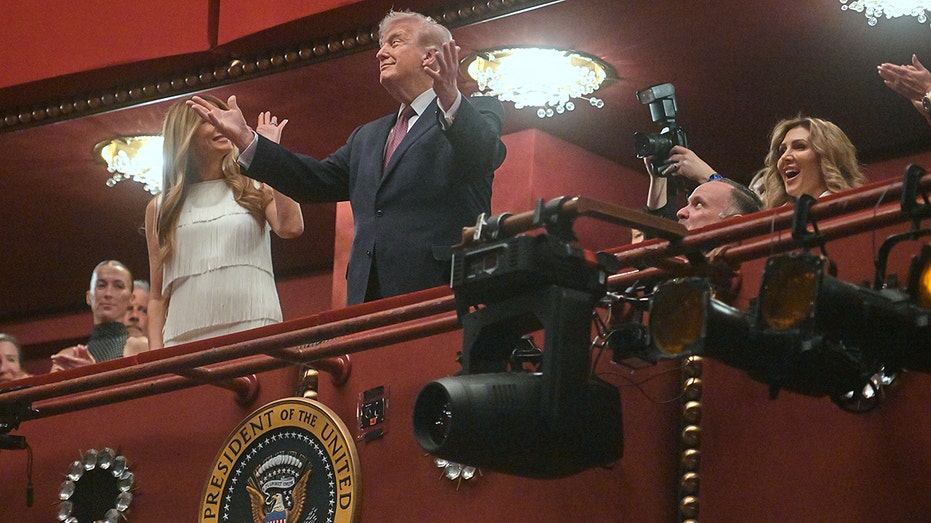
A federal judge on Friday delivered a significant ruling concerning the renaming of the John F. Kennedy Center for the Performing Arts, ordering the immediate removal of former President Donald Trump’s name from the prestigious institution. U.S. District Judge Christopher Cooper, an Obama appointee, declared that the Kennedy Center Board of Trustees exceeded its statutory authority by unilaterally approving the name change, a move that requires congressional approval.

This judicial directive mandates that all physical signage bearing Trump’s name and any official references to a ‘Trump-Kennedy Center’ be eliminated from the venue’s materials. The ruling stems from a lawsuit initiated by U.S. Rep. Joyce Beatty, D-Ohio, challenging the board’s decision.

Upholding Congressional Authority Over National Institutions

Judge Cooper’s decision firmly establishes that the power to rename national landmarks like the Kennedy Center rests solely with the legislative branch. His written order emphasized the clarity of the Center’s founding statute, stating, “Congress gave the Kennedy Center its name, and only Congress can change it.” This reinforces a fundamental principle of governance: proper procedure and established institutional frameworks must be respected, especially when dealing with symbols of national heritage.

The ruling highlights the importance of adherence to legal processes and the separation of powers. It serves as a reminder that even well-intentioned administrative decisions must operate within defined legal boundaries to maintain order and institutional integrity.

“Congress gave the Kennedy Center its name, and only Congress can change it.”

Board’s Rationale and Commitment to Appeal

The Kennedy Center Board of Trustees had previously voted unanimously to rename the venue, citing the need for significant renovations and substantial funding secured during the Trump administration. Roma Daravi, the Trump Kennedy Center vice president of public relations, conveyed the board’s intent to appeal the judge’s decision. Daravi noted that the Center requires “urgent and significant restoration,” a fact acknowledged even by the plaintiff.

Key points from the board’s perspective include:

  • The necessity of a comprehensive restoration project for the Center.
  • The securing of $257 million in funding by President Trump, subsequently approved by Congress, specifically for these renovations.
  • A commitment to exploring “every lawful avenue” to ensure the Center’s restoration as a national cultural landmark.

Despite the judge’s order, the board appears resolute in its efforts to proceed with the restoration, viewing the naming as intrinsically linked to the funding and the future of the institution. As reported by Fox News, the White House did not immediately provide a comment on the ruling.

The Broader Implications for Institutional Governance

This judicial intervention underscores a broader debate regarding the governance of national cultural institutions and the appropriate channels for significant policy changes. While the funding for renovations is a critical concern, the judge’s ruling prioritizes the established legal framework over the board’s administrative discretion.

The case sets a precedent for how boards of trustees for federally chartered institutions must operate within their prescribed mandates. It reinforces the idea that institutional longevity and public trust are best served when decisions, particularly those impacting core identity, are made through transparent, legally sanctioned processes. The dispute is far from over, with the planned appeal indicating a continued legal battle over the name and the authority to bestow it.

House Republican Calls for Russia's Expulsion from UN Security Council
House Republican Calls for Russia’s Expulsion from UN Security Council

Washington, D.C. – Representative Don Bacon, a Nebraska Republican, has intensified his demand for the United Nations General Assembly to take decisive action and remove Russia from its powerful Security Council. Bacon, a consistent critic of Moscow’s aggression, has repeatedly characterized Russia as a “pariah state,” asserting that its conduct on the global stage necessitates its expulsion from the influential international body.

A Persistent Stance Against Moscow

Congressman Bacon’s calls for Russia’s removal are not new. His Friday post on X, where he stated, “The United Nations General Assembly should vote on removing the Russians from the Security Council. Russia is a pariah state and should be treated that way,” echoes sentiments he has expressed for years. As early as February 2022, Bacon highlighted the “obscene reality” of Russia chairing the Security Council, advocating for its exclusion from as many international forums as possible.

Russia holds one of the five permanent seats on the U.N. Security Council, alongside the United States, the United Kingdom, China, and France. This status grants Moscow significant veto power, often complicating international responses to its own actions. Bacon’s position underscores a growing frustration among many lawmakers regarding the perceived dysfunction caused by Russia’s presence within the body.

Russia’s Actions and Global Condemnation

The Nebraskan lawmaker’s strong rhetoric stems directly from Russia’s unprovoked invasion of Ukraine and its subsequent military actions. In December 2023, Bacon explicitly declared that “The United Nations is an embarrassment with Russia sitting on the Security Council,” citing the invasion of a sovereign neighbor and the alleged commission of crimes against humanity. His statements reflect a broader international consensus condemning Russia’s disregard for international law and human rights.

The ongoing conflict has seen Russian forces target Ukrainian cities and civilians, leading to widespread destruction and humanitarian crises. This pattern of behavior, according to Bacon and many other global leaders, disqualifies Russia from holding a position of such critical responsibility within an organization dedicated to maintaining international peace and security.

“The United Nations General Assembly should vote on removing the Russians from the Security Council. Russia is a pariah state and should be treated that way.”

Bolstering Ukraine Amidst Conflict

Beyond advocating for Russia’s removal from the UN Security Council, Representative Bacon has been a vocal proponent of increased U.S. military assistance to Ukraine. He argues that sustained support is crucial given Russia’s struggles on the battlefield and its faltering economy.

  • Russia is reportedly facing significant losses in Ukraine and in the Black Sea.
  • Its economy continues to be impacted by international sanctions.
  • The primary targets of Russian attacks have shifted to Ukrainian cities and civilian infrastructure.

Bacon emphasized the urgency of legislative action, noting that the House is expected to vote on a package of Russian sanctions and military aid to Ukraine in the coming weeks. His call for robust support aligns with a center-right conservative stance that prioritizes deterring aggression and upholding international order through strength and strategic alliances, as reported by News Desk.

As Representative Bacon prepares to conclude his tenure in Congress, his unwavering focus on holding Russia accountable for its actions and reinforcing international institutions remains a defining aspect of his foreign policy advocacy. His persistent demands for Russia’s removal from the UN Security Council underscore a fundamental belief in the necessity of institutional integrity and global accountability.

Spencer Pratt Gains Unexpected Traction Among Frustrated LA Democrats

The mayoral race in Los Angeles is witnessing an unexpected surge of support for insurgent candidate Spencer Pratt, who is reportedly resonating with a significant segment of the city’s Democratic electorate. This development, as noted by a senior California lawmaker to Fox News Digital, suggests a growing dissatisfaction with the current administration’s handling of key urban challenges. Pratt, once known primarily for his reality television appearances, is now positioning himself as a voice for change in the deep-blue city, aiming to become the next LA Mayor.

Mounting Frustrations with City Leadership

Incumbent Mayor Karen Bass faces increasing scrutiny over her administration’s effectiveness, particularly in addressing critical issues that plague Los Angeles. Congressman Darrell Issa, a Republican, observed that Bass’s approach often appears to offer “more of the same” to residents who have witnessed a decline in public order and effective management. Among the most pressing concerns are the alleged mismanagement of devastating wildfires, which destroyed thousands of structures including Pratt’s own home, and a perceived lack of significant progress on the city’s pervasive street homelessness, drug addiction, and crime rates. These issues are fueling a broader sense of disillusionment among voters.

Spencer Pratt’s “Common-Sense” Platform

Spencer Pratt’s campaign strategy centers on offering direct, “common-sense” solutions to the city’s complex problems. His rise in prominence stems from forcefully calling attention to the stalled recovery efforts post-wildfire and the persistent struggles with homelessness and public safety. While his background in reality television might seem unconventional for a political contender, his direct criticisms of the status quo appear to be striking a chord with a diverse voter base, including those historically aligned with the Democratic party. His advocacy for a more accountable and effective city government aligns with a desire for tangible improvements in daily life for Los Angeles residents.

“He’s catching fire among ardent historic Democrat voters because Karen Bass has been so ineffective.”

A Fiercely Contested Primary Election

The June 2 nonpartisan primary election features Pratt challenging Mayor Bass and socialist City Council member Nithya Raman. Recent polling indicates a tight contest, with all three candidates reportedly in a dead heat. Despite Mayor Bass enjoying endorsements from prominent Democratic figures such as former Vice President Kamala Harris and Governor Gavin Newsom, the race remains highly unpredictable. Given the likelihood that no candidate will secure more than 50% of the vote, the top two contenders are expected to advance to a runoff election in November, setting the stage for an extended and intense political battle. The issues at stake for Los Angeles voters are clear:

  • Urban Homelessness: Persistent and visible street encampments.
  • Public Safety: Rising crime rates and concerns about law enforcement effectiveness.
  • Disaster Recovery: Perceived slow pace of rebuilding after major wildfires.
  • Government Accountability: Calls for more effective and transparent city management.

The unexpected momentum behind Spencer Pratt’s mayoral bid underscores a palpable desire for fresh leadership and decisive action in Los Angeles. As voters head to the polls, the outcome will not only determine the city’s next leader but also serve as a barometer for how deeply frustration with urban governance has taken root across the political spectrum. The focus remains on which candidate can most convincingly articulate a path toward a more orderly and prosperous future for the sprawling metropolis.

California's 'One-Party Rule' Challenged by Outsider Campaigns, Says Hilton
California’s ‘One-Party Rule’ Challenged by Outsider Campaigns, Says Hilton

California is witnessing a significant shift in its political landscape, as Republican gubernatorial candidate Steve Hilton and independent Los Angeles mayoral hopeful Spencer Pratt gain notable traction. Both campaigns, characterized by their outsider status, are signaling a growing voter appetite for fresh perspectives and a challenge to the state’s entrenched political establishment. Hilton, a prominent conservative voice, contends that this momentum reflects widespread fatigue with California’s nearly two decades of one-party rule.

A Call for Change Amidst Entrenched Governance

Steve Hilton, a conservative commentator and former Fox News Channel host, is a frontrunner in the race to succeed term-limited Democratic Governor Gavin Newsom. Backed by President Donald Trump, Hilton articulated a profound sense of discontent among Californians during an interview on Fox News @Night. He suggested that those outside the state might not fully grasp the depth of frustration with the current political climate. “Something’s happening in California,” Hilton stated, pointing to the long-standing Democratic control of the state government, which has persisted for sixteen years. This sustained dominance, he argues, has led to a stagnant political environment ripe for disruption, impacting various aspects of daily life for residents.

The perceived consequences of this entrenched power structure often include concerns over:

  • High cost of living and housing affordability
  • Rising crime rates and public safety issues
  • Taxation policies and their impact on businesses and families
  • Effectiveness of public services and infrastructure

Hilton’s message resonates with voters who feel their concerns have been overlooked by a system lacking robust political competition.

The Rise of Unconventional Candidates

Beyond his own gubernatorial bid, Hilton also drew attention to Spencer Pratt’s campaign for Los Angeles mayor. Pratt, a well-known reality television personality and online influencer, is running as an independent in the heavily Democratic city, presenting a populist appeal that is resonating with a diverse voter base. His insurgent campaign directly challenges incumbent Democratic Mayor Karen Bass, further underscoring the push against established power.

Despite their different backgrounds and campaign styles, Hilton emphasized a crucial commonality between himself and Pratt: their status as political outsiders. “We’re both outsiders… We’re very different, had different experiences, we were running different campaigns. But the one thing we have in common, we are outsiders. We’ve never run for office before,” Hilton noted. This shared narrative of being unburdened by traditional political allegiances is a powerful draw for voters disillusioned with career politicians.

Resonating with Discontent and Seeking Solutions

The appeal of these outsider campaigns, Hilton suggests, lies in their promise to fundamentally alter a system many perceive as failing. Both candidates aim to shake up a system that, in Hilton’s view, “is obviously not working.” This desire for systemic change, rather than incremental adjustments, is a key driver of their momentum. Pratt, a Republican running as an independent, has focused his campaign on issues that resonate broadly, attracting support from various segments of the electorate.

The energy behind these unconventional candidacies highlights a broader sentiment of voter fatigue with the status quo. As California approaches its June 2 primary elections, the performance of Hilton and Pratt will serve as a significant indicator of the electorate’s willingness to embrace non-traditional leadership. Their campaigns represent a notable challenge to the prevailing political order, suggesting a potential realignment of voter priorities in the Golden State.

“We’re both outsiders… We’re very different, had different experiences, we were running different campaigns. But the one thing we have in common, we are outsiders. We’ve never run for office before.”

Looking Ahead: A Test of Voter Sentiment

The combined energy behind Hilton’s statewide campaign and Pratt’s mayoral bid underscores a significant moment in California politics. It reflects a growing desire among the electorate for genuine alternatives to long-standing governance, signaling that even in a state with historically entrenched political leanings, the call for new leadership and accountability is gaining substantial ground. As the primaries unfold, the trajectory of these outsider movements will offer crucial insights into the evolving political landscape and the potential for a meaningful shift away from established norms.

Maine GOP Warns Democrats of 'Rude Awakening' Over Graham Platner Embrace
Maine GOP Warns Democrats of ‘Rude Awakening’ Over Graham Platner Embrace

Maine Republicans are sounding the alarm regarding the Democratic Party’s strategic backing of controversial Senate candidate Graham Platner, asserting that this alliance could lead to a significant voter backlash. State Senator Trey Stewart has voiced strong concerns, suggesting that Democrats are compromising their principles by supporting a candidate with a history of divisive and extremist remarks, potentially setting themselves up for a “rude awakening” in the upcoming November elections.

Platner’s Controversial Past Under Scrutiny

Senator Stewart highlighted a series of past statements and affiliations attributed to Platner, which he believes stand in stark contrast to the values typically espoused by the Democratic Party. These include self-descriptions as a “communist” and “socialist,” alleged homophobic slurs, and disparaging comments directed at military veterans. Stewart pointed to a track record that encompasses “racist and bigoted statements that were misogynist,” underscoring the severity of these allegations.

The Republican lawmaker expressed bewilderment at the Democratic Party’s willingness to overlook such a contentious background in their pursuit to unseat incumbent Senator Susan Collins. He characterized Platner as a “flash in the pan” for extreme liberal Democrats, driven solely by the desire to defeat Senator Collins “at any cost,” without fully considering the implications of endorsing such a figure.

Among the specific allegations against Graham Platner cited by critics are:

  • Self-identification as a “communist” and “socialist” in deleted social media posts.
  • Alleged use of homophobic slurs.
  • Disparaging remarks concerning military veterans injured in combat.
  • Accusations of racist, bigoted, and misogynistic statements.
  • A tattoo reportedly affiliated with the Nazis.

These points, reported by outlets like Fox News Digital, form the core of the Republican opposition’s argument against his candidacy.

Maine’s Political Landscape and Collins’ Strength

Despite some polling data showing Platner with a lead, Senator Stewart conveyed strong confidence in five-term incumbent Republican Senator Susan Collins’ ability to secure re-election. He emphasized that Maine’s electorate tends to be “middle-of-the-road,” suggesting that Platner’s more extreme views would ultimately fail to resonate with the state’s voters.

Stewart lauded Senator Collins as one of the most influential voices in the United States Senate, acknowledging her significant impact on Maine’s financial well-being and overall representation. He articulated a belief that “Maine people don’t subscribe to that line of thinking that Mr. Platner does,” predicting that the Platner campaign’s approach would ultimately prove ineffective given the state’s independent voting patterns.

“What they’re really doing is selling their soul to somebody who has a tattoo that’s affiliated with the Nazis on his chest, has made slanderous remarks, really pretty ugly and horrifying remarks about veterans.”

Implications for the Democratic Party

Senator Stewart cautioned that if Platner were to win, it would signify the Democratic Party moving to a “dangerous place.” This sentiment reflects a broader conservative concern that elements within the Democratic Party are increasingly willing to overlook significant ideological differences or past controversies in pursuit of electoral victories, potentially alienating their moderate base and shifting the party’s overall image further left. The ongoing debate surrounding Platner’s candidacy thus becomes a litmus test for the Democratic Party’s strategic priorities and its commitment to traditional institutional values.

As the Maine Senate race heats up, the clash between Senator Stewart’s warnings and the Democratic Party’s strategy highlights a fundamental divide over political pragmatism versus ideological purity. The question remains whether Maine voters, known for their independent spirit, will prioritize party loyalty or scrutinize candidates based on their full public record and stated beliefs. The outcome will not only determine a key Senate seat but also offer insights into the evolving landscape of American political discourse.

Maine GOP Warns Democrats Face 'Rude Awakening' Backing Graham Platner
Maine GOP Warns Democrats Face ‘Rude Awakening’ Backing Graham Platner

Maine Republican State Senator Trey Stewart has issued a stark warning to Democrats, suggesting their embrace of controversial Senate candidate Graham Platner could lead to a significant electoral backlash. Stewart asserts that backing Platner, whose past remarks and affiliations have drawn sharp criticism, is a perilous move for the Democratic Party, potentially placing it in a "dangerous place" should he secure a Senate seat.

Speaking to Fox News Digital, Senator Stewart emphasized that Maine voters are keenly aware of the mounting criticisms surrounding Platner. He highlighted concerns over deleted social media posts where Platner allegedly described himself as a "communist" and "socialist," used homophobic slurs, and disparaged military veterans, among other contentious statements.

Platner’s Controversial Record Under Scrutiny

The Republican lawmaker did not mince words when detailing the breadth of concerns regarding Graham Platner’s public record. Stewart pointed to a range of alleged issues that he believes directly contradict the values often championed by progressive elements of the Democratic Party.

  • Self-identification as a "communist" and "socialist" in past social media posts.
  • Alleged use of homophobic slurs.
  • Statements disparaging military veterans, particularly those injured in combat.
  • Remarks described as racist, bigoted, and misogynist.
  • A tattoo allegedly affiliated with Nazi symbolism.

Stewart argued that these claims represent "literally everything that you hear the left trying to villainize the right about," asserting that Platner is "actually guilty of and there’s a track record of this." This extensive list of alleged transgressions forms the core of the Republican critique against Platner’s viability as a mainstream candidate.

A "Flash in the Pan" for Extreme Liberals?

Despite Platner reportedly leading in some polls, Senator Stewart remains confident that the candidate’s appeal is limited to a specific segment of the Democratic base. He characterized Platner as a "flash in the pan for right now amongst extreme liberal Democrats who can’t see past defeating Susan Collins at any cost." Stewart believes this narrow focus blinds them to the broader implications of supporting a candidate with such a divisive background.

The Republican senator suggested that Democrats, in their zeal to unseat five-term incumbent Senator Susan Collins, are effectively "selling their soul" by aligning with someone whose views and past actions are so far outside the political mainstream. This strategic miscalculation, according to Stewart, will become evident when Mainers cast their votes.

"What they’re really doing is selling their soul to somebody who has a tattoo that’s affiliated with the Nazis on his chest, has made slanderous remarks, really pretty ugly and horrifying remarks about veterans who have been injured in combat."

Maine’s "Middle-of-the-Road" Electorate

Senator Stewart expressed strong conviction that Senator Susan Collins, recognized as one of the most influential votes in the United States Senate and a significant advocate for Maine, will ultimately be victorious. He grounded this belief in the unique political temperament of the state.

"Maine, at the end of the day, is a middle-of-the-road state," Stewart affirmed, underscoring his view that the state’s voters do not align with the more extreme ideologies allegedly espoused by Platner. He contended that the Platner campaign’s approach is "not going to work" because "Maine people don’t subscribe to that line of thinking that Mr. Platner does." This perspective highlights a core conservative belief in the pragmatism and independent spirit of the electorate, particularly in states known for splitting tickets and valuing moderate leadership.

As the election draws closer, the debate over Graham Platner’s candidacy and its potential impact on the broader political landscape in Maine is set to intensify. Senator Stewart’s remarks signal a clear line of attack from Republicans, betting on Maine’s established political character to reject what they view as an extremist agenda.

Pam Bondi Faces Congressional Scrutiny Over Epstein Files Testimony

Washington D.C. – Former Attorney General Pam Bondi made her first return to Capitol Hill since her departure from the Justice Department, engaging in a critical closed-door transcribed interview with the House Oversight Committee. The session focused intently on the voluminous Epstein files, a topic that has generated significant political tension and demands for accountability. This voluntary appearance follows a period of intense pressure from lawmakers seeking answers regarding the handling of the late convicted sex offender Jeffrey Epstein’s case during her tenure.

Intensifying Congressional Oversight

The House Oversight Committee’s probe into the Epstein files has escalated, culminating in this high-stakes interview. Congressional Democrats, joined by a notable contingent of Republicans on the panel, had previously threatened to recommend civil contempt charges against Bondi if she did not comply with a subpoena for her testimony. This bipartisan pressure underscores the gravity with which lawmakers view the need for transparency in this sensitive investigation.

The Nature of Bondi’s Testimony

Bondi’s participation in a transcribed interview differs notably from a sworn deposition. While not under oath in the traditional sense, individuals speaking before Congress are still criminally prohibited from making false statements. This legal safeguard ensures the integrity of the information provided, even in a non-sworn setting. The Trump administration had initially resisted Bondi’s testimony, arguing her departure from the Attorney General role negated the need for her appearance. However, the committee persisted, securing her voluntary cooperation for a session that, according to reporting from the News Desk, was expected to extend for several hours.

  • Voluntary participation, not a forced deposition.
  • Transcribed, allowing for a detailed record.
  • Criminal penalties for false statements apply.
  • Potential for the transcript to be released publicly later.

Demands for Transparency and Accountability

The push for Bondi’s testimony highlights a broader institutional drive for accountability concerning the Epstein scandal. House Oversight Committee Ranking Member Robert Garcia, D-Calif., publicly stated on social media, “Pam Bondi will finally have to answer our questions tomorrow about the Epstein files. It’s time for the truth.” This sentiment reflects a widespread demand from both sides of the aisle for a thorough examination of how the case was managed, particularly given the high-profile nature of Epstein’s crimes and the questions surrounding his death. The committee’s pursuit of this information reinforces the principle that no individual is above congressional scrutiny when it comes to matters of public interest and the integrity of justice.

As the details of the closed-door session remain under wraps, the focus now shifts to the potential release of a transcript. This pivotal testimony by Pam Bondi represents a significant step in the ongoing congressional investigation into the Epstein files, signaling a continued commitment to uncovering the full truth behind a case that has profoundly shaken public trust in the justice system. The Matox News will continue to monitor developments as lawmakers pursue greater transparency and accountability.

RNC and NRCC Intervene to Defend Missouri Congressional Map Against Democratic Challenges

National Republican organizations assert that legal actions by Democrats aim to subvert the democratic process and rig districts in their favor, defending the constitutionality of the state’s redistricting efforts.

In a significant move to safeguard electoral integrity, the Republican National Committee (RNC) and the National Republican Congressional Committee (NRCC) have jointly filed a lawsuit to defend Missouri’s recently enacted congressional map. This legal action, reported by Fox News Digital, comes as Republicans assert that Democrats are escalating a nationwide strategy to use courts to block redistricting laws passed through legitimate legislative processes, thereby attempting to circumvent the will of voters expressed at the ballot box.

Protecting Legislative Authority

The RNC’s intervention is a direct response to what it describes as a concerted effort by Democrats to manipulate electoral outcomes through judicial means. RNC Chairman Joe Gruters articulated this concern in a statement, emphasizing, “Democrats across the country are using frivolous lawsuits to cling to power after failing at the ballot box.” This strong rhetoric highlights the conservative view that legislative decisions, particularly those concerning electoral maps, should be respected as the legitimate expression of a state’s political process. The RNC further clarified that its lawsuit aims to intervene as Democrats pursue what Republicans characterize as a campaign to overturn legally enacted redistricting laws. For the RNC, this isn’t merely a procedural dispute but a fundamental challenge to the democratic principle of voter sovereignty. They contend that Democrats are attempting to “rig congressional districts in their favor and override the will of voters” through legal maneuvering rather than through electoral success.

The Constitutional Debate Over Missouri’s Map

At the heart of the legal dispute is the constitutionality of the new Missouri congressional map. Enacted by the Missouri General Assembly last year, Republicans firmly maintain that the map fully complies with the state constitution. This legislative approval, they argue, reflects a careful balance of interests and adherence to legal frameworks. However, opponents of the map, primarily Democrats and various referendum organizers, have fiercely disputed this claim. They have initiated court actions, arguing that the redistricting plan violates specific provisions of the Missouri Constitution. The legal challenge extends to efforts by referendum organizers seeking court action related to petitions. These petitions aim to allow Missouri voters to decide whether to restore the state’s previous congressional map, effectively bypassing the recently enacted one. Republicans, in turn, contend that any certification of these petitions should not proceed until the state’s rigorous signature-verification process is fully completed, ensuring the legitimacy of the referendum effort itself. This intricate legal dance underscores the profound institutional power struggles at play, where both sides are leveraging legal avenues to assert their vision for fair representation.

Defending the Democratic Process Against Partisan Overreach

The involvement of national committees like the RNC and NRCC elevates this Missouri-specific battle to a national imperative. NRCC Chairman Richard Hudson underscored the committees’ commitment, stating, “The people of Missouri deserve fair and equal representation, not a partisan power grab designed to silence voters and overturn a lawfully enacted map.” This declaration frames the defense of the Missouri map as a broader effort to uphold the integrity of the democratic process itself. The committees are not just defending a map but, in their view, standing up for the principle that electoral boundaries should be determined through established legislative channels, rather than being subject to continuous judicial revision based on partisan objections. The core argument is that the rule of law and institutional stability are paramount, and constant legal challenges risk undermining public confidence in the electoral system. This conservative stance prioritizes order and adherence to established legal frameworks, pushing back against what they perceive as attempts to politicize the judiciary for electoral gain.

“Democrats across the country are using frivolous lawsuits to cling to power after failing at the ballot box.”

The ongoing legal contest over Missouri’s congressional boundaries highlights a critical national debate concerning the appropriate balance of power between legislative bodies and the judiciary in shaping electoral landscapes. As the RNC and NRCC champion the integrity of the legislative process, the outcome of this lawsuit could establish a significant precedent for future redistricting challenges across the nation. It reinforces the principle that electoral maps should genuinely reflect the will of the people as expressed through their elected representatives, upholding institutional stability and the foundational tenets of our democratic republic.

Tensions Mount as Anti-ICE Agitators Clash with Federal Agents Outside Newark Detention Center

Violent clashes erupted outside a federal immigration detention center in Newark, New Jersey, Thursday evening as anti-ICE protesters blocked roads and confronted federal agents, drawing criticism from authorities and raising concerns over public order.

Tensions reached a boiling point at Delaney Hall, a privately operated facility, where anti-ICE agitators engaged federal agents in heated confrontations. The incident highlights the ongoing debate surrounding immigration enforcement and the challenges of maintaining public safety amidst escalating demonstrations.

Escalating Confrontations Spark Concern in Newark

The scene outside Delaney Hall grew increasingly chaotic as a crowd of over 100 demonstrators gathered. Federal agents, attempting to navigate unmarked vehicles into the facility, faced direct obstruction from protesters. Accounts from the scene, including those reported by Fox News Digital, described frequent clashes, with one male agitator reportedly detained after being dragged to the ground for refusing to move.

Further escalating the situation, a female protester accused federal agents of attempting to strike demonstrators with a vehicle. While an ICE agent present at the scene declined to confirm potential criminal charges for the detained individual, the incident underscores the intense nature of the standoffs.

Political Backlash and Institutional Authority

These latest ICE clashes are not isolated, following days of mounting protests, political criticisms, and confrontations between demonstrators and federal authorities. New Jersey’s Democratic leaders, including Governor Mikie Sherrill and Senator Andy Kim, have publicly voiced concerns regarding conditions within Delaney Hall, which activists claim houses approximately 900 detainees.

In response, the Department of Homeland Security (DHS) has issued strong statements, asserting that such activism and political rhetoric contribute to the unrest and actively undermine critical ICE enforcement operations. This perspective emphasizes the importance of upholding institutional authority and the lawful execution of federal mandates, a core tenet for maintaining societal order.

The blocking of roads surrounding the facility by protesters further impeded federal operations, creating a significant disruption to public thoroughfares and raising questions about the boundaries of permissible protest.

“The Department of Homeland Security accused lawmakers and activists of fueling unrest and undermining ICE enforcement operations.”

The events in Newark serve as a stark reminder of the complexities inherent in immigration policy and the enforcement challenges faced by federal agencies. Balancing the right to protest with the imperative to maintain law and order, and ensuring the safety of both citizens and federal personnel, remains a critical task for authorities.

As the situation continues to unfold, a clear commitment to upholding legal processes and respectful dialogue is paramount to resolving these deep-seated tensions and ensuring the effective functioning of essential government institutions.

Social Media Auto Publish Powered By : XYZScripts.com