Matox News

Truth Over Trends, always!

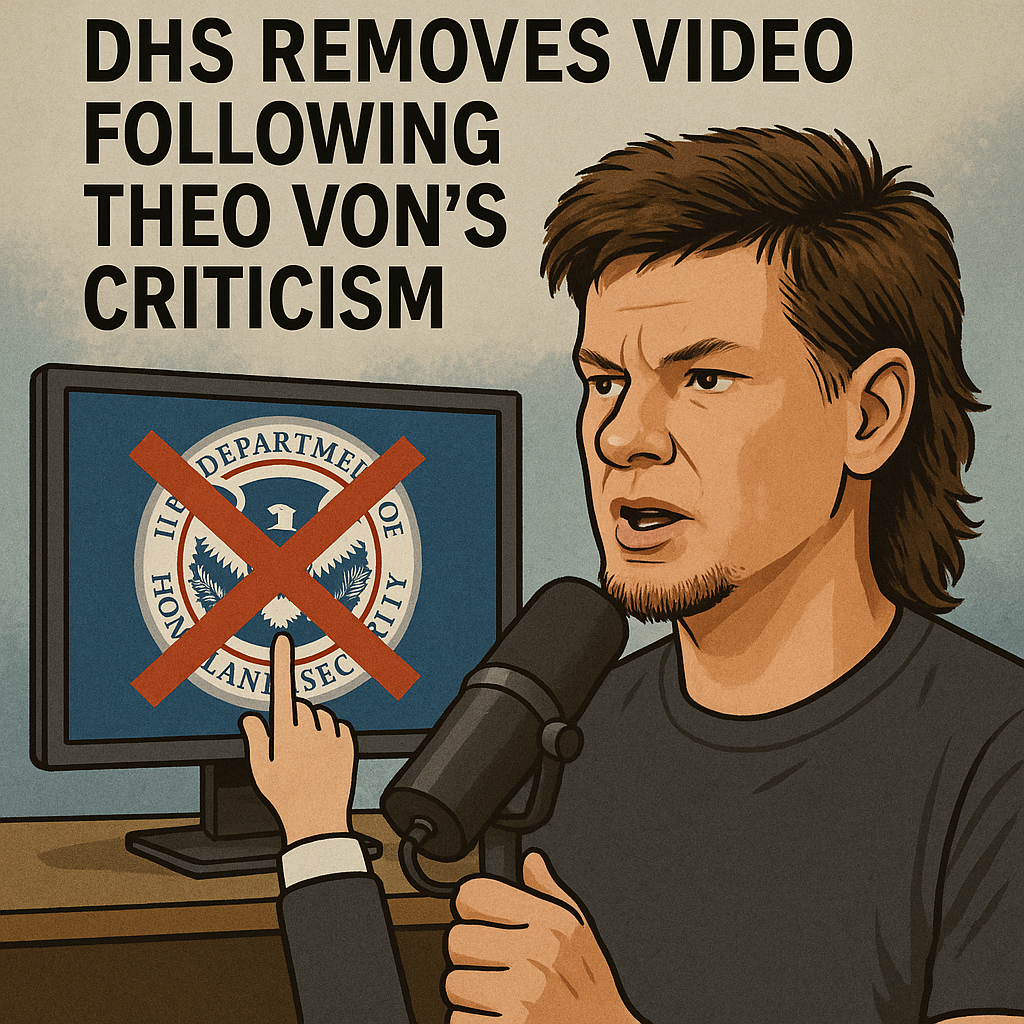
DHS removes video following Theo Von’s criticism

In an era where government agencies increasingly become arenas of public spectacle and power struggles, recent events involving the Department of Homeland Security (DHS) highlight the fragility of authority and the selective nature of political messaging. The DHS, a key instrument in shaping national security and immigration policies, found itself embroiled in controversy after it reportedly removed a social media post featuring internet personality Theo Von. The incident underscores how power dynamics within bureaucratic institutions can influence public perception and reveal underlying tensions between governmental control and individual rights.

According to reports, the DHS posted a video in which Von appeared engaging directly with his audience, making remarks that could be interpreted as humorous or provocative concerning deportation. However, after Von expressed his disapproval at being featured without his consent—citing an invasion of privacy—the agency deleted the content. This move exemplifies a broader trend in contemporary politics: decision-makers navigating the fine line between transparency and suppression. Such acts of digital curation demand scrutiny from constitutional experts who question whether the DHS’s actions represent a form of censorship or an attempt to manage political narratives in an increasingly polarized climate. As historian Charles Beard noted, governance is often a game of “control over information,” a principle as relevant today as it was during the inception of modern bureaucratic states.

This incident also demonstrates how *internal power struggles* within government agencies shape how policies are communicated and executed. It invites an examination of how decision-making hierarchies influence public engagement—a tension rooted in debates over freedom of speech, government transparency, and the authority of bureaucracies. The incident echoes historical parallels; similar disputes over control of the narrative have occurred during the Cold War and other periods of ideological conflict. Today, the digital realm amplifies these struggles, making them increasingly accessible to the public eye and, consequently, more impactful.

Ultimately, the controversy around the DHS’s handling of Von’s video reveals that politics remains a stage where destiny is written through power dynamics. As the nation witnesses this clash of interests—between individual rights and institutional authority—it becomes clear that the decisions made within bureaucratic walls have far-reaching consequences. The establishment’s attempt to manipulate or suppress content not only affects perceptions of legitimacy but also challenges foundational principles such as free expression and government accountability. As political theorists warn, when power consolidates unchecked within the state apparatus, the very fabric of democracy begins to fray, transforming the landscape into a battleground where the eventual winners are those who control the narrative itself.

In this struggle for influence and control, the digital age has rendered traditional political boundaries obsolete. Today, the stage where history is written is no longer solely in legislative chambers or courtrooms but in the fleeting, ever-changing arenas of social media. Here, every post, every deletion, carries the weight of ideological conflicts and the pursuit of ultimate authority. As the dust settles on the DHS’s digital purge, one thing remains undeniable: politics is the story of power – the raw, unyielding force shaping the destiny of nations and individuals alike. In this ongoing game, those who grasp the reins of influence will ultimately determine who writes history and who is forgotten in the shadows of its pages.
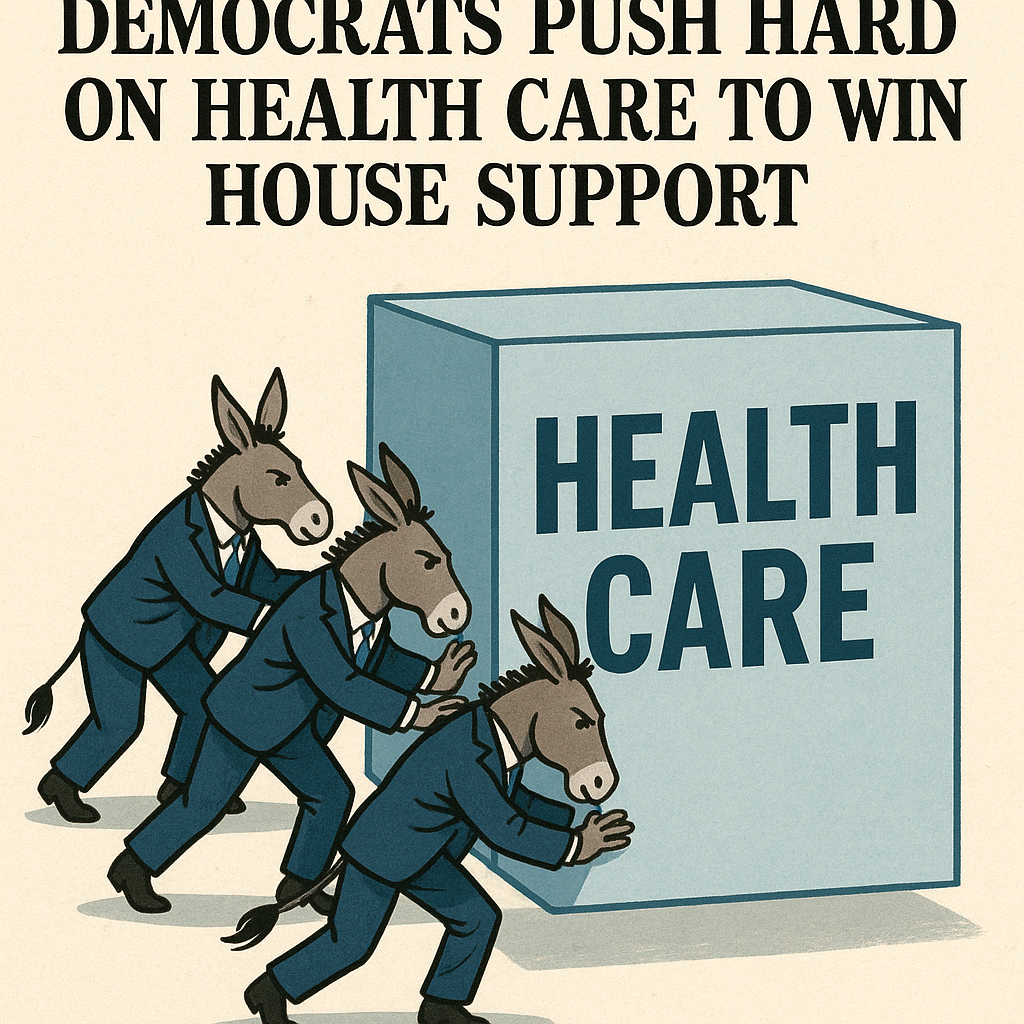
Democrats Push Hard on Health Care to Win House Support

Political leaders in confrontation

The Political Arena Prepares for a Confrontation Over Healthcare and Shutdown Politics

As the specter of a looming government shutdown casts a shadow over Washington, the strategic posturing by Democratic leaders signals an unfolding chapter in the ongoing battle for control of the legislative narrative. With the midterm elections approaching in less than a year, Democrats are doubling down on healthcare as their pivotal wedge issue, betting that the political climate is ripe for a decisive confrontation. Historically, healthcare has been a potent rallying cry—while it offers tangible benefits to voters, it also functions as a powerful symbol of ideological divides, exemplified by the Republican triumvirate currently exerting influence over Congress. Democratic strategists believe that any government shutdown efforts by their opponents would serve to galvanize their base and challenge the entrenched Republican posture, which they perceive as fostering inaction and obstruction.

The decision to leverage healthcare as a battleground is rooted in a deep understanding of how voters process political messages. For decades, Democrats have successfully capitalized on healthcare issues to mobilize their base, as seen in the post-Obamacare landscape where health policy remains a rallying point. The impending showdown appears to be less about concrete policy reform and more about staking ideological dominance. Political theorists such as James Madison and John Rawls would observe that such confrontations exemplify the enduring power struggles inherent in constitutional governance—where the scope of government and individual rights collide, shaping the very fabric of society. The Democrats’ gamble is that a government shutdown, framed around their healthcare agenda, will be portrayed as a battle for middle-class security against Republican extremism, thus reversing recent losses and reshaping the electoral map in their favor.

Beneath these strategic calculations lies a core conflict over who holds the moral and constitutional authority. Legal scholars acknowledge that the power struggle is not just about legislative wins but also about who defines the narrative of American health policy. The Democratic push for expanding healthcare access and defending Obamacare aligns with what many see as a broader societal shift—one that favors government intervention and social welfare. Conversely, the Republican insistence on reducing federal influence and empowering states reflects a longstanding tradition rooted in constitutional conservatism and individual liberty. These conflicting visions are more than policy debates; they are the battleground where the destiny of the nation’s social fabric is delineated. The decision to threaten a shutdown over healthcare reflects a strategic assertion of power—where policy becomes a weapon, shaping how millions experience their rights and protections.

Ultimately, the unfolding political drama emphasizes that power struggles are at the heart of American democracy, dictating not only legislative outcomes but also the future character of the nation. As history has demonstrated—through moments like the Civil Rights Movement or the New Deal—whose vision prevails on the political stage often determines the societal trajectory for generations. The current confrontation over healthcare and the threat of shutdown are not merely tactical moves; they are ideological turf battles that will mark the contours of an American identity in crisis. Politics, in essence, is where the very currents of history are written—each decision, each clash of wills sculpting the destiny of a nation poised between tradition and transformation.

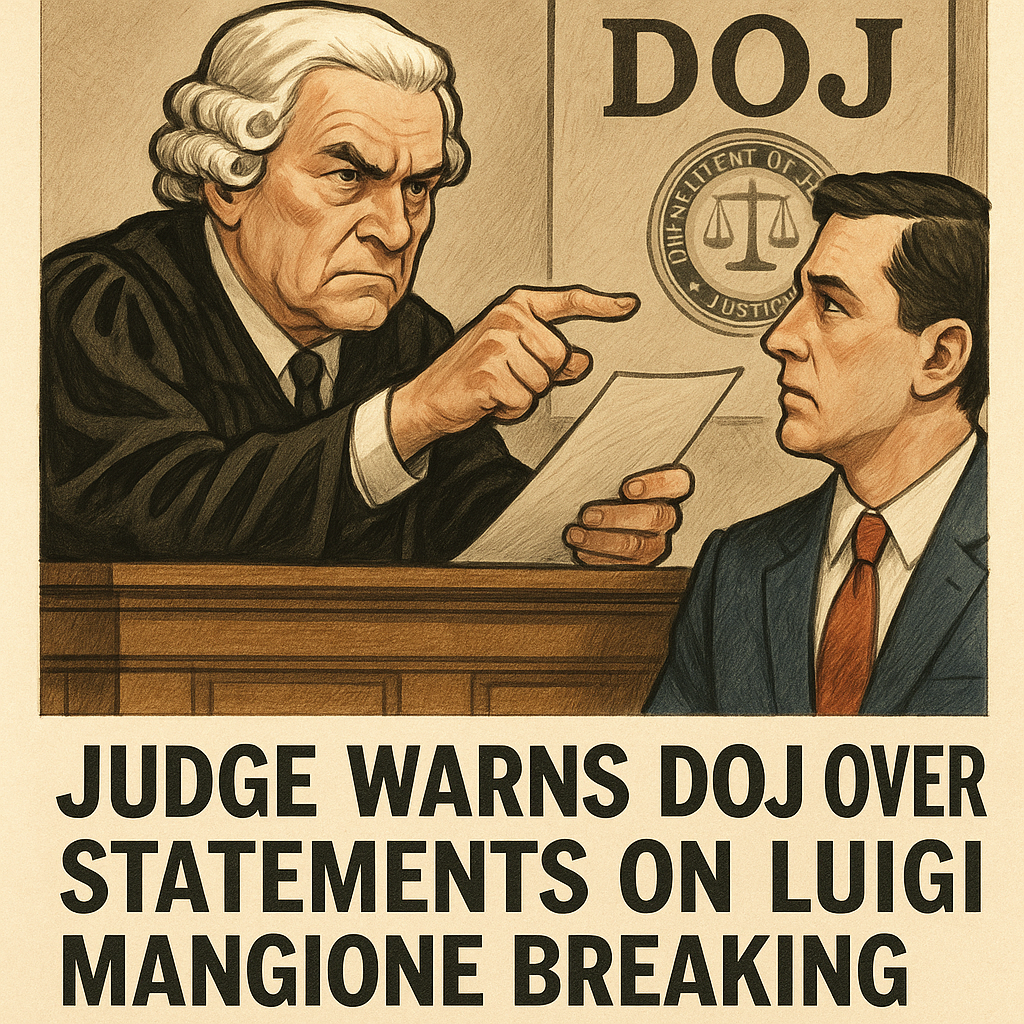
Judge warns DOJ over statements on Luigi Mangione breaking court rules

The unfolding controversy surrounding the Department of Justice’s (DOJ) handling of Luigi Mangione has cast a stark light on the intricate power struggles shaping American governance today. As the federal court, under the guidance of U.S. District Judge Margaret Garnett, suggests that DOJ officials may have violated established court protocols, it becomes evident that the boundaries between executive authority and judicial independence are under acute stress. Judge Garnett’s explicit caution — warning prosecutors about potential sanctions for continued public misconduct — underscores a broader conflict: the tension between prosecutorial discretion and the judiciary’s role as a neutral arbiter. This situation exemplifies the enduring debate about whether institutions thrive under clear boundaries or unravel when those borders are disregarded by powerful actors seeking to influence outcomes.

At the heart of this dispute lies a fundamental question of who holds the ultimate authority in the rule of law. The Biden-era DOJ, often seen as an extension of the executive branch’s expansive ambitions, appears to be embroiled in a struggle for control over narrative and influence, particularly when it involves politically sensitive figures. Historical parallels emerge when considering the Watergate era, where executive overreach provoked an unparalleled constitutional confrontation. Today, prosecutors’ attempts to publicly discuss sensitive legal matters—potentially a breach of protocol—highlight how decision-making processes are shifting, challenging the traditional separation of powers. Such confrontations are less about the individual case and more about who ultimately decides what justice looks like in a system still haunted by the echoes of political intervention.

The power struggle extends beyond mere procedural disputes, touching on the core of what it means for the people to be governed. Justice experts warn that consistent *public undermining of court authority* sets dangerous precedents, eroding the foundational tenets of constitutional law, which emphasize the independence of judiciary institutions. These actions reveal a strategic push by some within the DOJ to influence public perception and sway judicial proceedings—an effort to shape policy landscapes through raw political pressure. When legal processes become battlegrounds for partisan advantage, the consequences ripple outwards, threatening to diminish public trust and destabilize the delicate balance designed by America’s founders. Such struggles form the battleground where power is contested and the destiny of civic order is written.

Ultimately, this ongoing saga underscores a critical truth about politics: it is less a realm of fixed ideals and more a theater where the forces of authority clash, often with decisive, society-wide repercussions. As constitutional giants like **Alexander Hamilton** once argued, the strength of America’s republic resides in the careful orchestration of **separated powers**, yet those boundaries are consistently tested under the weight of ambition and influence. The legal skirmish over Mangione is symbolic of a larger epoch — one where internal conflict and strategic decision-making threaten to reshape the very fabric of American governance. For the watchers of history and future architects of policy, it is evident that in the theater of politics, the stage is where destinies are written, often with the ink of contention and the pen of power.

DHS to Boost Security at ICE Centers Following Dallas Shooting

The recent deadly shooting at an ICE facility in Dallas has ignited a surge of responses from the Department of Homeland Security (DHS), signaling a shift in the federal government’s approach to national security and immigration enforcement. In the aftermath of this tragic event, DHS announced it would “immediately increase security” at Immigration and Customs Enforcement (ICE) facilities nationwide, a move that underscores the ongoing power struggles between a government committed to border security and factions advocating for more lenient immigration policies. This escalation reflects a broader political confrontation, where decisions made in the halls of power directly impact law enforcement tactics and the safety of personnel working on the front lines.

The attacker’s motivations, reportedly driven by hatred for ICE, underscore the volatile atmosphere surrounding immigration enforcement agencies. This incident, a rare but alarming act of violence, has been exploited by hawks who argue for tougher security measures and stricter immigration policies, framing the shooting as a consequence of perceived governmental leniency or failure. On the other side, critics question whether this act of violence is being used as a pretext to justify draconian reforms and increased militarization. Constitutional experts and political analysts have long debated the balance of power when it comes to federal agencies like ICE, emphasizing the importance of safeguarding individual rights without compromising national security—a delicate tug-of-war that echoes throughout American history, reminiscent of debates during the early Cold War era.

Within the ideological fissures driving today’s politics, the right-wing factions see the DHS’s new directives as essential to defending the sovereignty of the nation and protecting American citizens from threats that are often marginalized in mainstream discourse. Campaign promises by leadership often included sentiments of restoring law and order and equipping agencies with the tools to combat what they deem an era marked by chaos and lawlessness. Conversely, those on the left caution against an approach that risks turning immigration enforcement into a militarized apparatus that erodes civil liberties. These conflicting visions of security mirror profound power struggles over the soul of American democracy—whether it is a nation of open opportunity or a fortified fortress determined to guard against external and internal threats.

As history’s currents continue to shift, it becomes clear that such moments are recorded as more than isolated incidents—they are defining chapters in the narrative of a nation wrestling with its identity. Decisions made today at DHS and across the political spectrum are not mere policy shifts but mirror the deeper contest of how freedom and security are balanced. In this ongoing saga, politics remains the grandstage where the destiny of the republic is scripted, with each movement and counter-movement setting the course for generations to come. Ultimately, the true power lies in the choices made now—choices that will shape the very fabric of society, for politics is where history’s pen finds its ink.

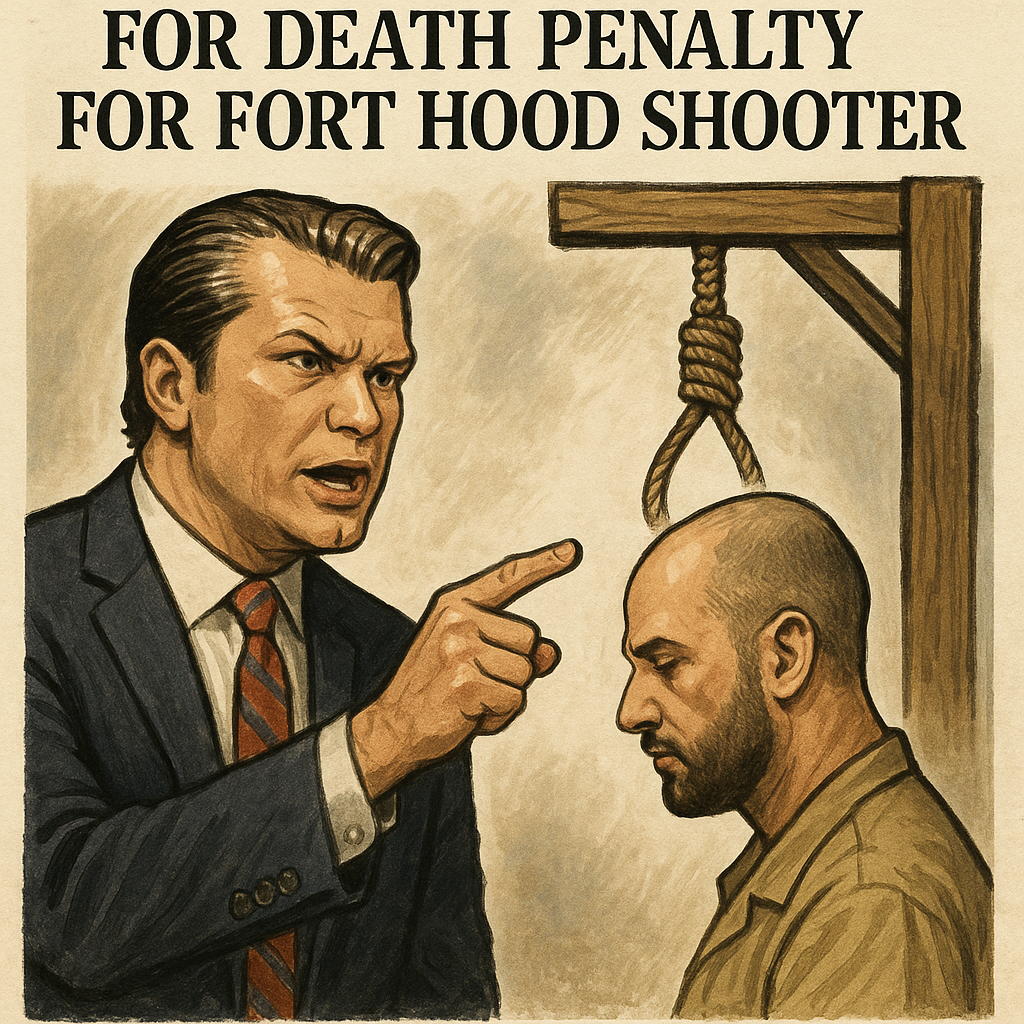
Hegseth pushes for death penalty for Fort Hood shooter

The ongoing saga of justice and authority within the United States military continues to unfold with high-profile certainty. Defense Department Secretary Pete Hegseth is actively pursuing the imposition of the death penalty for former Army Major Nidal Hasan, whose heinous act at Fort Hood nearly 16 years ago left 13 dead and dozens injured. This case’s significance extends well beyond its immediate tragedy, revealing in stark terms how power struggles in the corridors of authority influence both the public conscience and the intricate machinery of justice.

At the heart of this debate lies the question of how justice is delivered in a nation founded on the rule of law yet riddled with conflicting interpretations of morality and authority. Hegseth’s push for the death penalty is not just about retribution; it underscores the assertion of military discipline and national security over individual rights. He is seeking President Trump’s final approval for military execution. Historically, such decisions echo the constitutional debates sparked by early American theorists like Alexander Hamilton, who championed a strong federal authority to uphold order. Today, the very fabric of constitutional boundaries is tested by the intersection of martial justice and civilian rights, illustrating how power struggles shape the ideological landscape of justice in the post-9/11 era.

The case also exemplifies the strategic how decisions echo through communities and national consciousness. Critics argue that the pursuit of the death penalty for Hasan risks fueling polarizations, while proponents emphasize the necessity of demonstrating unequivocal national resolve. These tensions reflect the enduring debate over the role of the state—whether as an arbiter of mercy or an agent of relentless justice. The military tribunals, uniquely insulated from civilian oversight, serve as battlegrounds where the boundaries of authority are redefined. Such decisions ultimately reflect a broader political narrative about who holds the moral and judicial power to shape the future of American society.

As the drama finalizes in the corridors of power, it serves as a reminder: politics is where destiny gets written, often in ink of blood and conviction. The enforcement of capital punishment within the military context demonstrates that controversial, decisive actions are integral to the enduring tension between authority and liberty. This case, much like historical parallels such as the Nuremberg Trials or the moral quandaries faced during the Civil War, reminds us that the exercise of power in justice often defines national character. As citizens watch these proceedings unfold, it becomes clear: in the theater of politics, every decision, every ruling, writes a chapter in the larger narrative of where this nation is headed, and what it stands for.

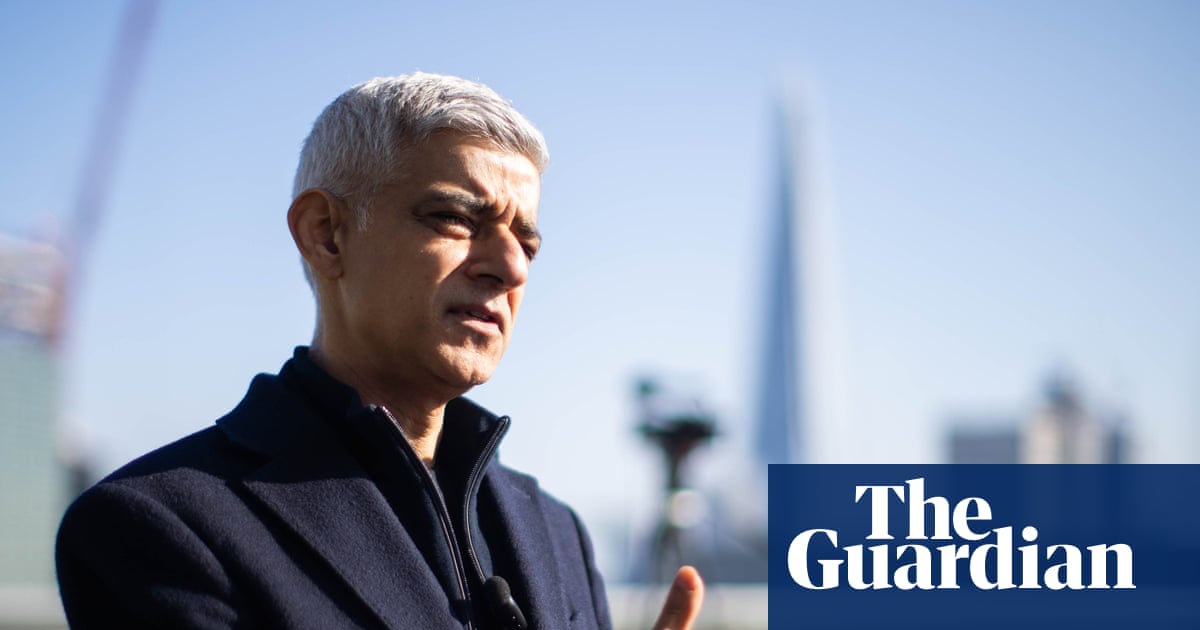
Sadiq Khan Responds to Trump’s Controversial Remarks on Diversity Issues

Power Struggles at the UN: Analyzing the Clash Between Trump and Khan

The recent exchange between Donald Trump, the President of the United States, and Sadiq Khan, the Mayor of London, highlights ongoing power struggles that not only define individual political careers but also shape international relations. In a pointed address at the United Nations General Assembly, Trump labeled Khan as “terrible” and accused the mayor of steering London toward “sharia law.” This sparked a vehement rebuttal from Khan, who described Trump as “racist, sexist, misogynistic, and Islamophobic.” Such rhetorical confrontations exemplify the divisive political landscape both leaders inhabit, raising questions about the impact of national leadership on urban governance.

The fallout from Trump’s comments has galvanized members of the Labour Party, who rushed to defend Khan, emphasizing his role as an advocate for diversity amid growing societal tensions. Health Secretary Wes Streeting labeled Khan a leader who “stands up for difference of background and opinion.” This defense plays into a broader narrative within the party that posits the importance of progressive values against what they deem regressive politics represented by Trump and his supporters. The accusations of racism and Islamophobia are not just mere insults; they are part of a calculated effort to frame the dialogue around inclusivity and acceptance, positioning Khan’s leadership as both a symbol and a product of contemporary multiculturalism.

The implications of this exchange extend far beyond personal animosities; they reveal how political rhetoric affects public perception and policy. As political theorists have often noted, the narratives set by leaders can have a profound effect on the populace. By invoking claims of sharia law, Trump not only incites controversy but also dredges up fears rooted in historical conflicts over cultural integration and sovereignty. Such discussions can lead to tangible shifts in policy, potentially affecting the civil rights and liberties of the populations involved. When mayors like Khan are accused of fostering extremism, it opens the door for legislative changes that may restrict freedoms under the guise of security.

As both figures navigate this highly charged atmosphere, one must ponder the long-term implications of their exchanges. Each statement is a calculated move in a chess game of political strategy, echoing the past struggles of political leaders who once faced similar challenges in their quests for power. The currents of thought and ideology set forth by leaders define the societal landscape, often leading to profound changes in governance and civil rights. In this theater of politics, every confrontation holds the potential to reshape destiny itself. After all, as history has taught us, it is often within these power struggles that the true character of a nation is revealed, with echoes of leaders past guiding the steps of those present. The quest for identity, values, and governance is never merely a personal journey—it is a collective odyssey where the stakes are nothing less than we, the people, and our futures.

Choose the Right Card for Holiday Savings: Cut Interest Costs!

In a significant political development, young Americans are increasingly finding themselves concerned about the rising costs of living and the state of the economy. This was underscored in a recent poll showing that inflation continues to be a top worry for voters, particularly among the youth demographic. Many are expressing dissatisfaction with the current administration’s handling of economic issues, pushing for solutions that prioritize fiscal responsibility and job creation.

Moreover, millennials and Gen Z voters are becoming more politically engaged, driven by issues like student loan debt and rising housing prices. Instead of turning a blind eye, they’re actively discussing potential reforms to improve their financial situations. Many are advocating for policies that support small businesses and promote entrepreneurship, viewing these as viable pathways toward economic empowerment.

Social media has played a pivotal role in shaping political discourse among younger voters. Platforms like TikTok and Instagram have become essential tools for spreading awareness about critical issues, allowing young activists to mobilize quickly and efficiently. This new wave of activism often emphasizes conservative values such as personal accountability and limited government, resonating strongly with younger individuals who value independence.

As the 2024 elections approach, the political landscape will likely be heavily influenced by this active youth segment. Candidates aiming to appeal to these voters will need to adopt strategies that address their specific concerns, focusing on reducing burdensome regulations and fostering job growth. By tapping into the ideals of fiscal prudence and self-sufficiency, candidates can effectively engage the rising generation of voters looking for a brighter economic future.

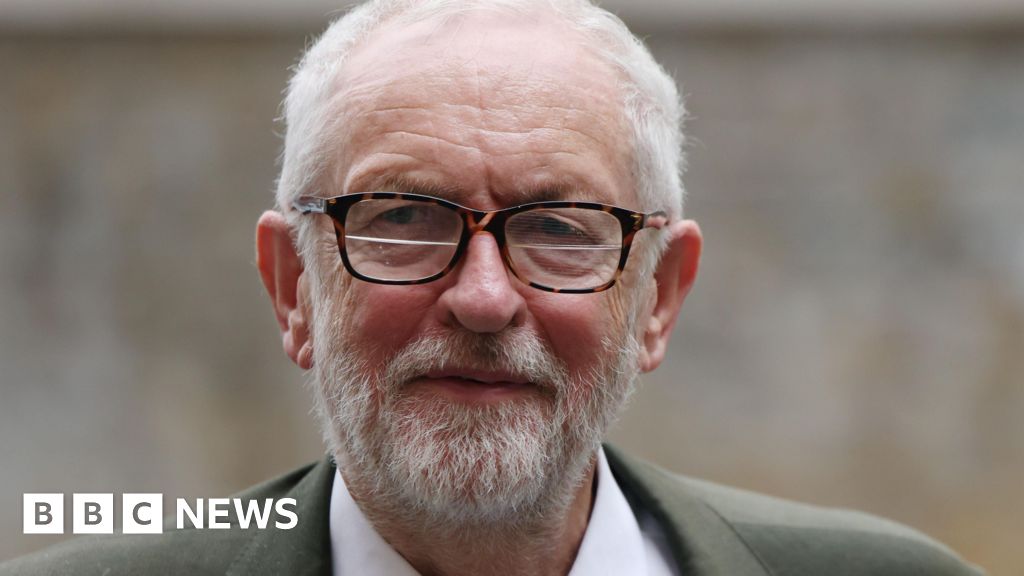
Corbyn clarifies ‘confusion’ over new party membership announcement.

The Shifting Landscape of British Politics: A Closer Look

Political dynamics are ever-changing, but recent events in the United Kingdom illustrate a particularly tumultuous phase. Following a period of leadership turmoil, it has become evident that the new alignment of parties is not just reshaping the political discourse but also triggering significant policy shifts that resonate with citizens. The former leader of the Labour Party has candidly acknowledged that these past days were marked by fraught challenges, highlighting the urgency and intensity of internal conflicts within his party.

As political theories often predict, power struggles among party factions can lead to unforeseen consequences for governance. In the context of the current coalition-building efforts, the stakes have never been higher. For instance, the rise of more moderate splinter parties has forced the traditional players to recalibrate their platforms to appeal to a broader spectrum of voters. This shifting landscape creates a dilemma: will parties remain true to their core values, or will they bend under the pressure of electoral expediency? The historical parallels are clear; one only need look back at the fracturing of the Labour Party in the 1980s to understand that these tensions can have long-lasting ramifications.

Policy positions have also evolved in response to these intense power struggles. Key parties have made important pledges that have caught public attention. Consider the following

  • The Conservative Party has reaffirmed its commitment to fiscal responsibility, promising to reduce the national debt while maintaining essential services.
  • In contrast, Labour has floated ideas around universal basic income, marking a significant leftward shift in economic policy.
  • The emerging Lib Dems are advocating for increased investment in green technologies, attempting to capture the youth vote by emphasizing sustainability.

As these developments unfold, it is vital to recognize how decisions shape the people. The electorate is not just a passive observer; it is an active participant in the political stage, and the choices made by leaders will have real-world implications. As the political theorist Alexis de Tocqueville noted, democracy is defined not just by the act of voting but by the engagement of citizens in shaping their own destinies. The current situation serves as a vivid reminder of his words. We are, in a sense, witnessing the political theater of life, where each move can alter the course of not only party fortunes but national identity as well.

In conclusion, the ongoing power struggles and the accompanying policy reforms underscore a crucial moment in British politics. The landscape is rife with possibilities, but it is equally fraught with tensions that require careful navigation. As new alliances crystallize and old rivalries resurface, one cannot help but feel that we are on the precipice of historical decisions—decisions that will define the ethos of a nation. Thus, it becomes increasingly clear: in the grand theater of politics, where ambition and ideology collide, the destiny of a people awaits its final act.

Women claim Andrew Tate abuse, call out ‘misleading’ Spectator coverage.

Concerns have been raised over an interview featuring Andrew Tate, a controversial figure known for his inflammatory views, published in the Spectator magazine, which is edited by Michael Gove. Four women alleging sexual abuse by Tate have lodged a formal complaint with the Independent Press Standards Organisation (Ipso), challenging the portrayal of their accusations in the piece.

The women, who have filed a high court claim against Tate for serious allegations—including rape and coercive control—are claiming that the article, penned by Deputy Editor Freddy Gray, misrepresents their experiences and undermines the gravity of their claims. They believe that the publication failed to adequately address the impact of Tate’s actions, which they argue contributes to a broader culture of dismissing survivor voices.

This situation highlights an ongoing debate about how media outlets handle sensitive topics, especially when it involves high-profile figures. Critics argue that sensational interviews can inadvertently glorify problematic individuals while silencing the narratives of those who have suffered. The women in question are pushing back, advocating for responsible journalism that prioritizes truth and sensitivity over sensationalism.

As this story unfolds, the implications for media ethics and the accountability of influential voices remain significant. It’s a critical moment for young people to engage in discussions about representation and responsibility in media, ensuring that survivor stories are not merely used as a backdrop for flashy headlines but are respected and treated with the seriousness they deserve.

MPs Call for Greater Rights for UK YouTube and TikTok Creators

A new cross-party initiative has emerged, urging the government to dismantle the barriers that hinder the success of Britain’s vibrant community of online content creators. This group of MPs and peers is focused on addressing critical issues ranging from mortgage accessibility to the challenges creators face in obtaining filming permits. With the landscape of media rapidly changing, it’s vital that policies adapt to support these digital pioneers.

The growth of platforms like YouTube and TikTok has revolutionized content creation, allowing individuals to reach and engage with millions. Recent research indicates that these creators contribute a staggering £2.2 billion to the UK economy. As young entrepreneurs continue to shape the future of media, there’s a pressing need for government action to ensure they have the rights and resources necessary to thrive in this evolving industry.

Social Media Auto Publish Powered By : XYZScripts.com