Matox News

Truth Over Trends, always!

Former reform politician admits to Russia-linked bribery scandal

The recent admission by Nathan Gill, former Member of the European Parliament, to eight charges of bribery has ignited a firestorm of debate within the corridors of power and among the electorate. Such allegations underscore the persistent perception of corruption that plagues modern politics, especially within institutions tasked with safeguarding democratic values. Gill’s admission not only tarnishes his personal reputation but also symbolizes a broader power struggle, illustrating how the mechanisms of influence and money continue to shape policy outcomes and political loyalties across the European political arena.

This scandal surfaces at a critical juncture, drawing attention to the fragility of institutional integrity amidst a landscape where trust in political actors is waning. The charges—centered on bribery—highlight a recurring theme in political history: the corrupting influence of wealth and clandestine dealings in the shaping of legislation and the allocation of power. As constitutional experts like John Rawls and Carl Schmitt have argued, the very foundational principles of democratic governance hinge on transparency and the separation of powers. Gill’s case starkly contrasts these ideals, exposing how decision-making processes can be compromised when individual actors prioritize personal gain over public service.

Within this context, the power struggle becomes palpable. Political parties, watchdog organizations, and the judicial system are now tasked with not only addressing individual misconduct but also confronting systemic vulnerabilities. The scene echoes historical parallels, reminiscent of scandals involving figures like Richard Nixon or more recent cases within the European Union, where high-stakes conflicts for influence have tested the resilience of democratic institutions. The unfolding saga serves as a stark reminder that how decisions are made—and by whom—fundamentally dictates the direction of policy and the future of sovereignty.

As the political landscape shifts, the question lingers: who holds the ultimate power to determine the trajectory of governance? The charges against Gill serve as a flashpoint, revealing the ongoing internal power struggles that define contemporary politics. This event will inevitably influence public perceptions of legitimacy and fuel calls for reform within the European Parliament. Ultimately, politics remains the grand stage where the battle for influence is fought in shadows and spotlight alike, where destinies are crafted through the choices of those in power. The corruption scandal underscores a perennial truth—politics is not merely a game but the arena where future civilizations are shaped, and where the contest for authority continues unabated, echoing through history’s hall of mirrors.

James Comey faces federal charges of obstruction and perjury, raising concerns

The recent indictment of former FBI Director James Comey by a federal grand jury marks a pivotal moment in the ongoing power struggles within the American political landscape. This development, coming on the heels of President Donald Trump’s calls for accountability, underscores the relentless battle over control of institutions and narrative. Comey, once a cornerstone of the FBI’s leadership, now faces charges including making a false statement and obstruction—charges that transcend mere legal accusations, embodying the ideological clash between those seeking to maintain law and order versus those striving for accountability in the face of perceived corruption.

From a historical perspective, this move echoes classic political dramas where the machinery of justice becomes a tool in the broader power struggle. The timing, just days after Trump’s public insistence on prosecuting Comey, amplifies the notion that decisions within the justice system are becoming increasingly intertwined with partisan interests. Experts in constitutional law note that such indictments, especially against figures once considered within the security state establishment, reflect a turbulent shift—possibly a redefinition of the boundaries of executive authority and oversight. This is reminiscent of earlier eras of political upheaval, where legal actions against high-ranking officials signal whether a nation is on a path toward justice or chaos.

Critics argue that the charges are emblematic of a broader trend where political factions leverage legal mechanisms to settle scores or shape public perception. Supporters, however, contend that no public servant is immune to scrutiny, regardless of stature. As constitutional theorists remind us, the rule of law must be protected against the temptation of political vendettas, lest the very fabric of constitutional governance frays. The charges also serve to remind citizens that, in a constitutional republic, power is mortal and fleeting; institutions exist to keep it in check, but they are also vulnerable to manipulation.

Ultimately, these events underscore that politics is less about personalities and more about the battle for the soul of the nation. Decisions made today will ripple through history, shaping not just legal precedents but the societal fabric itself. As political strategist and thinker Leo Strauss might suggest, in this realm of relentless power struggles, the future remains unwritten—destiny is proclaimed on the stage of battles that test the limits of authority and justice. In this unfolding narrative, the true victors are those who shape the rules of the game—and, perhaps, who decide the very course of national destiny.

Pokémon Company denies involvement in ICE raid video featuring theme song

Power Struggles and Cultural Battles: The Modern Political Arena

In an era where politics has evolved into a fierce battleground of ideologies and media influence, the recent controversy surrounding the Pokémon Company International exemplifies how cultural institutions are increasingly entwined in national conflicts. The company publicly stated it was not involved in the creation of a Department of Homeland Security (DHS) video that alarmingly incorporated imagery from its beloved franchise—a clear indicator of the power struggles that dominate contemporary governance. This incident underscores how decision-makers, often disconnected from culture’s nuances, make policies that impact the very fabric of societal values, often provoking a clash between popular culture and state authority.

At the core of this conflict lies a broader debate over the boundaries of governmental authority and the role of private entities in shaping public perception. The DHS’s decision to utilize a video that features imagery associated with a global franchise like Pokémon reveals a troubling trend: the state’s attempts to leverage culturally resonant symbols for political messaging. Political theorists like Hannah Arendt warned about the dangers of bureaucratic overreach and the potential erosion of cultural sovereignty. The fact that the Pokémon Company felt compelled to distance itself publicly illustrates the delicate tightrope between power and influence, where cultural assets become pawns in a political game. This incident highlights a fundamental question: who really controls our shared cultural symbols—the people or the state?

Such conflicts are not isolated but reflective of a larger power struggle involving various societal forces. The government’s move to incorporate popular imagery in its campaigns resonates with the historical tactics of authoritarian regimes that aimed to manipulate national sentiment by co-opting cultural icons. Here, we see echoes of the totalitarian use of propaganda, where imagery meant to inspire innocence and joy is twisted into instruments of control. Meanwhile, constitutional experts are raising alarms about the *extent* of government’s interference*, warning that such overreach threatens fundamental freedoms and the constitutional order. The clash between cultural sovereignty and state authority underscores a profound tension: does the government serve the people or manipulate them for political gain? It is a question that reaffirms the importance of safeguarding the principles on which democracy was founded.

In this unfolding narrative, the battleground extends beyond mere imagery; it shapes who controls societal narratives and ultimately, the destiny of the nation. As political strategists and ideology clash behind closed doors, the stage remains set for fixtures of the future—where policy reforms are as much about consolidating power as they are about public welfare. The power struggles we witness today—whether over a franchise’s image or over the core tenets of governance—remind us that history’s greatest nations are defined not only by their laws but by their ability to resist being manipulated by those who wield influence from the shadows. Perhaps, as the great political theorist Leo Strauss argued, it is in understanding these conflicts that citizens find their true power—not in passivity, but in active recognition of the forces shaping their destiny, writing new chapters where the pen is truly in their hands instead of in the grip of unseen masters.

Murphy: Criticizing ICE isn’t encouraging violence, just speaking out responsibly

In recent days, the political landscape has been marred by struggles for influence that underscore the ongoing battle for the soul of American governance. Senator Chris Murphy (D-Conn.) issued a pointed critique of the Trump administration, accusing it of attempting to exploit the rising tide of political violence for partisan gain. His remarks highlight a crucial aspect of modern political conflict: how powerfully each faction seeks to frame narratives and define the parameters of national debate. Murphy’s condemnation of efforts to blame Democrats for violence — including the tragic shooting at an ICE facility — reveals a deeper ideological contest over who bears responsibility for law and order amidst increased civil unrest.

This conflict is emblematic of a broader, power struggle that stretches back through American history. The current clash centers on the question of state authority versus individual rights, a debate famously theorized by constitutional scholars such as Alexander Hamilton and Thomas Jefferson. Today’s Democrats, often rhetorically aligned with protecting social safety nets and civil liberties, are now also under pressure from a rising conservative wing that seeks to reassert traditional law and order. Legislative shifts and policy reforms are fireworks in this ideological standard-bearer duel: Democrats emphasize social justice initiatives, while Republicans push for tougher border controls and law enforcement powers. The outcome of these battles will profoundly shape the political ecosystem and, by extension, the daily lives of ordinary Americans.

The spectacle of political blame-game and the framing of violence as a partisan tool underscore the intertwined nature of policy and perception. The recent focus on the ICE shooting, and the broader uptick in assaults on officials, serve as a stark reminder that decision-making in the corridors of power impacts the safety and freedoms of the citizenry at ground level. It’s here that power struggles become palpably real — where policy becomes a weapon in the fight for cultural dominance. Such moments reflect how the inclination of political actors to assign blame or credit often obfuscates the root causes—be they economic, social, or ideological—that give rise to violence. Historians and constitutional experts warn that, without a careful balance, these conflicts risk unraveling the delicate fabric of American constitutional order, turning democracy into a battleground.

As the nation navigates this turbulence, the overarching question remains: who holds the steel in shaping destiny? The answer hinges on the visible power dynamics—who controls the narrative, the policy, and ultimately, the future. With each legislative push, campaign promise, and ideological stance, the stakes are raised higher. The political arena is no mere stage but a crucible where the legacy of the republic is forged. In this arena, the struggle for power is relentless, and the decisions made today will ripple through generations. The question for citizens and analysts alike is whether this fierce contest will lead toward a more resilient republic or entrench divisions that threaten to redefine the nation’s future. What is at stake is nothing less than America’s destiny, written anew in the ceaseless tide of political conflict.

Ex-Fed and Treasury leaders urge court to protect Cook from Trump dismissal

Political leaders at a recent economic summit

In a dramatic twist that underscores the ongoing power struggles within U.S. financial governance, more than a dozen of the most influential economic policymakers from the past three decades have come together to urge the Supreme Court to uphold the tenure of Lisa Cook, a member of the Federal Reserve Board of Governors. Their collective stance is not merely an act of support for an individual appointment; it symbolizes a broader contest over authority, institutional influence, and the very direction of America’s economic future. As these veteran voices—comprising former Fed chairs and Treasury secretaries—align in their plea, the battle lines are drawn clearly, echoing historic conflicts between independence and political encroachment within central banking.

At the core of this dispute lies a fundamental question: who controls the levers of economic power in the United States? The Federal Reserve, often depicted as an elusive and autonomous institution, has long been the subject of politicization. Critics on the right condemn what they see as unchecked Federal Reserve activism, while supporters argue that its independence is vital for stability and effective policy. The controversy over Cook’s appointment—initially stymied by administrative delays—becomes a flashpoint illustrating the ongoing power struggle between the executive branch and the judiciary. The question remains whether the Court will respect the *constitutional independence* of the Fed or bow to political pressures seeking to influence monetary policy by other means.

This confrontation harks back to historical battles over the role of central banks and the political limits placed on their authority. Figures like **A. E. Carter** from the Federal Reserve’s founding era understood the importance of insulating monetary policy from short-term political whims—a lesson often overlooked when political ideologies threaten the autonomy of vital institutions. The current push to influence or remove Cook questions whether the judiciary is willing to serve as a guardian of this independence, or if it will become a pawns in a broader ideological struggle. The stakes extend beyond individual careers, directly impacting how policies are crafted—whether to favor free-market principles, regulators, or political elites seeking control over economic levers.

This dynamic also impacts the American people, who are caught in the crossfire of decisions made behind closed doors. To many, the idea that a small group—be it Congress, the judiciary, or a cabal of bureaucrats—can wield such profound influence over the economy challenges the very basis of popular sovereignty. As political theorists like **James Madison** warned, the separation of powers is designed to prevent any single faction from becoming a tyranny. Yet, in today’s climate, decision-making appears increasingly centralized, with powerful elites vying for control and shaping the destiny of millions. The fight over Cook’s position is more than a personnel matter; it is a decisive battle over how the future of economic governance will be written.

As history has shown, politics is the arena where destiny is forged. The latest power struggle within the U.S. financial system underscores that |the battle for authority is ultimately a fight for the soul of the nation|. Will the judiciary act as a bulwark protecting institutional independence, or capitulate to political expedience? The outcome will determine how boldly America’s institutions can stand against those who seek to manipulate them for short-term gains. And in the end, the destiny of the nation—its stability, greatness, and value—resides not just in the policies enacted, but in the battles fought for the very principle of who holds the power to shape the future.

Nicolas Maduro faces mounting challenges in his grip on power

Within the tumultuous landscape of Latin American politics, Venezuela’s President, Nicolás Maduro, faces a critical juncture emblematic of the broader crisis threatening the very fabric of democratic legitimacy. Once heralded by some as a champion of socialist ideals, Maduro now finds himself entangled in a relentless power struggle that echoes the classic conflicts between authoritarian resilience and revolutionary resurgence. The whispers of international condemnation, combined with growing domestic unrest, suggest that Maduro is increasingly running out of options, with each decision echoing deeper into the nation’s destiny.

Maduro’s recent measures signal a potential shift that many political analysts see as an attempt to consolidate power amidst mounting challenges. The decision to tighten control over opposition-led institutions, coupled with crackdowns on dissent, mirrors historical tactics used by populist regimes seeking to strengthen the grip on the levers of power. As constitutional experts dissect these moves, parallels arise with regimes of the past that prioritized centralized authority over democratic accountability. The question remains: are these reforms defensive acts designed to preserve Maduro’s tenure, or are they the harbingers of an irreversible slide into authoritarianism?

Furthermore, the socio-economic fallout of these power struggles extends far beyond Caracas. The Venezuelan people, caught in a relentless struggle for survival, are often seen as pawns in a grand political chess game. The decisions made in the palace corridors—whether to hold new elections, amend the constitution, or suppress opposition voices—directly shape the life chances of millions. This reflects an age-old truth in political theory: where power resides, so too does the capacity to shape societal destiny. As the regime tightens its grip, it raises a fundamental question rooted in historical parallels — will the nation’s sovereignty be dictated by the ambitions of a solitary leader, or will it ultimately pivot back to the sovereignty of the people?

As the global community observes, the internal fractures within Venezuela serve as a stark reminder of how power struggles define history’s course. Whether Maduro manages to prolong his hold on power or succumbs to internal dissent and external pressure, the unfolding crisis underscores a timeless truth: politics is the arena where the fate of nations is decided, and where the future is written with each decision made in the corridors of power. With each passing day, Maduro’s dwindling options reveal that in the theater of sovereignty, the stage is set for either resurgence or ruin—only history can truly reveal the scripts yet to be enacted.

DHS removes video following Theo Von’s criticism

In an era where government agencies increasingly become arenas of public spectacle and power struggles, recent events involving the Department of Homeland Security (DHS) highlight the fragility of authority and the selective nature of political messaging. The DHS, a key instrument in shaping national security and immigration policies, found itself embroiled in controversy after it reportedly removed a social media post featuring internet personality Theo Von. The incident underscores how power dynamics within bureaucratic institutions can influence public perception and reveal underlying tensions between governmental control and individual rights.

According to reports, the DHS posted a video in which Von appeared engaging directly with his audience, making remarks that could be interpreted as humorous or provocative concerning deportation. However, after Von expressed his disapproval at being featured without his consent—citing an invasion of privacy—the agency deleted the content. This move exemplifies a broader trend in contemporary politics: decision-makers navigating the fine line between transparency and suppression. Such acts of digital curation demand scrutiny from constitutional experts who question whether the DHS’s actions represent a form of censorship or an attempt to manage political narratives in an increasingly polarized climate. As historian Charles Beard noted, governance is often a game of “control over information,” a principle as relevant today as it was during the inception of modern bureaucratic states.

This incident also demonstrates how *internal power struggles* within government agencies shape how policies are communicated and executed. It invites an examination of how decision-making hierarchies influence public engagement—a tension rooted in debates over freedom of speech, government transparency, and the authority of bureaucracies. The incident echoes historical parallels; similar disputes over control of the narrative have occurred during the Cold War and other periods of ideological conflict. Today, the digital realm amplifies these struggles, making them increasingly accessible to the public eye and, consequently, more impactful.

Ultimately, the controversy around the DHS’s handling of Von’s video reveals that politics remains a stage where destiny is written through power dynamics. As the nation witnesses this clash of interests—between individual rights and institutional authority—it becomes clear that the decisions made within bureaucratic walls have far-reaching consequences. The establishment’s attempt to manipulate or suppress content not only affects perceptions of legitimacy but also challenges foundational principles such as free expression and government accountability. As political theorists warn, when power consolidates unchecked within the state apparatus, the very fabric of democracy begins to fray, transforming the landscape into a battleground where the eventual winners are those who control the narrative itself.

In this struggle for influence and control, the digital age has rendered traditional political boundaries obsolete. Today, the stage where history is written is no longer solely in legislative chambers or courtrooms but in the fleeting, ever-changing arenas of social media. Here, every post, every deletion, carries the weight of ideological conflicts and the pursuit of ultimate authority. As the dust settles on the DHS’s digital purge, one thing remains undeniable: politics is the story of power – the raw, unyielding force shaping the destiny of nations and individuals alike. In this ongoing game, those who grasp the reins of influence will ultimately determine who writes history and who is forgotten in the shadows of its pages.

Democrats Push Hard on Health Care to Win House Support

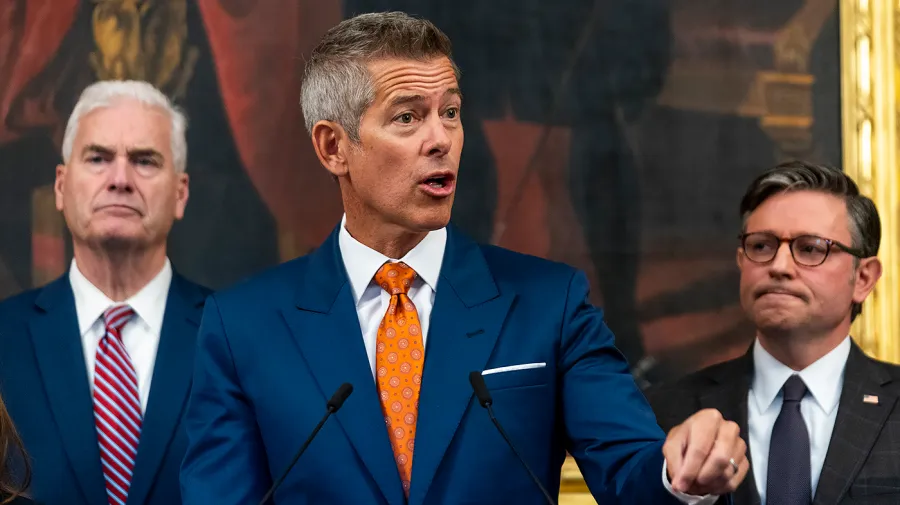
Political leaders in confrontation

The Political Arena Prepares for a Confrontation Over Healthcare and Shutdown Politics

As the specter of a looming government shutdown casts a shadow over Washington, the strategic posturing by Democratic leaders signals an unfolding chapter in the ongoing battle for control of the legislative narrative. With the midterm elections approaching in less than a year, Democrats are doubling down on healthcare as their pivotal wedge issue, betting that the political climate is ripe for a decisive confrontation. Historically, healthcare has been a potent rallying cry—while it offers tangible benefits to voters, it also functions as a powerful symbol of ideological divides, exemplified by the Republican triumvirate currently exerting influence over Congress. Democratic strategists believe that any government shutdown efforts by their opponents would serve to galvanize their base and challenge the entrenched Republican posture, which they perceive as fostering inaction and obstruction.

The decision to leverage healthcare as a battleground is rooted in a deep understanding of how voters process political messages. For decades, Democrats have successfully capitalized on healthcare issues to mobilize their base, as seen in the post-Obamacare landscape where health policy remains a rallying point. The impending showdown appears to be less about concrete policy reform and more about staking ideological dominance. Political theorists such as James Madison and John Rawls would observe that such confrontations exemplify the enduring power struggles inherent in constitutional governance—where the scope of government and individual rights collide, shaping the very fabric of society. The Democrats’ gamble is that a government shutdown, framed around their healthcare agenda, will be portrayed as a battle for middle-class security against Republican extremism, thus reversing recent losses and reshaping the electoral map in their favor.

Beneath these strategic calculations lies a core conflict over who holds the moral and constitutional authority. Legal scholars acknowledge that the power struggle is not just about legislative wins but also about who defines the narrative of American health policy. The Democratic push for expanding healthcare access and defending Obamacare aligns with what many see as a broader societal shift—one that favors government intervention and social welfare. Conversely, the Republican insistence on reducing federal influence and empowering states reflects a longstanding tradition rooted in constitutional conservatism and individual liberty. These conflicting visions are more than policy debates; they are the battleground where the destiny of the nation’s social fabric is delineated. The decision to threaten a shutdown over healthcare reflects a strategic assertion of power—where policy becomes a weapon, shaping how millions experience their rights and protections.

Ultimately, the unfolding political drama emphasizes that power struggles are at the heart of American democracy, dictating not only legislative outcomes but also the future character of the nation. As history has demonstrated—through moments like the Civil Rights Movement or the New Deal—whose vision prevails on the political stage often determines the societal trajectory for generations. The current confrontation over healthcare and the threat of shutdown are not merely tactical moves; they are ideological turf battles that will mark the contours of an American identity in crisis. Politics, in essence, is where the very currents of history are written—each decision, each clash of wills sculpting the destiny of a nation poised between tradition and transformation.

Judge warns DOJ over statements on Luigi Mangione breaking court rules

The unfolding controversy surrounding the Department of Justice’s (DOJ) handling of Luigi Mangione has cast a stark light on the intricate power struggles shaping American governance today. As the federal court, under the guidance of U.S. District Judge Margaret Garnett, suggests that DOJ officials may have violated established court protocols, it becomes evident that the boundaries between executive authority and judicial independence are under acute stress. Judge Garnett’s explicit caution — warning prosecutors about potential sanctions for continued public misconduct — underscores a broader conflict: the tension between prosecutorial discretion and the judiciary’s role as a neutral arbiter. This situation exemplifies the enduring debate about whether institutions thrive under clear boundaries or unravel when those borders are disregarded by powerful actors seeking to influence outcomes.

At the heart of this dispute lies a fundamental question of who holds the ultimate authority in the rule of law. The Biden-era DOJ, often seen as an extension of the executive branch’s expansive ambitions, appears to be embroiled in a struggle for control over narrative and influence, particularly when it involves politically sensitive figures. Historical parallels emerge when considering the Watergate era, where executive overreach provoked an unparalleled constitutional confrontation. Today, prosecutors’ attempts to publicly discuss sensitive legal matters—potentially a breach of protocol—highlight how decision-making processes are shifting, challenging the traditional separation of powers. Such confrontations are less about the individual case and more about who ultimately decides what justice looks like in a system still haunted by the echoes of political intervention.

The power struggle extends beyond mere procedural disputes, touching on the core of what it means for the people to be governed. Justice experts warn that consistent *public undermining of court authority* sets dangerous precedents, eroding the foundational tenets of constitutional law, which emphasize the independence of judiciary institutions. These actions reveal a strategic push by some within the DOJ to influence public perception and sway judicial proceedings—an effort to shape policy landscapes through raw political pressure. When legal processes become battlegrounds for partisan advantage, the consequences ripple outwards, threatening to diminish public trust and destabilize the delicate balance designed by America’s founders. Such struggles form the battleground where power is contested and the destiny of civic order is written.

Ultimately, this ongoing saga underscores a critical truth about politics: it is less a realm of fixed ideals and more a theater where the forces of authority clash, often with decisive, society-wide repercussions. As constitutional giants like **Alexander Hamilton** once argued, the strength of America’s republic resides in the careful orchestration of **separated powers**, yet those boundaries are consistently tested under the weight of ambition and influence. The legal skirmish over Mangione is symbolic of a larger epoch — one where internal conflict and strategic decision-making threaten to reshape the very fabric of American governance. For the watchers of history and future architects of policy, it is evident that in the theater of politics, the stage is where destinies are written, often with the ink of contention and the pen of power.

DHS to Boost Security at ICE Centers Following Dallas Shooting

The recent deadly shooting at an ICE facility in Dallas has ignited a surge of responses from the Department of Homeland Security (DHS), signaling a shift in the federal government’s approach to national security and immigration enforcement. In the aftermath of this tragic event, DHS announced it would “immediately increase security” at Immigration and Customs Enforcement (ICE) facilities nationwide, a move that underscores the ongoing power struggles between a government committed to border security and factions advocating for more lenient immigration policies. This escalation reflects a broader political confrontation, where decisions made in the halls of power directly impact law enforcement tactics and the safety of personnel working on the front lines.

The attacker’s motivations, reportedly driven by hatred for ICE, underscore the volatile atmosphere surrounding immigration enforcement agencies. This incident, a rare but alarming act of violence, has been exploited by hawks who argue for tougher security measures and stricter immigration policies, framing the shooting as a consequence of perceived governmental leniency or failure. On the other side, critics question whether this act of violence is being used as a pretext to justify draconian reforms and increased militarization. Constitutional experts and political analysts have long debated the balance of power when it comes to federal agencies like ICE, emphasizing the importance of safeguarding individual rights without compromising national security—a delicate tug-of-war that echoes throughout American history, reminiscent of debates during the early Cold War era.

Within the ideological fissures driving today’s politics, the right-wing factions see the DHS’s new directives as essential to defending the sovereignty of the nation and protecting American citizens from threats that are often marginalized in mainstream discourse. Campaign promises by leadership often included sentiments of restoring law and order and equipping agencies with the tools to combat what they deem an era marked by chaos and lawlessness. Conversely, those on the left caution against an approach that risks turning immigration enforcement into a militarized apparatus that erodes civil liberties. These conflicting visions of security mirror profound power struggles over the soul of American democracy—whether it is a nation of open opportunity or a fortified fortress determined to guard against external and internal threats.

As history’s currents continue to shift, it becomes clear that such moments are recorded as more than isolated incidents—they are defining chapters in the narrative of a nation wrestling with its identity. Decisions made today at DHS and across the political spectrum are not mere policy shifts but mirror the deeper contest of how freedom and security are balanced. In this ongoing saga, politics remains the grandstage where the destiny of the republic is scripted, with each movement and counter-movement setting the course for generations to come. Ultimately, the true power lies in the choices made now—choices that will shape the very fabric of society, for politics is where history’s pen finds its ink.

Social Media Auto Publish Powered By : XYZScripts.com