Matox News

Truth Over Trends, always!

US Banks Scramble to Secure Data After Hack Hits Financial Tech Firm

Cyber Breach at SitusAMC Sparks Industry-Wide Concerns Over Data Security and Disruption

In a rapid display of the evolving cybersecurity landscape, SitusAMC, a prominent provider of financial technology solutions to over a thousand commercial and real estate lenders, confirmed a significant data breach earlier this month. This incident underscores the escalating sophistication and audacity of cybercriminals targeting vital infrastructure within the financial sector. The breach, identified on November 12, involves the exfiltration of sensitive corporate data, including banking client information, legal agreements, and accounting records, which could have far-reaching implications for the stability and privacy of major financial institutions. The breach’s discovery has triggered a swift response from industry giants, including JPMorgan Chase, Citigroup, and Morgan Stanley, emphasizing how vulnerabilities in third-party technology providers can cascade across the financial ecosystem.

This incident illustrates a broader trend where disruption comes not only from emerging fintech innovations but also from the vulnerabilities they introduce. As SitusAMC processes billions of documents annually, its role as a critical intermediary in real estate and commercial financing has positioned it as a high-value target for hackers. The attack’s modus operandi indicates an intent focused on data exfiltration rather than destruction, as no encrypting malware was reported—highlighting a strategic shift towards covert data theft that could facilitate future financial fraud or blackmail scenarios. Industry analysts, including those from Gartner, warn of a “strategic gap” in cybersecurity defenses, especially among firms relying heavily on third-party vendors for core operations.

The strategic implications for financial institutions are profound. This breach exposes critical vulnerabilities that threaten the integrity of customer data and challenge the notion that current blockchain and encryption technologies alone can guarantee safety. Fintech disruptors and traditional banks alike are under rising pressure to implement comprehensive, proactive security measures. The incident serves as a stark warning: the future of fintech innovation depends heavily on disrupting accepted cybersecurity paradigms and investing in next-generation solutions. Institutions involved in this ecosystem must re-examine their risk models, as well as their reliance on external vendors, to prevent catastrophic breaches that could diminish consumer trust and regulatory approval—elements crucial for future growth.

Looking ahead, experts including Elon Musk and Peter Thiel emphasize that rapid technological advancements demand equally rapid innovation in security infrastructure. As AI-driven threat detection matures, the businesses that focus on disrupting traditional cybersecurity models now will be tomorrow’s leaders. The interconnectedness of financial technology, legal compliance, and data privacy dictates an urgent race to outpace hackers. The FBI’s ongoing investigation underscores the seriousness of these threats, and the industry must respond with greater urgency given the increasing frequency and sophistication of cyberattacks. It is clear that an era of robust, resilient, and disruptive cybersecurity measures is imminent—those who lead this charge will shape the future of financial innovation and maintain global market stability amidst an increasingly hostile digital battleground.


Top Air Purifiers of 2025: Coway, AirDoctor, IQAir Lead the Charge

Revolutionizing Air Quality: The Innovative Shift Disrupting Traditional HVAC and Air Purifier Markets

As the world faces an escalating climate crisis and a renewed focus on personal health, the industry of indoor air quality (IAQ) management is experiencing a seismic shift driven by cutting-edge innovations. Companies like Dyson, Blueair, Levoit, and startups like Mila are pioneering technologies that challenge conventional notions of air purification. These developments not only redefine how consumers approach IAQ but also carry profound business implications—disrupting legacy HVAC systems and opening lucrative new markets.

One of the major innovations fueling this disruption is the integration of AI-powered sensors and smart capabilities into compact, aesthetically appealing devices. For example, Mila’s Critter Cuddler employs built-in sensors and app dashboards that automatically adjust operation based on real-time air quality, echoing trends seen in MIT research on personalized environmental control. Meanwhile, Dyson’s Big+Quiet Formaldehyde BP04 employs gases-specific filtration with multi-stage purification, targeting VOCs with unprecedented efficiency. These devices, often featuring disruptive design—like wall-mounted units or minimalistic forms—contest the traditional bulky, noise-intensive models of yesteryear.

Industry Impacts and Market Shifts

  • Market Disruption: The rise of smart, portable units erodes consumer reliance on fixed, large-scale HVAC systems for everyday air quality management. Industry analysts like Gartner suggest this paradigm shift will accelerate as advanced sensors and AI deliver personalized air profiles, enabling real-time responses that legacy systems cannot match.
  • Business Implications: Legacy manufacturers face pressure to innovate or risk obsolescence. New entrants with disruptive technologies attract consumers seeking efficiency, portability, and precision. Companies investing heavily in AI, IoT, and VOC-specific capabilities will hold the competitive edge, much like Elon Musk’s approach to Tesla’s innovation culture.
  • Sustainability and Regulation: Growth in CARB-certified and ozone-compliant models indicates a market responding to tightened regulations and health-conscious consumers. This encourages sustainability — devices like Ikea’s Starkvind are adopting certifications while battling misinformation about filter capabilities.

Challenges and Future Outlook

However, technological **disruption** is not without its hurdles. Many AI-integrated units still grapple with reliability issues, filter saturation misconceptions, and noisy operation. For example, Morento’s Air Purifier faced challenges with sensor auto-regulation, highlighting the need for rigorous testing that goes beyond marketing claims. Meanwhile, some models, like Dyson’s, have functionality gaps—such as oscillation failures—calling for continued innovation. The combined demand for precision, silence, and affordability will dictate which companies succeed in this fiercely competitive space.

Looking ahead, industry leaders recognize the imperative of rapid adaptation. Thinkers like Peter Thiel note that the most disruptive companies will be those that converge innovation with consumer needs—delivering not just cleaner air but transforming indoor environments into personalized, connected ecosystems. As regulations tighten and consumer awareness heightens, the market is poised for an exciting surge of disruptive breakthroughs that will shape the future of healthy living. The race for technological supremacy is on, and those who innovate fastest will dominate the next chapter in indoor air quality management.

Roblox CEO Clashes Over Child Safety Concerns

Roblox Initiates Major Shift with New Age Verification Technology

In a strategic move signaling disruption within the gaming industry, Roblox, the major digital entertainment platform, has announced the implementation of an advanced age verification feature designed to enhance child safety and platform integrity. Revealed during a recent interview with The New York Times’s Hard Fork podcast, Roblox CEO Dave Baszuki detailed how the platform will require users to submit a face scan to access messaging features—an AI-driven initiative marking a pivotal moment in digital security protocols.
This development exemplifies an industry-wide shift towards more sophisticated identity verification methods, aligning with broader technological trends promoted by institutions like MIT and industry leaders such as Elon Musk, who emphasize the importance of trust-building in online spaces. The move aims to combat emerging threats such as grooming and harassment, which have historically plagued youth-centric platforms. Such investments in AI and biometric verification point to a future where user authenticity is no longer secondary but central to online engagement, elevating standards across not just gaming but social media and education sectors.

However, this push for tighter safety controls has ignited debate about privacy concerns and the broader implications for digital freedom. During the interview, Baszuki appeared visibly frustrated with questions regarding prioritization—particularly concerns that Roblox has focused on growth at the expense of safety. This underscores an ongoing industry tension: how to innovate responsibly without compromising user privacy.

  • While facial recognition could revolutionize online safety, critics warn of potential misuse and data breaches.
  • Proponents argue that AI-enhanced age-gating is essential for protecting vulnerable users and maintaining platform integrity.
  • Leading analysts from Gartner and cybersecurity experts emphasize the importance of transparency and robust safeguards as the technology develops.

The disruption by Roblox amplifies a trend seen across the digital landscape: the integration of AI-powered verification systems as standard features, signaling a technological arms race among giants like Meta and Google. Notably, industry veterans warn that such rapid deployment without comprehensive regulation could lead to unforeseen consequences—posing a challenge for regulators and policymakers trying to Keep pace with innovation. With industry insiders including Peter Thiel predicting a new era of digital trust driven by biometric tech, the next several years will be critical in shaping the balance between safety, privacy, and user freedom.

In conclusion, Roblox’s bold step toward integrating facial recognition and AI-driven age verification underscores a rapidly evolving digital ecosystem. As startups and tech giants race to embed security innovations into platforms that connect millions of youth and adults worldwide, the urgency is palpable. The industry must grapple with not only technological hurdles but also ethical and regulatory challenges—making this a defining moment in the future of online interaction. With market leaders and innovators poised to push boundaries, stakeholders—from regulators to consumers—must stay vigilant. The question remains: can this wave of disruption create a safer, more trustworthy digital landscape, or will it open the floodgates to new vulnerabilities? The answer will determine the trajectory of next-generation digital platforms in the years to come.

Raycast for Windows: The game-changing productivity boost your PC needs

Tech Industry Disruption and the Future of Innovation: A Deep Dive

As the technology sector accelerates its pace toward revolutionary changes, companies like Google, Samsung, and decentralized gaming platforms are leading a wave of disruption that promises to redefine business paradigms and consumer experiences. Recent developments indicate an industry at inflection point, where breakthrough innovations challenge traditional models and create new ecosystems of value.

Google’s Gemini 3, the latest iteration of its powerful Large Language Model (LLM), exemplifies the competitive edge AI is gaining globally. This model not only dominates in natural language understanding but also integrates seamlessly across multiple platforms—from apps to search engines—thus fostering a more intuitive user interface that could overhaul how we interact with information. Experts at MIT suggest that the expansion of such multilingual, multimodal models symbolizes a shift toward ubiquitous, AI-driven decision-making, with potential ramifications for entire industries, including advertising, education, and enterprise. Meanwhile, Raycast for Windows introduces an innovative productivity suite, bringing a Mac staple—a launcher and shortcut system—into the PC realm, promising to disrupt workflows and streamline computer management, especially for a generation raised on speed and simplicity.

In the consumer space, gaming startups and console creators are pushing boundaries—most notably with the Analogue 3D retro console built on Nintendo 64 hardware, which has garnered critical acclaim for blending nostalgia with cutting-edge hardware. Additionally, the emergence of Steam Machines and chaos-filled titles like Kirby Air Riders represent a revitalization of physical gaming experiences in an increasingly virtualized environment. Industry analysts, including Gartner, warn that disruption in gaming hardware and services signals a broader trend where convergence and nostalgia drive new revenue streams, reshaping the landscape for hardware makers and developers alike.

Furthermore, the ongoing proliferation of AI in everyday devices signifies a tectonic shift in digital interaction. Gemini’s widespread integration, along with innovative apps like Comet for Android, demonstrates that AI’s reach is expanding beyond traditional ecosystems, promising to enable smarter mobile browsing, remote work, and personal productivity tools. Industry leaders, including Elon Musk and Peter Thiel, recognize that accelerating AI capabilities bring both opportunities and warnings, emphasizing the need for responsible innovation amidst fierce competitive pressures. As startups and tech giants race to embed AI deeper into our lives, the actual business implications are profound—pioneering companies could dominate the emerging AI-enabled economies while laggards risk obsolescence.

Looking ahead, the pace of technological innovation mandates swift adaptation, as industry giants and startups alike race to establish dominance in these disruptive spaces. From AI advancements like Google’s Gemini to gaming hardware based on legacy systems, the industry’s trajectory is clear: those who leverage disruption and innovation effectively will shape the next era of digital commerce and culture. As industry experts underscore, the urgency to innovate—before the next wave of competitors —has never been greater. The future belongs to the agile and the bold, as the stakes climb higher on the chessboard of technological supremacy.

Waymo Scores Green Light to Expand Deep into Bay Area and SoCal

Waymo’s Autonomous Expansion Signals a New Era in Urban Mobility

Waymo, the front-runner in robotaxi innovation, has announced a major step forward in its autonomous vehicle (AV) deployment strategy. The company has received official approval to operate fully autonomous vehicles across a significantly broader region in California, including key areas like the East Bay, North Bay (Napa/Wine Country), and Sacramento, as well as extending its territory in Southern California from Santa Clarita up to San Diego. This territorial boost not only exemplifies relentless innovation but also underscores the disruptive potential of autonomous mobility to reshape urban transportation paradigms.

While regulatory hurdles remain—since additional permits are required for commercial passenger services—Waymo’s recent expansions demonstrate industry confidence in AV technology. Targeting a mid-2026 launch in San Diego, the company’s strategic timeline aligns with broader industry expectations for large-scale autonomous deployment. This timeline reflects the urgency to capitalize on technological advances, as other players like Tesla, Uber, and emerging startups accelerate their own autonomous initiatives. The push into new markets is further amplified by Waymo’s recent announcements to expand into Minneapolis, New Orleans, and Tampa, alongside plans to eliminate safety drivers in Miami ahead of commercial launch, signaling a paradigm shift in the traditional ride-hailing model.

Business implications of these developments are profound. As disruption accelerates, traditional taxi and ride-sharing industries face existential threats, while new entrants with agile autonomous fleets could dominate urban mobility markets. Major corporations such as Google’s parent company Alphabet (which owns Waymo) are positioning themselves as long-term players, banking on AVs becoming the dominant form of city transit. The deployment of AVs on freeways—now operational in Los Angeles, San Francisco, and Phoenix—further enhances their viability by addressing long-haul efficiency issues, making shared autonomous rides a practical alternative to personal vehicles.

Experts at institutions like Gartner and MIT emphasize that this wave of innovation might redefine business value propositions, emphasizing technological disruption that could make private car ownership less relevant. However, the rapidly evolving regulatory landscape and safety concerns pose risks, especially as the industry grapples with potential safety pitfalls and public acceptance. As Elon Musk and Peter Thiel have long argued, the key to winning the autonomous revolution lies in rigorous testing, robust infrastructure, and a daredevil willingness to challenge conventions.

Looking ahead, the trajectory of Waymo and other autonomous pioneers indicates an urgent race to dominate the mobility landscape. With new markets opening and regulatory frameworks evolving quickly, the next few years promise an unprecedented transformation where innovation and disruption converge to redefine how millions move within urban environments. Investors, policymakers, and tech innovators must stay alert to this impending upheaval—those who adapt swiftly will shape the future of mobility, while laggards risk obsolescence in a rapidly shifting landscape.

Trump admin hints it may back off from challenging state AI rules

U.S. Federal Push to Standardize AI Regulation Sparks Industry Debate

The current trajectory of artificial intelligence (AI) regulation in the United States signals a pivotal shift toward centralized oversight, with the Trump administration advocating for a unified federal standard. In a recent social media post, former President Donald Trump emphasized the necessity of moving away from a patchwork of state-level laws, calling for “one Federal Standard” to streamline AI governance. This initiative underscores a major departure from the decentralized regulatory landscape that has characterized the industry, potentially setting a precedent for how innovation will be managed at the national level.

Historically, the idea of a federal approach was rooted in the administration’s earlier legislative attempts, such as the proposed “Big Beautiful Bill,” which included a decade-long ban on state AI regulations—a measure seeking to preempt local restrictions and foster nationwide industry growth. Although this specific measure was ultimately removed by the Senate in a rare bipartisan vote (99-1), the renewed push signals an urgent effort to suppress what industry insiders see as disruptive, often inconsistent, state laws that could stifle technological innovation and market expansion. The move appears to be motivated by fear of regulatory fragmentation impeding the competitive edge of American AI firms against global rivals, particularly China and Europe, which are investing heavily in setting comprehensive AI standards.

Disruption Strategies: Litigation and Funding Leverage

According to reports from CNBC and Reuters, the administration is considering aggressive tactics to enforce federal dominance, including the drafting of an executive order that would create an AI Litigation Task Force. This body would have the authority to challenge state-level AI laws through lawsuits, potentially disrupting local jurisdictions that seek to implement their own regulations. Additionally, the executive order aimed to wield financial influence by threatening to withhold crucial federal broadband funding from states that resist federal standards, a move interpreted as a strategic effort to consolidate control over the AI ecosystem.

  • Milestones: Drafting of executive orders aimed at legal challenges
  • Tools: Federal funding leverage to influence state policies
  • Implications: Disruption of grassroots and local innovation efforts

Such aggressive measures, however, face mounting opposition within Congress and the private sector. Notably, Republican lawmakers—who previously criticized a proposed moratorium on state AI regulation—are wary of overreach and the potential stifling of regional innovation hubs. The political pushback reflects tension between fostering innovation freedom and ensuring national security and ethical standards in AI deployment. Major industry analysts, including those from Gartner, warn that such centralized control may hinder disruptive innovation in emerging AI sectors such as autonomous vehicles, biotech, and cybersecurity tools.

Business Implications and the Future Trajectory

The strategic push for federal AI regulation could reshape the American tech landscape, positioning the United States as a global leader in setting standards—yet risking environmental and entrepreneurial stagnation. Firms based in states wary of federal overreach—like California and Texas—may face increased regulatory uncertainty, potentially forcing relocations or strategic shifts in R&D investments. Behind the scenes, industry giants like OpenAI and Tesla are closely monitoring the legislative environment, knowing that heavy-handed regulation could either hinder innovation or provide clarity that accelerates deployment and commercialization of breakthrough AI products.

The trajectory of AI regulation in the U.S. is emblematic of the broader disruption the industry faces—balancing top-down governance with bottom-up innovation. As political actors and industry leaders scramble to define the rules of the game, the collective impact will determine whether America maintains its technological dominance or surrenders ground to more agile, less regulated competitors. Forward-looking executives, investors, and technologists should be prepared for rapid shifts, driven by policy decisions that could either catalyze or constrain the next wave of AI breakthroughs. With technology advancing at breakneck speed, the window for strategic positioning is narrow, making the next few months critical for shaping the future of AI governance and its business implications.

Top 5 Posture Correctors to Keep You Sharp in 2025

Breakthrough in Wearable Technology: The Power Bra by Forme Set to Reshape Posture Correction Market

In a compelling demonstration of disruptive innovation, Forme, a forward-thinking health and wellness brand, has launched the Power Bra, a smart wearable designed to improve posture while integrating seamlessly into daily life. Originally conceived by orthopedic surgeon Stephen Liu to aid his mother’s health, the device exemplifies how medical-grade technology can be brought into mainstream fashion. Its debut signals a notable shift towards combining health, tech, and fashion industries in pursuit of personalized, user-friendly health solutions.

This launch is more than just a product debut; it signals significant business implications for established players in the posture correction space and wearable tech ecosystem. Unlike traditional braces or correction devices, the Power Bra leverages advanced materials and ergonomic design for comfort and style, challenging older, less versatile solutions. The device offers sizing from XS to 3XL and cups from A to F, illustrating a strategic move to capture a broad demographic, aligning with trends noted by industry analysts like Gartner focusing on inclusive health tech products. The brand’s recommendation to stretch armholes before use reflects attention to user experience—key for mass adoption in a market increasingly driven by feedback-driven updates.

Innovation at the Forefront of Wearable Tech

The Power Bra encapsulates several technology milestones that mark a significant leap forward in disrupting traditional health wearables. Its design combines orthopedic principles with fashionable aesthetics, opening avenues for wearables to be less stigmatized and more integrated into everyday routines. Experts from MIT highlight that such innovations can transform how consumers approach physical health, positioning technology as not just functional but also an essential lifestyle component.

Its potential business impact is profound. As young, tech-savvy consumers demand smarter, more comfortable, and discreet health solutions, brands like Forme anticipate capturing substantial market share. Moreover, the Power Bra’s success could pave the way for further integration of AI-driven diagnostics, real-time feedback, and machine learning algorithms to tailor posture correction, echoing forecasts by industry leaders like Peter Thiel who emphasize the importance of tech-driven healthcare evolution.

Looking Ahead: The Future of Wearable Healthcare

The launch of the Power Bra signifies a broader trend of disruption in personal health management through wearable innovation. As market leaders and startups alike race to develop next-generation health tech, the focus shifts towards hyper-personalization, comfort, and style. The challenge remains in ensuring affordability and scalability, but the current trajectory indicates an increasingly rapid pace of innovation that could redefine the consumer health industry within the next decade.

To stay ahead in this fast-evolving landscape, companies must leverage emerging technologies, deepen consumer insights, and foster robust partnerships with healthcare providers. The potential to combine AI, IoT, and biomechanics in health wearables opens a new frontier for disruptive wins and business expansion. As noted by industry analysts, those who innovate swiftly and focus on user-centric design will forge the future of health tech—making adaptation not just advantageous but vital.

In sum, the Power Bra exemplifies the transformative power of innovation, signaling an era where health solutions are no longer solely medical but seamlessly integrated into our daily fashion statements. For investors, entrepreneurs, and consumers alike, the message is clear: the future of health tech is now, and rushing to adapt will be essential in capturing the opportunities ahead.

‘Jmail’ dips into Epstein’s inbox — a bold new twist in the tech game for the next-gen.

Tech Innovation Disrupts Transparency with Epstein Files Release

The recent release of over 20,000 pages of Jeffrey Epstein emails, facilitated by the House Oversight Committee, has marked a turning point in digital information accessibility. By utilizing advanced artificial intelligence (AI) and optical character recognition (OCR) technologies—specifically Google’s Gemini AI—tech entrepreneurs and journalists alike are rewriting the rules of data analysis and transparency. This wave of innovation leverages these cutting-edge tools to turn what was once inaccessible or cumbersome into searchable, user-friendly formats, creating significant disruption across the information economy.

Platforms like “Jmail”—a custom interface built by developers Luke Igel and Riley Walz—capitalize on these advancements, transforming complex source documents into searchable emails. Using OCR-powered AI, they’ve not only improved accessibility but also enabled real-time keyword searches, allowing users to pinpoint specific discussions involving high-profile figures like Trump or SEOs. This intelligent search capability exemplifies the potential for automation-driven transparency in government and corporate environments, dramatically reducing the time and effort required for investigative work. As Gartner analysts have noted, this type of AI-fueled data analysis is reshaping how sensitive information can be democratized without sacrificing integrity—marking just the beginning of a larger industry shift.

This technological disruption reveals a broader trend toward open access, driven by legislative action like the Epstein Files Transparency Act. Signed into law recently, it mandates the Department of Justice to make unclassified files publicly available in navigable, downloadable formats within 30 days. While some restrictions remain—to prevent jeopardizing ongoing investigations—the law underscores a strategic move toward greater government accountability. It is a clear signal that future data releases could be heavily processed, indexed, and integrated into AI systems, further accelerating shifts in how classified and unclassified information is managed, analyzed, and utilized in the digital age.

Implications for Business and Future Direction

For forward-thinking companies and organizations, this evolution signifies vast opportunities for innovation. Firms specializing in data processing, AI development, and cybersecurity stand to benefit immensely, positioning themselves as essential providers in this new data-driven landscape. As industry experts like Peter Thiel have forecasted, those who harness such technology early will influence policy, shape transparency standards, and redefine privacy boundaries.

  • Emerging platforms will integrate AI-powered search with secure, user-centric interfaces
  • Governments and corporations will adopt real-time data declassification and dissemination tools
  • Increased transparency may disrupt traditional power structures, pushing for accountability at all levels

As the pace of innovation accelerates, the question isn’t if but when this technological shift will change everything—impacting everything from public trust to the way money flows in political and corporate spheres. The urgency for young entrepreneurs and established players alike to adapt or risk obsolescence has never been greater. The transparency revolution, powered by AI and disruptive business models, is poised to transform the landscape. The onus now lies on visionary leaders to capitalize on this momentum and craft applications that not only inform but radically alter the future of governance and enterprise.

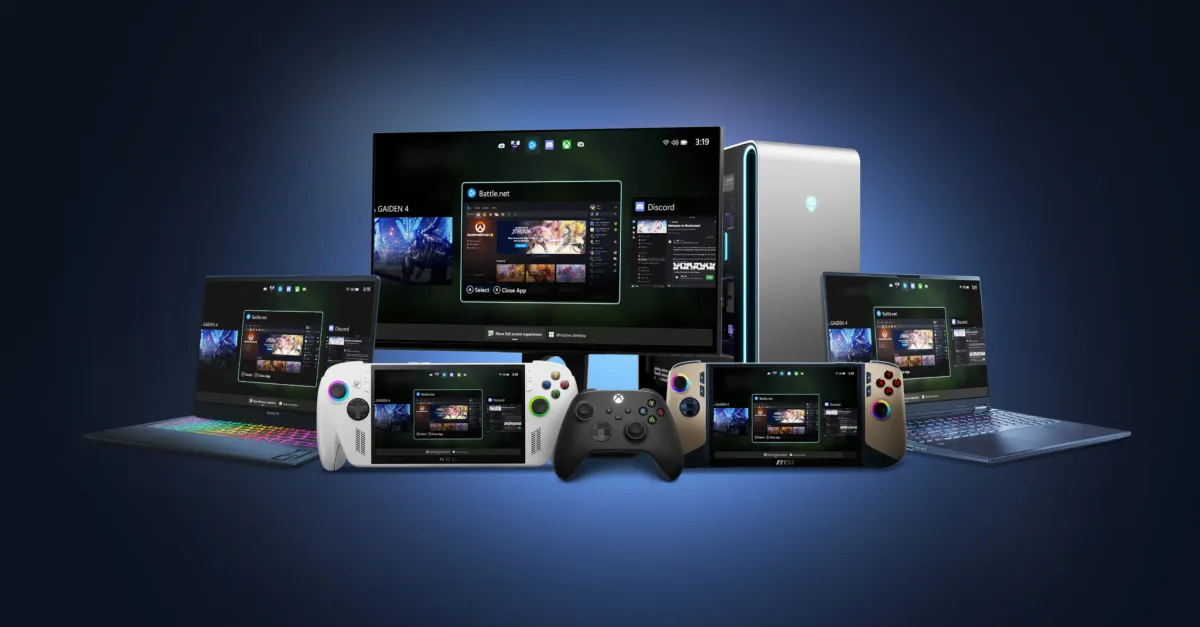
Try the Xbox Full Screen Experience on any PC or tablet—game on the go!

Microsoft Reinvents Gaming with Full Screen Experience (FSE) Expansion Across Windows Devices

In a significant move toward disruption of traditional gaming interfaces, Microsoft has announced the expansion of its Full Screen Experience (FSE) to a broader range of Windows devices — including laptops, desktops, and tablets — via the latest Windows Insider Preview Builds. This development underscores the company’s strategic push to integrate a more immersive, console-like gaming experience into everyday computing, creating a paradigm shift in how users engage with games across multiple form factors. The rollout, currently in the experimental Dev and Beta channels, is a clear sign of Microsoft’s intent to fuse console and PC gaming, bridging hardware ecosystems and setting new industry standards.

The FSE feature, which was previously limited to select Xbox Insider environments, is now more accessible, offering users a more streamlined, high-fidelity, full-screen gaming immersion from their Windows PCs. To activate the feature, users simply hover over the Task View icon on the taskbar and select the Xbox full-screen experience option, or use the shortcut Win + F11. This straightforward interface enhancement, coupled with easy toggling in the Game Bar settings, demonstrates Microsoft’s focus on user-centric innovation — making powerful gaming features more intuitive and widely available. “Microsoft aims to challenge the boundaries between Windows and Xbox, delivering a seamless, console-like experience that could fundamentally alter desktop gaming,” notes industry analyst Sarah Chen of TechInsights.

However, the rollout isn’t universal yet. As Microsoft explains, access to FSE is “gradually rolling out” and requires the latest Windows Insider Builds alongside the Xbox app from the Microsoft Store. This phased approach reflects a strategic move—optimizing the technology while managing the massive scale of Windows’ global user base. SuchControlled rollout strategies are typical of Microsoft’s approach to innovation, allowing them to gather feedback and fine-tune the feature before a broad public release. The potential implications are profound, positioning Microsoft to challenge other gaming platforms and reshape user expectations—particularly as the industry shifts toward more integrated, high-performance gaming environments that leverage PC hardware and cloud services.

The broader implications of Microsoft’s FSE expansion reach well beyond just user experience. By enhancing the gaming capabilities of Windows devices, Microsoft is reinforcing its position as the dominant ecosystem for gaming, possibly disrupting competitors like Sony and Nintendo, which are more console-focused. Industry insiders believe this move could catalyze new business models around integrated hardware-software packages and cloud-based gaming services—areas where giants like Elon Musk’s Neuralink and Google’s Stadia are vying for dominance. Significant, too, is how Microsoft’s decision reflects a larger industry trend—a shift towards more versatile, immersive computing platforms that blur the lines between gaming and productivity, fueling a future where innovation accelerates at an unprecedented rate.

Looking ahead, the expansion of FSE on Windows signals an urgent need for gamers, developers, and tech enthusiasts alike to stay alert. As Microsoft’s strategy to embed high-fidelity gaming into daily computing unfolds, industry stakeholders must adapt and innovate swiftly, or risk being left behind in an evolving landscape driven by disruptive technology. The move toward more immersive, seamless gaming experiences is just beginning; the industry must now prepare for a future where the next big leap isn’t just hardware or software, but the integration of both into a holistic, user-focused ecosystem that redefines how and where we game. The race for the next generation of immersive tech is on, and Microsoft’s bold steps might just steer the industry toward a transformative era of digital interaction.

Trump’s FCC drops cybersecurity rules amid Chinese hack fears — a bold move for youth, tech, and free markets

FCC’s Cybersecurity Rollback Sparks Industry Disruption and Security Concerns

In a bold move signaling a shift in U.S. telecommunications policy, the Federal Communications Commission (FCC) voted 2-1 along partisan lines to rescind critical cybersecurity regulations previously enacted under the Biden administration. The decision, championed by the FCC’s two Republican commissioners, Brendan Carr and Olivia Trusty, effectively removes mandatory security standards aimed at safeguarding phone and internet networks from unlawful access and cyber threats. This strategic rollback aligns with a broader trend of deregulation in the tech sector, emphasizing market-led resilience over prescriptive government intervention.

The regulatory shift arrives amidst an escalating threat landscape, notably exemplified by the Salt Typhoon hacking campaign attributed to China-backed adversaries. This sophisticated operation compromised over 200 US telecommunications firms, including giants such as AT&T, Verizon, and Lumen. Hackers targeted fundamental infrastructure, including wiretap and surveillance systems mandated for law enforcement, exposing the fragility of existing security protocols. Industry analysts, including Gartner and MIT cybersecurity experts, warn that such vulnerabilities could be exploited further if regulatory oversight diminishes.

Adding complexity to the industry’s response are divergent opinions among policymakers. Democratic FCC commissioner Anna Gomez opposed the rollback, arguing it reverses the only meaningful cybersecurity efforts against nation-state cyber espionage. Critical voices, including Senators Gary Peters and Mark Warner, expressed alarm that deregulation will undermine national security, leaving critical communication channels exposed. Their assertions underscore a persistent industry question: Will market forces alone suffice to defend against increasingly sophisticated cyber threats, or is strategic regulation indispensable? Conversely, the NCTA, representing the telecommunications industry, welcomed the move, asserting that the existing rules were overly prescriptive and hampered innovation.

From a technological perspective, this deregulation potentially signals a disruptive phase for the industry, where innovation, rather than regulation, becomes the primary driver of security advancements. Cutting-edge solutions—such as AI-powered anomaly detection, blockchain-based integrity checks, and decentralized security architectures—are poised to redefine cybersecurity landscapes. Disruption driven by market competition could accelerate the deployment of these technologies, positioning nimble firms as leaders in the new security paradigm. Notable industry figures, including Elon Musk and Peter Thiel, have long championed decentralized innovation—foreshadowing a future where private entities spearhead cybersecurity guardrails, rather than bureaucratic mandates.

Looking forward, the industry faces a pivotal moment: balancing innovation and disruption with the safeguarding of national security interests. Policymakers, industry leaders, and technologists must collaborate to ensure that market-driven solutions do not come at the expense of foundational infrastructure resilience. As hackers refine their methods and geopolitical tensions escalate, the window narrows for meaningful action. The future of U.S. cybersecurity in telecommunications depends on adopting a proactive, forward-thinking approach that leverages technological innovation while maintaining robust safeguards—an urgent call for strategic agility in an increasingly volatile digital landscape. The coming months will determine whether deregulation fosters a pioneering security ecosystem or exposes critical vulnerabilities, with profound implications for the global tech frontier.

Social Media Auto Publish Powered By : XYZScripts.com