Matox News

Truth Over Trends, always!

Top 5 Live TV Streams of 2025: Tested and Trusted for Young Viewers

Disruption in Streaming: Sling TV’s Modular Model Sparks Industry Shift

The live TV streaming industry continues to evolve rapidly, with Sling TV emerging as a noteworthy disruptor, despite its notorious complexity. Unlike conventional platforms such as Hulu Live TV or YouTube TV, Sling’s innovative modular approach allows consumers to customize their plans through a base package complemented by a range of affordable add-ons. This flexibility is pushing established giants to reconsider their monolithic service offerings, signaling a potential shift toward more personalized, cost-efficient streaming solutions.

However, this model introduces a new layer of “consumer sovereignty” that could redefine competitive dynamics. The industry’s traditional focus on all-inclusive packages is being challenged by Sling’s emphasis on segmentation—offering core plans at lower prices with optional extras for specific interests. This strategy is aligned with broader market trends highlighted by analysts at Gartner, emphasizing consumer empowerment and segmentation as key drivers for next-gen entertainment platforms. The result: a disruptive force that incentivizes other players to innovate or risk falling behind in an increasingly fragmented but highly tailored landscape.

From a business perspective, Sling’s approach unlocks new revenue streams while maintaining cost leadership—underscored by its ability to underprice competitors by a few dollars despite offering a narrower channel portfolio. This cost-efficiency, paired with extensive compatibility across popular devices such as Roku, Samsung Smart TVs, Apple’s ecosystem, and even Xbox, positions Sling as an agile player capable of rapid market penetration. The availability of apps across leading hardware—from TiVo to Xfinity—further enhances its accessibility, democratizing live TV and broadening its reach among younger, tech-savvy consumers looking for customizable, affordable content.

Looking ahead, industry leaders, analysts, and innovators like Elon Musk, Peter Thiel, and MIT researchers agree that the streaming wars are just beginning. As disruptive technologies like AI-driven content curation and dynamic pricing models mature, the potential for smaller, agile firms like Sling to carve out significant market share becomes increasingly apparent. Ensuring adaptability and innovation will be vital for incumbents to stay relevant in a landscape driven by consumer-centric disruption. The imminent future promises a battleground where technological innovation, strategic agility, and disruptive thinking will determine which companies lead the next era of entertainment. Those who leverage these shifts early will not just survive—they will dominate the new streaming paradigm.


Austin Business Tips for 2025: Young Pros’ Guide to Getting It Done

Innovating the Heart of Texas: Austin’s Tech Scene Sparks Disruption and Business Transformation

Once renowned for its eclectic music and cultural vibrancy, Austin is rapidly transforming into a powerhouse of technological innovation and entrepreneurial disruption. The city’s evolution from the “Silicon Hills” to a central hub of startup activity exemplifies industry shift towards tech-driven urban economies. As major players like Big Tech and innovative startups converge, this epicenter encapsulates how disruptive technologies are reshaping business landscapes and redefining the future of work and commerce.

At the core of Austin’s burgeoning tech ecosystem are its creative co-working spaces, incubators, and a thriving network of entrepreneurs who embody the spirit of fast-paced innovation. Resources like Austin Coworking and Deskpass exemplify this shift, offering flexibility and fostering community among young, ambitious professionals. These platforms are not merely about workspace—they symbolize a broader paradigm shift in how the next generation of tech talent collaborates and innovates. Industry analysts from Gartner highlight that adaptability in work environments and access to agile resources are pivotal for startups aiming to disrupt traditional industries and attract top talent.

Equally notable is Austin’s vibrant hospitality and lifestyle scene, which caters to a new class of digital entrepreneurs and remote workers. Iconic hotels like The Otis and Omni Hotel blend comfort with innovation, offering amenities tailored to the needs of tech-savvy visitors. Concurrently, Austin’s food scene—characterized by legendary BBQ joints like Terry Black’s—demonstrates how local businesses are embracing disruption through online ordering, unique culinary twists, and a focus on experiential dining. This symbiotic relationship between tech and lifestyle underscores a market shift towards a digitally connected, experience-driven economy with enormous implications for business models across sectors.

Moreover, Austin’s brewing and beverage industry, featuring innovative venues like Breakside and local breweries, reinforces the city’s stance on disruptive consumer experiences. These establishments integrate cutting-edge brewing techniques with community-centric outdoor spaces, reflecting how traditional industries are leveraging technology and creative marketing to capture a new generation of consumers. Forward-looking firms such as Breakside focus on crushable lagers and West Coast-style IPAs, exemplifying how brands are embracing innovation at both product and experiential levels, which is critical for maintaining competitive advantage in a crowded market.

From a strategic perspective, this trend signals a broader industry transformation driven by emerging technologies like AI, IoT, and data analytics. Entrepreneur peter Thiel and MIT’s research underscore that early adoption of disruptive innovations is essential for startups to leapfrog established competitors. As Austin continues to attract top-tier talent and investment, the urgency to harness these technologies accelerates, promising a future where disruption is not optional but imperative for survival.

Looking ahead, Austin’s transformation offers a compelling template for other cities aiming to compete in the 21st century economy. The rapid integration of innovation into every facet of urban life—from coworking hubs and hospitality to lifestyle and food—underscores the importance of agility, adaptation, and bold experimentation. Entrepreneurs, investors, and industry leaders must recognize that the race for domination in the tech-driven future is already underway, and those who leverage this momentum today will shape the world of tomorrow with unprecedented velocity and impact.

This week’s top steals: Google Pixel Watch 3 and Anker’s dual-headed USB-C cable—gear up smart!

Emerging Trends Signal Disruption in Consumer Tech Industry

In an era marked by rapid technological innovation and market disruption, companies are leveraging new hardware and software advancements to secure their footholds in a fiercely competitive landscape. Google’s Pixel Watch 3 exemplifies this shift, showcasing not only the integration of Wear OS 6 with revolutionary AI features but also emphasizing the importance of health-centric wearables in the evolving ecosystem of Android devices. As Victoria Song highlights in her recent review, the watch’s extended battery life, seamless integration with Pixel devices, and multi-functional capabilities—including remote Google TV control and offline navigation—highlight how Google is positioning itself to challenge established players like Samsung and Apple.

Beyond smartwatches, accessory innovators such as Anker and Microsoft are driving disruption in the accessory and gaming markets. Anker’s new 2-in-1 USB-C cable restructures charging logistics, allowing consumers to charge multiple devices simultaneously with peak power throughput when paired with a 140W adapter, such as Apple’s latest offering. This move not only signifies a technological leap but also signals a shift towards more efficient, space-saving… device management—crucial in a market where productivity and convenience are paramount. Meanwhile, Microsoft’s Xbox Wireless Controller, now retailing at record lows, underscores how timeless hardware design—founded on user comfort and durability—continues to influence the gaming industry.

Implications for Business and Industry Leaders

These innovations are emblematic of a broader industry trend that favors disruption over tradition. Tech giants and startups alike recognize that differentiation now hinges on integrated ecosystems. For instance, Google’s push into AI-powered health tracking and software-driven updates reflect an understanding that continuous innovation is essential for maintaining competitive advantage. Analysts from Gartner suggest the wearables and accessories markets could see compound annual growth exceeding 20% over the next five years, driven by consumer desire for smarter, more interconnected devices.

Such market shifts compel established companies to reevaluate their strategies, while new entrants capitalize on niche innovations. The business implications are profound, including heightened patent activity, strategic acquisitions, and a focus on AI-driven feature development. As industry leaders like Elon Musk and Peter Thiel emphasize, disruption in technology not only challenges the status quo but also creates enormous opportunities for those who can harness these innovations swiftly and effectively. Competition will intensify, and companies must prioritize agility and strategic foresight to avoid being rendered obsolete.

Looking Forward: Seizing the Future of Tech Innovation

As we look ahead, one thing remains clear: The technological landscape is undergoing a fundamental transformation, driven by rapid advances in AI, wearable tech, and smart accessories. Industry insiders warn that failing to innovate could leave legacy companies trailing behind more agile disruptors. The convergence of hardware and software, exemplified by products like the Pixel Watch 3 and Anker’s new charging solutions, signals an era where disruptive innovations will redefine consumer expectations and redefine market winners.

For young entrepreneurs and established players alike, the challenge is to anticipate, adapt, and accelerate amidst this dynamic upheaval. In a world where technology is no longer an enabler but a core differentiator, the race for innovation is more urgent than ever, and those who capitalize on emerging trends now will shape the digital economy of tomorrow.

Top Family Board Games of 2025: Catan, Ticket to Ride, Codenames & More

Emerging Trends in Digital Gaming Signal Disturbance in Traditional Markets

In a landscape marked by relentless innovation, the digital gaming explosion exemplifies pioneering disruption capable of transforming entire industries. This wave is driven by advancements in augmented reality, artificial intelligence, and new interactive platforms that have begun to redefine how businesses conceptualize entertainment, engagement, and revenue models. A prime example is the emergence of warehouse-like, multiplayer, and cooperative game formats that lean heavily on digital interconnectivity, challenging traditional paradigms of family entertainment and social interaction.

Leading firms like Exploding Kittens and Wired are capitalizing on these innovations by shifting from conventional board games to digital-integrated experiences. Notably, these companies leverage AI-assisted game design, real-time analytics, and crowdsourced content to craft immersive, fast-paced, and highly social experiences that appeal to the tech-savvy youth demographic. Furthermore, the industry is witnessing a notable pivot towards virtualized, multiplayer setups that transcend geographical limitations, heralding a new era where physical game assets evolve into digitally enriched entertainment ecosystems. This shift is also reinforced by data from Gartner, which predicts that by 2025, the majority of family and social gaming will be rooted in interactive, digitally networked platforms, foreshadowing a steep decline in traditional physical game sales and a rise in hyper-disrupted content delivery channels.

One of the most disruptive elements lies in the business model innovation facilitated by these technologies. Subscription-based access, microtransactions for in-game assets, and on-demand gaming experiences are fundamentally altering the revenue stream, much like the monetization strategies seen in AI-powered cloud services and streaming giants. Companies such as Ultra PRO and others are now offering digital packages that integrate seamlessly with social media, further accelerating the shift towards a gig economy of gaming content, where user-generated content feeds into monetization pipelines. This transition into a **digital economy** is a wake-up call for legacy board game manufacturers and retail giants, many of whom are ill-prepared for the scale of disruption.

With industry heavyweights like MIT and analysts such as Peter Thiel warning about the stagnation of non-digital entertainment sectors, it becomes clear that the race for technological dominance is intensifying across gaming, social interaction, and consumer engagement. Those who fail to adapt risk being left behind in an era where innovation in AI and augmented reality revolutionizes consumer expectations overnight. As the landscape evolves with new formats—from visually stimulating tile-building games to fast-paced guessing competitions—the urgency for incumbent businesses to innovate is more critical than ever. Leaders in tech and entertainment must collaborate, harness data-driven insights, and accelerate the deployment of next-generation gaming infrastructures—failing which their market share is destined to erode significantly. Recognizing this seismic shift, stakeholders need to deploy aggressive R&D strategies and prioritize open platforms that foster community-driven content and cross-platform integration.

Future Outlook

Looking forward, the persistent acceleration of digital disruption demands proactive adaptation from market players. The advent of AI-integrated game design, virtual reality, and advanced analytics promises to unlock unprecedented levels of engagement and profitability. Companies that view this as an opportunity—rather than a threat—will dominate the new digital gaming frontier. The window to capitalize on these innovations is closing rapidly; industry leaders must act decisively to secure a competitive edge, or risk becoming obsolete in the blink of an eye. The future belongs to those who can orchestrate disruptive technologies at scale, merging innovation with business agility. The question is no longer if but when and how the next wave of digital entertainment will redefine the marketplace—those who recognize the urgency now will shape its future trajectory.

What is Bending Spoons? The startup behind AOL’s latest takeover—here’s what you need to know

In a remarkable leap forward for tech innovation and industry disruption, Bending Spoons, a relatively understated player, has announced its ascent into the billion-dollar club, solidifying its position as a pivotal force in the digital economy. Over the past week, the company’s four cofounders achieved billionaire status, illustrating the profound influence of strategic acquisitions and tech-driven transformation in today’s competitive landscape. The secret to their meteoric rise? Disruptive ingenuity combined with relentless focus on revitalizing established but stagnant digital brands.

Since its inception, Bending Spoons has carved a niche as an active operator rather than a passive investor. Unlike traditional private equity firms, it targets digital businesses that, despite substantial user bases, have become underperforming or overlooked. Its approach—buying, restructuring, and scaling—mirrors the ingenuity seen in giants like Elon Musk’s Tesla or Peter Thiel’s Palantir, but with a unique focus on consumer-facing apps. Notable acquisitions, such as Remini, Evernote, Wetransfer, and Vimeo, exhibit a clear strategy to disrupt the status quo, injecting innovation, AI, and new business models into legacy brands. The company’s recent move to acquire AOL signals its ambition to dominate digital communication and content, setting industry warnings: the era of fragmented app ecosystems is giving way to integrated, AI-enabled digital conglomerates.

Implications for the future of digital businesses are profound. As Gartner and MIT researchers emphasize, the integration of artificial intelligence and strategic consolidation are core trends reshaping the tech landscape.

  • Transforming underperforming businesses into revenue-generating assets.
  • Consolidating consumer and enterprise digital platforms for maximum reach and monetization.
  • Shifting from ownership to long-term value creation, emphasizing innovation over mere exit strategies.

Businesses that fail to adapt risk obsolescence, while those like Bending Spoons leverage disruption to build resilient, diversified digital portfolios. Its recent moves—acquiring high-profile brands like Vimeo and AOL—highlight a trend where scaled, AI-powered digital ecosystems will dominate, forcing established players to rethink their strategic priorities or face rapid decline.

As the industry watches intently, the rapid pace of acceleration in acquisition activity and technological overhaul signals that the contemporary tech arms race is far from over. With a valuation surpassing $10 billion, Bending Spoons exemplifies a new breed of American and European tech giants who prioritize continuous reinvention and innovation. The question now is whether the rest of the industry can keep up or fall behind in this relentless pursuit of digital dominance. The urgency to innovate, disrupt, and capitalize on emerging AI and platform integration has never been greater. For youth-oriented investors, entrepreneurs, and tech enthusiasts, the clock is ticking: the future belongs to those bold enough to reimagine the digital frontier today.

Nancy Mace Clashes with Airport Cops in Explosive Outburst: Police Report

Major Political Controversy Sparks Disruption in Public Sector Operations

In a development that underscores the unpredictable intersection of politics and technology, South Carolina Congresswoman Nancy Mace has recently found herself embroiled in a controversial incident at Charleston International Airport. According to an incident report obtained by WIRED, her unruly behavior toward law enforcement and security personnel has not only raised eyebrows but also spotlighted vulnerabilities within logistical and security infrastructures. As public sector disruption becomes increasingly intertwined with political theatrics, tech companies operating in the realm of security, identity verification, and AI-driven enforcement are now reassessing their innovation strategies to navigate industry instability.

This episode exemplifies the critical need for disruption-resistant systems in operational workflows, especially where governmental and security agencies rely heavily on automation and digital interfaces. While traditional security protocols—such as manual checks and human oversight—have served well, the incident emphasizes the urgency for emerging automated compliance tools and AI-driven behavioral analytics. Companies that incorporate these innovative technologies could not only improve operational efficiency but also enhance resilience against unforeseen political risks. As analyst Gartner has consistently reported, the future of public sector security will increasingly depend on the ability of AI systems to prevent, detect, and adapt to unexpected human behaviors that threaten safety and order.

Furthermore, the incident highlights a broader industry shift towards automation and smart security protocols, especially in high-stakes environments such as airports. Disruption in traditional security models—exacerbated by operational gaps such as the ongoing government shutdown affecting TSA salaries—calls for a strategic pivot towards blockchain-based identity verification, biometric authentication, and AI-powered behavioral monitoring. Companies that recognize these market shifts early will lead the next wave of public-private partnerships, which could fundamentally redefine security logistics and compliance in a post-pandemic, hyper-polarized world.

From an innovation perspective, the episode underscores the urgency for disruptive technologies that can predict and manage human factors within critical infrastructure. Experts from MIT and industry leaders like Elon Musk have long championed the integration of autonomous compliance systems, recognizing their potential to mitigate risks associated with human unpredictability. As industry analysts warn, failure to adapt to these disruptive shifts could expose vulnerabilities, inviting greater instability and operational costs. The future landscape will likely favor businesses leveraging AI, blockchain, and advanced behavioral analytics to create resilient, adaptive systems—and those slow to innovate risk becoming obsolete.

In a world increasingly defined by rapid technological transformation and fleeting political stability, the call for proactive innovation is more urgent than ever. National security, business resilience, and public trust depend on their ability to disrupt traditional models and adopt next-generation infrastructure. The incident at Charleston Airport serves as both a cautionary tale and a clarion call to innovators: those who harness the disruptive potential of emerging technologies will shape the future of security, governance, and societal stability. As the industry evolves, remaining static will no longer be an option—forward-thinking companies must lead the charge into a disruptive new era.

Meta: Alleged Porn Downloads Tied to AI Lawsuit Were Just for Personal Use

Meta Fires Back at Allegations Over IP and AI Training Practices

In a high-stakes legal battle that underscores the rapidly evolving landscape of artificial intelligence and intellectual property, Meta has publicly dismissed claims from Strike 3 that suggest the tech giant engaged in suspicious activities related to AI training data. According to Meta, the allegations lack credible evidence or specifics, and are instead rooted in unfounded speculation. The company’s recent court filings articulate a compelling narrative that challenges the very foundation of Strike 3’s accusations, emphasizing the importance of clarity and fairness in the fast-moving AI marketplace.

At the core of Meta’s argument is its assertion that the complainant has failed to identify any individuals linked directly to the alleged IP address misuse or associated with Meta roles in AI development. The company’s legal team pointed out that “tens of thousands of employees, contractors, visitors, and third parties” access their internet infrastructure daily, making it impossible to pin down specific malicious activity without concrete evidence. Meanwhile, Meta emphasizes that any activity involving downloads of IP content over the past seven years could just as plausibly be linked to third parties such as contractors or vendors, rather than the company itself, highlighting the pervasive challenges in tracing digital activity securely and accurately in a complex corporate environment.

Adding to the company’s strong stance, Meta argues that claims suggesting a clandestine “stealth network” of hidden IPs are both “nonsensical” and unsupported. The complaint proposes a scenario where Meta might conceal certain downloads to evade detection, yet the company questions such logic—pointing out inconsistencies like why an organization would use easily traceable IP addresses for one set of data, but covert channels for another. This critique underscores a broader industry trend: the push for transparency and accountability in AI training practices, which remains a contentious issue as the sector accelerates toward new frontiers of disruption and innovation.

The implications for business innovation are profound. As AI continues to revolutionize markets and redefine competitive advantages, corporate transparency becomes a strategic imperative. Companies that can demonstrate clear, responsible data practices will likely gain the TRUST of users and regulators alike—an essential factor in navigating the emerging era of AI-first enterprises. Conversely, unfounded legal claims risk fueling regulatory uncertainty, potentially stifling disruptive advancements and delaying the deployment of transformative technologies. As analysts from Gartner and MIT warn, unresolved legal disputes and the erosion of trust could hamper AI’s integration into critical sectors such as healthcare, finance, and autonomous systems.

Looking ahead, the unfolding legal discourse surrounding Metas AI training methods signals a critical juncture. Industry leaders like Elon Musk and Peter Thiel advocate for “rigorous accountability” in AI development, emphasizing that innovation must proceed responsibly without compromising on ethical standards. With the sector poised for exponential growth, remaining vigilant and adaptive to both technological and regulatory shifts is crucial. The scene is set for a future where transparency and accountability are the cornerstones of sustainable disruption—yet the stakes could not be higher. Companies that seize this moment to lead with integrity will shape the next epoch of technological evolution, while those mired in ambiguity risk falling behind in a fiercely competitive global landscape. The race for AI dominance is accelerating, and the ability to delineate fact from fiction will determine who emerges victorious in the decades to come.

Sora turbocharges AI videos—pay more, create bigger!

OpenAI Advances AI Video Platform Sora: Monetization Sparks Industry Disruption

In a bold move towards business model innovation and industry disruption, OpenAI has announced new paid options for its AI-powered video platform Sora. As part of its strategic pivot, the company is phasing out unlimited free usage and introducing a pay-per-generation model targeted at high-volume creators. This shift underscores the platform’s burgeoning role in shaping the emerging AI creator economy, where monetization, user engagement, and technological innovation intersect with intense market competition.

Bill Peebles, head of the Sora team at OpenAI, emphasized that the current system’s economics are “completely unsustainable,” citing growing demand from power users who generate hundreds of videos daily. The new model offers ten extra video generations for $4, with costs varying based on factors such as resolution and length — a clear signal that high-scale content creation will soon be driven primarily by paid usage. This transition aligns with the company’s broader strategy to turn Sora into a lucrative revenue stream by attracting professional creators and content studios eager for seamless, AI-driven video generation capabilities.

Disruptive Innovations and Market Implications

OpenAI’s integration of paid credits not only signals a shift towards sustainable operations but also exemplifies disruptive innovation in AI-assisted content creation. For tech giants and startups alike, this move sets a new industry standard—transitioning from free, limited access towards scalable, pay-as-you-go models reminiscent of cloud computing services and subscription platforms. This opens up lucrative business implications:

  • Emergence of a Creator Economy: The platform’s features such as clip stitching, leaderboards, and deepfake avatar creation foster a competitive environment favoring professional and semi-professional creators who are willing to pay for enhanced capabilities.
  • Market Differentiation: Sora positions itself as a pioneer in AI-based video content, likely prompting other players to innovate or price competitively, thus intensifying market rivalry.
  • Potential Legal and Ethical Concerns: With functionalities like deepfake creation, the industry must reckon with societal impacts and legal frameworks—areas closely monitored by institutions like MIT Media Lab and industry watchdogs.

By emphasizing transparency about upcoming changes and future paywall thresholds, OpenAI aims to build trust amidst rapid disruption. The company’s move echoes strategies advocated by industry veterans such as Peter Thiel, who emphasize the importance of sustainable business models that enable continuous innovation.

Future Outlook: Urgency for Stakeholders and Industry Watchers

The burgeoning AI-powered creator economy remains in its infancy, but the direction is unmistakable: AI content generation will soon become a high-stakes, monetized industry requiring strategic agility. As OpenAI ramps up its paid offerings, competitors will be under pressure to innovate or risk obsolescence. Industries reliant on digital content—media, entertainment, marketing—must adapt swiftly to these technological shifts. Experts at Gartner predict that within the next few years, platforms like Sora could redefine content pipelines, with AI-driven videos surpassing traditional methods in cost, speed, and scale.

This ascending wave of AI innovation signals that staying ahead of the curve will require an acute understanding of emerging business models, legal landscapes, and technological breakthroughs. For stakeholders eager to capitalize on this disruptive landscape, the window to innovate is closing rapidly. The future belongs to those who grasp the urgency of proper integration: the next decade promises unprecedented transformation fueled by AI’s potential to revolutionize entire industries.

Microsoft’s new agent platform signals a rightward tech shift | The Verge

In an epochal shift within the technology landscape, Microsoft is positioning itself at the forefront of the AI revolution through groundbreaking developments unveiled at its recent GitHub Universe developer conference in San Francisco. As AI accelerates its encroachment into core facets of software development, disruption is becoming inevitable, signaling both opportunity and strategic recalibration for industry leaders.

The conference spotlight was on GitHub’s ambitious initiative to transform into an AI-powered coding hub with the introduction of Agent HQ. This new interface aims to serve as an ecosystem where outside coding assistants—including OpenAI’s Codex, Anthropic’s Claude Code, and emerging AI agents from Google, Cognition, and xAI—can seamlessly integrate with GitHub’s platform. These advances are designed to reinforce GitHub’s role as the connective tissue for AI-driven software development, effectively making it the central node where AI agents interact directly with vast codebases used by over 180 million developers globally.

  • Enhanced ecosystem openness, allowing multiple AI providers to plug into GitHub
  • Strategic move to maintain Microsoft’s centrality in the developer universe
  • Potential to embed AI as the default collaborator in coding workflows

Such strategic positioning underscores a clear mandate: to remain indispensable in an industry on the cusp of profound transformation. Jared Palmer, GitHub’s new senior vice president, emphasized the goal of fostering an “arms-wide-open ecosystem” where developers retain control, regardless of which AI tools they adopt. As Microsoft’s Jay Parikh, overseeing CoreAI, articulates, the focus is on “building better tools and fostering choice,” as the company accelerates efforts to integrate AI into every layer of software infrastructure. This approach aligns with industry analysis from Gartner, which asserts that the next decade will see AI become embedded in nearly all development tools—disrupting traditional workflows and redefining efficiency thresholds.

The implications extend beyond mere productivity gains. With Microsoft’s deep-rooted partnership with OpenAI—cited explicitly by CEO Satya Nadella as the catalyst behind the surge of AI coding innovations—the company aims to dominate the emerging “AI code economy.” Nadella’s reference to “the billion to ten-billion happened at GitHub” highlights a pivotal trend: AI-generated code is not just augmenting human effort but fundamentally altering the creative and specification phases of software engineering. This evolution is increasingly pushing humans towards design, strategy, and oversight, while delegating routine coding tasks to powerful GPUs and AI agents. Harvard’s MIT AI Lab and industry insiders warn that such disruption could render traditional development paradigms obsolete unless companies adapt swiftly.

Looking ahead, Microsoft’s strategic focus on disruptive AI integration signals an urgent call to industry players: those who fail to adapt risk obsolescence in a fiercely competitive AI arms race. The converging force of innovation, strategic alliances, and ecosystem decentralization suggests a future where agility and openness are paramount. The industry must accelerate investment in AI infrastructure, talent, and alliances, recognizing that the next wave of technological dominance hinges on early, bold action. As Elon Musk and Peter Thiel have long warned, this is the era where the first movers will captivate the market—those who recognize the industry’s tectonic shifts now will shape the digital future or be swept aside.

Canva rolls out new AI tools and its own design model, empowering creators and boosting creativity

Canva Unveils Revolutionary AI-Powered Design Platform, Signaling Industry Disruption

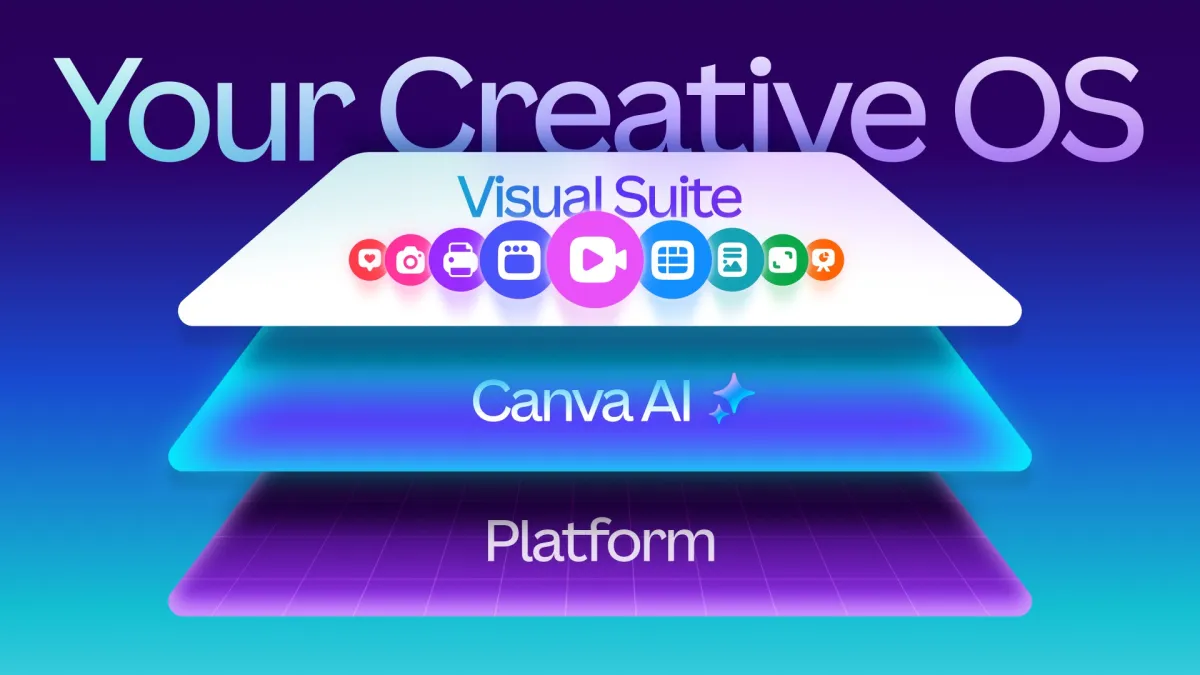
In a bold move that underscores the rapid acceleration of AI-driven innovation in creative software, Canva announced the launch of its own state-of-the-art foundational AI model on Thursday. Moving beyond the era of simple diffusion-based image generation, Canva’s new model delivers **multi-layer, editable designs**—a game-changer for visual content creation. This strategic development exemplifies how tech disruptors are challenging legacy giants like Adobe and Figma, positioning Canva as a serious contender in the $40 billion creative SaaS industry.

The new model, trained on Canva’s extensive element library, enables users to generate versatile, multi-format designs—from social media posts to full-fledged websites—with the ability to manipulate individual layers and objects. “Where traditional diffusion models produce flat images, ours offers **editable, dynamic compositions**, elevating the user’s ability to iterate seamlessly,” explained Robert Kawalsky, Canva’s global head of product. This evolution aligns with industry analysts’ predictions (Gartner, 2023) that future creative tools will prioritize flexibility and user control, disrupting existing workflows and fostering innovation at an unprecedented pace.

Infusing AI Into the Creative Ecosystem: Business Implications & Future Trends

Canva’s integration of AI further extends into interactive features, such as real-time media suggestions, 3D object generation, and design style replication—saving time and reducing skill barriers for users. The platform’s bond with its recent acquisition, Affinity —a professional-grade design suite—illustrates a clear strategy to bridge casual content creation with high-end professional tools, effectively challenging Adobe’s dominance. Canva’s decision to make Affinity free permanently not only enhances value but signals a disruptive shift in the software licensing paradigm, encouraging broad adoption of high-fidelity, non-destructive editing capabilities.

Additional updates bolster Canva’s position as an integrated ecosystem. The introduction of form creation substitutes *Google Forms* for client input, alongside branded email templates designed with AI assistance, deepening the platform’s value for digital marketing. As MIT’s recent study suggests, such multi-functional platforms are steering the industry toward **ecosystem dominance**, where seamless interoperability between tools becomes essential for staying ahead.

  • Innovative features include AI-generated 3D objects and style-mimicry, advancing visual storytelling capabilities.
  • The tight integration of Affinity with Canva’s interface unifies vector, pixel, and layout considerations under one roof—streamlining designer workflows.
  • The ability to transfer objects between tools and leverage AI within Affinity sets a new standard for professional creative suites, blurring the line between amateur and professional design.

Looking Ahead: A Racedur for Market Leaders & Startups Alike

This advancement reaffirms the narrative that **disruption is not merely about innovation but strategic repositioning**, with Canva challenging entrenched industry incumbents through AI democratization and ecosystem expansion. As Elon Musk’s Neuralink and Peter Thiel’s Palantir have demonstrated, early adoption of scalable, AI-driven platforms can redefine market power and influence. Gartner forecasts that by 2026, over 70% of digital content will be AI-enhanced, emphasizing the urgent need for industry players to innovate or face obsolescence.

In a landscape where rapid technological shifts are defining winners from the rest, Canva’s convergence of AI, professional-grade tools, and ecosystem integration signals a clear message: the future belongs to those who can harness disruption as a strategic advantage. Companies and creators alike must adapt swiftly, as the next wave of radical innovation is set to reshape how visual content is designed, understood, and monetized—making it imperative for industry stakeholders to stay alert, agile, and prepared for the inescapable march of AI-driven transformation.

Social Media Auto Publish Powered By : XYZScripts.com