Matox News

Truth Over Trends, always!

Google’s Gemini in Home Keeps Calling My Dog a Cat—Time for Better AI?

Google’s Gemini Revolutionizes Smart Home Ecosystem, Signaling Major Industry Disruption

In a bold stride toward hyper-intelligent home automation, Google has integrated its latest large language model, Gemini, into the Android-based smart home ecosystem, marking a pivotal shift in how consumers interact with connected devices. Announced in early October, this technological leap is not merely an incremental upgrade; it indicates a significant disruption in the smart device industry, with far-reaching implications for entrenched players and emerging startups alike. As business analysts and industry experts scrutinize, the integration of Gemini suggests an unstoppable momentum toward AI-driven environmental awareness and autonomous decision-making, setting a new standard for the convergence of AI and IoT.

By replacing Google Assistant with Gemini across a decade-old range of Google Nest devices, the company signals its focus on innovation and disintermediation. The new AI-powered assistant offers profound improvements, such as multi-command understanding, automated routines, and richer contextual alerts — capabilities once reserved for high-end enterprise systems. Notably, disruption extends beyond user experience: this technological shift challenges legacy industry models, compelling traditional security camera firms and smart device manufacturers to accelerate their AI integration plans or face obsolescence. As Gartner recently noted, the advent of large language models in consumer devices will catalyze an ecosystem where data, automation, and user engagement are more tightly intertwined than ever before.

Innovation in Action: Smarter Security and Home Automation

  • Enhanced contextual alerts — such as distinguishing delivery personnel from pedestrians or neighborhood animals
  • Advanced automation — enabling users to set complex routines through conversational commands
  • Improved response accuracy — reducing false positives like misidentifying indoor dogs as cats or hallucinating events

However, these improvements come with a note of caution. Industry veteran Elon Musk warns that heavy reliance on AI, particularly in safety-critical applications like home security, warrants rigorous testing and oversight. Currently, Gemini’s indoor camera alerts still experience hallucination issues, such as mislabeling a dog as a cat, illustrating that AI models require more refined training before deployment at scale. Still, the trajectory leads toward an autonomous, AI-driven smart environment that is less about manual control and more about seamless, anticipatory, and context-aware assistance.

Business Implications: Disruption, Competition, and Market Shifts

The strategic move by Google exemplifies disruption theory in action. Traditional players like Arlo and Sony are now under pressure to embed comparable AI capabilities or risk losing ground to Google’s integrated ecosystem. The move also raises the bar for startups aiming to carve niches in AI-powered smart homes, as consolidation appears imminent. Equally, business implications extend to data privacy debates, with AI models requiring vast data sets for refinement, thus prompting new regulatory and ethical considerations. According to MIT’s Digital Economy Lab, the integration of large language models into everyday devices accelerates a paradigm shift from device-centric to data-centric business models, where control over AI and consumer data becomes the new competitive battleground.

Looking to the future, the question remains: are we witnessing the dawn of a new era in AI-powered living spaces or the early signs of overhyped disruption? Given the rapid pace of innovation, companies that prioritize disruption through technological breakthroughs and adopt a forward-thinking, agility-first approach will shape the next frontier of smart technology. With industry giants like Google pushing the envelope, the time for startups and incumbents alike to adapt is unmistakably now — because the smart home of tomorrow is being engineered today, and those who fail to innovate risk being left behind in a dust cloud of legacy systems and missed opportunities.


Top Deals: Motorola Razr Ultra & Marshall Emberton II Lead the Pack this Week

2025: A Year of Breakthroughs and Industry Shifts in Technology

As the technological landscape accelerates into 2025, industry leaders are witnessing unprecedented waves of innovation and disruption that are fundamentally reshaping consumer markets and enterprise sectors alike. Notably, the launch of the Motorola Razr Ultra signals a renewed focus on foldable devices, integrating cutting-edge hardware with an ultra-stylish aesthetic that appeals to a youthful, style-conscious demographic. With its dual-display setup featuring a 7-inch inner screen and a 4-inch outer panel, powered by the Snapdragon 8 Elite chipset, this device exemplifies the convergence of form and function, setting a new benchmark for mobile tech that prioritizes both innovation and user experience.

The business implications of such innovations extend well beyond aesthetics; they signal a pivotal shift in how device developers incorporate AI and versatile hardware to meet the demands of next-generation consumers. The addition of a dedicated AI button for live transcriptions and notification summaries illustrates a move towards more intuitive, context-aware devices—an evolution driven by industry visionaries like Elon Musk and analysts from Gartner. Meanwhile, accessories are following suit. The Marshall Emberton II portable speaker, now more affordable at Best Buy and Amazon, showcases how iconic brands are pivoting towards rugged, outdoor-friendly designs with multi-directional stereo sound, enhancing brand relevance and consumer engagement in competitive markets.

The rapid growth of integrated peripheral solutions underscores a broader trend: hardware ecosystems are becoming more interconnected and powerful. The Ugreen 8-in-1 dock exemplifies this, bringing a wealth of connectivity—including four Thunderbolt 4 ports, gigabit Ethernet, and multiple USB-A ports—centered around an efficient 140W GaN charger. Such innovations streamline workflows, allowing professionals and power users to operate seamlessly across multiple high-resolution displays, high-speed data transfers, and legacy accessories. This level of hardware integration paves the way for more flexible, portable, and powerful computing setups, which are indispensable as remote work becomes entrenched within corporate strategies.

Looking ahead, these technological advancements demonstrate an industry eager to disrupt traditional paradigms by weaving together hardware excellence, AI sophistication, and consumer-centric design. Industry observers like Peter Thiel have long predicted that the most impactful companies will be those that leverage disruptive innovations to redefine user expectations. The combination of rugged, stylish devices like the Motorola Razr Ultra, smart accessories like the Emberton II, and comprehensive connectivity hubs suggests that 2025 may be the year where breakthrough fundamentals set the stage for a more integrated, AI-powered, and consumer-first digital ecosystem. A sense of urgency surrounds these shifts: the companies that embrace this future faster will dominate an increasingly competitive landscape driven by innovation, disruption, and relentless pursuit of future-ready tech. As the industry propels itself forward, it remains clear—those who hesitate risk falling behind in the race for technological supremacy.

TiVo Fights Courts, but Misses the TV Revolution

TiVo’s Decline: A Lesson in Innovation and Industry Disruption

Once hailed as a pioneer in digital video recording, TiVo now stands as a cautionary tale of missed opportunities amidst the relentless pace of technological disruption. The company’s early dominance with its advanced DVR technology was built on a series of groundbreaking features, protected fiercely through the now-infamous US Patent 6,233,389, popularly known as the Time Warp patent. However, despite its patenting strength, TiVo’s focus on prolonged intellectual property battles with industry giants such as Motorola, Time Warner, AT&T, and others diverted its energy from innovation to litigation. The company’s victory streak in patent suits culminated in a $500 million settlement with EchoStar, but critics argue this legal fervor drained resources that could have been used to pioneer the next wave of entertainment technology.

Failure to Capitalize on Industry Shifts

The television and digital video space rapidly evolved with the advent of streaming services and smart TVs. TiVo, despite adding support for Netflix and Hulu, struggled to keep pace with the disruptive market forces. Rivals like Roku and Google Chromecast exemplified this shift by offering low-cost, plug-and-play streaming solutions at impulse-purchase prices—sometimes as low as $49.99—eroding the premium perception of TiVo’s hardware. Meanwhile, the smart TV operating systems gained in capability, making dedicated set-top boxes increasingly redundant. The company’s traditional advantage—the user-friendly interface and iconic peanut remote—became less relevant as consumers gravitated towards integrated, smart TV platforms fueled by massive changes in consumer expectations and wider industry trends. TiVo’s incremental approach, heavily reliant on licensing its patents and litigating, starkly contrasted with the innovative disruption led by companies embracing software-first, streaming-focused environments.

From Hardware to Patent Licensing: A Changing Business Model

The acquisition of Rovi in 2016, a firm specializing in patent licensing, epitomized TiVo’s shift from hardware pioneer to patent troll. Instead of developing cutting-edge hardware or new OS platforms, the company pivoted towards monetizing its extensive patent portfolio through licensing and litigation. When Xperi acquired TiVo in 2020, it marked the end of an era for consumer hardware innovation, with the TiVo Edge being last of its kind before hardware production was quietly discontinued. The new focus on licensing underscores a broader trend where patent hoarding and legal battles replace technological innovation as industry drivers. Critics like Gartner analysts warn that such a model, while profitable in the short term, could spell long-term obsolescence in a competitive market that favors agility and consumer-centric innovation.

The Future of Digital Video Technology

The shift away from traditional hardware to software-driven platforms is accelerating, with giants like Apple and Google investing heavily in their own ecosystems. The announced focus of TiVo’s successor operations—namely a new smart TV OS—comes *15 years too late* amid a landscape dominated by native platform integrations. Industry insiders such as Elon Musk and Peter Thiel emphasize the importance of disrupting entrenched legacy systems with truly innovative, consumer-first solutions, rather than relying on old patent hoarding tactics. The key for future success will hinge on how quickly and effectively emerging players can leverage AI, edge computing, and next-generation streaming services to outpace competitors and redefine consumer expectations. Industry momentum is shifting decisively towards integrated, streaming-first, software-centric ecosystems—those that innovate rather than litigate will seize the future.

Digital Decluttering: The Swedish Death Cleaning Trend for Teens and Beyond

Innovative Strategies Transform Digital Legacy Management in End-of-Life Planning

As the digital age accelerates, a critical yet often overlooked frontier is digital estate management—the methodical organization of personal data for end-of-life scenarios. The recent case involving Adam Liljenberg’s family highlights a burgeoning industry shift: technology firms and service providers are stepping in to revolutionize the way our digital legacies are handled. From malware-laden phones to complex, multi-layered data silos, the challenges facing heirs and executors demand innovative solutions that go beyond traditional physical estate planning.

Disruption and Innovation Fueling Digital Death Cleaning

The concept of Swedish death cleaning, long favored for organizing physical belongings, is now gaining momentum in the digital realm. Companies like Stow & Behold and other emerging startups are deploying intelligent software and AI-driven tools to automate digital asset management. These platforms are designed to facilitate tasks such as scanning physical documents, organizing photos, and encrypting sensitive information to prevent leaks—anticipating a future where digital inheritance management is seamlessly integrated into estate planning.

  • Automation of digital inventory logging
  • Advanced encryption and privacy controls
  • Cloud-based access for authorized heirs
  • AI-driven categorization and contextual tagging

This disruption is not happening in isolation. Think tanks such as Gartner and MIT are emphasizing the strategic importance of digital resilience and cybersecurity in personal data management. As Elon Musk and Peter Thiel warn about the vulnerabilities in our digital footprints, industry leaders recognize that a proactive approach to digital estate planning could be a significant business opportunity with profound societal impacts.

Business Implications and Future Trajectory

The shift towards comprehensive digital estate solutions signals a broader transformation in how businesses approach data security and user experience. By integrating digital death cleaning into mainstream estate planning, companies can position themselves as essential intermediaries in a highly sensitive market—one that combines personal data, privacy concerns, and technology. This trend not only opens doors for new business models but also compels legacy firms to innovate rapidly, adopting SaaS platforms, AI, and blockchain for secure data transfer and ownership verification.

Moreover, the industry is responding to a rising demand for personalized digital care. For example, the emphasis on safeguarding sensitive content—be it memories, financial records, or private correspondence—underscores the importance of customizable privacy settings. Such features are critical in avoiding situations where unexpected data leaks cause emotional distress or legal complications for heirs. Innovations like these also underscore a broader push: the digital estate industry is not just about logistics but an ethical imperative to protect personal dignity and privacy at life’s end.

The Urgency of Embracing Digital Estate Management

As digital assets expand exponentially, the imperative for comprehensive, secure, and user-friendly digital estate management solutions becomes undeniable. Industry experts from institutions like Gartner forecast that by 2025, over 60% of digital heirs will rely on specialized platforms to manage their inherited data, up from negligible figures today. This prodigious growth underscores the necessity for early adoption—both from individual users aiming to secure their digital legacy and businesses poised to lead this disruptive wave.

In this rapidly evolving landscape, those who ignore the importance of digital death planning risk being left behind. With technology advancing at breakneck speed, organizations that leverage innovation—be it AI, blockchain, or cloud computing—will shape the next chapter of personal data management. The message is clear: the future belongs to those who act now, integrating digital estate solutions into the core of estate planning and cybersecurity strategy.

Facebook’s new AI-powered button previews your private photos before you even upload—are you ready?

Meta’s Latest Push into AI-Enhanced Camera Roll Features Sparks Industry-Wide Disruption

Meta continues to redefine the boundaries of artificial intelligence and user data integration with its latest feature rollout, raising significant questions about the future of data-driven innovation and digital privacy. Recently, the social media giant announced a new camera roll feature at Facebook that leverages AI to assist users in enhancing their photographs before posting. This development exemplifies disruption at the intersection of personal data and AI capabilities, offering both technical innovation and strategic market advantages that could reshape social media engagement.

Initially tested in June, the feature proposes to select media from users’ camera rolls and upload it to Meta’s cloud, ostensibly to generate creative suggestions. While Meta claims that private photos used solely for suggestions will not be used to train AI models unless explicitly authorized, industry experts such as Gartner analysts highlight that this transparency may be more perceived than actual. “The potential for future misuse or escalation in data harvesting practices remains a key concern,” warns Dr. Anne He, a prominent researcher in AI ethics and privacy. Today, Meta clarifies that media uploaded for suggestion purposes isn’t immediately used to improve AI, unless the user engages further—yet the underlying implication remains significant for industry-wide data policies.

Strategic Innovation and Industry Implications

Meta’s approach demonstrates a push for convenience-driven AI interfaces that blur the lines between personal privacy and technological convenience. As Meta trains its models on publicly available data since 2007, and potentially on user uploads in the future, industry leaders are recognizing the strategic value of this disruptive shift. The move positions Meta to lead the next wave of AI-powered content creation, aligning with the broader trend of companies leveraging user-generated data to fuel ever more sophisticated algorithms.

Furthermore, the company’s emphasis on avoiding advertising targeting using private media underscores a calculated attempt to mitigate backlash while maximizing data utilization for AI training. This tactical stance could set a precedent for industry standards, prompting rivals such as Snapchat or Twitter to accelerate similar innovations. The strategic deployment of AI-enhanced features like this signals a future where personalized, real-time content enhancement becomes a compelling differentiator in a crowded social landscape.

Disruption, Challenges, and the Road Ahead

The move marks a pivotal moment for digital innovation, yet it comes with significant challenges. Critics argue that any collection of private media for AI training could initiate a new era of privacy erosion, potentially undermining user trust. Industry insiders, including Elon Musk and Peter Thiel, warn that unchecked data aggregation could lead to unforeseen ethical dilemmas and regulatory crackdowns, ultimately disrupting long-term growth prospects for digital giants.

The core question remains: how will industry players balance cutting-edge innovation with user trust and regulatory compliance? As Meta advances in AI-driven content manipulation, the urgency for establishing clear ethical standards becomes evident. With the race to dominate AI-enabled social experiences intensifying, any hesitation or misstep risks falling behind in a market that is rapidly evolving beyond traditional boundaries. Looking forward, the convergence of AI, privacy, and business innovation will likely define the technology landscape for the next decade, requiring companies and regulators alike to act swiftly, decisively—and with vision.

Ex-Lidar Chief Makes Bold Move to Take Back Control

Emerging Disruption in Lidar Technology and the Future of Autonomous Vehicles

Recent developments in the autonomous vehicle sector underscore the relentless pace of innovation and disruption driving this high-stakes industry forward. Luminar Technologies, a leading name in lidar sensor manufacturing, faces a turbulent period following the unexpected departure of its founder and CEO, Austin Russell. The 30-year-old billionaire’s abrupt resignation earlier this year, amid an ethics investigation, sent shockwaves through the automotive tech landscape. Now, Russell is leveraging his entrepreneurial acumen to regain influence by launching a new venture aimed squarely at advancing lidar technology—a critical component of self-driving car systems.

In September, Russell co-founded a new enterprise alongside Markus Schaefer, CTO of Mercedes-Benz Group AG, and Murtaza Ahmed, a former managing partner at Softbank. This high-profile collaboration highlights a strategic shift that signals a broader industry pivot. By aligning with major automotive OEMs and top-tier investment firms, Russell’s startup is positioned to challenge incumbent providers like Luminar, which has encountered financial headwinds—including several layoffs and the threat of delisting from the NASDAQ. The move exemplifies how disruption is not limited to technological innovation but extends into reimagining business models and corporate governance at the core of emerging mobility ecosystems.

The landscape of lidar technology is rapidly evolving, with recent analyses from institutions like Gartner emphasizing its critical role in autonomous vehicle development. Innovations in sensor design, data processing, and AI integration are creating a competitive battleground where established players are pressured to sustain pace or risk obsolescence. Key features fueling this disruption include improved range, enhanced resolution, and reduced manufacturing costs, enabling scalable deployment for next-generation AV fleets. These advancements could catalyze a new era, democratizing access to autonomous mobility and forcing traditional automotive giants to rethink their strategies. As Elon Musk and other industry pioneers have warned, technology races like these have the potential to redefine the global automotive order in just a few short years.

The implications for automakers and investors are profound. The challenge now involves balancing innovation with financial stability, especially as market volatility and regulatory hurdles persist. For startups like Russell’s new venture to succeed, they will need to demonstrate not only technological supremacy but also sustainable business models that attract long-term capital. The industry’s trajectory suggests that those who can integrate cutting-edge lidar solutions with broader intelligent transportation systems could dominate the future mobility landscape. This is a critical moment—a defining juncture where future-forward companies are poised to reshape the automotive ecosystem and redefine what is possible with autonomous tech. Stakeholders across sectors must remain vigilant and agile, capitalizing on this disruptive wave to achieve strategic advantage.

As the industry hurtles toward what some analysts call a technological inflection point, the urgency of embracing innovation is clear. The next decade will reveal whether these startups can translate groundbreaking ideas into scalable, mainstream solutions that revolutionize transportation. For investors, policymakers, and tech entrepreneurs alike, the message is unmistakable: the race to dominate the future of mobility has begun, and only those willing to push boundaries and challenge assumptions will thrive in the new era of autonomous driving.

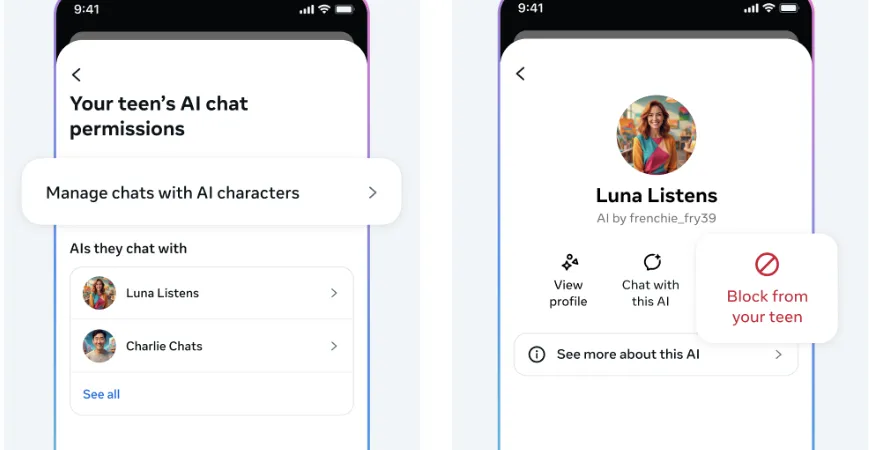
Meta’s Instagram rolls out AI-powered parental controls for teens next year

In a significant move toward responsible AI deployment, Meta has rolled out its first major safety update for its AI chatbots, integrated across Facebook, Instagram, and WhatsApp. This update marks a pivotal milestone in the technology giant’s ongoing efforts to mitigate risks associated with AI interactions at scale. Coming on the heels of recent regulatory pressures and heightened public scrutiny over misinformation and harmful content, this development underscores the urgent need for robust safety protocols in AI systems. As AI continues to embed itself into daily digital interactions, the imbalance between innovation and safety becomes a focal point for industry leaders, investors, and policymakers alike.

The timing of Meta’s safety enhancements coincides with broader industry trends emphasizing responsible AI development. Notably, the company’s move follows recent policy shifts targeting teen safety on social platforms, including Instagram’s new restrictions designed to emulate PG-13 standards—an effort to address mounting concerns over youth exposure to unsuitable content. Analysts from Gartner and MIT urge tech firms to prioritize transparency and accountability as AI tools become more sophisticated and pervasive. Meta’s actions reflect a recognition that disruption alone will no longer suffice; sustainable innovation demands built-in safeguards without stifling user engagement or technological advancement.

This evolution is not just about user safety. Enhanced safety protocols could redefine business models in the digital landscape. Companies that invest in AI safety capabilities position themselves as industry leaders, gaining a competitive edge through increased trust and reduced liability. Yet, the path forward is fraught with challenges: balancing innovation with regulation, avoiding censorship backlash, and maintaining a seamless user experience.

  • Potential for increased regulatory scrutiny
  • Risk of reputational damage from safety lapses
  • Opportunities for monetization through safer AI products

The implications are clear: the era of unrestrained AI experimentation is giving way to a more disciplined, safety-conscious phase of development. Visionaries like Elon Musk and innovations from institutions such as MIT emphasize that the future of AI hinges on embedding ethical considerations into core algorithms. For investors and entrepreneurs, this shift signals the need to leverage emerging safety standards as a strategic advantage rather than an obstacle. As industry giants race to refine artificial intelligence, the pressure to deliver disruptive yet responsible solutions will intensify—pushing the frontier toward an AI-enabled future that balances progress with prudence. The question now remains: how swiftly and effectively will organizations adapt to this new paradigm? The answer will likely determine their position in the next wave of digital innovation.

F5 Hack Sparks Urgent Alert: Thousands of Networks at Risk

Nation-State Hackers Exploit F5 Software in Major Cybersecurity Breach

In an alarming development for both government agencies and Fortune 500 corporations, F5 Networks, a leading provider of networking and cybersecurity solutions headquartered in Seattle, has disclosed a significant breach indicating an advanced persistent threat (APT) campaign. According to federal government officials, hundreds of networks remain vulnerable to breaches by nation-state hacking groups. This incident underscores the growing threat landscape targeting critical infrastructure and enterprise systems, with potential disruptive implications for global digital ecosystems.

F5’s breach reveals an unprecedented level of threat sophistication, with hackers working for an undisclosed nation-state maintaining long-term access within the company’s internal network. The group had surreptitiously infiltrated the infrastructure overseeing updates for F5’s flagship product, BIG-IP, which is used by 48 of the world’s top 50 corporations for load balancing, security, and data management. The hackers exploited this position, downloading proprietary source code, including vulnerabilities that had yet to be publicly patched. This revelation signals a fundamental disruption in the traditional cybersecurity paradigm, as adversaries gain access to the very building blocks of network security—potentially enabling supply-chain attacks of a scale previously deemed unlikely.

The implications extend beyond F5’s immediate client base. By obtaining configuration details and source code, threat actors now wield a level of control and insight capable of orchestrating exploitative supply-chain compromises. Such breaches could enable the suppression or manipulation of traffic, data exfiltration, or even deployment of malicious firmware—posing grave concerns for critical infrastructure, financial institutions, and government networks. Security analysts highlight this as a stark warning: the vulnerabilities at the network’s edge—particularly those tied to sophisticated management systems—are high-value targets that can destabilize entire industries. As Peter Thiel and Elon Musk have long emphasized, technological dominance hinges on securing these crucial nodes before adversaries can establish footholds.

In the aftermath, F5 has responded by rolling out critical updates for its affected products, including BIG-IP, F5OS, BIG-IQ, and APM. Despite the company’s assurances of thorough investigations—coordinated with firms like IOActive and NCC Group—no evidence surfaced of data exfiltration or modifications to the system’s source code. Nevertheless, this incident has highlighted a pressing need for organizations to rethink cybersecurity strategies centered around disruption-resistant architectures and zero-trust frameworks. The breach’s strategic implications reinforce that disruption is no longer a future concern but an immediate reality; the next frontier of cybersecurity must prioritize resilience and rapid detection.

Looking to the future, industry analysts and security firms concur that we are standing on the brink of a new era. Major corporations and government agencies alike must accelerate efforts to adopt innovative safeguards, including real-time threat intelligence, AI-powered anomaly detection, and proactive threat hunting. As experts from MIT and Gartner warn, the cyberarms race is intensifying, and falling behind now will have catastrophic consequences. This breach serves as a stark reminder: the battle for digital dominance is being waged at the very core of our most vital networks. In this landscape of relentless disruption, rapid adaptation is the only way to defend the future of our interconnected world.

Pinterest’s ‘Tuner’ gives you control over AI content—just enough, not too much

Pinterest’s New Feature Empowers Users to Tweak AI Influence on Visual Discovery

In a move reflecting the rapid evolution of artificial intelligence within the social media landscape, Pinterest has unveiled a novel tool that enables users to modify the prevalence of AI-generated content in their feeds. Dubbed a “tuner,” this feature offers a meaningful step toward personalized content filtration—a critical innovation amid ongoing debates over the rise of AI-infused media. Available immediately on Android and desktop platforms, with an anticipated rollout to iOS shortly, the feature allows users to fine-tune their experience in key categories such as beauty, art, fashion, and home decor.

This development underscores a broader industry shift—tech companies are increasingly prioritizing user agency over AI-driven algorithms. By placing control in the hands of individual consumers, Pinterest disrupts the standard dynamic where platforms push AI-curated content with minimal transparency. Instead, reflecting insights from institutions like MIT and analysts at Gartner, this approach not only enhances user trust but also positions Pinterest at the forefront of a disruption aimed at neutralizing “AI fatigue” among a digital-savvy generation hungry for authenticity and choice. The “refine your recommendations” setting leverages existing AI detection tools to personalize content, effectively allowing users to cut through the noise of AI-generated imagery.

Moreover, Pinterest has historically grappled with what it terms “AI infestation” — a tongue-in-cheek way to describe the overwhelming influx of AI-generated pins. In May, the company introduced an “AI modified” label, aiming to enhance transparency amid rising concerns about misleading or synthetic visuals. With increased detection and more visible labeling, Pinterest seeks to strike a balance between technological innovation and consumer protection—an approach that echoes calls from Think Tanks and industry experts like Elon Musk, who warn against unchecked AI proliferation. These efforts showcase a larger industry trend: digital platforms recognizing the necessity of integrating AI responsibly to preserve user trust and differentiate themselves in an increasingly crowded marketplace.

The implications for businesses and developers are profound. As the industry shifts towards more user-controlled AI experiences, companies must innovate not only in detection and labeling but also in personalization and transparency. This move towards nuanced content filtering could set a precedent for future AI applications across social media, e-commerce, and entertainment sectors. Early adopters of such controls—particularly younger demographics—may demand a new level of engagement, where technology respects user preferences rather than hidden algorithms dictating discovery. Leaders like Meta and Google are likely to follow suit, embedding similar features that allow for expansive customization, thereby disrupting traditional content recommendation models.

Looking ahead, the future of AI in consumer platforms hinges on balancing disruption with responsibility. Pinterest’s push for user empowerment signals a critical turning point—an industry-wide call for transparency and user-centric design. For technologists, investors, and industry watchers alike, this signals a pressing need for innovation that aligns with growing demands for authenticity and control. As AI continues to evolve at a breakneck pace, the next decade will define the trajectory of how digital experiences are curated—either as tools of manipulation or as repositories of genuine human expression. The urgency is clear: embracing these shifts now will forge the path toward a more transparent, personalized, and ethically grounded digital future.

Steve Jobs graces—$1 coin debut honors tech visionary

US Mint Unveils Steve Jobs Commemorative Coin, Signaling Innovation’s Cultural Significance

The United States Mint has announced a new $1 coin honoring the visionary co-founder of Apple, Steve Jobs. This move underscores how cultural icons of innovation are increasingly embedded into national identity, reflecting a broader societal shift emphasizing technological disruption and entrepreneurial spirit.

Designed to depict a young Jobs against a California landscape, the coin captures the essence of innovation with a quote: “Make something wonderful,” from 2007. Priced at $13.25 and available from 2026, this initiative forms part of a multi-year project launched in 2018, aimed at celebrating American innovation through commemorative coins. Each state can nominate icons aligned with its industrial heritage, illustrating a decentralized recognition of technological contributions, with Wisconsin’s selection of the Cray-1 supercomputer highlighting America’s pioneering role in computing.

Implications for Disruption and the Business Ecosystem

This initiative exemplifies how governments are increasingly recognizing disruptive innovation as a core element of national legacy. The choice of Steve Jobs, often hailed as a disruptor who revolutionized multiple industries, signals a strategic alignment with the ethos of technology-driven growth. As noted by industry analysts at Gartner, such symbols serve both as cultural milestones and as branding tools that reinforce innovation as a national value.

By immortalizing figures like Jobs, the U.S. Mint is effectively positioning itself at the intersection of cultural recognition and the business landscape, fostering a narrative that innovation is at the heart of America’s identity. This trend is echoed by tech entrepreneurs and thought leaders like Elon Musk, who emphasize the importance of celebrating pioneers who push the boundaries of technology. In the context of a rapidly evolving market landscape, such symbolic gestures could influence investor sentiment and inspire emerging entrepreneurs to pursue disruptive technologies.

The Forward-Looking Perspective: Innovation as the New National Currency

The integration of icons like Steve Jobs into official national symbolism signals a potential paradigm shift. As noted by MIT’s Leading Innovation Report, disruption is no longer confined to startups but has become woven into national narratives. The timing is crucial; with the global competitive landscape intensifying, governments and industries must accelerate their recognition of technological pioneers or risk falling behind in the _____ race for dominance in AI, quantum computing, and other transformative sectors.

As market analysts warn that failing to embrace and promote innovation might erode future competitiveness, technological disruption warrants urgent investment and policy support. The historic inclusion of Jobs underscores a broader imperative: to galvanize a new generation of innovators inspired by legacy figures, ensuring the U.S. remains at the forefront of innovation-driven economic growth. The countdown to 2026 is not just about a coin—it’s a strategic move emphasizing that in today’s world, the currency of the future is innovation itself.

Social Media Auto Publish Powered By : XYZScripts.com