Matox News

Truth Over Trends, always!

UK Won't Back Trump on Every Issue, Says Cooper
UK Won’t Back Trump on Every Issue, Says Cooper

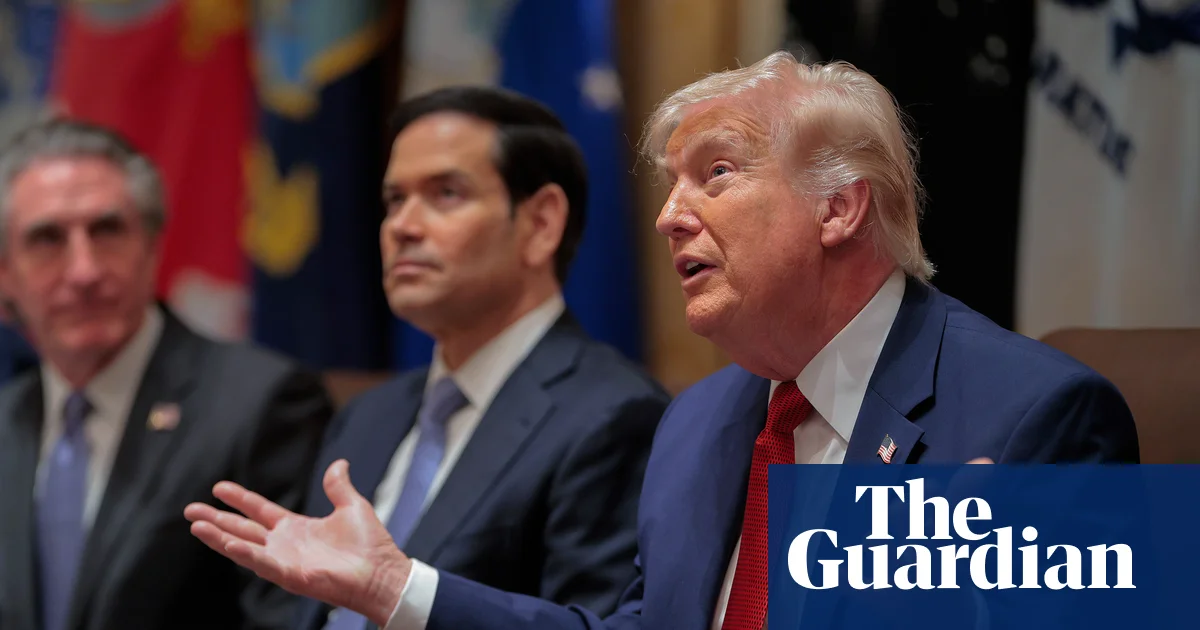
Foreign Secretary Yvette Cooper has publicly confronted President Donald Trump over his recent criticisms of the United Kingdom’s stance amidst escalating tensions in the Middle East. During an interview with Laura Kuenssberg, Cooper emphasized the importance of sovereignty and national decision-making, asserting, “It won’t surprise you that we don’t agree with President Trump on every issue.” This pointed rebuke underscores the ongoing divergence in strategic priorities between London and Washington as events in Iran continue to unfold.

The UK government’s approach, as articulated by Cooper, highlights a firm commitment to operate independently, prioritizing the UK’s national interests over aligning with US foreign policy. She further emphasized that it falls to the prime minister’s office to determine the most suitable course of action for Britain, especially in a volatile environment where regional stability is fragile. Meanwhile, President Trump issued a stark social media remark that appeared dismissive of any extensive UK military engagement in the region, declaring, “We don’t need people that join Wars after we’ve already won!” His comment signals a shifting US stance towards Middle Eastern conflicts, casting doubt on American commitment to traditional alliances.

The current tension reflects deeper, underlying shifts in geopolitical alignments, igniting debate among analysts and historians who see this as a pivotal moment in international relations. Many warn that the recent exchange signals a broader trend of waning US influence and a reassertion of independent foreign policies by traditional allies like the UK. According to policy experts, this could redefine NATO’s future, challenging the structure that has underpinned transatlantic security since WWII. Moreover, the decision to potentially bolster military presence in the Middle East demonstrates London’s intent to maintain strategic influence and protect economic and security interests amid rising regional volatility, especially with Iran’s unpredictable regime and its nuclear ambitions.

International organizations, including the United Nations, have issued cautious warnings about the dangerous escalation of regional conflicts, emphasizing the risk of a broader war. Several international analysts suggest that the decisions being made now may well determine the trajectory of global stability for decades. As nations recalibrate alliances, the geopolitical landscape grows increasingly fragile. The question remains whether these decisions will foster peace or plunge the region—and the world—more deeply into chaos, with historians noting that history often hinges on singular moments of choice amidst chaos. The coming weeks will prove decisive, etching this chapter into the annals of history, leaving future generations to ponder whether the currents of diplomacy and conflict can be steadied—or if they are destined to surge toward an unpredictable and turbulent future.

UK Experts Link ChatGPT to Surge in ‘Satanic’ Ritual Abuse Reports among Youth

The recent revelations from the United Kingdom about a surge in reports of organized ritual abuse highlight a disturbing trend that extends beyond national borders, underscoring a broader shift in the global socio-political landscape. Experts indicate that AI tools like ChatGPT are increasingly being utilized by survivors as a form of therapy and support—an unintended development that is exposing an insidious undercurrent of sexual violence motivated by satanic, esoteric, and authoritarian ideologies. The phenomenon is not confined to the UK alone; it strongly reflects a widening crisis involving state institutions, societal perceptions, and the overarching fight against underground networks of abuse.

Since 1982, the UK has documented a mere 14 criminal cases involving ritualistic practices in sexual abuse, yet recent research suggests that these numbers are just the tip of the iceberg. Clinical psychologist Dr. Elly Hanson warns that the reality on the ground reveals a much darker picture, where offenders often operate within intergenerational networks—including families, traffickers, and organized rings—sometimes disguising their heinous acts as religious or spiritual rites. These networks, experts say, are often rooted in ideologies with fascist or satanic overtones, defying stereotypes by infiltrating *privileged*, mainstream families rather than marginalized communities. Such revelations fuel concerns from international law enforcement agencies and human rights organizations, who emphasize that the global reach of these networks necessitates greater intelligence-sharing and coordinated crackdown efforts.

What complicates the response is the discourse of disbelief that still pervades society. As historian and analyst Dr. Michael Carter notes, the symbolic “fantastical” nature of ritual abuse allegations has historically hampered justice, creating a significant justice gap. Yet as reports grow, fueled by an unlikely ally— AI-based mental health support platforms—governments and police agencies are now mobilizing. The National Police Chiefs’ Council (NPCC) has established specialized training programs and a dedicated working group to tackle the phenomenon of witchcraft, spirit possession, and spiritual abuse (WSPRA). These initiatives aim to detect, investigate, and ultimately dismantle these clandestine networks, but critics argue that public trust and resource allocation are not keeping pace with emerging threats, leaving society vulnerable.

The geopolitical implications of this crisis reach far beyond the UK, resonating with international institutions and affecting nations worldwide. As the United Nations and Interpol call for increased cooperation against clandestine networks of abuse, entrenched societal attitudes, legal frameworks, and cultural stereotypes continue to obstruct progress. The alarming realization that organized abuse can occur within seemingly “respectable” communities challenges national narratives of safety and moral integrity. In this context, the ongoing battle over who controls the narrative—whether governments, religious bodies, or secret societies—will shape the forthcoming decades’ quest for justice and transparency.

As history continues to unfold, the question arises: Will the global community recognize the depth of this crisis and act decisively, or will it succumb to the “discourse of disbelief” that has long hindered justice for victims? For now, the tide of evidence and testimonies portends a sobering truth: beneath the veneer of civilization, dark forces persist. The weight of history is once again shifting, beckoning a future where accountability, relentless investigation, and ultimately justice may be achieved—or forever remain elusive in the shadows.

Princess Eugenie resigns from anti-slavery charity role amidst growing concerns

In a move that signals shifting tides in the delicate arena of international reputation and moral authority, Princess Eugenie has stepped down as patron of Anti-Slavery International, the oldest human rights organization founded in 1839. Her departure, occurring amid the ongoing fallout from the Jeffrey Epstein scandal, underscores how private scandals within elite circles can ripple across societal and geopolitical landscapes. Although no evidence links her personally to Epstein’s criminal network, her association with figures like her father, Prince Andrew, and her family’s connections to Epstein have become a focal point in mounting public concern over elite complicity in international trafficking. International analysts emphasize that such scandals threaten to erode the moral authority of monarchies and diplomatic institutions, especially as global decision-making increasingly hinges on the moral credibility of prominent figures.

Moreover, the saga exposes profound questions about international influence and accountability. The revelations extracted from U.S. Department of Justice files and emails link Epstein’s network to powerful individuals worldwide, with allegations suggesting that Prince Andrew may have been involved in illicit activities. Although he denies any wrongdoing, the allegations have prompted calls by historians and legal experts for greater transparency among global elites to combat deep-rooted corruption. The unfolding scandal threatens to undermine alliances rooted in mutual prestige, especially as U.S. authorities intensify their investigations into Epstein’s extensive trafficking ring. Such developments highlight the fragility of diplomatic trust that governments and royal families have built over decades on shared interests and mutual respect.

From a geopolitical perspective, the scandal’s fallout converges with broader issues of sovereignty, transparency, and societal integrity. As international organizations and Western governments face the difficult task of balancing diplomatic diplomacy with the pursuit of justice, nations are forced to confront their own complicity and past failures. The public exposure of elite misconduct serves as a clarion call for radical reforms in how societies oversee their most powerful leaders, resonating with the warnings of international watchdogs like the United Nations. These revelations threaten to embolden populist movements worldwide, demanding accountability and transparency, but also risking destabilization of long-standing diplomatic ties if governments are perceived as shielding their elites from justice.

As the dust settles, the weight of history’s unfolding narrative leaves the world at a crossroads. The unraveling of Epstein’s network and the profound implications for royal families, diplomatic ties, and societal morality remind us that no institution—regardless of its stature—is immune to the tides of justice and truth. The decisions made in this epoch will likely reverberate for decades, shaping how future generations view authority, morality, and the global fight against modern slavery and exploitation. Humanity now stands at a pivotal moment—whether to allow the dark shadows of the past to continue haunting the present or to forge a future grounded in unyielding transparency and moral resolve. The pages of history are turning, and the world must decide: will justice be the legacy we leave behind?

War sparks clash over UK bases in Cyprus—youth voice concerns

The recent drone strike targeting the RAF Akrotiri airbase on the island of Cyprus has reignited longstanding debates over foreign military presence and sovereignty in the Eastern Mediterranean. Cypriot protesters have rallied under the banner “British Bases Out”, symbolizing a growing national movement demanding the removal of British military installations from the island. This incident not only underscores persistent regional security challenges but also exemplifies the broader geopolitical tension that continues to define this strategically vital zone.

The attack on RAF Akrotiri, a key British military outpost established during colonial times, rapidly drew international attention. Analysts and security experts have pointed out that while the drone strike was reportedly carried out by unknown actors, it highlights the vulnerabilities of foreign military bases situated in geopolitically contentious areas. Historically, Cyprus has been a focal point of regional rivalry among Greece, Turkey, and broader NATO interests. The island’s divided status—split between the Greek Cypriot south and Turkish-occupied north—has compounded these tensions, positioning Akrotiri as both a strategic asset and potential liability in the ongoing power struggles.

Global institutions such as NATO and the United Nations have expressed concern, with some calling for de-escalation and diplomatic negotiations. However, critics argue these calls are insufficient given the shifting strategies of regional and global powers. Historians like David Fromkin and Michael Cox have long emphasized that colonial-era military bases often act as flashpoints, symbolizing unresolved conflicts inherited from the past. The drone attack underscores how such remnants of the colonial era can become focal points in contemporary conflicts, affecting the lives of ordinary Cypriots and the regional balance of power alike. As the situation evolves, many see this as a stern warning that old security arrangements might no longer suffice in an era of rapid technological change and asymmetrical warfare.

  • Demonstrators in Cyprus are calling for the withdrawal of British military presence, citing sovereignty concerns and the risk of becoming a target in regional conflicts.
  • The incident has prompted renewed debates within NATO about the presence of non-member military bases in volatile zones.
  • Regional leaders, including the Turkish and Greek governments, continue to jostle over influence and security guarantees in the area.
  • International organizations warn that destabilization could spill over, threatening broader Mediterranean stability.

The geopolitical impact extends far beyond Cyprus itself. As analysts observe, Britain’s military footprint in the Mediterranean acts as a critical hinge in NATO’s strategic calculations. The growing calls for the closure or relocation of British bases in Cyprus reflect wider American and European concerns over militarized zones that are increasingly viewed as points of vulnerability rather than power projection. From the perspective of many young nationalist movements, the symbols of colonial legacy must be dismantled to forge a future rooted in sovereignty and regional stability. Yet, powerful international interests remain entrenched, complicating efforts to chart a clear path forward.

As the dust settles from this recent clash, the question lingers: will the winds of change finally sweep away the old colonial architecture of security, or will entrenched interests and geopolitical realities prolong this era of tension? History now watches—and waits—as this small but significant island continues to serve as a crucible for the struggles between past legacies and future aspirations. The unfolding story in Cyprus stands as a stark reminder that the true weight of history often rests in the choices of today, shaping the destiny of many nations yet to be written.

Explosion strikes outside US embassy in Oslo, police confirm—Stay alert, Norway.

In a startling development that underscores the fragility of international diplomacy, police authorities mobilized significant resources early this morning following reports of an explosion at an unspecified foreign embassy. The incident, which transpired at approximately 01:00 local time, has triggered immediate security alerts and raised concerns about the safety of diplomatic missions amid escalating global tensions. The response was swift, indicating the gravity with which authorities are treating what could be a targeted act of violence or sabotage against a foreign diplomatic site.

Historians and security analysts warn that acts of violence against embassies are often precursors or reflections of larger geopolitical shifts. Such incidents tend to expose underlying strains between nations, often linked to unresolved conflicts or diplomatic disputes. In this context, the event serves as a stark reminder of the potency of diplomatic vulnerabilities and the potential for isolated acts to spiral into broader crises. Global institutions such as the United Nations have long underscored the importance of protecting diplomatic missions as a cornerstone of international stability, yet recent incidents highlight that these protections are increasingly tested in an era defined by unpredictable conflicts and cyber warfare.

While official statements remain limited, sources close to the investigation suggest that the explosion could be linked to ongoing regional disputes or covert operations by non-state actors. This incident may not only jeopardize bilateral relations but could also affect wider international cooperation. Experts from the International Crisis Group and security think tanks emphasize that the decision of hostile entities to target diplomacies directly impacts international peace efforts, potentially fueling cycles of retaliation and distrust across borders. Already, some analysts fear this event could escalate tensions, prompting retaliatory actions or heightened security protocols that could hinder diplomatic engagement globally.

As the world watches this unfolding crisis, the question remains: what are the long-term geopolitical ramifications? Will this act serve as a catalyst for increased paranoia among nations, or will it foster renewed calls for multilateral security arrangements? The historical record shows that such incidents, especially against embassies, leave indelible marks on international relations, often prompting nations to re-evaluate their security doctrines or tighten embassies’ defenses under the guise of normal diplomacy.

In the shadows of these developments lies a sobering truth: the delicate fabric of international diplomacy is as fragile as it is vital. As investigators piece together the circumstances surrounding the explosion, the broader implications threaten to reshape alliances and ignite new conflicts. The coming days will be crucial in determining if this event remains a localized security concern or unfolds into a broader geopolitical crisis. History’s pen continues to write the narrative of our times, and the world must prepare for whatever chapters lie ahead—an epoch where diplomacy must stand resilient in the face of mounting chaos.

Middle East Tension: China Warns Against ‘Jungle Law,’ Trump Claims Iran’s in Free Fall — U.S. and Israel Ramp Up Pressure

Geopolitical Turmoil in the Middle East: A Crisis Unfolding

The Middle East stands at a crucial crossroads as a series of escalating conflicts threaten regional stability and global security. The recent outbreak of violence, primarily driven by the US-supported Israel campaign against Iran, has drawn widespread international concern. Reports indicate that over the past week, a cascade of military actions, missile exchanges, and targeted strikes have pushed the region into chaos, with far-reaching consequences for nations involved and societies across the globe.

The initial spark was the aggressive clearance of Iranian targets by Israeli forces, ostensibly aiming to weaken Iran’s military capacity. Israeli airstrikes across southern Lebanon and the Iranian capital of Tehran have resulted in significant destruction, including fuel storage complexes and military command centers. The Israeli military reported it targeted “several fuel storage complexes” and “key commanders” of the IRGC’s Quds Force, which, according to analysts, signals a direct confrontation with Iranian paramilitary elements. Meanwhile, the US has embraced a hawkish stance, with President Trump declaring that Iran is being “decimated,” though he refused to rule out the deployment of ground troops, amplifying fears of an open-ended regional conflict.

International Responses and Shifting Alliances

Global reactions have been sharply divided amid the turmoil. China, a prominent regional power and strategic competitor of the United States, has condemned the conflict, stating “the war should never have happened” and warning that the world must avoid returning to a punitive “law of the jungle.” Wang Yi, China’s foreign minister, explicitly called for an end to military actions, emphasizing the need for diplomatic solutions. This stark opposition underscores the geopolitical impact of the crisis, as Beijing positions itself as a defender of multilateral diplomacy against unrestrained military escalation.

Conversely, America and Israel continue their assertive stance. Donald Trump, through social media, suggested that more Iranian officials would be targeted, with explicit warnings that “Today Iran will be hit very hard.” Reports indicate ongoing discussions between the US and Israel over deploying special forces to seize Iran’s highly enriched uranium stocks, a move that could escalate the conflict into a full-on war of attrition. The US has also been critical of their traditional allies, explicitly warning the UK for its delayed support, threatening to remember their perceived slights amidst this global chaos. The stakes are now higher than ever, with the possibility that this conflict could extend into years, shaping the future of international power dynamics.

Regional Strife and Societal Consequences

Beyond the political arena, the human toll is unmistakable. Iranian officials have claimed their military can sustain an indefinite war effort, but the reality for civilians is dire. Residents of Tehran report widespread fires and smoke blanketing the city, unable to escape due to ongoing attacks. In Lebanon, Israeli strikes have hit areas near Beirut, resulting in casualties and damage to critical infrastructure. Inside Kuwait and other Gulf nations, reports of missile and drone attacks and the death of border guards highlight the interconnected nature of regional conflicts and the threat to vital economic and strategic assets in the region. These developments threaten to ignite other conflicts and destabilize already fragile nations, creating a volatile powder keg that could ignite at any moment.

As the region teeters on the brink of wider confrontation, the international community finds itself at a critical juncture. The Australian, European, and Middle Eastern analysts warn that unchecked military escalation risks unleashing a new era of instability, reminiscent of Cold War-era proxy conflicts. The weight of history presses heavily on global shoulders as diplomacy is increasingly strained, and the path toward peace appears murky and uncertain. It is a moment that demands sober judgment, yet the tumult suggests a narrative unfolding with no clear end in sight—a story written in smoke and fire, shaping the contours of a tumultuous new world order.

Australia Ready to Back Gulf Allies Against Iran, Will Stay Clear of Ground War — Wong

Australia Navigates Middle Eastern Turmoil Amid Geopolitical Shifts

As international powers scramble in the aftermath of recent military strikes against Iran, Australia finds itself caught in a precarious position within a rapidly evolving geopolitical landscape. While Canberra explicitly refuses to deploy ground troops into Iran, its willingness to provide logistical and military support—albeit within tight boundaries—underscores the complex balancing act facing allied nations amid the escalating U.S.-Israeli coordinated strikes and Iran’s retaliatory missile and drone attacks.

The Australian government, under the stewardship of Foreign Minister Penny Wong, has confirmed that it received requests for assistance from regional allies threatened by Iran’s mounting assaults. Nine flights have already evacuated Australians from the volatile Middle East, with additional flights scheduled, and hundreds have been bussed out of Qatar to nearby countries. Wong clarified that Australia is prepared to work through assistance measures targeted at defending the Gulf nations, but remains firm in its stance against offensive action—rejecting any deployment of combat troops into Iran and emphasizing adherence to a defensive posture instead. This position aligns with Australia’s broader policy of maintaining strategic independence, avoiding entanglement in regional conflicts that could draw its military into direct combat.

The geopolitical impact of such decisions is profound. Analysts note that Australia’s cautious approach seeks to preserve its international reputation while avoiding the pitfalls of overcommitment favored by some Western allies. Countries with a history of military intervention, like the United States and United Kingdom, have long debated the efficacy of troop deployments in volatile regions, but Australia—especially under current Prime Minister Anthony Albanese—has emphasized diplomatic and logistical support as the middle ground. Yet, this careful balancing act is increasingly scrutinized by critics who warn that the current trajectory risks aligning Australia too closely with US-led military endeavors, potentially dragging it into broader conflicts that serve geopolitical interests beyond national security.

International organizations and historians warn of the long-term consequences of this violent chapter. The United Nations has called for restraint, underscoring the danger of escalating a regional conflict into a wider world crisis. Veteran geopolitical analysts interpret Australia’s role as indicative of a broader trend: western nations are recalibrating their military priorities, emphasizing indirect support over direct engagement. Meanwhile, the ongoing conflict continues to reshape regional alliances, with Saudi Arabia and other Gulf states increasingly looking towards alternative power brokers, wary of the US’s militarized approach. As history reminds us, the decisions made today will echo through generations, shaping the fabric of international stability—or chaos.

In the shadows of this unfolding crisis, the weight of history presses heavily on the shoulders of modern leaders. With each missile launched and flight undertaken, the delicate chess game of geopolitics intensifies—drawing societies ever closer to the brink of chaos or stability. While Australia seeks to maintain a measured stance, the broader geopolitical impact leaves an undeniable imprint: a reminder that, in the theater of global conflict, the lines between diplomacy and war remain perilously thin, and the choices of today could determine the course of history for decades to come.

UK under pressure as locals demand removal of Cyprus military bases

In a dramatic escalation of regional tensions, Britain faces mounting pressure from Cyprus and international observers to withdraw its military bases from the island, amid a series of provocative attacks by regional actors. The unprecedented drone strike on RAF Akrotiri and subsequent interception of additional aerial threats have thrust the colonial-era installations into the geopolitical spotlight. Notably, the protests sweeping through Nicosia underscore a broader sentiment of resentment towards these bases, perceived by many as remnants of colonial dominance and potential catalysts for regional instability. As the island grapples with its complex history and contemporary security threats, the core question remains: how do decisions regarding these bases influence regional stability and the future of Cypriot sovereignty?

Analysts point to the increasing role of regional proxy conflicts and the evolving Middle Eastern landscape as critical factors fueling this crisis. The Cypriot foreign minister, Constantinos Kombos, disclosed that the drone responsible for the attack was launched from Lebanon, a nation long embroiled in turmoil and linked to Iran’s Islamic Revolutionary Guard Corps and Hezbollah. This connection signals a dangerous expansion of proxy warfare into the Eastern Mediterranean, with Iran seeking to extend its influence and destabilize U.S.-allied nations in Europe and the Middle East. The incident underscores the precarious security environment—an environment where British assets, especially the crucial RAF Akrotiri airbase, are now seen as targets in a broader regional chess game. This evolution of threats prompts a re-evaluation of Britain’s strategic interests and raises questions about the sustainability of foreign military presence in historically complex territories.

International organizations and military experts warn that the continued reliance on outdated colonial arrangements could have disastrous consequences. The NATO alliance, often positioned as the guarantor of regional security, faces its own internal struggles, especially with Turkey’s opposition to Cyprus’s NATO membership. Despite ongoing efforts to bolster Cyprus’s defenses with European military cooperation and rapid deployment of European ships and aircraft, critics argue that these measures fall short of deterring well-equipped adversaries armed with precision drone technology and proxy support. Needless to say, such vulnerabilities threaten not only regional peace but also the global balance of power, with potential ramifications cascading into international markets and diplomatic relations.

The unfolding crisis commands the attention of historians and geopolitical analysts who warn that this chapter in Cyprus’s history might prove pivotal. As historians note, the last major upheaval — the Turkish invasion in 1974 — reshaped the island’s political landscape. Today, the threat of renewed conflict and the expansion of proxy wars over strategic territories like Akrotiri cast a shadow over the island’s future. The decision by Oxford and London to maintain these bases, despite international protests, signals a stubborn commitment to preserving post-colonial military dominance—yet it also risks igniting a conflict that could eclipse even the past upheavals. With socio-political unrest simmering and calls for full Cypriot sovereignty growing louder, the question remains: will these historic quarrels deepen or finally give way to a new chapter of independence and peace? As the world watches, one truth persists—Rome wasn’t built in a day, and the flames of this unfolding saga have only just begun to ignite.

Australia updates: Wong hints at military aid in Middle East — no plans for offensive action against Iran, Victoria

Geopolitical Impact of Middle East Conflict and Domestic Unrest: Australia’s Strategic Position

In an era marked by escalating international conflicts, Australia is carefully recalibrating its foreign and military policies amidst a complex web of regional tensions. Penny Wong, the nation’s foreign minister, has clarified that Australia will not engage in offensive actions against Iran, emphasizing instead Australia’s potential role in providing defensive military support to countries under threat. As regional powers like Iran ramp up missile and drone attacks, and non-participating nations face attacks through proxy tactics, the geopolitical landscape becomes even more volatile. The international community, including respected analysts and organizations like the United Nations, watches closely as Australia aims to balance its regional security commitments with prudent diplomacy, striving to avoid entanglement in a broader conflict.

The Australian government’s stance illustrates a cautious yet firm approach. Wong’s statements underscore a commitment to defending allies without crossing into offensive operations, a stance echoed by military strategists who warn against unnecessary escalation. The potential for “defensive military assistance” reflects a strategic necessity to safeguard regional stability, especially given Iran’s ongoing missile and drone deployment targeting non-participating countries. This approach signals a wider trend among Western allies, aligning with US and Israeli policies, but with an explicit limit: no ground troops. The decision—highlighted by analysts as a calculated move—aims to counter Iran’s expanding influence while avoiding a direct confrontation that could spiral into a larger regional war.

Domestically, Australia is experiencing its own turmoil, with violent incidents and political debates over security measures illuminating the broader societal impact of regional conflicts. Recent tragedies, including a savage knife attack at a Melbourne train station which resulted in the death of a bystander, have prompted urgent discussions about youth violence and community safety. Political figures like Mary-Anne Thomas and opposition spokespersons criticize what they call failures of the current community safety policies, invoking a heightened sense of urgency. This internal strife underscores how international crises often cast long shadows over social cohesion, as governments grapple with balancing national security with the need to restore public trust and safety.

  • Wong’s declaration that Australia could step in defensively in the Middle East, without offensive engagement
  • Iran’s relentless missile and drone assaults prompting regional instability and international responses
  • Australian repatriation efforts mobilized amidst rising regional violence—over 1,500 Australians evacuated from the Middle East
  • The internal crisis in Victoria, with youth violence and community safety at the forefront of political discourse

Historical scholars and international analysts warn that such strategic decisions carry profound geopolitical impact. The careful stance Australia adopts today could shape the future of regional alliances and influence global responses to Iran’s aggressive posture. Meanwhile, domestic unrest threatens to ignite larger societal debates about law, order, and national identity in a time of global upheaval. As policymakers walk this tightrope, the weight of history presses down—reminding us that the choices made in this volatile period will echo through generations.

The unfolding drama in the Middle East and within Australia’s borders leaves the world perched at a crossroads. Will this be a moment of restraint or the spark that ignites a broader conflict? As figures like Wong emphasize transparency and caution, the true test lies ahead—whether diplomacy prevails or history plunges into chaos, the next chapter remains unwritten. Humanity watches, holding its breath as the delicate balance between peace and war flickers in the shadows of history’s latestturning point.

Israeli forces storm Lebanese village, leave dozens dead in latest raid targeting 40-year-old remains

In what has been swiftly characterized as a significant escalation in the ongoing Middle Eastern conflict, an overnight operation conducted by Israel resulted in the deaths of at least 41 individuals and left 40 more injured, according to reports from the Lebanese health ministry. This incident underscores the persistent volatility in the region, where tensions continue to simmer beneath the surface of diplomatic overtures and ceasefire agreements. Such military actions are not isolated but rather emblematic of a broader struggle for regional dominance, sovereignty, and security, with every strike reverberating across a complex geopolitical landscape.

The Israeli Defense Forces have yet to release detailed statements explaining the precise objectives and targets of the operation, yet analysts suggest that this escalation may be part of a strategic effort to weaken militant groups, or a direct response to recent provocations. Historically, Israel has maintained that its military operations aim to neutralize threats posed by Hamas and other groups, but critics argue that such actions often lead to extensive civilian casualties and increase regional instability. The incident highlights the precarious balance of power in the Middle East, with each military action threatening to ignite further cycles of violence and retaliation.

International observers, including United Nations analysts and human rights organizations, have expressed deep concern over the profound geopolitical impact of escalating violence. These events threaten not only immediate regional stability but also have wider implications for global security. Some experts warn that this could mark a dangerous turning point—a moment when fragile peace efforts are shattered and the region’s volatility intensifies. The United States, European powers, and neighboring states are closely monitoring developments, but their influence remains limited amidst the rapid shifts of ground reality.

The fallout from this recent escalation underscores the critical importance of international diplomacy and the urgent need for lasting solutions. Historians have long noted that moments of intense violence often serve as markers in the ongoing narrative of the region’s tumult, with each chapter revealing the profound consequences of strategic decisions by global powers. As conflicts ripple outward and alliances are tested, the world watches with a mixture of apprehension and resolve. The decision to escalate military operations, while perhaps seen as necessary by some, also risks deepening divisions, fueling cycles of retaliation, and destabilizing nations that are already fragile.

In this critical hour, history’s pen continues to write a story fraught with peril and hope. The choices made today—by leaders and policymakers—will shape the destiny of this geopolitically vital region for generations to come. With every dropped bomb, every diplomatic deadlock, the world stands at the precipice of an uncertain future where the weight of history continues to unfold, echoing through the corridors of power and the lives of millions caught in the storm. This is not merely a chapter of conflict but an enduring saga, where every decision could either usher in peace or plunge the region into deeper chaos.

Social Media Auto Publish Powered By : XYZScripts.com