Matox News

Truth Over Trends, always!

Ukraine urges Putin to stop stalling after U.S. talks in Moscow

The year 2025 marks a pivotal chapter in the ongoing saga of Russia’s invasion of Ukraine, a conflict whose repercussions ripple across the global geopolitical landscape. Diplomatic efforts, primarily driven by U.S.-Russia negotiations and European strategic shifts, underscore the complex dynamics shaping the future of international security. Following recent high-stakes talks at the Kremlin, the absence of concrete agreements highlights the stubborn resilience of entrenched positions, especially concerning territorial integrity and security guarantees.

Despite the lack of substantive breakthroughs, key players remain committed to dialogue, indicating that the conflict’s resolution remains an elusive but urgent goal. The U.S. delegation, including special envoy Steve Witkoff and Jared Kushner, engaged in nearly five hours of negotiations with Vladimir Putin and his advisors. While they reported a “thorough, productive” meeting, Moscow’s senior policy adviser Yuri Ushakov quickly tempered expectations, remarking that “no compromise” was reached, with significant points such as the territory seized by Russia and security assurances for Ukraine remaining fiercely contested. The division over Ukraine’s potential NATO membership remains a core stumbling block, with Russia vehemently opposed and Western nations insisting that such guarantees are vital for deters future aggression.

Meanwhile, the European Union is rapidly pivoting towards greater independence, exemplified by its recent agreement to phase out Russian gas imports by 2027. EU officials, including Ursula von der Leyen, hail this move—part of a broader strategy to weaken Russia’s economic blackmail and bolster energy security. As Europe distances itself from Russia’s energy leverage, the geopolitical question of Russia’s influence over European stability becomes even more pronounced. Simultaneously, NATO ministers emphasize the necessity for Kyiv to maintain its resolve in the face of continuing Russian advances, while advocating for Ukraine’s eventual membership in the alliance—something Moscow labels a direct threat.

Experts and analysts warn that the unfolding interactions—a mix of diplomacy, military reinforcement, and economic sanctions—are shaping a new era of geopolitical confrontation. History’s watchful eyes see parallels with past conflicts where protracted negotiations eventually gave way to decisive shifts. The European Commission proposes a €90 billion support package for Ukraine, designed to sustain its military and economic resilience, an initiative met with cautious approval. Yet, tensions linger; Belgium’s resistance to using frozen Russian assets as reparations underscores the legal and moral quandaries faced by the West. As battling continues in eastern Ukraine, with Russia consolidating gains and claiming strategic cities like Pokrovsk, the path to peace is shrouded in uncertainty, and the weight of history presses heavily upon global shoulders.

In this tense and volatile landscape, the decisions made today—whether in Moscow, Brussels, or Washington—will echo through generations. The future of Ukraine’s sovereignty, the integrity of NATO, and the role of energy in international power struggles are now intertwined with the fate of nation-states and their people. As history unfolds, the question remains: will diplomacy prevail, or are we witnessing the prelude to a new global territorial reshuffle? The answer hangs in the balance, with the world watching with bated breath and the weight of history still unfolding.


House Democrats unveil new photos of Epstein’s private Caribbean island

Unveiling the Shadows: Jeffrey Epstein’s Private Island and its Geopolitical Ripple Effects

The recent release of photographs and videos from Jeffrey Epstein’s private Caribbean island signifies more than just a glimpse into a scandalous secret; it underscores a broader geopolitical narrative intertwined with global power structures and the pursuit of accountability. The materials, obtained from law enforcement authorities of the US Virgin Islands, surface at a critical juncture as investigations intensify, revealing the depths of Epstein’s notorious operations. These images, dating back to 2020—just a year after Epstein’s controversial death—invite a cautious reflection on the international implications of this high-profile case and the forces that may have enabled such atrocities.

The properties owned by Epstein, including Little St James, broadly referred to by locals as “pedophile island,” symbolize the convergence of illicit activity and the complicity of powerful entities. The US Virgin Islands’ Attorney General settled in 2022 for more than $100 million with Epstein’s estate, highlighting the institutional attempts to reckon with the trafficking and abuse allegations that tarnished Epstein’s reputation. Such settlements not only represent a pursuit of justice but also serve as a stark reminder of how financial and political interests can obscure accountability until those interests are challenged by persistent investigations. The release of these new images seems to coincide with a broader congressional effort to maintain pressure on authorities, particularly as the Justice Department faces an impending deadline in December for releasing sensitive files relating to Epstein’s operations.

Analysts see these disclosures as a reflection of how international and domestic power can intertwine to protect or expose scandal. The bipartisan push—urging the Attorney General Pam Bondi to update on pending investigations—signals a strategic move to sustain congressional oversight amid calls for transparency. Moreover, documents such as records from financial institutions like JP Morgan and Deutsche Bank further complicate the picture, hinting at sophisticated financial networks that may have facilitated Epstein’s trafficking and obfuscated the extent of his influence. International organizations and historians warn that this case is a cautionary emblem of systemic corruption, with the potential to reshape how nations confront organized abuse embedded within elite circles.

As global eyes remain fixated on the unfolding revelations, the situation underscores how critical decisions at the national and international levels have long-lasting, far-reaching consequences. How countries manage transparency, uphold justice, and prevent the abuse of power directly affects societal stability and public trust in institutions. The ongoing investigation, poised to unearth further truths, leaves a sobering question: can justice truly be served in a landscape where power often shields the powerful? The narrative remains unresolved, with history itself still scribbling its chapters into the dark corners of a world grappling with the shadows cast by its most influential figures. The story of Epstein’s island is not just one of scandal but a stark reminder that beneath the veneer of civility, the battle between light and darkness continues—one that will shape the destiny of nations for generations to come.

Chinese Factory's Childlike Sex Dolls Production Stopped Amid Outcry
Chinese Factory’s Childlike Sex Dolls Production Stopped Amid Outcry

In recent weeks, the international community has witnessed a growing concern over the proliferation of sex dolls and customizable products resembling children circulating on major online platforms. This unsettling trend, primarily driven by Chinese-based e-commerce giants, has ignited diplomatic tensions and raised profound questions about global ethics, regulation, and the influence of communication technology. Countries such as France and Sweden have responded by implementing measures aimed at curbing these disturbing sales, emphasizing a collective responsibility among governments and corporations to prevent the normalization of such products.

The controversy was first brought to broader attention when reports surfaced that AliExpress, a leading Chinese e-commerce platform, was being utilized to sell these problematic items. According to recent investigations, the company claims to have “strengthened its keyword blacklist” in an attempt to prevent the listing of illegal or inappropriate products. Despite these efforts, authorities in France and Sweden have taken decisive actions, with French regulators probing the platform’s compliance and Swedish officials explicitly condemning the online retailing of these controversial dolls. Social Services Minister Camilla Waltersson Gronvall declared that her country was prepared to tighten legislation if e-commerce companies fail to assume their responsibilities, underscoring the growing pressure that regulatory agencies are placing on industry giants to uphold ethical standards in the digital marketplace.

Analysts and international organizations are warning that these developments reflect deeper geopolitical struggles. As China faces increased scrutiny over its role in global commerce and ethics, this controversy intensifies calls for stricter international frameworks governing online sales, especially regarding products with potential to harm societal morals and children’s safety. Historians note that such conflicts over technology and morality are nothing new; however, the escalation in online markets signifies a new frontier in the battle for cultural values and regulatory sovereignty. The European Union and other geopolitical blocs are increasingly debating whether to impose unified standards that could challenge China’s dominance in digital trade, in a bid to shape a future where commerce aligns with broader human rights principles.

As the debate rages on, the fate of these controversial products symbolizes more than just regulation; it embodies a fundamental clash over how societies define morality in the age of emerging technology. The decisions made in the coming months could redefine the boundaries of acceptable online commerce and signal whether the international community will stand united against exploitation or capitulate to the economic powerhouses aiming to shape a new digital order. The weight of history hangs heavy as nations grapple with their response—whether to forge a path of moral clarity or succumb to the shadows of unchecked digital capitalism. The story is far from over, and the world watches with bated breath, caught in a pivotal moment that may well determine the moral direction of the digital age.

Three French teens drown in tragic pool crash—another scary reminder to stay safe.

In a heartbreaking incident that has shocked France and reignited debates over safety standards, three teenagers lost their lives in a freak accident in the town of Alès. The tragedy unfolded in the early hours of a rainy Wednesday night when their vehicle unexpectedly skidded off the road, smashing through a low-level garden wall, and ending up inverted in a private pool. According to authorities, the teenagers, aged 14, 15, and 19, found themselves trapped inside the submerged vehicle, unable to escape, and tragically drowned. The youngest victim is believed to have been the driver, an alarming detail that intensifies the ongoing investigation into the circumstances surrounding this catastrophe.

This catastrophe underscores broader issues of road safety and surveillance, especially during adverse weather conditions. The incident happened during a night marked by heavy rain, which played a critical role in the unpredictable series of events that followed. Public prosecutor Abdelkrim Grini described the accident as ‘the height of horror,’ emphasizing how the teenagers’ inability to escape—their doors jammed—proved fatal in the icy depths of the pool, which was only about 1.5 meters deep. The fact that it took hours for emergency services to be alerted and to respond highlights deficiencies in emergency response protocols and highlights the peril of unmonitored private properties. The event is a stark reminder of how unpredictable and tragic accidents can occur when minor safety lapses combine with adverse environmental conditions.

Adding complexity to this tragic event are reports indicating the presence of recreational drugs, specifically canisters of nitrous oxide, found in the vehicle. Known for its psychoactive effects—relaxation, dizziness, lightheadedness—nitrous oxide usage has become a rising concern among youth across Europe, fueling debates on drug regulation and youth safety. As analysts and international organizations scrutinize the surge in recreational drug use, critics argue that such substances contribute to impaired judgment and accidents. The presence of these canisters in the vehicle raises questions about whether drug impairment played a role in the accident, a suspicion that authorities are still investigating. The incident feeds into a larger discourse on how societal shifts—ranging from drug culture to infrastructure neglect—affect the safety and well-being of young citizens.

  • The accident happened amidst discussions over road safety laws and emergency preparedness.
  • France’s government faces increased pressure to review safety measures in private properties and improve youth substance abuse policies.
  • International bodies like the World Health Organization have issued warnings about rising recreational drug use among youth, linking it to increased accident rates.

As France mourns losing three young lives, international analysts warn of a pattern—that such tragic events are a reflection of deeper societal issues that transcend borders. Historians like Norman Davies and sociologists point out that youth violence and accidents often mirror the failures of social safety nets and community oversight. The event raises pressing questions about how nations safeguard their most vulnerable—whether through infrastructure, education, or drug policy—and how international organizations can influence effective reforms. Meanwhile, officials in France are compelled to navigate the delicate balance of preserving freedoms while tightening safety regulations, a challenge that echoes across democracies grappling with similar crises.

In the aftermath of this tragedy, the weight of history presses heavily. The eerie silence of that night in Alès, punctuated only by the distant wail of sirens and the cold undertone of grief, leaves a haunting question: How many more lives will be lost to circumstances that could have been foreseen and prevented? As the forensic examinations proceed and investigations unfold, the broader implications remain embedded in the collective consciousness of societies that must confront their vulnerabilities. This event, tragic as it is, serves as a stark reminder that the fabric of our safety is woven with threads of vigilance, responsibility, and societal commitment—elements that, if neglected, can unravel in moments of unforeseen chaos, leaving history to record yet another avoidable loss amid its pages of human tragedy.

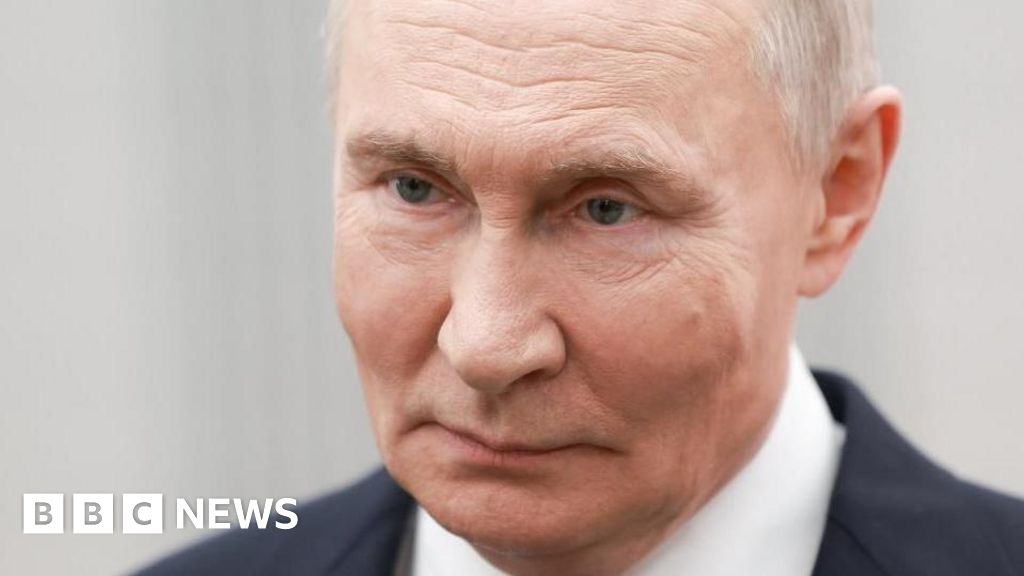
Putin stands firm—no signs of backing down

Russia’s Unyielding Stance in Ukraine: A Turning Point in Global Diplomacy

Amidst persistent international concern, Russian President Vladimir Putin has signaled a firm and unwavering stance in ongoing negotiations related to the conflict in Ukraine. According to reports from the BBC’s Russia Editor Steve Rosenberg, Putin’s government exhibits no signs of compromise, especially after recent talks with the United States envoy Steve Witkoff, which reportedly concluded with no agreement reached. These negotiations, lasting five hours, underscore a critical moment in the evolution of the crisis, revealing Moscow’s intent to maintain control over its strategic objectives without conceding ground to Western diplomatic pressures.

This resistant posture is rooted in the belief that Russia currently holds the initiative on the battlefield, a perspective echoed by many geopolitical analysts who observe that Putin interprets recent military developments as a strategic advantage. As Rosenberg notes, Putin perceives himself as the principal architect of the conflict’s future terms, confidently asserting that Russia will dictate the conditions of any forthcoming peace agreement. This approach, fueled by a mix of nationalistic fervor and strategic calculus, threatens to prolong the hostilities and deepen the international divide, raising urgent questions about the prospects for resolution and the potential for escalation.

From an international perspective, these developments wield profound geopolitical impact. Western nations, particularly in NATO, have watched with increasing concern as Russia entrenches its positions, arguably risking a prolonged confrontation that could spark broader instability. Critics and security specialists warn that such unyielding negotiations risk emboldening Russia’s military posture, complicating diplomatic efforts and destabilizing the carefully balanced power structures in Europe and beyond. Meanwhile, world leaders and historians—such as Angela Stent, a former National Intelligence Officer for Russia and Eurasia—have emphasized that Russia’s refusal to concede underscores a wider strategic gamble: that patience and firmness may be the only way to counter Putin’s vision of regional dominance.

In the larger narrative of global diplomacy, this confrontation marks a turning point, echoing past conflicts that shifted the course of history. How the Western alliance responds to such stiff resistance will determine whether diplomacy can eventually prevail or if the conflict will enter a protracted stalemate or active escalation. The stakes extend beyond Ukraine’s borders, portending a redefinition of international order and sovereignty, with nations watching every move, every negotiation, every escalation. As Putin’s government shows no sign of retreat, the world stands on the precipice of a new and uncertain chapter—one where the decisions made today will shape the geopolitical landscape for generations to come.

Trump criticizes Somali immigration as ICE prepares crackdown

The United States under the Trump administration has intensified its stance on immigration, with a focus that increasingly echoes nationalist, right-wing rhetoric. President Donald Trump publically declared a disdain for Somali immigrants, asserting that their presence “goes the wrong way” for the country. During a recent cabinet meeting, he dismissed Somalia as “barely a country” and blamed its societal structure for ongoing instability. These remarks, while seemingly isolated, are part of a broader strategy that amplifies hostilities toward specific immigrant communities, especially in Minnesota, where the Somali diaspora constitutes one of the largest populations worldwide outside Africa.

This surge of anti-immigration rhetoric dovetails with deliberate policy actions. Reports indicate that the US Immigration and Customs Enforcement (ICE) is planning an enforcement operation targeting undocumented Somali immigrants in the Twin Cities—home to about 80,000 Somalis, most of whom are American citizens. Critics, including local leaders, argue that the operation would violate due process, with Mayor Jacob Frey decrying likely breaches of constitutional rights. Meanwhile, officials deny targeting based on ethnicity or race, claiming the focus remains solely on illegal status. Herein lies a critical geopolitical impact: these policies threaten to destabilize a community with deep roots in the U.S., sowing fear and division, while reinforcing hardline narratives that blame immigrant populations for societal issues, rather than addressing systemic failures or external threats.

Historically, Somalia has been beset by civil war and instability since the early 1990s, prompting waves of migration seeking refuge in the West. Yet, the current US policy shift appears to manipulate this legacy, with the Trump administration threatening to terminate the Temporary Protected Status (TPS) granted to Somali residents—an attempt to paint Somali Americans as a security risk amidst ongoing investigations into potential links to militant groups like Al-Shabaab. Analysts warn that such measures not only destabilize Somali-American populations but also risk fueling anti-Muslim sentiment and xenophobia, which can have ripple effects across international diplomacy.

International voices, including Somali Foreign Minister Ali Omar, have publicly condemned the US narrative, condemning it as an unjust scapegoating tactic. The US’s moves are seen by many experts as part of a broader shift in foreign policy where narrative and perception distort reality—blaming poor nations and marginalized communities to justify domestic political agendas. As historians and global watchdogs warn, these policies threaten to deepen societal divisions and undermine America’s own democratic ideals, while emboldening authoritarian tendencies around the world. How the US navigates its immigration policies now will shape perceptions of justice and fairness for decades to come, especially as other nations watch this unfolding story of national identity and border control.

In a stark narrative of cause and effect, the current trajectory leaves the world’s most powerful nation at a crossroads. Will it uphold its founding principles amid rising populism and fear? Or will it succumb to the siren song of exclusion, casting long shadows over the very liberties it once championed? As history watches with a wary eye, the weight of this moment extends beyond border policies into a question of the global order itself. What begins as a debate over immigration may well become the defining chapter—an epoch where the values of openness clash with the currents of nationalism, and where the future of societies worldwide hinges on the choices made today.

Thames Water's Half-Year Profit Surges Over £400m as Bills Rise a Third
Thames Water’s Half-Year Profit Surges Over £400m as Bills Rise a Third

British Water Giant Faces Uncertain Future Amid Financial Turmoil

In a striking display of economic paradox, Thames Water, Britain’s largest water supplier, has announced a significant increase in its half-year profits, soaring to £414 million, after suffering a loss of £149 million the previous year. The company’s revenues surged by 40%, reaching nearly £2 billion, largely due to a 31% hike in customer bills approved in April. Yet, beneath these figures lies a looming crisis that could reshape the future of public utilities and major infrastructure management in the UK. Despite recent financial improvements, Thames Water has issued stark warnings, citing “material uncertainties” which cast doubt on its continued viability. Experts warn that the threat of a swift government takeover by special administration regime (SAR) looms if the company fails to renegotiate its staggering debts of £17.6 billion, accumulated over decades since privatization.

This financial turmoil is not merely about corporate mismanagement; it reflects broader geopolitical and societal shifts. Thames Water’s struggles underline how privatised industries, especially those as vital as water, are increasingly vulnerable in a world of economic instability and environmental outrage. The company has come under intense scrutiny because of severe environmental failures—such as sewage leaks—and the associated fines have added billions to its losses. Cases like Thames Water exemplify how legal and regulatory pressures—often driven by domestic political agendas—can hinder the resilience of critical infrastructure. The ongoing debt recapitulation negotiations involve hedge funds like Elliott Investment Management and Silver Point Capital, both based in the US, which have sought up to 15 years of regulatory leniency. This underscores how international financial interests are now deeply intertwined with national utilities, prompting questions about sovereignty and control.

International Stakeholders and the Shift Toward Global Financial Powerhouses

As Thames Water edges toward a potential nationalisation, international investors, including hedge funds and traditional asset managers, are in a position to influence the strategic direction of the UK’s infrastructure. This situation exemplifies a disturbing pattern where global financial institutions increasingly control essential services while national governments hesitate to intervene decisively. Critics argue that such interference risks undermining national sovereignty and public accountability. The UK government has, so far, avoided granting regulatory leniency to the debtors, fearing that succumbing to investor demands could set a dangerous precedent, effectively handing over control of critical resources to foreign financial interests. This tug-of-war accentuates a broader debate about how the West manages its strategic infrastructure in an era of financialisation and geopolitical upheaval.

Historian Niall Ferguson and analysts from the International Monetary Fund warn of a growing trend where economic vulnerabilities in privatised sectors can be exploited during times of crisis. As Thames Water struggles with environmental scandals and financial instability, many question whether these are isolated crises or symptoms of systemic vulnerabilities embedded within Western infrastructure models. The ongoing negotiations reflect a broader international challenge—finding a balance between capital interests and the public good. The decision to potentially nationalize Thames Water could have ripple effects across other privatised industries, prompting governments worldwide to reconsider models that have long prioritized shareholder profits over societal resilience.

Shaping the Future Amidst a Sea of Uncertainty

The final chapters of Thames Water’s saga remain unwritten, but the narrative underscores how intertwined economic stability, environmental accountability, and geopolitical strategy have become. Thrust into a crucible of debt, environmental fines, and foreign investment, the UK’s approach to infrastructure management is at a crossroads. If the government chooses to seize control, it risks setting a precedent that could embolden or alarm other nations contemplating similar moves. Conversely, a failure to resolve Thames Water’s crisis could result in a catastrophic collapse, leaving millions without reliable services and further destabilizing the national economy. As Britain and the global community watch closely, the story of Thames Water reminds us that in the rapidly changing arena of international power, decisions about one utility can echo through the corridors of history—shaping society, sovereignty, and security for generations to come.

Opposition Slams Labor’s Secretive FoI Changes, Charges Fees to Silence Youth Transparency Movements

In what could mark a significant shift in Australia’s democratic landscape, the Albanese government has proposed a controversial overhaul of its Freedom of Information (FoI) regime. The proposed legislation aims to introduce fees for FoI requests, significantly reduce the scope of accessible documents, and impose strict processing time limits. Critics warn that these changes threaten the very foundation of accountability, echoing fears that secrecy will supersede transparency. Despite the government’s assurances that the reforms target frivolous and AI-generated requests, opposition and crossbench senators depict the plan as an erosion of citizens’ rights and a step toward government opacity.

Led by a Labor-dominated Senate inquiry, proponents argue that the measures are necessary to curb unwarranted demands on public resources and shield sensitive policy discussions from undue exposure. The amendments include a transfer from the current 30-day response window to a more restrictive business days timeline, along with a 40-hour cap on processing individual requests. These provisions, aimed at streamlining bureaucratic procedures, are met with skepticism by opposition voices who contend that the real impact will be a decline in government transparency and an increase in administrative barriers for citizens seeking information. Increasingly, international observers look at Australia’s evolving foi policy in the context of a broader global trend—governments tightening control over information to defend national interests, whilst critics warn of safeguarding elitist privileges at the expense of public accountability.

Historians and analysts warn that such moves are not isolated but part of a broader, pattern of democratic backsliding observed across Western nations. According to the International Transparency Agency and key political analysts, the current push can be understood as an attempt by governments to regulate the flow of information in an era dominated by AI and digital manipulation. The United States and United Kingdom, for instance, have enacted similar restrictions amid concerns over data overload and misinformation. Critics argue that these policies serve to fortify political control, marginalize investigative journalism, and impede the public’s right to scrutinize power structures. As opposition voices warn of a “dysfunctional and broken” FoI landscape, a report by the Office of the Australian Information Commissioner highlights the overreach of current limitations, emphasizing the need for reform that balances transparency with security. Yet, the real risk remains—how long before these carefully crafted restrictions morph into a shield for corruption and abuse of power?

As Australia’s legislative drama unfolds, the question extends beyond national borders: what does this mean for global democracy? Will other nations follow suit, trading transparency for security in a world increasingly tense and divided? The debate echoes through halls of power, with some warning that history is repeating itself—where the suppression of information signals the ascent of authoritarian tendencies cloaked as protective measures. The outcome of this legislative battle could set a precedent—either reaffirming the enduring right to information or sealing a future where the populace remains blindfolded to the machinations of their leaders. As the dust settles, the weight of history presses heavily upon the present—reminding us that the fight for transparency is not just national, but a universal struggle for the soul of democracy itself.

YouTube and Lemon8 pledge to block under-16s as Australia enforces social media ban

Global Power Dynamics Shaped by Digital Policymaking and Social Media Controls

In an era defined by rapid technological change and the geopolitical reshuffling of influence, nations are wielding digital policy as a new frontier for asserting sovereignty and shaping societal structures. Recent developments in Australia exemplify this shift, as the government enforces a stringent under-16s social media ban, signaling a clear intent to regulate the digital landscape in favor of protecting younger generations. Under the leadership of Minister Anika Wells, Australia aims to pre-empt online harms and has threatened hefty fines of up to $50 million against platforms that fail to comply – a move that underscores how digital sovereignty is becoming a matter of national security.

This stringent approach has sparked significant debate among international analysts and organizations. Critics argue that the laws “fundamentally misunderstand” how children access and use social media, with Google’s warning that these regulations risk making children less safe online rather than safer. Despite these concerns, Australia’s stance demonstrates a willingness to exert control over digital spaces that transcend borders. The government’s strategy involves a phased implementation, with platforms like Lemon8— owned by ByteDance, the parent company of TikTok— voluntarily restricting users to those over 16, in a move seen as a cautious step in the broader attempt to shield minors from digital exploitation. Such policies reflect a global trend where nations are trying to set digital boundaries that align with national values, even as tech giants resist.

How Geopolitical and Societal Shifts Are Reshaping Digital Norms

Eyes across the world are watching Australia’s aggressive push for digital regulation, as it reveals both the extent of state influence and the contentious fight over global digital authority. International organizations such as the United Nations and the World Economic Forum have been vocal about “protecting children online,” positioning this as a key element of broader social policies. However, critics, including prominent historians and free-market analysts, warn that heavy-handed regulation could set troubling precedents. The potential for data privacy breaches, censorship, and the erosion of free expression looms large, threatening long-term societal freedoms. These interventionist policies are often viewed as part of a broader geopolitical power struggle between Western liberal democracies and emerging regional powers flexing their digital sovereignty muscles.

Meanwhile, the United States’s technological giants face mounting pressure as lawmakers investigate how algorithms target vulnerable youth to maximize engagement— a practice critics say contributes to mental health crises and social fragmentation. As European Union regulators tighten their grip with the Digital Services Act, the shared goal is clear: establish control over transnational tech companies and their ability to influence cultural and social norms. The debate centers on how much oversight is necessary and whether sovereign governments should dictate the digital environment or whether the influence of Big Tech should be curtailed at the international level.

The Future of Digital Sovereignty and Global Stability

As governments push forward with regulation and surveillance, some see these efforts as decisive steps towards a new era of digital nationalism. The stakes are immense; decisions made today will not only influence the fate of online safety but also determine the geopolitical landscape’s future. Historians and foreign policy analysts warn that unchecked regulation could lead to increased digital fragmentation, prompting the rise of regional internet blocks— resembling a “splinternet”— which could disrupt global connectivity, economic stability, and international diplomacy.

Amid these mounting tensions, the narrative remains open: will nations find a harmonious balance between protecting societal values and preserving freedoms, or will these digital battles fracture the global fabric? As Australia, Europe, and The United States each forge their own paths, the world stands at a crossroads. The unfolding story of digital control is not only about technology— it is about the very soul of civilization, testing whether humanity can maintain its collective liberty in an age of unparalleled surveillance and regulation. Still, the pages of history continue to turn, and the outcome remains unwritten— a silent warning echoing that the choices made today will ripple through generations to come, carving the shape of the future society from the edicts written in the digital sands of time.

Rare Fabergé egg sells for record-breaking £22.9m at London auction

The recent auction of a Fabergé Egg in London has not only shattered previous records but has also ignited renewed interest in the era of the Russian Imperial family and its enduring cultural legacy. The Winter Egg, a masterpiece of exquisite craftsmanship, fetched an astonishing £22.9m ($30.2m), setting a new worldwide record for any work by the renowned jeweler. This extraordinary piece, crafted in 1913 for Tsar Nicholas II as a gift to his mother, symbolizes the opulence of the last days of Imperial Russia. Its sale highlights the enduring allure of imperial artifacts, but also underscores the complex historical narratives that continue to influence global perceptions of Russia.

  • The Winter Egg, carved from rock crystal and decorated with 4,500 diamonds, was created by Carl Fabergé, with design influences from Alma Theresia Pihl, one of only two women workmasters at the time.
  • It uniquely opens to reveal a miniature basket of white quartz flowers, exemplifying the meticulous craftsmanship and symbolic artistry associated with Fabergé’s creations.
  • The production of only 50 Imperial eggs between 1885 and 1917 places this piece among the rarest collectibles, with only seven remaining in private ownership today.

Historically, the Fabergé eggs stand as potent symbols of Russia’s imperial grandeur and the aristocracy’s decadence before the upheavals of the early 20th century. International auction houses like Christie’s not only serve as custodians of history, but they also act as focal points for geopolitical symbolism. The high-profile sale comes amid a tense period where Russia and the West remain embroiled in a complex confrontation, replete with economic sanctions, diplomatic standoffs, and a reassessment of Russia’s cultural legacy. Some analysts posit that the record-breaking price underscores a global fascination with the waning days of the Romanov dynasty, coupled with a broader cultural revival of old imperial symbols amidst geopolitical instability.

Reflecting the broader geopolitical impact, the sale of the Winter Egg is not merely a transaction; it is a reflection of shifting alliances, historical memory, and national identity. The West and Russia continue to interpret these artifacts through differing narratives—while some view them as relics of a lost imperial era, others see them as symbols of legacy and cultural resilience. Critical voices from historians and analysts emphasize how these relics influence international relations, sometimes becoming pawns in the ongoing ideological struggle that defines the modern geopolitical landscape. The recent auction is thus seen by many as an almost prophetic reminder that history’s threads—be they of imperial ambition, cultural pride, or political upheaval—are never truly silenced.

As history unfurls in unpredictable chapters, the story of the Fabergé Egg serves as a mysterious relic in an era defined by global tension. Its gleaming facets and delicate artistry mask a complex narrative of empire, revolution, and nationhood. The echoes of the Romanovs and their decadent legacy reverberate through time, shaping the discourse of power and influence that will ultimately decide the future of nations. In this unfolding story, the weight of history persists, a silent witness to the profound transformations that continue to sculpt the world order—where every artifact, like this rare masterpiece, bears witness to an epoch that refuses to be forgotten.

Social Media Auto Publish Powered By : XYZScripts.com