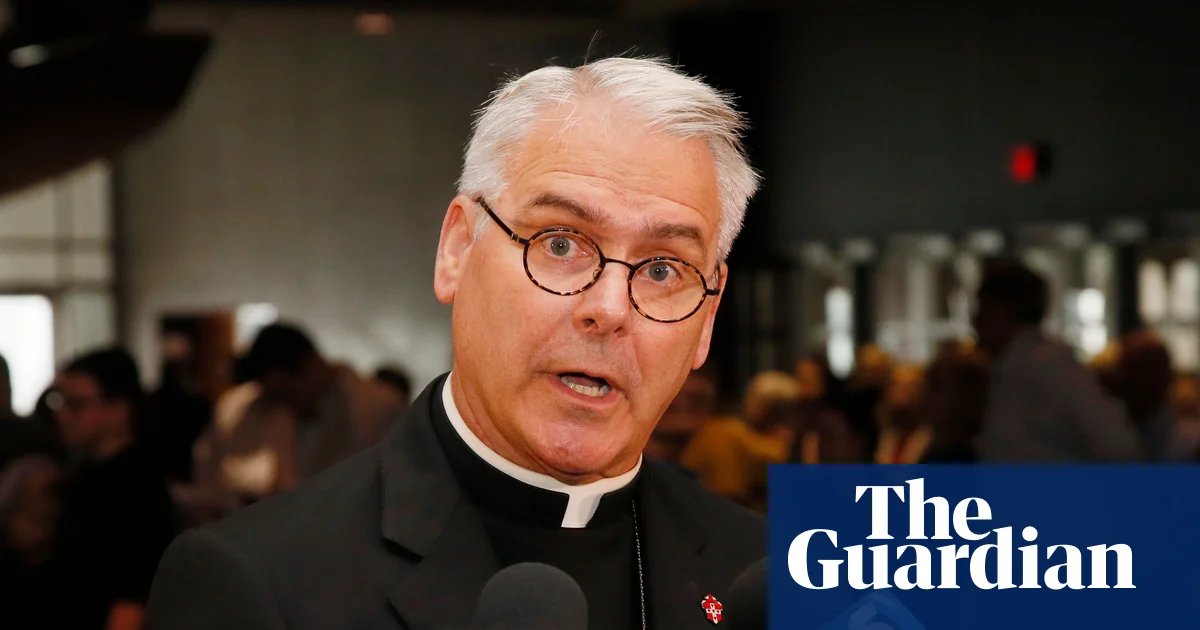
In a decisive move reflecting the deepening ideological divide within America, the U.S. Catholic bishops have elected Archbishop Paul Coakley of Oklahoma City as their new president. His victory underscores a clear shift toward a conservative, culture-war orientation, positioning the church leadership in alignment with the policies of Donald Trump‘s administration. The vote, held amidst a landscape of internal division within the American hierarchy, reveals how longstanding religious institutions continue to influence, and are influenced by, broader geopolitical and cultural battles. The selection of Coakley, known as a staunch conservative with ties to the powerful Napa Institute, signals a strategic emphasis on defending traditional values against perceived societal erosion—a move that resonates beyond national borders, impacting the Church’s global posture.
Meanwhile, the bishops’ stance on immigration highlights the complex interplay between religious morality, national sovereignty, and international diplomacy. Despite their conservative leanings, the bishops have publicly affirmed their support for migrants, condemning harsh policies enacted under the Trump administration that have marginalized and detained countless individuals. Analysts from organizations like the International Crisis Group warn that such internal church debates mirror a larger geopolitical fissure: the clash between sovereign border control and international human rights standards. The bishops’ letter to the Vatican emphasizes their intent to stand with migrants, asserting that “the right to worship and due process” must be safeguarded, even as federal policies tilt toward stricter enforcement. This internal debate echoes in Europe and other regions, where migration remains a flashpoint of political conflict, and religious leaders are increasingly vocal about humanitarian obligations.
The international community watches intently as these internal church dynamics unfold amidst a global landscape riddled with uncertainty. The Vatican’s papal leadership, especially under Pope Leo XIV, whose recent call for “deep reflection” on the treatment of detained migrants, reflects a nuanced desire to influence American policy from within. Yet, their influence risks being overshadowed by the hardline policies embraced by segments of the global far right, which see in migration a threat to national identity and sovereignty. Prominent historians and geopolitical analysts argue that the internal polarization within the Catholic Church parallels the wider geopolitical shift toward nationalism and populism. The outcome of this internal religious struggle, coupled with national policy decisions, will almost certainly influence how nations cooperate—or clash—over issues of border security, migration, and human rights.
As this complex web of internal church politics and international relations continues to evolve, the weight of history presses heavily on future generations. The decisions taken now—whether to fortify national borders or to champion inalienable human dignity—will define the character of the 21st century. The world watches with bated breath, knowing that the lines of faith, policy, and power are converging in ways that could shape the global order for decades to come. The question remains: will the church and world leaders alike choose unity over division, or will this chapter of history be etched with further conflict, silence, and unresolved tensions—leaving future generations to navigate the fallout of decisions made in this pivotal moment?