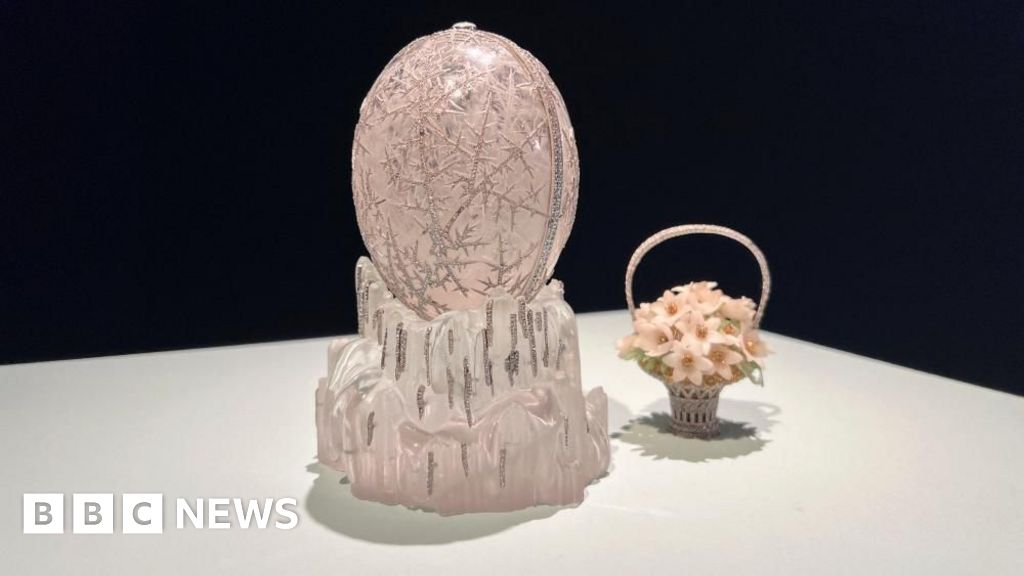
The recent auction of a Fabergé Egg in London has not only shattered previous records but has also ignited renewed interest in the era of the Russian Imperial family and its enduring cultural legacy. The Winter Egg, a masterpiece of exquisite craftsmanship, fetched an astonishing £22.9m ($30.2m), setting a new worldwide record for any work by the renowned jeweler. This extraordinary piece, crafted in 1913 for Tsar Nicholas II as a gift to his mother, symbolizes the opulence of the last days of Imperial Russia. Its sale highlights the enduring allure of imperial artifacts, but also underscores the complex historical narratives that continue to influence global perceptions of Russia.
- The Winter Egg, carved from rock crystal and decorated with 4,500 diamonds, was created by Carl Fabergé, with design influences from Alma Theresia Pihl, one of only two women workmasters at the time.
- It uniquely opens to reveal a miniature basket of white quartz flowers, exemplifying the meticulous craftsmanship and symbolic artistry associated with Fabergé’s creations.
- The production of only 50 Imperial eggs between 1885 and 1917 places this piece among the rarest collectibles, with only seven remaining in private ownership today.
Historically, the Fabergé eggs stand as potent symbols of Russia’s imperial grandeur and the aristocracy’s decadence before the upheavals of the early 20th century. International auction houses like Christie’s not only serve as custodians of history, but they also act as focal points for geopolitical symbolism. The high-profile sale comes amid a tense period where Russia and the West remain embroiled in a complex confrontation, replete with economic sanctions, diplomatic standoffs, and a reassessment of Russia’s cultural legacy. Some analysts posit that the record-breaking price underscores a global fascination with the waning days of the Romanov dynasty, coupled with a broader cultural revival of old imperial symbols amidst geopolitical instability.
Reflecting the broader geopolitical impact, the sale of the Winter Egg is not merely a transaction; it is a reflection of shifting alliances, historical memory, and national identity. The West and Russia continue to interpret these artifacts through differing narratives—while some view them as relics of a lost imperial era, others see them as symbols of legacy and cultural resilience. Critical voices from historians and analysts emphasize how these relics influence international relations, sometimes becoming pawns in the ongoing ideological struggle that defines the modern geopolitical landscape. The recent auction is thus seen by many as an almost prophetic reminder that history’s threads—be they of imperial ambition, cultural pride, or political upheaval—are never truly silenced.
As history unfurls in unpredictable chapters, the story of the Fabergé Egg serves as a mysterious relic in an era defined by global tension. Its gleaming facets and delicate artistry mask a complex narrative of empire, revolution, and nationhood. The echoes of the Romanovs and their decadent legacy reverberate through time, shaping the discourse of power and influence that will ultimately decide the future of nations. In this unfolding story, the weight of history persists, a silent witness to the profound transformations that continue to sculpt the world order—where every artifact, like this rare masterpiece, bears witness to an epoch that refuses to be forgotten.