Rising Tensions in Chicago: Immigration Enforcement and Civil Unrest
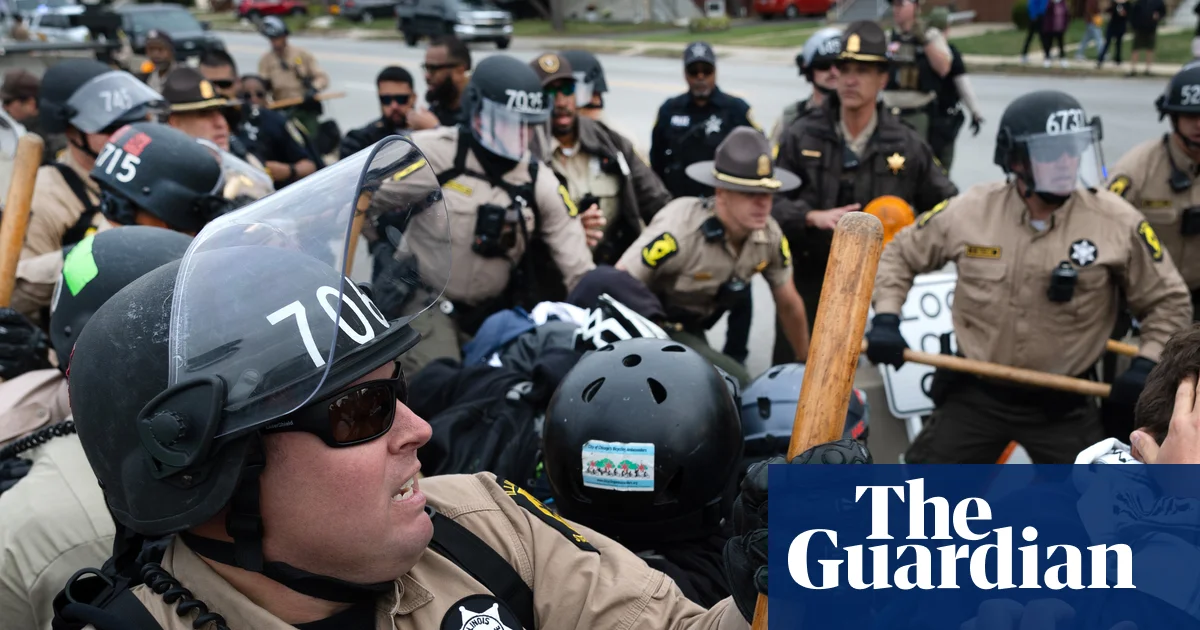
Recent incidents in Chicago have unleashed a wave of public outrage and international concern over the escalation of immigration enforcement tactics within the United States. The violent arrest of Debbie Brockman, an employee of WGN, captured on numerous videos, exemplifies the increasingly aggressive approach deployed by federal agents under the directives of the Biden administration and in coordination with U.S. Homeland Security. Detained amid protests in the city’s Lincoln Square neighborhood, Brockman’s arrest has ignited debates about civil liberties and the geopolitical implications of domestic law enforcement practices in an era of shifting immigration policies.
This incident, where bystanders recorded agents forcibly taking Brockman to a van amidst chants condemning their actions, underscores a broader tension over immigration enforcement—particularly the intensified efforts underway since former President Trump’s administration left a lasting impact on immigration policy. Analysts warn that such aggressive tactics risk fueling social divisions, both domestically and internationally. The operation’s perceived overreach has drawn sharp criticism from civil rights groups and local residents, who described it as “horrifying” and “frightening.” These events are symptomatic of a nation grappling with the consequences of politicized border policies—policies that increasingly resemble the hardline stance of Mexico’s neighbors to the south, or even border conflicts seen elsewhere in the world.
While officials from Homeland Security justify their actions by citing claims that Brockman and others posed threats—accusing her of assaulting officers—the broader geopolitical impact extends beyond mere allegations. The incident occurs amidst a climate of heightened tension over immigration, which oscillates between enforcement and accommodation. International observers, including HR organizations, warn that the unchecked use of force on American citizens jeopardizes the country’s reputation as a beacon of liberty and justice. The unusual timing, shortly after prosecutors dropped charges related to protests outside an immigration detention center, signals a possible shift toward more confrontational tactics reminiscent of authoritarian regimes.
- The U.S. Federal Government intensifies immigration raids, prompting protests and legal challenges.
- Local communities in Chicago and across the country express fears of civil liberties violations amid broader anti-immigration sentiment.
- International institutions like Amnesty International and the United Nations observe and critique these developments, warning of potential human rights concerns.
As historians note, these domestic conflicts are not isolated—rather, they reflect a larger geopolitical realignment that will influence global perceptions of American resolve and values. The decision to prioritize harsh enforcement under the guise of national security reveals a nation at a crossroads, where internal social unrest and external diplomatic stability are intertwined. How the United States navigates this turbulent chapter will leave a lasting mark on the fabric of its democracy—either as a proud defender of freedom or a cautionary tale of descent into division and authoritarianism.
In this high-stakes game of geopolitics and internal sovereignty, history is watching. With each detention, protest, and legal challenge, the narrative of nationhood in the 21st century continues to be written—sometimes by the voices of the oppressed, sometimes by the relentless machinery of state power. The world now stands at the edge of a new chapter, where the choices made in Chicago and across the nation will resonate for generations to come, shaping the legacy of a society torn between security and liberty—and the inexorable march of history.