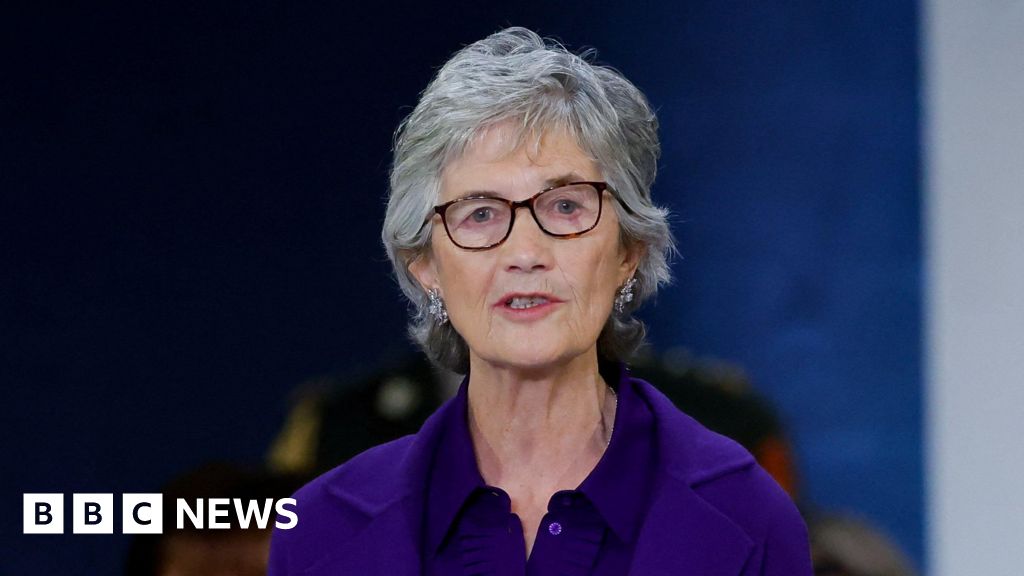
In a decisive turn towards renewal, Republic of Ireland has ushered in Catherine Connolly as its 10th president with an overwhelming landslide victory. Her inauguration at Dublin Castle symbolized more than a transition of symbols; it represented a potential recalibration of Ireland’s role on the international stage. As a country that has long maintained a nuanced, often cautious stance amidst European and global conflicts, Ireland’s choice to elect Connolly—who has articulated a vision centered on inclusion and dialogue—signals a shift that could ripple through the landscape of geopolitical diplomacy and intra-island relations.
Connolly’s vows to foster an inclusive dialogue across the island and her recognition of the seismic changes since the Cold War emphasize an Ireland seeking a nuanced role amidst the ongoing reshuffle of international alliances. Her remarks, advocating for pride in the Good Friday Agreement as a peaceful conflict resolution model, suggest an advocate for stability, yet underscore the delicate balancing act Dublin faces in managing relations with Northern Ireland and the broader United Kingdom. Analysts note that her leadership might reorient Ireland toward a more proactive stance in regional diplomacy, a change that could bolster or challenge existing balances of power in the British Isles, especially as tensions over Brexit and Northern Irish sovereignty persist.
The attendance at the ceremony underscores Ireland’s complex engagement with both unionist and nationalist communities. The absence of representation from the Democratic Unionist Party was explained as not a “snub,” reflecting the continued tensions and the importance of respect across sectarian lines. Ulster Unionist MLA Steve Aiken emphasized the significance of demonstrating respect “due to the president,” amidst ongoing debates about unionist identity and allegiance. Endorsements or abstentions like these ripple out, directly impacting how decisions made in Dublin are perceived in Belfast and beyond, shaping societal perceptions and diplomatic leverage alike.
The broader international landscape remains volatile as major powers recalibrate their strategies. From strategic disagreements over trade, security alliances, to the reshaping of EU borders and policies, Ireland’s positioning—balancing its historic neutrality with growing aspirations for a more influential role—becomes ever more consequential. Global organizations and seasoned historians warn that these internal rifts and external alignments, if mismanaged, could lead the country down a path of increased instability or unforeseen geopolitical consequences. How Ireland navigates this era of seismic shifts will not only define its societal fabric but could also serve as a litmus test for stability in an increasingly volatile world.
As the world’s eyes turn toward Dublin, the weight of history presses heavily on the unfolding chapters of Ireland’s story. With Connolly’s leadership seeking unity amid divergence and strategic ambiguity, her presidency might serve as a beacon or a warning—depending on how deftly her administration maneuvers through the tumult. In a world on the brink of transformation, the future remains as uncertain as it is inevitable—a relentless chapter of history still being written, with Ireland poised at a crossroads, its destiny intertwined with the shifting tides of global power.