Legacy Ends as Ask.com Ceases Operations Amid AI Disruption
After over three decades of serving as a pioneer in natural language question-and-answer interfaces, Ask.com, formerly known as Ask Jeeves, has officially shut down as of May 2026. This closing marks not just the end of a chapter for a longstanding industry player but also highlights a sweeping shift toward AI-driven search and conversational technology—a shift that is redefining digital information retrieval and business models across the tech ecosystem.
Founded in 1996, Ask Jeeves was an innovative attempt to facilitate human-like interaction by enabling users to pose questions in natural language. Its approach foreshadowed the rise of today’s AI chatbots, laying foundational concepts for conversational AI. However, it struggled to maintain competitive relevance in a landscape dominated by Google, Bing, and other tech giants, which rapidly advanced with their own AI and machine learning initiatives. Despite its early innovations, industry analysts like Gartner have pointed out that traditional search engines became increasingly commoditized, unable to sustain the disruptive potential of emergent AI technologies.
The IAC acquisition in 2005 and subsequent rebranding marked an attempt to pivot the company’s focus towards Q&A services. Yet, by 2010, market dynamics had shifted decisively, with disruption from AI-powered chatbots redefining user expectations. With the advent of GPT models and other advanced language systems from leaders like OpenAI and Google Bard, the traditional search engine as a static information gateway has become obsolete. Today, conversational AI platforms leverage deep learning and natural language processing to provide instant, nuanced, and contextually relevant responses, effectively making legacy search engines less relevant in the face of these innovations.
Implications for Business and Industry
The shutdown of Ask.com exemplifies a broader industry-wide disruption. Businesses investing heavily in AI and conversational interfaces are poised to dominate the evolving digital landscape. Firms like Microsoft and Google are racing to embed AI into their core products, transforming search, customer service, and content creation. The market shift indicates that next-generation AI solutions will act as primary interfaces for consumers and enterprises alike, creating new monetization models centered around AI integration rather than traditional advertising or referral-based services.
Disruption of legacy search engines as AI-driven chatbots improve in accuracy and context-awareness
Shift in revenue streams from advertising to AI-as-a-service models
Emergence of new startups leveraging AI to deliver personalized, real-time answers
Increased investments in foundational AI research from institutions like MIT, Stanford, and industry leaders
Experts including Elon Musk and Peter Thiel have widely discussed AI’s transformative potential, with some warning against over-reliance on concentrated technological power. Still, the undeniable trend is this: the digital information landscape is evolving at a breakneck pace, with AI at its core. Companies that recognize and adapt to these shifts—embracing real innovation and disruption—will secure strategic advantages in an increasingly AI-dominant future. The demise of Ask.com may serve as a stark reminder, but it also signals an urgent call to action for businesses and developers eager to stake their claim in tomorrow’s AI-powered world.
Looking ahead, the question isn’t whether AI will continue to revolutionize search and communication but how rapidly this evolution will accelerate. Innovation cannot be paused or ignored. As younger consumers demand instant, conversational, and personalized interactions, the winners will be those boldly navigating the future—until, inevitably, the next wave of technological breakthrough redefines the landscape once again.
In recent years, the fashion industry has undergone a seismic evolution, revealing a deep transformation in consumer behavior and societal values. The release of The Devil Wears Prada 2, set against the grand backdrop of the National Gallery, exemplifies this shift. What once was a celebration of ostentatious luxury and industry dominance has now morphed into a compelling reflection of cultural resilience and changing attitudes toward power, age, and authenticity. The film’s premiere, attended by industry icons like Meryl Streep and Anne Hathaway, isn’t merely a sequel; it’s a cultural milestone—a mirror held up to a broken but still vibrant fashion world.
The social relevance of this trend extends far beyond the red carpet. The narrative surrounding the film delves into how digital disruption has redefined the power structures of fashion. Traditional gatekeeping—once held tightly by editors and designers—has dissolved in the face of a consumer-driven market where shoppers refuse to conform to the old dictates of trend-setting. Today’s fashionable youth are more inclined to curate their individual identities, leveraging social media influencers and micro-celebrities who challenge institutional authority and celebrate genuine, relatable style. According to analysts like sociologist Dr. Emily Roberts, this is a return to authenticity, where personal expression outweighs curated perfection. This cultural shift is why the film’s plot, reportedly “close to the bone,” strikes such a chord—highlighting that traditional power brokers are no longer the sole arbiters of taste.
Perhaps most remarkable is how this transformation is reflected in the ownership and valuation of esteemed designer brands. Over the past 20 years, the prices of iconic items—from Chanel jackets to Hermès scarves—have soared dramatically, exemplifying what some fashion analysts call fash-flation. Items worn by characters in the original film, like the classic Chanel jacket and Jimmy Choo shoes, now command prices that are significantly inflated—up by 80% or more. This inflation isn’t just about luxury; it illustrates an industry recalibrating its desirability in a digital age where conspicuous consumption intersects with an overarching pursuit of personalized identity. The cultural impact is profound: fashion is no longer merely about status, but a tool for individual storytelling. Influencers and industry insiders, such as Donatella Versace, are actively shaping this zeitgeist, making style accessible and relevant to younger generations.
Furthermore, the renewed focus on figures like Wintour and Streep, both in their mid-70s, signals a break from archaic Hollywood and fashion industry sexism. Their presence on the cover of Vogue—styled by legendary Grace Coddington—not only celebrates enduring personal brands but also champions a progressive attitude towards aging. This shift prompts us to ask: as societal perceptions of age and gender continue to evolve, will the next frontier be a complete reevaluation of how influence and authority are measured in the fashion world? The next chapter seems poised to challenge the structures of power once thought sacred, urging us to question whether the trend of individual authenticity and digital empowerment might someday redefine the very nature of cultural authority itself.
Sonos Reshapes Audio Industry with Innovative Refurbished Offerings and Next-Gen Smart Speakers
In a bold move demonstrating disruption and strategic innovation, Sonos has unveiled the Sonos Era 100 and refurbished models, significantly lowering the entry barrier for consumers seeking high-quality audio. By eliminating microphones in its standard model, Sonos strategically reduces costs and appeals to market segments wary of privacy or excessive spending, while maintaining premium sound quality. This move not only intensifies competition but stresses the importance of cost-effective innovation in an increasingly crowded smart speaker landscape.
Equipped with dual tweeters, a midwoofer, and support for Bluetooth alongside traditional Wi-Fi, the Era 100 exemplifies disruptive technology. It offers features such as Apple’s AirPlay 2 and Sonos’ proprietary Trueplay tuning, marking a clear shift towards customization and spatial sound optimization. Additionally, the model supports line-in connections via an optional USB-C adapter, an important nod to the resurgence of analog sources like turntables amidst digital dominance. Notably, paired with voice assistants like Amazon Alexa or Sonos Voice Control, the Era 100 redefines the potential of compact, yet highly capable, smart audio devices. This aligns with industry analysts’ predictions (e.g., Gartner) that intelligent audio devices will become central to the connected home.
Another key product, the Era 300, caters to audiophiles and larger spaces with six drivers, Dolby Atmos support, and spatial audio capabilities. It exemplifies the evolution of home entertainment systems into immersive experiences. As the market shifts towards next-generation audio formats, Sonos’ focus on spatial and multi-dimensional sound positions the company as a formidable disruptor capable of challenging traditional home theater giants. The simultaneous support for Bluetooth, line-in, and Wi-Fi ensures that these products are not just premium but versatile, appealing to a broad spectrum of consumers. As Peter Thiel emphasizes, “Innovation that upends the status quo is key to long-term dominance,” and Sonos seems intent on embodying this principle.
The strategic use of refurbished gear and aggressive pricing—up to 25% discounts with a one-year warranty—are signs not only of market agility but of a deliberate attempt to accelerate adoption and fend off emerging competitors in the smart speaker arena. Business implications are profound: as rising consumer demand for affordable, high-quality audio products grows, companies that leverage cost-effective innovation and broad ecosystem integration will define the industry’s future. In a landscape where disruption often shifts market leadership overnight, the firms that capitalize on these trends today will shape the smart home narrative for years to come.
Conclusion: A Future Defined by Innovation and Urgency
As the industry moves into a phase where holistic ecosystem integration and advanced spatial sound become the norm, traditional players face an uphill battle to stay relevant. Sonos’ newest offerings not only demonstrate a keen understanding of evolving consumer preferences but also reflect a broader technological shift towards cost-conscious, yet sophisticated, audio solutions. The urgency for industry leaders is clear: those who innovate rapidly and disrupt entrenched markets will secure their futures. With giants like Elon Musk and Peter Thiel emphasizing the importance of maintaining a disruptive edge, it is evident that the next decade will be pivotal — innovation is no longer optional but essential for survival in the rapidly transforming landscape of consumer tech and smart audio solutions.
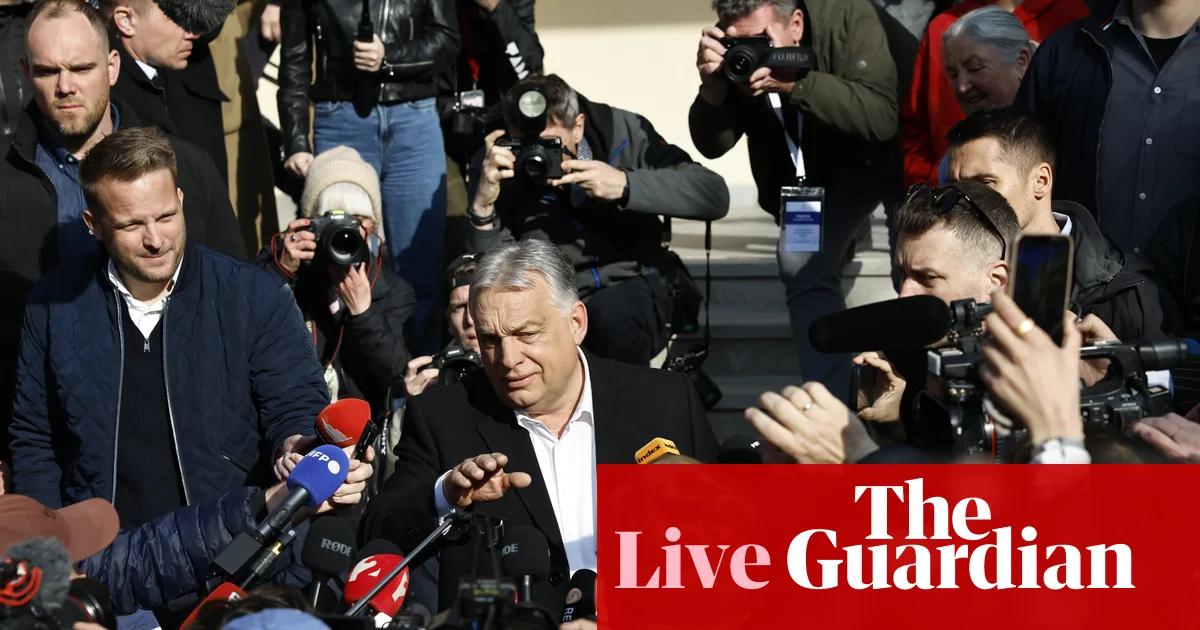
As Europe faces mounting geopolitical uncertainties, Hungary’s internal political landscape continues to evolve amidst a backdrop of shifting alliances and national sovereignty debates. Recently, Hungary’s leadership has witnessed a generational tug-of-war, with Prime Minister Viktor Orbán at the epicenter. While Orbán’s tenure has been marked by strategic resilience and a focus on safeguarding national interests, recent developments reveal internal tensions that could ripple across the European Union and beyond.
Two younger figures, Foreign Minister Péter Szijjártó and Transport Minister János Lázár, have emerged prominently at political rallies, often seen standing alongside Orbán. Their appearances are indicative of a strategic attempt to invigorate the party’s image, appealing to a younger electorate and positioning themselves as potential successors. However, political analysts warn that rather than revitalizing the aging leadership, their presence inadvertently underscores Orbán’s waning vitality. Critics argue that this dynamic exposes generational divides within Hungary’s ruling elite, reflecting broader European trends of political aging amidst a rapidly changing international environment.
Historically, Hungary’s leadership has oscillated between technocratic pragmatism and nationalist rhetoric, navigating complex relationships with the EU and Russia. Recent tensions over the rule of law, migration policies, and energy security have pushed Budapest into a delicate balancing act. International institutions such as the European Commission continue to question Hungary’s compliance with shared values, risking financial repercussions and diplomatic isolation. Yet, Hungary’s leadership remains steadfast in asserting its sovereignty, often challenging Brussels’ directives, which it perceives as threats to national autonomy. Such assertions highlight how decisions centered on sovereignty can trigger profound shifts in regional stability and economic collaboration.
This internal political tension comes at a crucial juncture for Europe, where the strategic contestations involving NATO, Russia, and China are redefining geopolitical alignments. As Hungary consolidates its stance, it influences regional alliances and impacts NATO’s eastern flank security. Notably, analysts from the International Crisis Group warn that conservative leadership in Budapest could complicate efforts for greater EU cohesion or transatlantic unity. The European Union faces a possible fragmentation, as member states increasingly choose sovereignty over supranational directives. Meanwhile, Hungary’s maneuvering under Orbán’s leadership underscores a broader trend: strategic national sovereignty becoming the central battleground in global power dynamics.
Ultimately, the underlying question remains: how will Hungary’s internal power struggles and leadership choices shape the future of European geopolitics? As the echoes of history continue to unfold, the story of Budapest’s resilience—and resistance—stands as a potent symbol of a continent at a crossroads. With each new political move, the balance of influence shifts, and the weight of past decisions presses heavily upon the present. The next chapter in Hungary’s saga will determine not just its own destiny but the future trajectory of European stability—an unfolding drama where history’s judgments await in the wings.
[gpt3]Using the feed content below, write a factual 3–4 paragraph article (600–800 words) in a moderate right-wing, youth-oriented tone.
– Style: international/world news report.
– Use HTML formatting:
– for countries, leaders, and global institutions.
– for underlining conflicts, treaties, or international shifts.
– for emphasis on turning points or warnings.
–
for key events, agreements, or consequences.
– Highlight geopolitical impact and how decisions affect nations and societies.
– Mention historians, analysts, or international organizations where relevant.
– Avoid slang or personal “I”, keep it factual and editorial.
– Conclude with a dramatic, narrative-like ending, leaving the reader with the weight of history still unfolding.
Original Content:
‘My fellow Hungarians, we have done it!’ Magyar tells jubilant Budapest
Flora Garamvolgyi
Magyar is on stage. The crowd is cheering loudly.
“Hello, my fellow Hungarians we have done it!”
Tisza and Hungary have won the elections. Not by a small but by a very large margin.
Together we liberated Hungary.”
Thank you. This couldn’t have been achieved without you.”
“Our victory may not be visible from the moon but it is visible everywhere in Hungary,” he said in a swipe at Orban’s 2022 victory speech.
“We are going to have two-third majority in the parliament.”
Key events
Tisza set to have two-thirds majority with 97% votes counted
“Russians, go home!,” Tusk says as he celebrates opposition win
Magyar pledges to bring Hungary closer to Europe, held Orbán accountable
Ukraine’s Zelenskyy joins in congratulations for Magyar and Tisza
‘My fellow Hungarians, we have done it!’ Magyar tells jubilant Budapest
‘Russians, go home’ sounds on Budapest metro
Merz says he wants to ‘join forces for strong, secure, united Europe’ as he hails opposition win
Crowds cheering, laughing and hugging each other as Budapest celebrates opposition win
Tisza on course for 2/3 majority with 72% votes counted
Nordic, Baltic leaders congratulate Tisza on historic win
France’s Macron congratulates Magyar on election win
‘Europe’s heart is beating stronger in Hungary tonight,’ von der Leyen says
Election result ‘painful for us, but clear,’ Orbán says as he concedes defeat
Orbán concedes election to Tisza’s Magyar
Tisza’s Magyar says Orbán ‘congratulated us on our victory’
Opposition Tisza party with shot at 2/3 majority, early results suggest after nearly half votes counted
‘Thank you Hungary,’ opposition leader Magyar says
Tisza closing on key 2/3 majority in new parliament as third of votes counted
Opposition Tisza party leads in early vote count – what we know so far?
Tisza lead widens as close to quarter of votes counted
First partial results start to come in
Vote count under way
Opposition ‘cautiously optimistic’ as we wait for first results to filter in – what we know so far
Tisza ‘cautiously optimistic’ about result, but want to win elections, not polls, Magyar says
Two polls suggest three early questions for election night – snap analysis
Two new pre-election day polls suggest significant opposition lead
Poll close in Hungary
No exit polls tonight
Government figures appear to imply voting irregularities
Tisza supporters hopeful as they wait for results over beers and pretzels
Hungary votes – in pictures
Good ‘vibes’ give Budapest hopes for opposition win
Voters in Budapest for change, but remain nervous about outcome
‘It’s going to be very exciting’ – what voters tell us on the ground in Budapest
Orbán’s Hungary ‘remains in a category of its own’ on repressive laws and policies
‘He cares about Hungarians’: the small Ukrainian town divided over Orbán
Hungary’s Viktor Orbán seeking to drum up votes by doing down Ukraine
Leaked calls prompt scrutiny of Hungary’s close ties with Moscow
Trump, Vance and European far-right leaders rallied for Orbán ahead of tricky electoral test
Who is Péter Magyar, the opposition leader challenging Viktor Orbán?
Opposition leader Magyar paints vote as ‘choice between East or West’
2026 turnout by 5pm still far ahead of previous elections
Most Hungarians want better relations with EU, poll finds
23 years on from EU accession referendum, Hungary ‘once again … decides direction’ of country
Hang on: what’s the story and why does it all matter?
Hungary on course for record-high turnout as Orbán says ‘not a single patriot can stay home’
‘I am here to win,’ Orbán says after casting his vote
No election silence, but there are some restrictions on campaigning
What to expect when during the night?
Pre-election day polls suggest Tisza win but lots of questions remain
Magyar ends campaign in Debrecen as he attacks Fidesz’s positions
Orbán’s last rally showed key messages cut through with his supporters
Hungarians vote in hard-fought election that could oust Viktor Orbán after 16 years
Hungary votes as the future of Viktor Orbán’s 16-year rule hangs in balance
Tisza set to have two-thirds majority with 97% votes counted
With 96.89% of votes counted, Tisza is predicted to have 138 seats in the new parliament, with only 55 for Fidesz and 6 for the far-right Mi Hazank.
If this holds, this will giveTisza the critical two-thirds majority required to reverse the Orbán era laws.
“Russians, go home!,” Tusk says as he celebrates opposition win
In a post on X, he says:
“Hungary Poland Europe Back together! Glorious victory, dear friends! Ruszkik haza!”
“Ruszkik haza” is obviously “Russians, go home” – the very same song that reverberated on the Budapest metro earlier (22:33).
Magyar plans to visit Warsaw as his first foreign trip, as confirmed during his victory speech. The pair met earlier this year at the Munich Security Conference.
Poland’s foreign minister Radosław Sikorski also doesn’t pass a chance to take a swipe at Orbán as he calls the result “the revenge of the zebras.”
Magyar pledges to bring Hungary closer to Europe, held Orbán accountable
Speaking to his supporters on Budapest, Hungary’s election winner Péter Magyar pledged to bring Hungary back to the main fold of the EU, step up fight against fraud and corruption and to held the outgoing government accountable for its actions over the last 16 years.
Péter Magyar, leader of the opposition Tisza party, waves the Hungarian flag following the announcement of the partial results of the parliamentary election, in Budapest, Hungary. Photograph: Dénes Erdős/AP
In a wide-ranging victory speech, Magyar has urged Orban to refrain from adopting any measures that would limit the next government’s room for maneuver on policy.
He also urged the country’s president Tamás Sulyok, a Fidesz politician, to give him the mandate to form the next government as soon as possible and then resign from the post. He then went on to call for a number of heads of other party-captured institutions to resign as well.
Peter Magyar, leader of the opposition Tisza party, center, speaks to his supporters following the announcement of the partial results of the parliamentary election, in Budapest, Hungary. Photograph: Dénes Erdős/AP
Magyar promised the Tisza government would restore the system of checks and balances, and join the European Public Prosecutor’s Office as a central part of the new government’s fight against alleged fraud and corruption associated with the Orbán era.
He said “those who defrauded our country will be held accountable.”
On foreign policy, he pledged that Hungary would be a strong EU and Nato ally.
He said he wanted to visit Warsaw in his first foreign trip, before going to Vienna and Brussels, where he will start work on convincing the EU to release its funds to the new government.
Jakub Krupa
on Antall József embankment in Budapest
The crowd on the Pest side – the people who couldn’t get on the overflowing metro – is cheering loudly speeches from the other side as they are listening to them – half following whatever they can hear from across the river, and half from streams played out loud.
Cars passing by honk in celebration.
People streamed Magyar’s speech from the other side of the river. Photograph: Jakub Krupa/The Guardian
Jakub Krupa
in Budapest
I have seen a few people walking around with Tisza posters taken off city lamp posts as a souvenir of this historic moment.
The British prime minister congratulated Peter Magyar for his victory, calling it a historic moment for European democracy.
Keir Starmer said on X:
“Congratulations Peter Magyar on your election victory. This is an historic moment, not only for Hungary, but for European democracy.
I look forward to working with you for the security and prosperity of both our countries”
Ukraine’s Zelenskyy joins in congratulations for Magyar and Tisza
Meanwhile, Ukraine’s Volodymyr Zelenskyy is the latest leader to join in congratulations for Peter Magyar and his Tisza.
In a post on X, he says:
“Congratulations to @magyarpeterMP and the TISZA party on their resounding victory. It is important when constructive approach prevails.
Ukraine has always sought good-neighbourly relations with everyone in Europe and we are ready to advance our cooperation with Hungary.
Europe and every European nation must get stronger, and millions of Europeans seek cooperation and stability.
We are ready for meetings and joint constructive work for the benefit of both nations, as well as peace, security, and stability in Europe.”
After a harshly anti-Ukrainian campaign from Orbán, one can only try to imagine how much this result means for Zelenskyy as it offers a chance for a new opening with Ukraine.
Jakub Krupa
On the Pest bank, a growing crowd of people that couldn’t get on the metro is listening to Magyar’s speech from across the river and cheering along.
People watch from the Pest bank. Photograph: Jakub Krupa/The Guardian
‘My fellow Hungarians, we have done it!’ Magyar tells jubilant Budapest
Flora Garamvolgyi
Magyar is on stage. The crowd is cheering loudly.
“Hello, my fellow Hungarians we have done it!”
Tisza and Hungary have won the elections. Not by a small but by a very large margin.
Together we liberated Hungary.”
Thank you. This couldn’t have been achieved without you.”
“Our victory may not be visible from the moon but it is visible everywhere in Hungary,” he said in a swipe at Orban’s 2022 victory speech.
“We are going to have two-third majority in the parliament.”
Flora Garamvolgyi
at Tisza’s election party in Batthyany ter
She says they are planning on drinking spritzer all night and celebrate with everyone gathering on the bank of the river.
She says they all came to Budapest with her friends hoping they can all celebrate here with everyone else – and now, they are.
Flora Garamvolgyi
at Tisza’s election party in Batthyány ter
Over on the Buda side of the Danube river, the celebrations are also in full swing.
“This dictatorship, it’s right-wing ideology, and all of that will disappear now, and we have a chance for a better country. I am so happy. I’m feeling hopeful and happy,” Nori, 24, tells me with tears of joy in her eyes.
“I hope there will be a chance to have a country that is close to Europe, and we are going to get closer to the west and not going to fight imaginary enemies anymore; that the government will not build on fear but rather opportunities.”
Inter Miami’s Historic Debut at Nu Stadium Ends in Draw Against Austin FC
In a moment that will be etched in the history of Major League Soccer, Inter Miami co-owner David Beckham expressed his excitement after the team’s inaugural match at the newly constructed Nu Stadium. The atmosphere was electric as fans filled the seats for the fixture against Austin FC, culminating in a thrilling 2-2 draw on Saturday night. Beckham described it as a “dream come true,” reflecting the dedication and vision that have fueled the franchise since its inception.
The game showcased key performances from both teams, with each side demonstrating resilience and skill. Inter Miami opened the scoring early, with an exceptional goal from star forward Gonzalo Higuain, marking the first competitive goal in the stadium’s history. However, the joy was short-lived as Austin FC struck back swiftly, leveling the score with a brilliant shot from Sebastián Driussi. As the match progressed, it became a back-and-forth affair, showcasing the competitive spirit of both teams.
Gonzalo Higuain scored the first goal of the match.
Austin FC answered back with a goal from Sebastián Driussi.
The game ended in a thrilling 2-2 draw.
Inter Miami fans celebrated incredibly spirited performances despite the draw.
Post-match, Inter Miami’s coach, Phil Neville, highlighted the significance of this event: “It’s not just about the score; it’s about building a culture and community.” Meanwhile, commentators noted the potential for greatness in both teams, praising their strong tactical approaches and dedication throughout the match. As the season unfolds, both clubs look to build on the momentum generated in this historic encounter.
Beyond the scoreboard, this match serves as a powerful reminder of what sports can accomplish—bringing fans together in a shared experience, igniting local pride, and uniting diverse communities under one banner. As Inter Miami embraces this new chapter in their journey, the echoes of jubilant cheers and the spirit of competition will resonate throughout the city, proving that in the world of sports, every goal is a step towards a larger dream.
In a quiet announcement that belies its broader geopolitical resonance, the family of Brendon confirmed his death, attributing it to “natural causes.” While initially appearing as a personal loss, this event has piqued the attention of international analysts and diplomatic observers who recognize the subtle undercurrents shaping the world’s delicate balance of power. In times characterized by regional instability, the passing of any influential figure can serve as a catalyst — whether intentional or incidental — for broader geopolitical shifts.
Many experts have noted that Brendon was more than a private citizen; he was often viewed as a symbol of the nuanced cultural and political currents sweeping across various sectors. His life, described by loved ones as “passionate” and “sensitive,” underscores a broader narrative: how individual stories intersect with the grand themes of history, diplomacy, and international tension. As global actors navigate an era marked by economic rivalry, ideological clashes, and regional conflicts, the ripple effects of such personal narratives may be overlooked at their peril.
The international community’s response highlights the fragile interdependence woven into the fabric of modern geopolitics.
In Europe, policymakers and security officials have begun to reassess their strategies, wary of unpredictable shifts that could destabilize their carefully negotiated treaties.
In Asia, rising powers observe the event as another data point in the complex calculus of regional dominance and influence, with many analysts warning that even personal events can accelerate or hinder diplomatic negotiations.
Within the United States, institutions such as the Council on Foreign Relations and the Pentagon’s strategic think tanks are scrutinizing the broader implications of social and political shifts, emphasizing that history demonstrates the significance of leadership narratives in shaping international policy.
Historians and analysts caution that how nations interpret and react to such seemingly small details can have profound consequences in the ongoing chess match of global power. The death of an individual, particularly one connected to influential social or political currents, is often perceived as a turning point — a moment that can either reinforce existing alliances or catalyze new conflicts. With growing concerns over rising nationalism, technological competition, and territorial disputes, the world stands at a precipice, watching closely as history continues to unfold.
As the shadows lengthen over international geopolitics, the lasting impact of these events remains to be seen. Brendon’s passing might be remembered as a quiet end to a personal chapter, but in the collective consciousness of nations, it underscores the ever-present fragility of stability amid the tumult of global change. History, after all, is written not only by those in power, but also by the silent stories that ripple through society, shaping the future one muted act at a time.
Apple’s Strategic Chip Bump in the New iPad Air: What It Means for the Future of Tech Innovation
The latest iPad Air introduces a significant leap forward through a trio of upgraded chips: the M4 processor, the C1X cellular modem, and the N1 chip. These developments mark an intentional effort by Apple to extend its dominant position in the tablet market by refining performance and connectivity without radically altering form factors. While benchmarks show a modest 20-25% speed increase over the M3-powered Airs, industry experts recognize that real-world differences often remain subtle—yet the ripple effects across the industry are anything but minor.
Innovation and Disruption Driving Market Shifts
The chip bump strategy exemplifies a broader industry trend of incremental innovation that leverages hardware improvements for enhanced longevity and business efficiency. Apple’s approach—refining a proven product with targeted upgrades—stands in stark contrast to radical innovation cycles seen in other sectors, yet it effectively sustains consumer interest and operational margins. Gartner analyst Ian Wang notes, “Such strategic updates prevent obsolescence, fostering customer loyalty while pushing competitors to prioritize disruptive breakthroughs.”
Crucially, the C1X cellular modem signals a deliberate pivot towards enhanced mobile connectivity. Early testing indicates these devices outperform recent smartphones in adverse conditions, making the iPad the definitive mobile productivity tool. This is a strategic disruption,” argues industry analyst Mark Davis, “where Apple is not only satisfying existing demand but setting new standards for portable, always-connected workflows.”
Business Implications for Industry Players and Consumers
Within this context, the industry faces significant industry-wide ramifications. The continuation of refined hardware—focused on efficiency, connectivity, and seamless integration—presents an obstacle for emerging competitors as well as established rivals like Samsung and Microsoft. Apple’s incremental yet strategic enhancements suggest a business model built on durability and scalability, where faster chipsets prolong device lifecycles, ultimately challenging the paradigm of rapid tech refresh cycles.
Pros: Superior performance in key tasks, extended device life, and improved network capabilities.
Cons: Marginal performance differences for average users, persistent limitations such as base storage and display refresh rates, which reflect deliberate cost-optimization.
As Peter Thiel often emphasizes, “In tech, breakthroughs are often sterile, but incremental progress combined with ecosystem dominance can be more disruptive long-term.” Consequently, this market evolution reinforces the importance of strategic investment in hardware that emphasizes not just raw power but also connectivity, security, and ecosystem control.
Looking Ahead: The Urgency of Innovation and Market Readiness
The iPad Air’s chip upgrades demonstrate Apple’s keen focus on building an ecosystem that is resilient and future-proof. The enhancements hint at an era where hardware becomes increasingly invisible but indelibly impactful, underpinning a new wave of enabled, connected lifestyles. Industry insiders like MIT’s Center for Future Computing warn, “failing to keep pace with such nuanced but critical improvements risks obsolescence not just for Apple but for the entire connected device market—an industry where rapid disruption determines future dominance.”
In a landscape characterized by rapid technological shifts, the urgency for companies and consumers to stay ahead is clear. Innovation, disruption, and strategic agility will define the next decade. The rising tides of hardware enhancement and connectivity benchmark new standards—those who adapt swiftly will position themselves at the forefront of this new era, while complacency invites obsolescence. The question remains: how will you leverage this wave of innovation to stay competitive in tomorrow’s tech landscape?
Preserving the Soul of Identity: Scotland’s Historic House as a Cultural Testament
In the vast tapestry of a nation’s history, few symbols resonate as profoundly as its most important historic houses. Situated in the Borders, these storied edifices are not merely relics of bygone eras, but living monuments that embody the enduring spirit of a people. As cultural landmarks, such properties serve as guardians of tradition, custodians of collective memory, and echoes of the societal values that have shaped the fabric of Scottish identity. Their preservation is thus an act that transcends mere architecture; it becomes a declaration of cultural continuity in a rapidly changing world.
Drawing from the insights of cultural critics and philosophers like G.K. Chesterton, we are reminded that tradition is the organic link connecting generations, a vital force that sustains societal cohesion and moral grounding. The historic houses of Scotland exemplify this principle, standing as tangible links to the past—sites where stories of local nobility, revolution, and resilience are etched into stone and timber. These structures are more than mere aesthetics; they are symbols of national humility and pride, reminding us that a society’s soul is often best expressed through its architecture and its stories preserved within.
The cultural significance of such heritage sites extends beyond their physicality. As futurist thinker Ortega y Gasset suggested, our sense of identity is rooted in a dialogue between the present and the memory of the past. When we shield these historic houses from decay and neglect, we actively engage in this dialogue, ensuring that future generations inherit not only a physical legacy but also a moral compass. Historian Alexis de Tocqueville might argue that the strength of a nation lies in its institutions of tradition, which serve as anchors amid the tumult of societal transformation. In Scotland’s case, these houses are more than mere relics; they are ongoing narratives that continue to shape collective consciousness.
Moreover, the conservation of these cultural landmarks underscores a broader philosophical truth: culture, society, and identity are intertwined threads woven into the fabric of human existence. The importance of protecting these historic properties lies in recognizing that they embody a sense of rootedness essential to societal well-being and democratic vitality. As T.S. Eliot observed, tradition is not static but a living, breathing entity—a “living thing,” perpetually being reinterpreted by each generation. The Scottish historic houses stand as testament to this ongoing process, embodying a collective memory that grounds cultural renewal while forecasting future identity.
In an era marked by rapid globalization and cultural homogenization, the survival of such sites becomes an act of cultural resistance and affirmation. They are the tangible expressions of a history forged through struggle, triumph, and perseverance—stories of a people who refused to forget their roots. These heritage sites encourage us to see beyond transient trends and recognize that true tradition sustains the moral and aesthetic fabric of society. As guardians of order in a chaotic age, they remind us that the future must be built upon the foundations of the past, with a reverence that is both conservative and visionary.
In Closing
The Scottish historic house in the Borders is more than a property; it is a testament to the enduring power of culture to define and uphold societies. As custodians of this shared heritage, we participate in a dialogue that links memory with prophecy, a symphony of past, present, and future. In this sacred procession, culture becomes not only a reflection of who we are but also an anticipation of who we may yet become—a luminous mosaic of human memory and divine possibility.
Anticipation Builds for NFL Draft as 2026 Class Prepares for Combine
As the NFL gears up for this week’s combine workouts, excitement is mounting over the highly anticipated 2026 draft class. While mock drafts hint at potential placements, the actual performance during these evaluations can significantly shift a player’s stock. Coaches and analysts alike are closely monitoring the talent that will soon showcase their skills on the national stage.
Among the standout prospects is quarterback Jake Ellis, whose arm strength and accuracy have garnered significant attention. His recent season stats reflect a commendable completion rate of 68%, along with a staggering 35 touchdown passes. This performance places him squarely at the top of many draft boards. Commentator and former coach Mike Sullivan stated, “Ellis has a unique blend of athleticism and poise; I wouldn’t be surprised to see him picked within the top five.”
Another player to watch is defensive lineman Marcus Smith, noted for his explosive playstyle and relentless drive. With 15 sacks last season, Smith’s capabilities to disrupt opposing offenses make him an invaluable asset for any team. His preparation during the combine will be crucial in solidifying his first-round status. As Linda Carter, a scouting analyst with over a decade of experience, pointed out, “Combine performances often separate the good from the elite, and Smith has everything to prove.”
Injury recovery updates: Many top prospects have faced injuries; how they handle the combine could impact their draft position.
Position battles: Teams are likely to reconsider positional needs as standout athletes rise in their evaluations.
Scouting decisions: The combine is a critical juncture for GMs and coaches to assess players beyond game film.
As April approaches and the buzz intensifies surrounding the 2026 NFL Draft, it is essential to remember that sports transcend mere statistics and accolades. The yearly ritual of drafting new talent symbolizes hope, ambition, and the unbreakable spirit of competition. Whether through tears of joy or moments of heartbreak, sports foster a unique sense of community, setting the stage for the future while uniting fans across the nation.