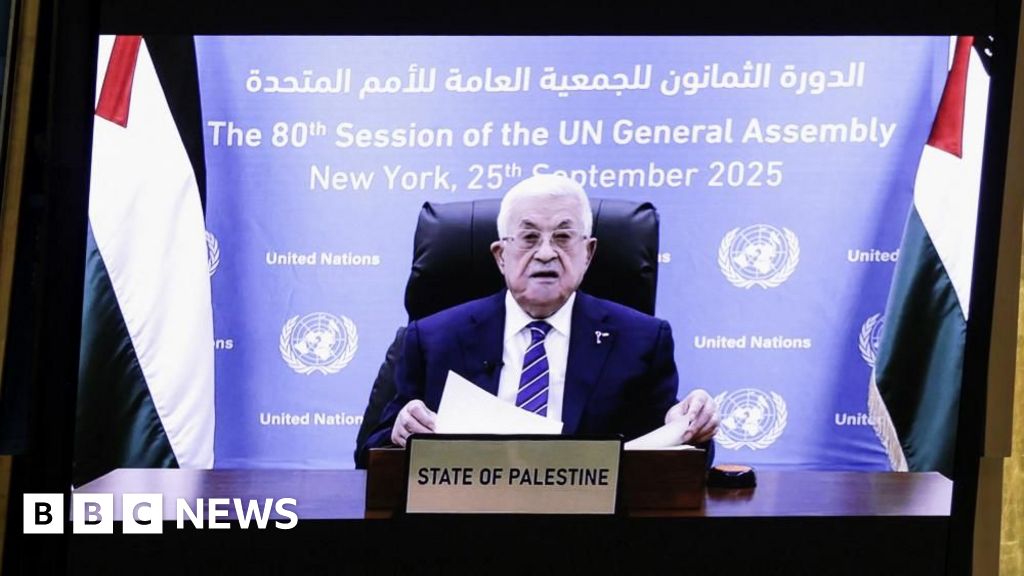
Amid the ongoing turmoil in Gaza, Palestinian President Mahmoud Abbas has asserted his readiness to collaborate with the international community to advance the peace initiatives proposed by France. Speaking via a recorded message at the United Nations General Assembly, Abbas emphasized his unwavering stance against a future governing role for Hamas in Gaza, demanding its disarmament as a prerequisite for any lasting peace. This position underscores the persistent internal divisions within Palestinian politics, which continue to complicate efforts toward national sovereignty and stability in the region. As the recipient of renewed international attention, Palestine’s quest for full recognition and independence remains a pivotal turning point with significant geopolitical impacts.
The recent outbreak of violence in Gaza, triggered by Hamas’s deadly attack on Israel on 7 October 2023, has resulted in tremendous loss and suffering. The attack, which claimed the lives of approximately 1,200 civilians and led to the abduction of 251 hostages, has been widely condemned as a reprehensible act, yet it precipitated a brutal Israeli military response. According to Gaza’s Hamas-led health ministry, over 65,000 Palestinians, many of them women and children, have been killed in the ensuing conflict—highlighting the catastrophic human toll. Analysts warn that this relentless cycle of violence threatens to undermine any hopes for peace, potentially altering the political landscape in the Middle East for decades to come.
The peace plan announced by French President Emmanuel Macron at a recent regional summit signals a possible pathway toward de-escalation. The proposal advocates for the simultaneous release of Hamas-held hostages and an end to Israeli military operations, followed by the establishment of a transitional administration — comprising Palestinian Authority officials and excluding Hamas — to govern Gaza. This plan envisions a sovereign, demilitarized Palestinian state that would incorporate Gaza with the Israeli-occupied West Bank, aiming to usher in a new chapter of stability and sovereignty. However, both the United States and Israel have dismissed the initiative, fearing it legitimizes terrorist groups and rewards militant unrest. This divergence in support highlights the fragile balance of international diplomacy in a conflict still deeply entrenched in historical grievances and power struggles.
Throughout this upheaval, Abbas has called upon the international community to recognize Palestine as a sovereign state and grant it full membership in the UN—an effort to bolster national legitimacy and pressure global powers to reconsider their policies. Countries like Canada, Australia, the UK, and Portugal have already extended recognition, while the U.S. remains opposed, citing fears of encouraging Hamas’s influence. As historians and analysts observe, such recognitions symbolize a pivotal shift, challenging the longstanding international stance that has kept Palestine in diplomatic limbo. Abbas’s call for electoral reform and the promise of a democratic Palestinian state underscore the urgent desire among Palestinians to redefine their future, yet the path remains obstructed by external intervention and internal discord. As the world watches, the fate of Gaza—and the broader Middle East—hangs in the balance, with each decision resonating far beyond the region’s borders, shaping the course of history yet to unfold.