Investigating the Truth Behind Claims of Transgender Individuals as Mass Shooters
In recent debates surrounding gun violence and transgender rights, a recurring narrative suggests that transgender individuals are responsible for a disproportionate number of mass shootings in America. Prominent figures like Donald Trump Jr. and Sebastian Gorka have cited figures that imply a significant connection between gender identity and violent acts, with claims of dozens of mass shootings involving transgender perpetrators over the last few years. However, a rigorous review of available data from reputable sources reveals a starkly different reality. When scrutinized with precise definitions and verified data, the number of transgender mass shooters in the U.S. remains exceedingly small, accounting for less than 0.1% of incidents over the past decade.
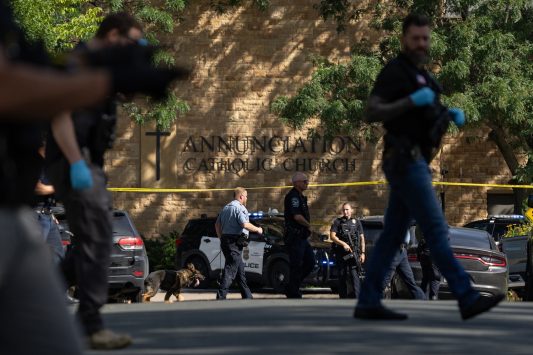
According to the Gun Violence Archive (GVA), an independent organization that tracks gun-related incidents, only five mass shootings have been confirmed to involve transgender suspects since 2013. These incidents include the tragic Chattanooga church shooting, the Highland Ranch school shooting, the Memphis warehouse shooting, the Colorado Springs gay bar attack, and Minneapolis’ recent church shooting. Notably, in cases like that of Anderson Lee Aldrich in Colorado, who identified as nonbinary, the gender identity was verified during court proceedings. When comparing these five incidents against the thousands of annual shootings, the proportion remains negligible—less than 0.1%.
It’s crucial to emphasize that the term “transgender” encompasses a broad spectrum; not all—particularly nonbinary individuals—may identify as transgender. This nuance complicates any direct causal link. Experts like James Densley, co-founder of The Violence Project, clarify that transgender individuals are statistically underrepresented among known mass shooters. Their comprehensive database, which applies a stricter definition—such as four or more victims killed or injured in a public setting—documents 201 cases since 1966, with only a single confirmed transgender perpetrator. Moreover, Dr. Ragy Girgis, a psychiatrist specializing in mass violence, states plainly: “Being transgender is not a causative factor in mass shootings.” The data overwhelmingly support that violence is committed almost exclusively by men, with over 97% of mass shooters being cisgender males, well aligning with societal patterns rather than challenging them based on gender identity.
Despite the clear data, misinformation persists. Figures like Gorka or the claims of “many” transgender shooters tend to rely on loose definitions or anecdotes, which inflate the perception of a link where none exists. As one fact-checker summarized, “even if you expand the definitions, transgender individuals responsible for mass shootings remain a tiny fraction of such crimes, overshadowed by the broader trend of male perpetrators.” The numbers tell a straightforward story: most mass shootings are carried out by men, across all gender identities, and transgender individuals are statistically rare among these perpetrators. This accurate data is vital, not only for honest debate but also for upholding the integrity of our democratic discourse, where facts must guide policy and public understanding.
Conclusion
In a democracy, informed citizens are the backbone of responsible policy—especially on issues as consequential as gun laws and gender rights. The evidence demonstrates that the narrative linking transgender identity to mass violence is deeply misleading. It is essential that we differentiate between anecdotal claims and comprehensive, verified data. As experts confirm, the presence of transgender individuals among mass shooters is vanishingly small, making it clear that gender identity is not a factor in violent behavior. Only through accurate information can we foster a fair, informed debate that respects both facts and responsible citizenship, foundational to our shared democracy.