Healthify’s Revolutionary Upgrade Sets New Standard in Personalized Healthcare
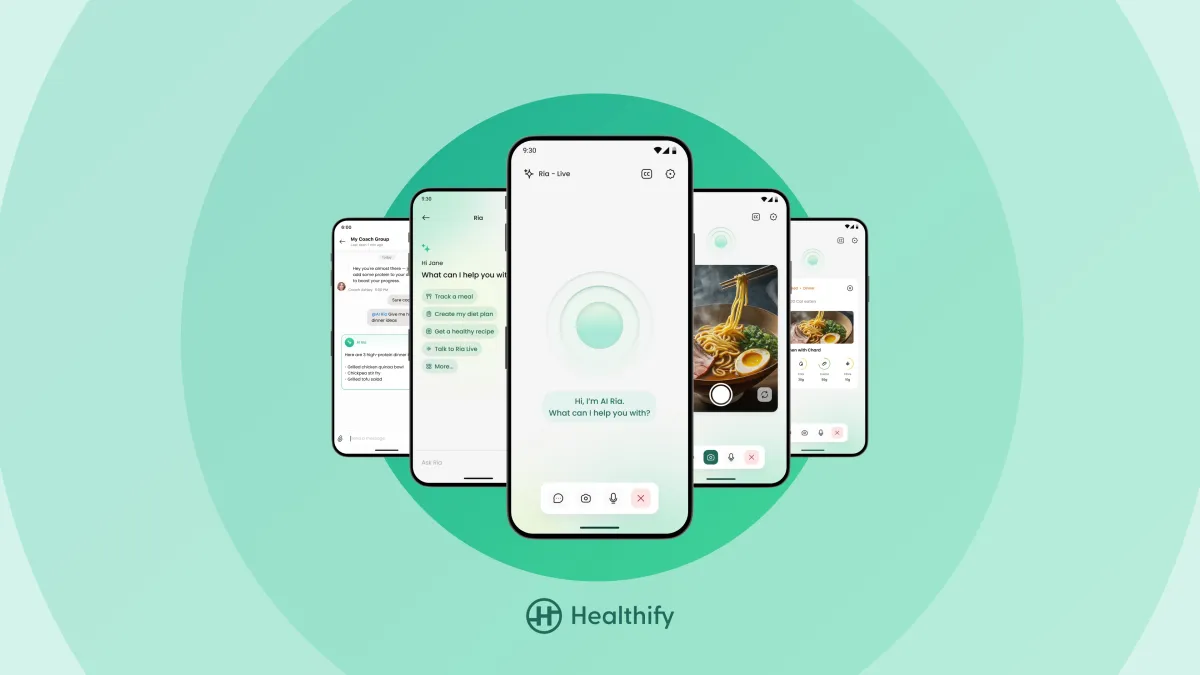
In a bold move that underscores the accelerating pace of innovation in digital health, Healthify, a startup backed by Vinod Khosla, has launched an advanced iteration of its AI health assistant, Ria. This new version integrates voice interaction, real-time camera input, and persistent memory features designed to redefine how users engage with health data. At a time when disruption in healthcare technology is critical, Healthify’s latest innovations exemplify the push toward seamless, AI-driven health management, with implications stretching across markets and platforms.
The upgraded Ria demonstrates a significant leap forward in conversational AI technology. Incorporating live voice interactions and camera-based food logging — using devices like Meta’s Ray-Ban smart glasses — it fosters a more intuitive, human-like engagement. The company’s goal is to create an ecosystem where users can effortlessly access insights, generate tailored exercise plans, or log goals, all within a single session. This move away from traditional apps toward conversational interfaces positions Healthify as a disruptor, pushing the boundaries of what AI can achieve in real-world health applications. As Tushar Vashisht, CEO of Healthify, explained, the team trained Ria on years of conversational data, ensuring grounded, actionable advice grounded in real interaction history.
The implications extend beyond just individual health tracking. By integrating AI deeply into user onboarding and long-term memory, the company is positioning itself to deliver hyper-personalized recommendations that evolve with users’ health journey. Looking ahead, the prospects for AI in healthcare extend into strategic partnerships, with Healthify aiming to collaborate with device manufacturers for data integration and to develop GLP-1-based weight-loss programs. As Peter Thiel and other tech visionaries have argued, the next wave of innovation will heavily rely on bridging unstructured health data and providing personalized, context-aware insights at scale, which Healthify appears poised to capitalize on.
Additionally, the company is enhancing collaborative features by enabling its assistant to function within conversations with health professionals, including voice transcription and data retrieval. This not only increases efficiency but also disrupts traditional consulting models, enabling real-time data sharing and analysis. By developing a persistent memory layer atop OpenAI’s models, the startup aims to give its AI an almost long-term cognitive makeup, which could revolutionize patient-provider interactions, making them more continuous and integrated. With more than 45 million registered users and several million active monthly participants, the scale and ambition suggest a future where AI-driven health ecosystems are the new norm, forcing traditional healthcare providers and tech giants alike to adapt swiftly.
As the industry moves into this new era marked by AI-driven personalization, the urgency for startups and established players to innovate or be left behind becomes clear. Healthify’s aggressive expansion plans, including a $20/month AI-powered plan and forthcoming partnerships, demonstrate that the market’s trajectory is unmistakable. This technological disruption compels competitors to re-evaluate their strategies and accelerates the push toward an integrated, AI-enabled health infrastructure. In an environment where data privacy, accuracy, and seamless user experience are paramount, the stakes have never been higher. Industry watchers and investors alike must recognize that the race for dominance in this space is now in full throttle, with the winners set to shape the future of healthcare for decades. The window to lead this transformative wave is closing fast — those who act decisively will determine the next chapter of digital health innovation.