The Upcoming Irish Presidential Election: A Turning Point in National Politics and Global Geopolitical Impact
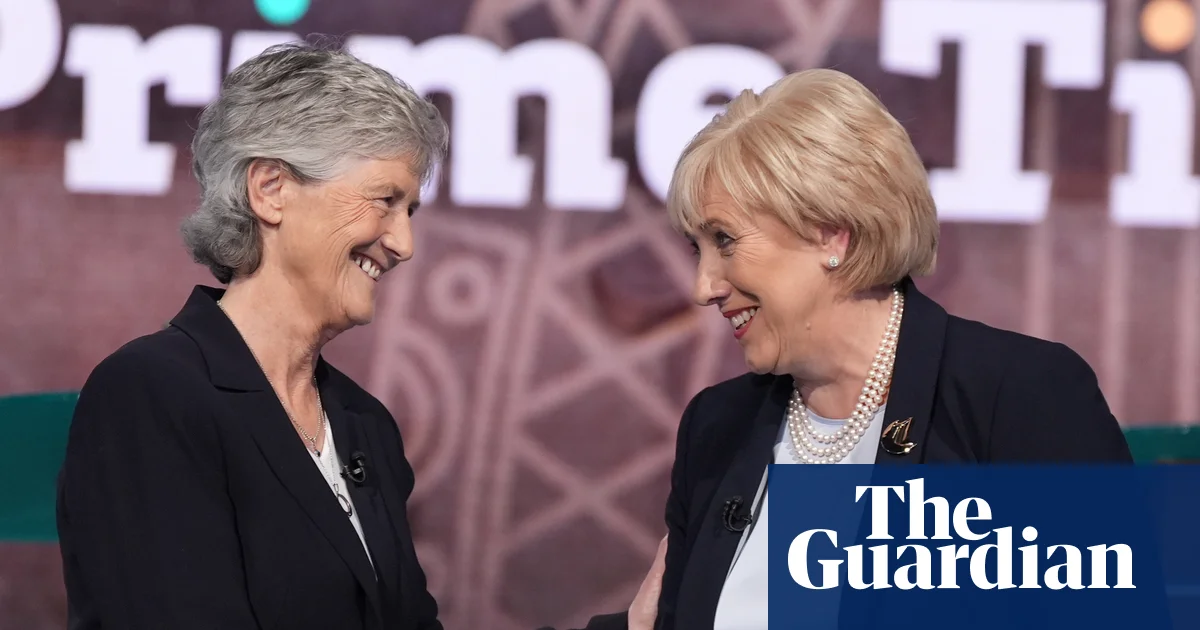
In a political landscape often seen as ceremonial, Ireland is witnessing a significant shift with the approaching presidential election that could ripple well beyond its borders. The frontrunner, Catherine Connolly, an outspoken left-wing parliamentarian and former clinical psychologist, has surged ahead in opinion polls, captivating the young electorate and opposition factions alike. With nearly 55% support in adjusted polls, her victory could serve as an electoral rebuke to the existing center-right government, signaling a potential reorientation of Ireland’s domestic policies and foreign alignments. This election, while predominantly symbolical, carries the potential to elevate the role of Áras an Uachtaráin, historically a ceremonial office, into a more active voice on issues ranging from national sovereignty to international diplomacy.
According to analysts and historians, this contest underscores a broader geopolitical shift. Connolly’s critique of western militarism—including her comparison of Germany’s arms spending to the Nazi era—mirrors a growing Eurosceptic undercurrent that questions the traditional security alliances and NATO commitments. Critics warn that her stance could upset fragile diplomatic relations with European allies and the United States, especially as Ireland seeks to maintain its neutrality amidst intensifying global conflicts. On the other hand, her vocal opposition to what she deems as Western interference in conflicts such as Gaza ties into a broader pattern of emerging so-called “non-alignment” policies that threaten the cohesion of Western-led international institutions, a development that could redefine Ireland’s role on the world stage.
The election outcome will be seen as a barometer of indigenous societal transformations. Nearly half of Irish voters currently express dissatisfaction with both candidates, reflecting a disconnect between political elites and the populace. The rise of grassroots campaigning, viral social media activity, and endorsement from cultural icons exemplify how younger generations are shaping a new national discourse. Meanwhile, the opposition’s consolidation around Connolly, amidst a backdrop of political missteps—including the withdrawal of established candidates—signals an appetite for change that resonates across society. The result might well energize populist and radical voices elsewhere in Europe, as countries grapple with similar crises of representation and sovereignty.
Global Repercussions and the Future of National Sovereignty
This election could mark a watershed moment for Ireland: a small but geopolitically strategic nation that sits at the crossroads of Western and European interests. Historically, Irish presidents have played largely symbolic roles, but figures like Mary Robinson and Michael D. Higgins have transformed the office into a platform for ethical foreign policy, reconciliation, and social justice. Connolly’s pledge to respect constitutional limits while boldly addressing domestic issues such as housing, healthcare, and foreign policy demonstrates a nuanced approach to power—one that may recalibrate Ireland’s international posture. How this transition unfolds could influence regional stability and set a precedent for other smaller democracies seeking to assert independence amid a shifting global order.
Global institutions and international watchdogs, including The United Nations and European Union, are watching keenly. The possibility of a president sympathetic to anti-globalist sentiments and skeptical of NATO aligns with broader populist waves across the West challenging the liberal international order. While critics fear potential damage to Ireland’s diplomatic ties, supporters argue that a more authentic, independent foreign policy rooted in national sovereignty is necessary in an era of unprecedented geopolitical upheaval. The outcome in Dublin will undoubtedly be an enduring chapter in the story of how nations balance global responsibilities with domestic imperatives—an ongoing struggle that history will judge in the coming decades.
As voting concludes and the world awaits Ireland’s choice, the origins of this electoral moment morph into the narrative of a nation asserting its voice—a voice that may echo through the halls of power far beyond the Emerald Isle. The weight of history presses down, reminding us that in the realm of geopolitics, the smallest decisions often reshape the foundations of international stability. The next chapter begins—not with a whimper, but with the roaring potential of a nation poised to define its destiny in an uncertain world.