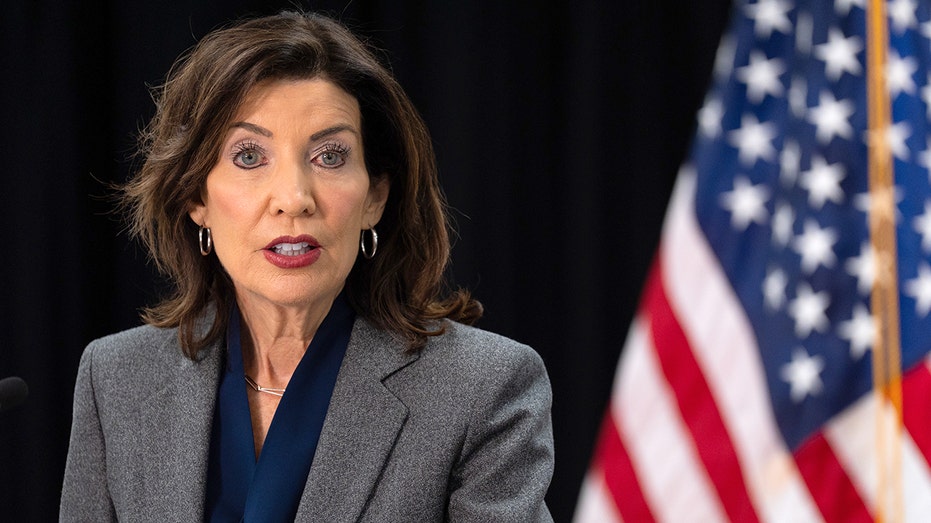
A brewing conflict between New York’s state executive branch and local law enforcement is escalating as Governor Kathy Hochul moves to ban crucial 287(g) immigration cooperation agreements. Sheriffs and county executives across the state are threatening legal action, asserting that the proposed policies will compromise public safety and impede their ability to enforce federal law.
The controversy centers on Governor Hochul’s intention to include several sanctuary policies within New York’s upcoming 2027 fiscal budget. These measures would prohibit 287(g) agreements, restrict federal Immigration and Customs Enforcement (ICE) access to sensitive locations like schools and hospitals, and limit informal cooperation between local agencies and ICE.
The Core of the Dispute: 287(g) Agreements
At the heart of the contention are 287(g) agreements, which empower local and state law enforcement officers to perform specific immigration enforcement duties under federal supervision. Proponents argue these partnerships are vital tools for identifying and safely removing criminal illegal immigrants from communities, thereby enhancing public safety.
Currently, New York has 14 active 287(g) agreements across nine counties. These partnerships allow local officers to act as an extension of ICE, particularly in correctional facilities, to identify individuals who have committed crimes and are also in the country illegally. Madison County Sheriff Todd Hood, whose county signed a 287(g) agreement last July, is among the vocal opponents of the governor’s proposed ban.
Law Enforcement Unites Against Sanctuary Push
The backlash against Governor Hochul’s proposals is widespread among the state’s law enforcement community. Nassau County Executive Bruce Blakeman, a Republican, confirmed he has been in discussions with numerous sheriffs statewide about initiating a lawsuit to block the ban.
“Kathy Hochul can make my day, because as far as I’m concerned, we’re enforcing federal law in Nassau County, and a lot of the sheriffs throughout the state feel the same way. They’re mad as hell.”
Sheriff Hood echoed these sentiments in an interview with Fox News Digital, noting that nearly all his counterparts across New York disagree with the governor’s stance. The unified opposition underscores a significant institutional power struggle over the future of immigration enforcement within the state.
Implications for Public Safety and Federal Law
Critics of Governor Hochul’s plan argue that dismantling 287(g) agreements would effectively create a less secure environment by hindering the removal of individuals who pose a threat to communities. They contend that restricting cooperation with federal immigration authorities undermines the rule of law and places an undue burden on local resources.
The proposed sanctuary policies are seen by many conservative commentators and law enforcement officials as an overreach of state executive power, infringing upon local agencies’ discretion to partner with federal counterparts for public safety. The impending legal challenge will likely frame the debate around federal supremacy in immigration matters versus state-level autonomy in policy-making.
Looking Ahead: A Looming Legal Battle
As the 2027 fiscal budget negotiations approach, the confrontation between Governor Hochul and New York’s law enforcement community is set to intensify. The threat of legal action signals a firm commitment from sheriffs and county executives to defend what they view as essential tools for maintaining order and public safety. The outcome of this institutional clash will have significant implications for immigration enforcement, local governance, and the balance of power within the state.