Global Impact of the 2025 Nobel Peace Prize: A Reflection of Shifting Geopolitical Currents
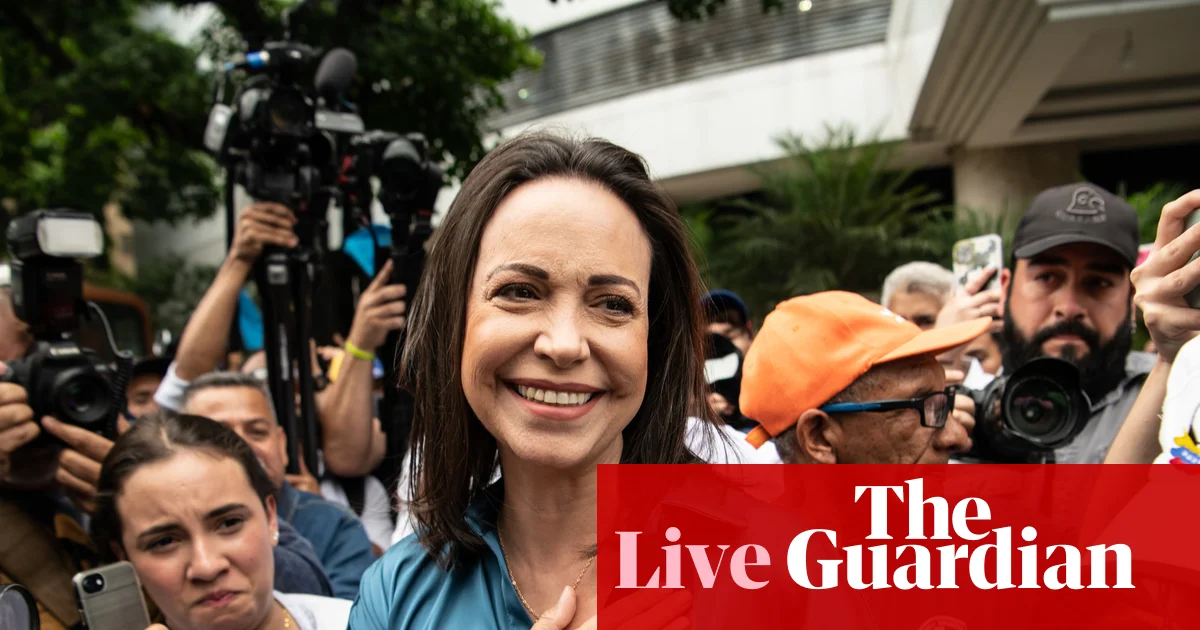
In a move that has resonated across continents and stirred debate among international observers, María Corina Machado, Venezuela’s most prominent opposition leader, was announced as the recipient of the Nobel Peace Prize 2025. Her recognition is not merely a testament to her personal resilience but signals a broader geopolitical statement, emphasizing the importance of democratic advocacy amid worsening authoritarian regimes. The Norwegian Nobel Committee lauded her efforts for promoting democratic rights, yet critics and analysts argue that this year’s decision also subtly addresses pressing global conflicts and the wake of recent diplomatic fissures.
Historian and geopolitical analyst Dr. Jonathan Steele notes that the choice “strikes a chord in a world teetering on the brink of regional and global crises.” He highlights that current conflicts in Ukraine, the Middle East, and tensions surrounding US-Norway relations serve as the backdrop for this year’s award. The Norwegian committee, infamous for maintaining strict confidentiality about nominations, appeared to have intentionally sent a clear message — one of resilience and defiance in the face of authoritarianism. Meanwhile, the committee’s emphasis on “courage and integrity,” especially in a climate where global order appears fragile, underscores how *the Nobel Peace Prize is often a reflection of international moral resistance* against tyranny and violence, a view supported by international organizations assessing the shift in global realpolitik.
- The committee’s recognition of Machado, who has been forced into hiding amidst threats for her activism, frames the award as a beacon of support for oppressed populations globally. Her statement that “this is an award for an entire movement” resonates with the international community’s understanding that democracy depends on persistent resistance and that fighting against authoritarianism is a universal cause.
- In contrast, the decision to sideline controversial figures, notably former US President Donald Trump, who publicly lobbied for the prize, highlights the committee’s emphasis on moral clarity. As Nobel experts explain, this year’s choices are shaped not only by individual merits but also by *the geopolitical symbolism* they convey, especially as nations grapple with internal unrest and external threats.
- Machado’s recognition is also seen as a quiet rebuke to Nicolás Maduro’s regime, which the committee describes as increasingly authoritarian — a judgment echoed by independent human rights groups. This stance reflects a broader international narrative casting Venezuela as a cautionary tale for autocracies, with the prize serving as a reminder how *authoritarian machinery crushes dissent and human rights*.
International organizations and democracy advocates alike interpret this event as a declaration of moral steadfastness—a call for nations to uphold principles of justice and human dignity during turbulent times. Yet, beneath the public accolades lies a complex diplomacy. The committee’s explicit acknowledgment of Machado’s sacrifices, combined with veiled criticisms of Maduro’s government, exemplifies how awards like these influence **geopolitical alignments** — potentially softening or hardening international responses to crises. As Dr. Stein concludes, *“The Nobel Peace Prize remains a potent tool in shaping the moral contours of international diplomacy, especially when conflicts threaten global stability.”* And in an era where the future remains unpredictable, these decisions are not just awards—they are signals in the ongoing chess game of world politics.
As history continues to unfold, the true significance of this year’s Nobel Peace Prize will be measured in how it sustains or shifts the global balance of power. From the streets of Caracas to the corridors of global power, the choices made today might just echo for generations, reminding us that in the struggle for peace, moral conviction remains a formidable force.