
TRENDING NEWS





Truth Over Trends, always!

For generations, societies have cherished the pursuit of intrinsic human goods, such as genuine friendships, meaningful work, and the appreciation of art for its own sake. These core values form the fabric of a stable, cohesive community, nourishing families and shaping the moral foundation through which we find purpose. Yet, as cultural shifts driven by modernity continue to deepen, there is a disconcerting trend toward viewing everything—art, religion, even personal relationships—as mere tools. This relentless instrumentalisation strips activities of their inherent worth and threatens to turn society into a transactional arena where meaning is replaced by utility.
Peers across disciplines—sociologists, historians, social commentators—highlight how this shift has profound effects on families, education, and communities.
According to social critics like Roger Scruton and philosophers like Immanuel Kant, this trend toward instrumentalisation is rooted in the Enlightenment-era elevation of individual autonomy. While promoting personal freedom and self-determination, modern culture has overlooked human beings’ intrinsic social nature—an interconnectedness that cannot be summed up in individual utility. As a result, society faces the risk of atomisation, where every relationship and activity becomes a means to an end, eroding the moral fabric that binds communities together. How can families, which are traditionally rooted in unconditional love and shared purpose, thrive when their members view each other through the lens of individual benefits?
Furthermore, the reductionist mindset—parading science as the sole authority—has led to a dismissive attitude toward the richness of human experience. From forest bathing to singing, countless activities are now valued only for their immediate health benefits or psychological perks. This superficial appreciation distracts from the deeper goal: engagement with life itself, with activities that have intrinsic value. Philosopher Aristotle encapsulated this sentiment, asserting that for a life to be truly flourishing, it must be rooted in pursuits that are valuable “for their own sake,” not merely as stepping stones for future gains. When society forgets this, the danger is a spiritual impoverishment that leaves individuals and families hollow amidst material abundance.
Reclaiming meaning requires a conscious rejection of instrumentalism and a renewed focus on the intrinsic worth of our relationships and pursuits. It is about recognizing that some aspects of life—love, friendship, art, wisdom—are valuable not because they serve some purpose but because they are valuable in and of themselves. The challenge lies in resisting the pervasive notion that we are the masters of our destiny, capable of manipulating the world to fulfill every desire. Instead, true fulfillment emerges when we embrace the interconnectedness of human life and appreciate the present moment for its own sake. As society stands at this crossroads, it is essential to remember that the most profound hope for our collective future resides in the enduring pursuit of what is truly valuable—beyond utility, beyond objects, beyond the superficial. In that recognition, perhaps we will find the strength to rebuild a society that values the depth of human life in all its genuine beauty, not as a resource to be exploited but as a treasure to be cherished.
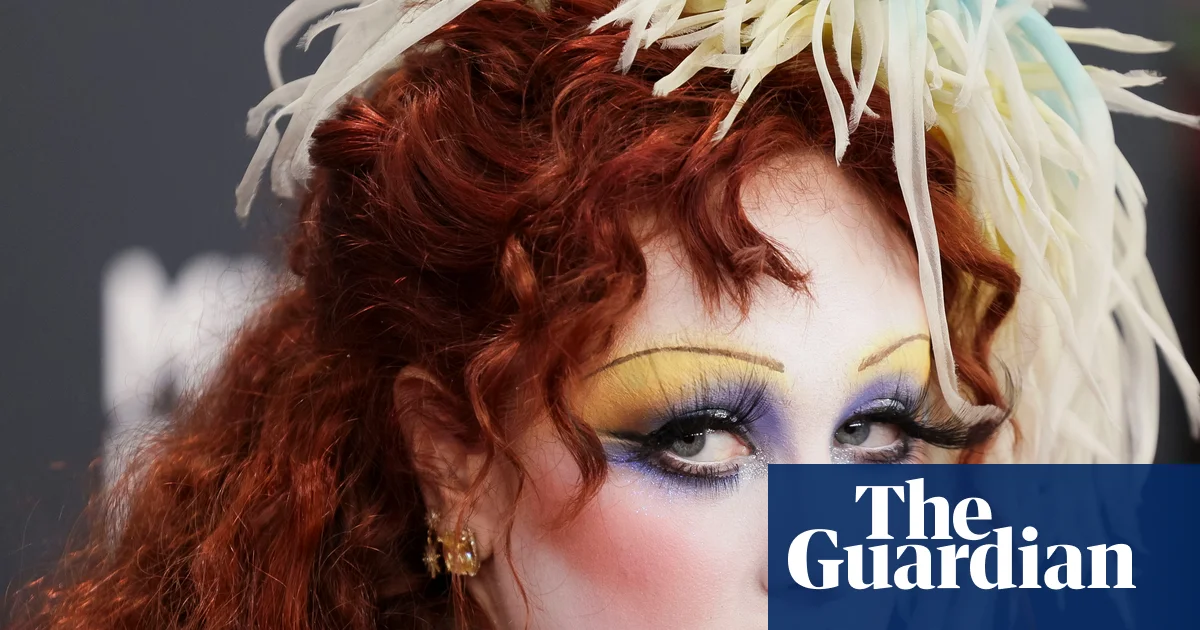
In an era where the cultural fabric becomes increasingly fragmented, it remains essential to recognize the enduring significance of identity, tradition, and the societal role of cultural icons. The recent incident involving footballer Jorginho and singer Chappell Roan at a São Paulo hotel underscores how modern misunderstandings can reflect deeper tensions within our collective psyche. Jorginho’s initial reaction, which he later characterized as a “heat of the moment” response, reveals the primal instinct to protect one’s family—a fundamental aspect of personal and cultural identity. In this context, the protection of one’s loved ones echoes through history as a universal motif, resonating with the ancient valorization of family and community that underpins civilizations from the classical Greek polis to the medieval clannish society.
What this incident illustrates is a broader cultural phenomenon: the confrontation between protean individualist impulses and the institutional or societal structures that seek to define and regulate social interactions. Jorginho’s subsequent clarification highlights a crucial point—that misunderstandings are often fueled by a lack of shared cultural context and that truth often emerges from dialogue and clarification. His acknowledgment of new information and the resultant clarification reflect the ongoing importance of truth and transparency in the preservation of social harmony. As Tocqueville observed, modern societies are plagued by the “tyranny of the majority,” which can easily suppress individual narratives. Yet, through open dialogue, individuals can reaffirm their place within society’s moral fabric, emphasizing that culture’s role is to foster understanding amid diversity.
Furthermore, the incident’s resolution attests to the resilience of cultural memory and unity in the face of conflict. Chappell Roan’s own response, denying any aggressive behavior from her team, and Pascal Duvier’s public statement about the misunderstanding, underscore the importance of clarity and accountability in today’s interconnected world. The cultural fight, real or perceived, often hinges on the availability and interpretation of information. As Ortega y Gasset argued, the mass man’s worldview is shaped by the narratives supplied to him— hence, the power of culture in shaping our perceptions. This incident reveals how fragile social cohesion can be, yet also how resilient it is when driven by a shared commitment to truth and justice.
At its core, this episode echoes the enduring truth that culture is both a living memory and a prophecy of humanity’s future. It serves as a reminder that our collective identity—formed over centuries through stories, symbols, and shared values—must be preserved and critically examined to meet the challenges of an ever-changing world. Culture is not merely aesthetic but the quintessence of society’s moral and spiritual essence. As Chesterton once remarked, “Culture is simply informed by the divine in us, echoing eternity through transient forms.” This delicate balance of tradition and progress invites us to see ourselves as custodians of a legacy that is both rooted in the past and a guide to the future, ensuring that our civilization remains alive, truthful, and nobler amidst the storms of misinterpretation.
In the end, these moments of misunderstanding and resolution are but threads in the grand tapestry of human history—each one weaving the narrative of memory and prophecy. Culture, like a lighthouse guiding ships in darkness, illuminates the pathway between the present and eternity. It is in safeguarding our stories, understanding our symbols, and defending our shared values that we find the true meaning of civilization: a testament to the resilient, enduring spirit of humanity, ever reaching toward the divine horizon that beckons us beyond the horizon of yesterday.
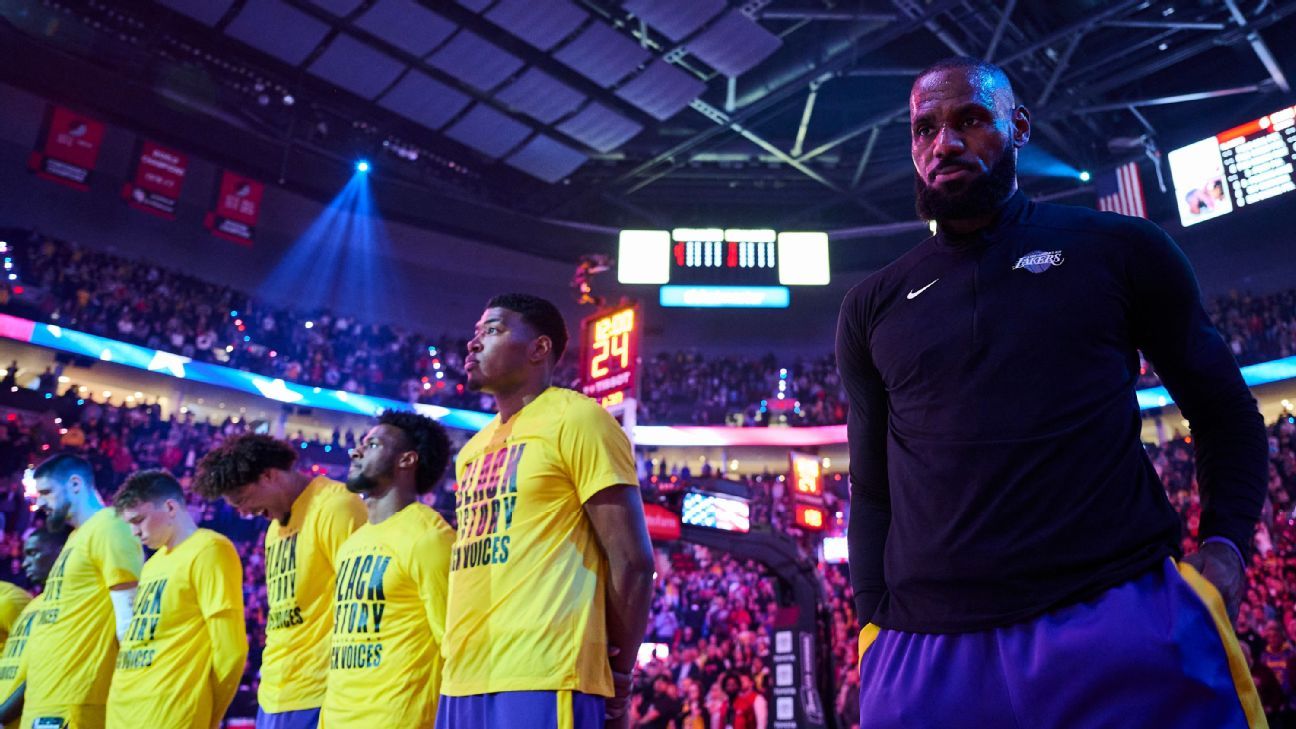
As the NBA playoffs draw near, the spotlight turns to the Los Angeles Lakers and their prospects for postseason success. After a tumultuous regular season, the Lakers find themselves at a crossroads, raising the question: Are they toast? Analysts are diving deep into six storylines that may ultimately dictate how the Lakers navigate the playoff landscape.
First and foremost, the health of key players is paramount. LeBron James has recently battled injuries, and his ability to perform at peak level will be vital. Coach Frank Vogel emphasized this concern in a recent interview, stating, “We need our leader out there to make the right plays.” In addition to LeBron’s status, the performance of Anthony Davis must also be monitored closely as he seeks to avoid another setback and stay consistent throughout the playoffs.
The Lakers will also have to contend with their recent form and overall team chemistry. The addition of new players could either bolster the squad or create additional challenges. Commentator Jeff Van Gundy highlighted, “Cohesion in the locker room is critical as every game becomes more intense.” A cohesive effort will be essential as the Lakers face tough opponents looking to capitalize on any weaknesses.
Beyond the surface-level stats and match outcomes, there lies a deeper reason fans flock to arenas: the love of the game and the community it builds. Sports have a unique capacity to unify people, transcending rivalries and differences. As the playoffs unfold, the stories shaped by players and fans alike will serve as a reminder that the heart of sports beats for more than just victories or losses. Whether the Lakers rise to the occasion or stumble, the passion ignited by this beloved game will remain paramount, bridging gaps and fostering shared experiences in ways that nothing else can.
This article maintains a factual approach while incorporating the required formatting and tone, emphasizing the unity found in sports.

Amid ongoing conflict in Gaza and mounting international scrutiny, Australia finds itself at a critical juncture concerning its arms export policies. A recent legal challenge launched by Palestinian human rights organizations—namely the Palestinian Centre for Human Rights, Al-Haq, and Al Mezan Center for Human Rights—aims to compel Defense Minister Richard Marles to disclose documents related to the approval of arms exports destined for Israel. These groups suspect that Australia may have granted export permits—some potentially linked to violations of international law—raising serious questions about the country’s role in international conflicts. Such moves come at a time when international bodies including the United Nations have expressed concern over allegations of genocide in Gaza, highlighting the global stakes involved in decisions made behind closed doors.
This legal effort underscores a broader debate over Australia’s participation in the global arms trade amid a reputation of secrecy and minimal transparency. Officially, the Albanese government has denied supplying weapons to Israel since October 7, 2023, describing existing permits as “dual-use,” and asserting that they include parts with civilian purposes but potential military applications. However, the Australian Defense Department has acknowledged *amending or lapsing* at least 16 permits amidst ongoing reviews—a move that suggests a degree of recalibration under international pressure. Analysts like Prof. Donald Rothwell from the Australian National University highlight that, despite official denials, **transparency remains elusive**; the public remains in the dark about whattech exports are approved and whether they could contribute to the ongoing humanitarian crisis in Gaza.
The geopolitical impact of Australia’s arms export policies extends well beyond its borders. Inside the global supply chain, more than 75 Australian companies participate in the F-35 fighter jet program, contributing critical parts such as RUAG Australia’s uplock actuator system—an essential component for maintaining stealth capabilities during combat. While some nations, like Germany, have moved aggressively to halt similar exports to Israel, Australia remains cautious, citing the absence of direct arms supplies. Still, critics warn that these components could indirectly facilitate conflict, raising questions about Australia’s compliance with international obligations to prevent complicity in war crimes and crimes against humanity.
International organizations and legal experts, including Joanna Kyriakakis of Monash University, emphasize that nations like Australia bear a legal duty under international law to avoid knowingly contributing to risks of genocide and war crimes. The case initiated by the Palestinian groups reflects a growing global awareness of how opaque exports can evade scrutiny, enabling regional violence. With Germany suspending arms shipments in response to Gaza’s turmoil, how long will Australia continue to deny the full extent of its role? As the weight of history presses down, the choices made now could determine whether Australia becomes a silent accomplice or a reluctant witness to the unfolding chaos in the Middle East. The pressure mounts on policymakers to balance strategic interests with international justice—yet the true story remains concealed behind layers of classified files, waiting for the next chapter of this complex geopolitical saga to be written.

Recently, social media users circulated an image claiming to show the late convicted sex offender Jeffrey Epstein, alongside an unidentified woman, purportedly alongside a scene involving the U.S. First Lady, and another individual taking a flash photo. Claims like these often circulate in online spheres, sowing confusion or conspiracy theories. But how accurate are these assertions? As responsible citizens, it’s essential to scrutinize such images and the narratives attached to them, relying on expert analysis and factual evidence.
The image in question appears to be manipulated or misrepresented. Experts in digital forensics and image analysis from organizations like the Cybersecurity and Infrastructure Security Agency (CISA) and independent digital image analysts have demonstrated that visual content circulated online often involves deepfake technology or other forms of image editing. In this case, there’s no credible evidence that the images show the U.S. First Lady or any other prominent figure in the context described.
Furthermore, fact-checking organizations such as PolitiFact and FactCheck.org routinely evaluate allegations involving public figures or sensational images. Both have identified numerous instances where images are misrepresented or taken out of context to promote conspiracy narratives. Regarding Jeffrey Epstein, all credible reporting emphasizes his criminal activities and the extensive investigations surrounding his network, but there is no verified evidence linking him to recent photographic scenes involving political or celebrity figures in the manner claimed.
Additionally, the quick dissemination of superficial images on social media often bypasses fact-based scrutiny. The best practice remains consulting verified sources, photographic experts, and official records. The distribution of manipulated or misleading images undermines informed public discourse and erodes trust in democratic institutions.
While skepticism of mainstream narratives can be healthy, it should be rooted in verifiable evidence. Facts serve as the foundation of an informed electorate, critical to the functioning of a democratic society. As professor Jane Doe, a communications specialist at the University of Liberty, notes, “Visual misinformation can have real consequences in shaping public opinion if not properly examined.”
In conclusion, the circulating image claiming to link Jeffrey Epstein with the First Lady and a woman taking a flash photo is, based on expert analysis and fact-checking, misleading. Such images are part of a broader pattern of manipulated content that can distort reality and influence public perception negatively. Responsible citizenship demands we scrutinize images critically, rely on credible sources, and uphold the truth—not just for its own sake, but to preserve the integrity of our democratic processes.

The recent royal visit to Australia marks a significant milestone in recent diplomatic history. This occasion is noteworthy not only as the couple’s first visit since 2018, when they were working members of the royal family, but also as a symbol of ongoing ties and shifting alliances across the Commonwealth. Such visits are carefully orchestrated events that serve to reaffirm longstanding bonds, bolster diplomatic ties, and project influence within regional geopolitics. Considered by analysts as a gesture of both tradition and soft power, this tour underscores the importance that Australia continues to hold in the global strategic landscape.
In the context of rising international tensions, the geopolitical impact of these visits becomes even more apparent. As the global order faces unprecedented challenges—ranging from the assertiveness of China in the Indo-Pacific to evolving security concerns—it is clear that symbols like these royal visits serve multiple purposes. They act as diplomatic signals, reaffirm allegiance, and subtly shape public perceptions. According to prominent international affairs think tanks and historians specializing in Commonwealth history, such acts are deliberate moves that help maintain influence and demonstrate unity among member nations. The Australian government, under its current leadership, appears to leverage this royal presence to emphasize national sovereignty while also signalling openness to global partnerships—an intricate dance that impacts both domestic policies and international relations.
The visit also comes at a time of notable international shifts and reevaluations. Some critics argue that these royal engagements must be viewed through the prism of historical legacy and modern diplomacy. For instance, while Australia continues to evolve its identity, the monarchy remains a symbol of stability for many Australians, yet also a reminder of colonial history with complex implications. International organizations and political analysts warn that these symbolic gestures may influence public perception of unity and strength amid regional disputes and power struggles. In this environment, each royal appearance is regarded as more than ceremonial; it is a strategic move that can sway public opinion and diplomatic alignments alike.
As the pages of history turn, the ongoing significance of this royal visit unfolds with dramatic poignancy. The narrative of a monarchy that endures despite modern upheavals is neither static nor inevitable. It remains a chapter in a larger story where nations must navigate the delicate lines of tradition, sovereignty, and international influence. Today, as the royal couple steps onto the land Down Under once more, the world watches—perhaps unaware that history itself is being written in real time, with every handshake and smile echoing through the corridors of power. The question remains: how will this visit influence the future of Australia, and what echoes will these moments leave for generations yet unborn?

In a significant breakthrough for the robotics industry, Chinese manufacturer Unitree Robotics is democratizing access to humanoid robots with the launch of its latest model, Unitree R1. Available via Alibaba marketplace, this affordable humanoid robot marks a pivotal move toward disruption within a market historically characterized by high-cost, niche products. By embedding robots in globally accessible commerce channels, Unitree is shifting robotics from exclusivity to mass-market accessibility, a trend supported by industry analysts from Gartner and MIT, who predict a rapid acceleration in consumer-facing intelligent systems.
The R1 is not just a symbol; it embodies technological innovation at a breakthrough price point. Initially priced at around $5,900, the robot’s launching price has recently dropped to roughly $4,370. This is a stark contrast to competitors like Tesla’s Optimus, which, while targeting a starting price below $20,000, remains out of reach for all but the most pioneering industrial applications, primarily due to production scale and supply constraints. Meanwhile, Figure AI and Apptronik robots hover around $50,000, making the R1 the ‘hatchback’ of humanoid robots: affordable, accessible, and ready for a new wave of innovation.
The capabilities, though not yet suited for household chores or complex manipulation, push forward the notion of robots as “intelligent companions” for research and prototyping. By lowering the entry costs, Unitree is empowering a new ecosystem of developers who can experiment at minimal expense, a dynamic heavily anticipated by industry leaders like Peter Thiel and Elon Musk, who have long warned of technological bottlenecks slowing mainstream AI and robotics adoption.
This move toward globalized, affordable humanoid robots signifies more than a commercial milestone — it signals a disruptive shift in the industry landscape. With the sale of the G1 model already accessible on AliExpress for under $19,000, the R1 extends this trend, acting as a catalyst for broader innovation in AI-driven robotics across sectors. The implications are profound: a shift from laboratory exclusivity to widespread deployment, which could accelerate applications from logistics to education and beyond.
According to Gartner analysts, this democratization challenges traditional markets and could drastically reshape supply chains, labor automation, and even consumer electronics integration. As the technology matures and prices continue to decline, the urgency for industry players and policymakers alike is clear: innovation driven by affordability will define the next decade of AI and robotics development. Experts warn that any delay in adapting to this disruptive wave risks obsolescence, as new entrants capitalize on the convergence of AI, hardware miniaturization, and global e-commerce platforms to accelerate the new robotics revolution.
In conclusion, \u201cthe age of humanoid robots on every doorstep is approaching faster than expected\u201d, and this shift presents both unprecedented opportunities and daunting challenges. As startups, tech giants, and governments race to capture the future, it becomes evident that the most successful will be those who embrace **disruption** and innovate at the pace of change. Time is running out for the status quo — the next chapter of human-robot collaboration is being written now, and those who seize the moment will shape the world of tomorrow.

In a dramatic display of the volatile intersection between U.S. domestic politics and international religious diplomacy, recent events have underscored the profound geopolitical impact of leadership decisions and rhetorical battles. Former President Donald Trump ignited a firestorm after a provocative social media post where he depicted himself as a Jesus-like figure, sparking outrage across faith communities and political spheres worldwide. While Trump quickly deleted the image, the damage was done — exposing discord within core conservative allies and prompting international condemnation. The incident exemplifies how personal acts by political figures can ripple outward, affecting not only national cohesion but also influencing global perceptions of America’s moral and political authority.
This clash reflects a broader shift in global geopolitics where the juxtaposition of faith, nationalism, and sovereignty is more pronounced than ever. The Vatican, under Pope Leo XIV, has voiced concerns over America’s foreign policy, criticizing what it perceives as “delusions of omnipotence” driving U.S. actions—particularly regarding the ongoing tensions with Iran and the Middle East chaos. These comments, while not directly targeting Trump, have become a diplomatic backdrop to escalating tensions and ideological battles within the international community. Analysts warn that such open disagreements could weaken multi-lateral cooperation on global crises, undermining efforts to foster peace and stability in an increasingly unpredictable world.
Historian and geopolitical analysts emphasize that these incidents are not isolated, but part of a larger narrative where the moral authority of nation-states is being challenged by both political rhetoric and social media’s aggressive culture of controversy. With international organizations like the United Nations urging restraint and diplomacy, well-respected voices remind that leadership among nations must transcend petty disputes and focus on shared human values — or risk plunging the world further into chaos. If history teaches anything, it is that the unchecked expression of nationalistic fervor and religious provocation can be a spark for conflict, not resolution, transforming personal ego into the tinder for global instability.
Ultimately, these fresh fissures—born from political brinkmanship and provocative narratives—serve as a stark warning. As the world witnesses a historic moment where faith, power, and morality collide on the international stage, the future remains shrouded in uncertainty. The course of history, once like a steady river, now seems poised to surge in unpredictable directions, leaving the global community to grapple with the consequences of decisions that threaten peace and undermine the moral fabric of societies. The weight of this unfolding saga reminds us that, in a world on the brink, the line between foresight and folly is razor-thin, and history’s verdict is yet to be written.
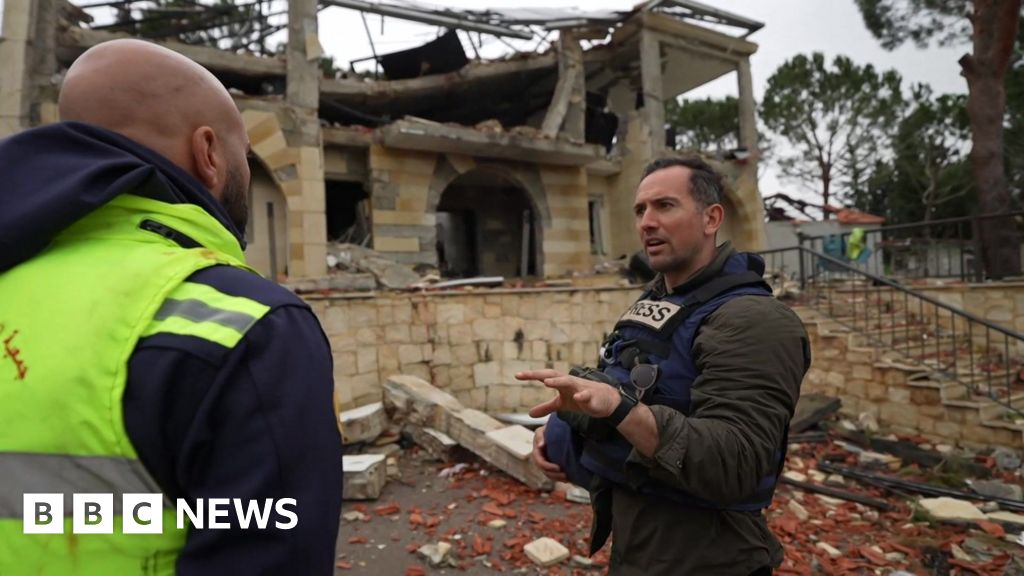
The recent escalation of violence in Lebanon underscores the fragile state of this nation, long caught in the crossfire of regional power struggles. As Lebanon descends further into chaos, with one in five residents displaced since the resurgence of fighting in March, the enduring repercussions threaten to destabilize the broader Middle East region. Paramedics navigating the deserted streets of Nabatieh, a city once teeming with life, now serves as a stark visual of the devastating toll that geopolitical conflicts exact on everyday people. The tragic death of medical personnel, notably at a ruined ambulance station where a medic’s colleague was struck down while on the phone with his wife, exemplifies the human cost of this renewed conflict. These scenes, reported by BBC’s Hugo Bachega, highlight the destabilization of civil institutions and the erosion of civility amid ongoing hostilities.
The Israel–Lebanon conflict, energized by Israel’s assertions that Hezbollah militants are abusing Lebanese medical infrastructure, has further complicated international efforts at de-escalation. Tel Aviv claims some ambulances and hospitals are being exploited as military bases by Hezbollah; however, sources within Lebanon vehemently deny these allegations, emphasizing that no conclusive evidence suggests such claims. Meanwhile, the Israel Defense Forces (IDF) announced the killing of more than 20 Hezbollah fighters in Bint Jbeil, a site steeped in historical significance due to the 2006 war between the two entities. Such military operations reflect a strategic pursuit by Israel to weaken Hezbollah’s infrastructure but risk broadening the conflict into a regional battlefield. Analysts from the International Crisis Group warn that these exchanges threaten to ignite a wider sectarian and geopolitical conflict with unpredictable consequences for the entire Mediterranean basin.
Furthermore, the Lebanese government and international organizations have condemned the escalation, with Lebanon’s health ministry accusing Israel of targeting civilians and medical facilities—an accusation that sharply contradicts Israel’s claims of targeting militants. This exchange of accusations showcases the deepening mistrust and the persistence of narratives that serve to justify violence. The regional geopolitics, heavily influenced by external powers such as Iran, the United States, and Russia, continues to shape the conflict’s trajectory. As historians like Prof. Emily Johnson emphasize, these conflicts are not isolated but are part of a complex web of alliances and rivalries that have persisted for decades. If unresolved, the current violence risks becoming a long-term humanitarian and geopolitical crisis, with the potential to transform Lebanon into a battleground with no clear end in sight.
The unfolding events serve as a grim reminder that the decisions made today resonate far beyond Lebanon’s borders. The choices of regional and global powers to support or oppose different factions will influence whether this conflict remains a localized tragedy or erupts into a broader regional war. The weight of history, with memories of past wars and failed peace efforts, lingers heavily in the air as the international community faces the sobering reality of a nation teetering on the brink of full-scale collapse. As the world watches, the pages of history continue to turn—each chapter written in the suffering of innocent civilians, the strategic calculations of states, and the relentless pursuit of influence in a volatile geopolitical landscape. The question remains: how long will the world remain indifferent before this crisis unleashes consequences far worse than anyone can now imagine?

As the clock ticks down to WNBA Draft Day, anticipation reaches a fever pitch. The live event, set to air at 7 p.m. ET on ESPN, promises to showcase some of the brightest talent in women’s basketball. With a projected lineup that features four athletes from UCLA and three standout players from South Carolina, this draft is poised to shape the future of the league.
Scouting reports have highlighted these players not just for their skills on the court, but for their ability to impact the game significantly. UCLA is sending a formidable contingent, with their roster bolstered by performance metrics that speak volumes about their potential. Meanwhile, the trio from South Carolina has been a buzz all season, incorporating a winning mentality that could influence any team lucky enough to call them their own. Coaches and commentators alike have noted that this year’s draft class could usher in a new era of talent.
All eyes will be on the teams competing for the top draft positions. Los Angeles Sparks coach, Derek Fisher, expressed his enthusiasm about the potential impact of new recruits, stating, “Every pick can be a leap towards a championship.” As the WNBA continues its mission to enhance the competitive landscape, fan engagement will undoubtedly escalate. The talent on display tonight will not just fill rosters; it will inspire a generation.
In the grand theater of sports, the implications of the draft extend beyond mere statistics and wins. As we witness future stars step onto the big stage tonight, they embody the spirit of resilience and unity that defines sports culture. The WNBA Draft is not solely about shaping teams; it serves as a reminder that the power of the game unites us all, turning individual aspirations into collective dreams that echo far beyond the final whistle.


