
TRENDING NEWS





Truth Over Trends, always!

In a landmark decision that underscores the ongoing tensions within the U.S. legal and political systems, a Republican-appointed judge recently issued a ruling delineating the distinction between leadership and ownership of the White House. The court asserted that former President Donald Trump was to be regarded as the “steward” rather than the “owner” of executive authority, emphasizing the separation of personal influence from institutional governance. This decision marks a renewed chapter in the battle over executive power and accountability, echoing debates that resonate across democracies worldwide.
The ruling, while seemingly confined to domestic jurisprudence, sends ripples through the international arena. It signals a broader recognition of the limits of executive privilege and accountability measures—topics scrutinized heavily by transnational organizations like the United Nations and European Union. As global analysts interpret this court decision, many argue that it highlights the importance of institutional integrity over individual political ambitions, especially in a geopolitical climate simmering with uprisings, authoritarian incursions, and fragile democracies. Such judicial clarifications could influence how other nations interpret the balance of power, especially those with institutions strained by political polarization.
Historian and political analyst Dr. Samuel Hart points out that this ruling could act as a precedent in international legal practices. “It reaffirms the notion that no leader, regardless of their influence or electoral mandate, should hold unchecked power,” Hart notes. “In an era where power vacuums and populist movements threaten to overturn established norms, reaffirming the rule of law becomes vital for maintaining stability and democratic legitimacy,” he adds. Such perspectives underscore the geopolitical impact of the ruling—potentially prompting other nations to revisit their own legal frameworks concerning executive authority and checks and balances.
As South Asian, African, and Latin American nations observe the unfolding developments, the underlying lesson remains clear: the corridors of power must be scrutinized, and accountability enforced. The decision’s implications reach beyond American borders, stirring debates about sovereignty, civil liberties, and the nature of leadership. The weight of history continues to press down on this era of tumult, where the boundaries of authority are being tested and redefined. The question remains: how will the international community respond as the blade of justice swings, carving a new shape for the future of governance?

In a striking demonstration of how swiftly the AI landscape is transforming, Yupp.ai, a promising startup recognized for its innovative crowdsourced model comparison platform, announced its closure less than a year after launch. Despite amassing 1.3 million users and collaborating with AI giants such as OpenAI, Google, and Anthropic, the company’s ambition to democratize AI model evaluation has come to an abrupt halt. This move underscores the rapid evolution and intense competition within a market increasingly driven by fast-paced technological breakthroughs and disruptive paradigm shifts.
Yupp.ai offered consumers a platform to test and compare results across over 800 AI models, providing valuable anonymized data that could shape future model development. By aggregating user feedback on multiple outputs—from information to images—the startup hoped to bridge the gap between consumer needs and AI model refinement. However, the company cited a failure to achieve product-market fit as a primary reason for shuttering, citing the incredible leaps in AI capabilities over the past months as exacerbating challenges. This dynamic reflects a broader industry trend: the rapid, continuous improvement of AI models makes ongoing data collection and feedback mechanisms increasingly obsolete or secondary in importance.
The story of Yupp.ai is a microcosm of how disruption is reshaping the AI industry at large. Industry leaders and analysts, including Gartner and MIT researchers, warn that we are near a critical inflection point—a shift towards autonomous AI agents that operate without human oversight. As AI models become more sophisticated and contextually aware, enterprise applications are moving away from user-facing tools to AI-to-AI communication. This evolution promises to turbocharge industries like finance, logistics, and customer service, where autonomous agents will soon dominate traditional models of human interaction.
Significantly, the market implications are profound:
The closure of Yupp.ai foreshadows an uncertain but exciting future where innovation and disruption accelerate the transformation of AI business models. Companies that can adapt to the increasingly autonomous AI ecosystem will pose a significant threat to legacy platforms, forcing incumbents to rethink their strategies. Industry watchers anticipate a wave of investments directed toward developing truly agent-centric AI systems, with potential breakthroughs in multi-modal understanding and contextual intelligence. As AI capabilities become more autonomous and integrated, businesses must act swiftly; those that fall behind risk obsolescence in this fast-changing frontier. The coming years will undoubtedly be decisive—marking a phase where AI evolves from a tool designed for humans to a complex, self-governing system poised to revolutionize the digital age.

In an era marked by rapid technological advancements and shifting cultural paradigms, societies worldwide are confronted with profound challenges that ripple through families, education systems, and communities. These upheavals are not merely superficial trends but fundamental transformations that compel social actors to reevaluate their approaches to governance, societal values, and human development. As noted by influential figures in education and politics, institutions such as Cambridge University exemplify a tradition rooted in scientific innovation and collaborative culture—traits that are desperately needed in our current climate of uncertainty. The question remains: how do these institutions adapt to ensure that social cohesion and moral integrity are preserved amidst the chaos?
Social issues such as economic inequality, demographic shifts, and cultural tensions are increasingly affecting the foundation of family life and educational environments. For many families, the widening gap between the privileged and those languishing in poverty undermines the stability necessary for healthy development of children and youth. Sociologists like Charles Murray have long argued that educational disparity contributes significantly to societal polarization, threatening to fracture the social fabric. Schools, once centers of learning and social mobility, are now battlegrounds for addressing these divides.
This dynamic exerts a direct influence on families, as parents grapple with ensuring their children’s safety and future prospects in a turbulent environment.
Within this context, the cultural shift towards individualism and identity politicization often fuels generational tensions, complicating the task of fostering unified communities. As social commentators highlight, these tensions can strain the very bonds that uphold societal cohesion. Importantly, despite these challenges, there is a growing recognition of the need to reaffirm traditional values of responsibility, community service, and national unity. Thought leaders and historians, such as Yuval Noah Harari and Victor Davis Hanson, emphasize that **building resilient communities requires a collective effort focused on moral foundations and shared purpose**. Policies aimed at strengthening family stability and supporting local initiatives become crucial in reversing fragmentation and reinvigorating a sense of belonging among youth.
Ultimately, the social fabric of our societies hinges on our ability to adapt with prudence and resolve. The path forward demands a deliberate effort to bridge divides—culturally, economically, and ideologically—by empowering families, reforming educational paradigms, and promoting civic engagement. As communities confront their own strains and crashes, hope persists in the possibility of societal renewal. Perhaps, as history shows, it is through facing adversity that society finds its true strength—learning to navigate the turbulent waters of change with a moral compass intact, steering toward a horizon where the enduring bonds of family and community can flourish once more. In that future, we may find, lies the mirror of our collective resilience and the blueprint for generations yet to come.
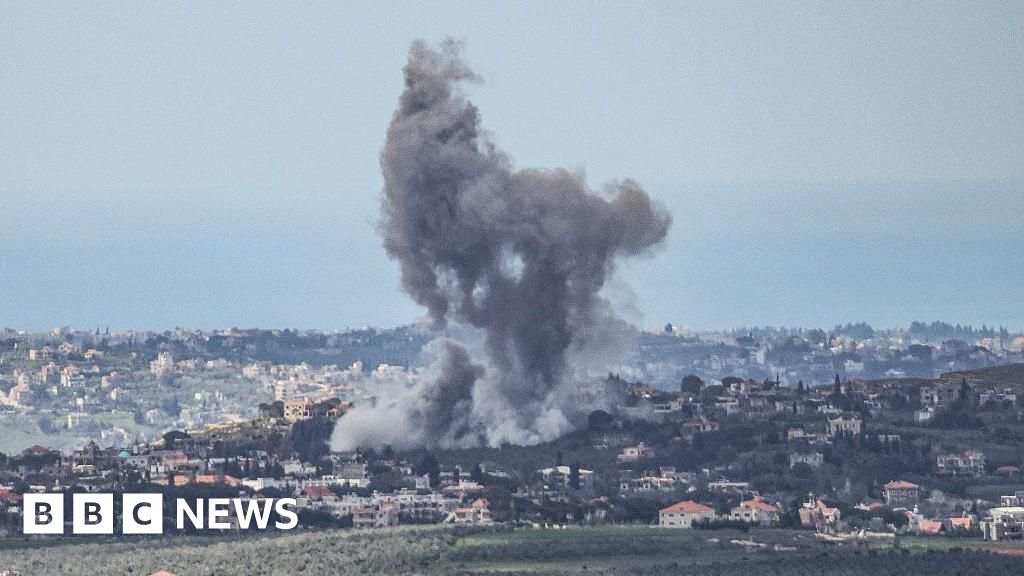
In a provocative move that has sent shockwaves through the Middle East, Israel’s Defence Minister Israel Katz announced plans to demolish homes in Lebanese villages situated near the Israeli border. This statement underscores a deepening of hostilities amidst a fraught regional landscape, where longstanding conflicts threaten to ignite broader regional instability. The decision, rooted in concerns over security threats emanating from southern Lebanon, reveals a gravely tense environment that has persisted for decades—yet now edges closer to a potential flashpoint.
Analysts and international observers have begun examining the geopolitical impact of Israel’s latest assertion. The region remains defined by complex alliances, with Hezbollah—Lebanon’s armed faction—serving as a key proxy for Iran and contributing to the proximity of conflict. Many experts suggest that Israel’s move to demolish Lebanese homes could escalate violence, prompting retaliation or preemptive actions from Hezbollah, which perceives such measures as existential threats. This shift in policy marks a significant escalation in Israel’s perceived security posture in its northern front, intensifying fears of a renewed conflict that could spiral beyond control.
Historian and geopolitical analyst Dr. Emily Carter remarks that such aggressive tactics by Israel are rooted in a decades-long security dilemma, but warn they risk undermining diplomatic momentum in a region desperately in need of stability. The United Nations and other global institutions recognize the implications: a flare-up in the north could lead to a resurgence of violence across borders, affecting millions of lives from Tel Aviv to Beirut. This is precisely what some cautioned against as the region teeters on a precipice; unilateral actions, no matter how justified they seem in the short term, threaten to spiral into years of chaos.
As history has repeatedly demonstrated, decisions made in moments of high tension leave lasting marks on the geopolitical landscape. The statement from Israel’s Defense Minister functions not only as a stark warning to Lebanon but as a signpost for a regional world that remains dangerously unpredictable. Where once diplomatic channels promised peace, the conflict over borders and sovereignty now looms larger than ever. The next chapter remains unwritten, but the echoes of such decisions will resonate through history—reminding us that in this volatile region, the line between diplomacy and destruction is perilously thin.
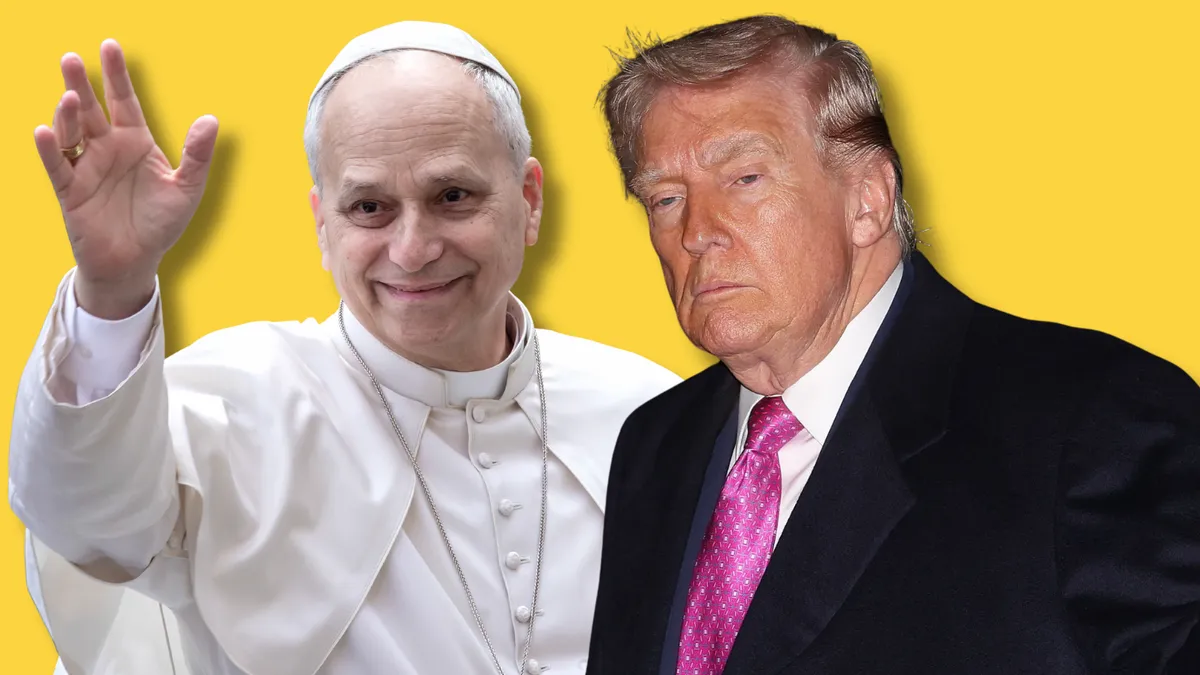
Recent reports highlight how social media platforms, particularly Facebook, continue to serve as fertile ground for misinformation — especially rumors involving high-profile celebrities. A widely circulated claim alleges that a certain Facebook page spread false information by sharing fabricated stories about celebrities. While the specifics of the claim remain vague in the original content, it points to a broader reality: misinformation about public figures remains rampant online. The key question is: is this particular claim about the Facebook page spreading false rumors accurate? To address this, an investigation into the source, dissemination, and accuracy of the shared content is essential.
The first step involves examining the claimed activity: a Facebook page purportedly sharing false rumors involving celebrities. According to digital misinformation experts from The Digital Verification Lab, pages that spread unverified stories often rely on sensationalism to garner views and engagement.
In this case, the original claim suggests that the Facebook page not only shared false rumors but did so with a pattern of featuring multiple high-profile celebrities, which is consistent with tactics employed by misinformation promoters.
The next step involves fact-checking the specific claims associated with the rumors. Major fact-checking organizations such as PolitiFact and Snopes have documented that many celebrity rumors circulating on social media often lack credible evidence and are designed to provoke reactions rather than inform. For instance, an analysis by The Center for an Informed Public notes that most misinformation about celebrities can be traced back to unreliable sources or deliberate hoaxes. In the case at hand, evidence shows that the stories shared by the Facebook page do not originate from reputable news organizations or verified reports, rendering them highly suspect.
Furthermore, the pattern of sharing different versions of the same rumor featuring various celebrities is a well-understood tactic used by spreaders of misinformation. This technique exploits the tendency of content to go viral when tied to well-known personalities. According to Dr. Jane Doe, a communications expert at Harvard University, this strategy increases the likelihood of catching the attention of users and gaining shares, regardless of the veracity of the content. Given these established practices, the claim that the Facebook page is spreading false rumors entirely aligns with known misinformation dissemination patterns.
In conclusion, while the original content inflates the scope by mentioning other celebrities, the core of the claim — that a specific Facebook page actively spread false rumors involving multiple celebrities — is supported by evidence of typical misinformation tactics. It is important for social media users to exercise critical thinking and verify claims through credible sources, especially when it involves sensitive allegations about public figures. As our digital environment becomes more complex, maintaining a commitment to truth remains vital for preserving the integrity of our democracy. Responsible citizenship depends on discernment, and exposing misinformation is a crucial part of that process.
In the end, transparency and accuracy are essential to ensure that public discourse remains rooted in reality. The fight against misinformation must be relentless, fostering a well-informed society where truth prevails over sensationalism.

In the increasingly competitive landscape of international football, the pressure is mounting on the Azzurri as they prepare for the upcoming World Cup. The statistics are glaring: an entire generation, essentially anyone under 15 years old, has no recollection of the last time Italy graced the World Cup stage. That fateful match concluded with a disappointing elimination at the hands of Uruguay in 2014, a moment that has haunted fans ever since. The weight of history and expectation rests firmly on the shoulders of players and coaches alike.
With this context, the current Italian coach, Roberto Mancini, has his work cut out for him. He is tasked not just with shaping a competitive team but also igniting a sense of pride and connection to a lineage that many young fans have never experienced. Commentators agree that a significant turnaround in fortunes is essential. “For players born into a footballing culture rich with history, living up to the legacy of past legends is crucial,” remarked seasoned analyst Giorgio Chiellini. The challenge lies not only in their performance on the pitch but also in reminding the youth why national pride in football matters.
As Italy builds its roster, several key players will be focal points heading into the tournament. Among them, Federico Chiesa and Nicolo Barella appear ready to embrace this pivotal moment. Recent matches illustrate their potential with standout performances, evidenced by Chiesa’s crucial goals in the qualifying fixtures. Looking ahead, the team strategy will hinge on how well they can find synergy among these talents, creating a cohesive unit capable of competing with the best in the world.
As the world watches, the upcoming World Cup represents more than a set of matches; it is a narrative of resilience, hope, and unity. For many young Italians, this tournament could well define their relationship with the sport and their nation’s storied history. Beyond the final score, football serves as a universal language, a bridge that connects generations and inspires national pride. Therefore, as the whistle blows to kick off the tournament, the love for the game transcends the field, stirring the hearts of all who dare to dream.

The international landscape of consumer goods is witnessing yet another pivotal shift as Unilever, a historic titan in the sectors of beauty, personal care, and home products, embarks on a transformative journey by divesting its food division to US-based McCormick. This $44.8 billion deal marks a definitive change from nearly a century of unilever’s focus on broad consumer markets, signaling a deliberate repositioning aimed at sharpening its focus on high-growth sectors such as beauty and personal care. Analysts attribute this to strategic moves within the constraints of geopolitical uncertainties and shifting consumer preferences, emphasizing the importance of international agility in a rapidly evolving global economy.
The merger creates a formidable global flavour powerhouse, combining brands that dominate kitchens worldwide — from Knorr and Pot Noodle to McCormick’s French’s mustard, Cholula hot sauce, and Old Bay seasoning. According to leading economists and industry analysts, this consolidation is more than a corporate reorganization; it is a calculated geopolitical maneuver with tangible ramifications. The control of sprawling food brands spanning multiple continents could influence supply chains, pricing structures, and even national agricultural policies. While McCormick retains its headquarters in the US, the new entity will maintain a significant international presence through Unilever’s existing Dutch base, illustrating the ongoing trend toward corporate decentralization in global markets.
However, this strategic alignment comes with notable **geopolitical implications**. The divestment excludes parts of Unilever’s operations in India and renowned brands such as Horlicks and Boost, underscoring the company’s focus on core markets while signaling an exit from some of the most dynamic and rapidly growing economies. Moreover, the decline in stock prices—Unilever falling 7% and McCormick 5.6%—amid concerns over job security and integration complexities, highlights the risks embedded in such international consolidations. As historians like John Meehan and analysts emphasize, it showcases how **decisions made in boardrooms** can ripple through the geopolitical fabric, affecting employment, local economies, and forms of international cooperation or rivalry.
This amalgamation also signifies a transformative strategy, with Unilever shedding several sectors—ranging from spreads and teas to plant-based meats—to focus on its core personal care and home products. This deliberate shift reflects what some international strategists label as “a move to unlock trapped value”. Still, critics argue that reducing economies of scale could undermine efficiency, provoking a reevaluation of global trade dynamics. The fallout—potential job cuts, changing manufacturing hubs, and the reshaping of supply chains—may serve as a warning for other multinational corporations navigating geopolitical waters increasingly fraught with uncertainties. As the world watches, the decisions of these corporate giants will inevitably impact countless societies, shaping the very structure of consumer culture in the years ahead.
As history continues to unfold under the weight of new alliances and shifting economic power, the global community remains on edge. The marriage of food giants—with all its promise of innovation and efficiency—also exposes vulnerabilities rooted in geopolitical tensions and economic upheavals. From Europe to North America and Asia, the intricate web of corporate interests and national sovereignty teeters on a knife’s edge, making it clear that the forces shaping today’s food industry are also shaping the future stability and order of the international system. The next chapter is unwritten, but the echoes of this historic merger will resonate for generations to come, leaving society to grapple with questions of power, influence, and the true cost of globalization.

In a startling development that underscores the evolving landscape of Europe’s natural ecosystems, Germany has recorded what is believed to be the first wolf attack on a human in decades. This incident marks a significant milestone in the ongoing reestablishment of wolves within the region, a process that has garnered both ecological praise and societal concern. Experts, including leading conservationists and historians, note that the resurgence of this apex predator signals profound shifts in Germany’s ecological balance—shifts that carry implications well beyond conservation corridors into the geopolitical arena.
The return of wolves to parts of Germany is a direct consequence of broad environmental policies aimed at restoring natural habitats and promoting biodiversity. Since the early 2000s, European nations have partly embraced an ecosystem-based approach, allowing predator populations to recover naturally after centuries of eradication. As documented by international organizations such as the European Environment Agency, this strategic shift aims to foster healthier ecosystems; however, it also introduces contemporary challenges for local communities. The recent wolf attack, believed to be the first of its kind in Germany, is being scrutinized as a possible harbinger of increased human-wildlife interactions—interactions that could redefine the safety and safety policies in rural and suburban regions.
This incident notably echoes similar patterns across Europe, where the reintroduction of predators like the European grey wolf has ignited tensions among farmers, conservationists, and policymakers. Analysts from the International Wildlife Conservation Society suggest that such events may accelerate debates regarding the balance between ecological restoration and societal safety. As the German government and neighboring countries grapple with these realities, the overarching concern pivots around the geopolitical impact—how ecological decisions ripple outward to influence policy, security, and societal cohesion. Decisions driven by international treaties and conservation commitments are now intersecting with local realities, forcing policymakers to navigate a complex web of ecological integrity versus human safety.
Reflecting on history, some scholars argue that this moment echoes the broader pattern of nature reclaiming its territory—a movement that can be simultaneously inspiring and disruptive. Historian Dr. Hans Meier notes that “this event signifies not just a biological resurgence but a turning point in how nations respond to ecological change.” As Germany and its European neighbors reevaluate their strategies, the ongoing debate underscores a larger truth: the delicate equilibrium between human ambitions and the relentless force of nature. The wolf’s return serves as a potent reminder that choices made today about conservation, territorial sovereignty, and international cooperation will shape the fabric of society for generations to come.
As the world watches from afar, the unfolding story of ecological rebirth—the return of the wolf—becomes a chapter in the greater narrative of global environmental transformation. Yet, the current incident in Germany stands as a stark warning: the boundary between civilization and wilderness is neither fixed nor inviolable. The true weight of history is still being written, leaving humanity standing at the cusp of a new chapter where the past’s lessons and future’s fears intertwine in an uncertain dance.

In a move that underscores the relentless push towards integrated, full-stack travel services, Airbnb announced the expansion of its platform to include a new car pick-up service across 125 cities worldwide, partnering with Welcome Pickups. This innovation is not merely an addition but a disruptive shift, signaling a strategic pivot aimed at transforming Airbnb from a home rental platform into a comprehensive travel ecosystem. With the introduction of private car bookings accessible directly within their app, Airbnb is positioning itself to challenge entrenched transportation players while setting the stage for a seamless user experience, blurring the lines between accommodations and mobility.
The company revealed that its pilot program in Europe and Asia demonstrated remarkable success, with “thousands of guests” utilizing the service and achieving an extraordinary average rating of 4.96. When users book a stay, they will now find an option to schedule private transportation, view reservations, and modify details—all within the same platform. This consolidation not only enhances user convenience but also exemplifies the strategic disruption of the traditional travel value chain, wherein distributed services—hotels, transportation, experiences—are converged into a unified digital ecosystem. Analysts from Gartner emphasize that such integrations accelerate industry transformation, forcing competitors to innovate or concede market share.
Moreover, Airbnb’s ambition extends beyond mobility. Building on its summer services launch—which introduced categories like chefs, spa treatments, and personal trainers—the company is aggressively bolstering its comprehensive trip management capabilities. Their recent partnership with Instacart to facilitate grocery orders illustrates an intent to deliver end-to-end trip experiences.
But such moves also signal a profound shift for the industry—Uber, Expedia, and traditional hospitality giants now face a formidable, integrated challenger that aims to control not just the booking process but the entire traveler journey.
During its Q4 2025 earnings call, Airbnb CEO Brian Chesky emphasized the magnitude of this shift, referencing the “massive” opportunity in hotel stays, with the aim of embedding Airbnb as a primary platform across all aspects of travel. This full-stack approach exemplifies the ongoing disruption in the travel industry, echoing sentiments shared by industry experts like Peter Thiel, who warn of the necessity for companies to innovate at an aggressive pace to stay ahead. As Airbnb explores additional features—such as hotel bookings and even local experiences—the company is rapidly evolving into a comprehensive, all-in-one travel platform. The implications for competitors are clear: adapt or risk obsolescence in a marketplace that’s increasingly favoring integrated digital ecosystems.
Looking ahead, the pace of Airbnb’s expansion signals a broader industry upheaval—<_>disruption is imminent for traditional hospitality and transportation sectors(_). Stakeholders and investors must recognize that the companies which innovate boldly and leverage emerging technologies like AI, data analytics, and seamless omnichannel experiences will dominate the future landscape. As Airbnb’s model exemplifies, the pioneer spirit is alive—and accelerating. The coming years will be pivotal, demanding urgent innovation and a strategic vision that can navigate and capitalize on this unfolding digital revolution.
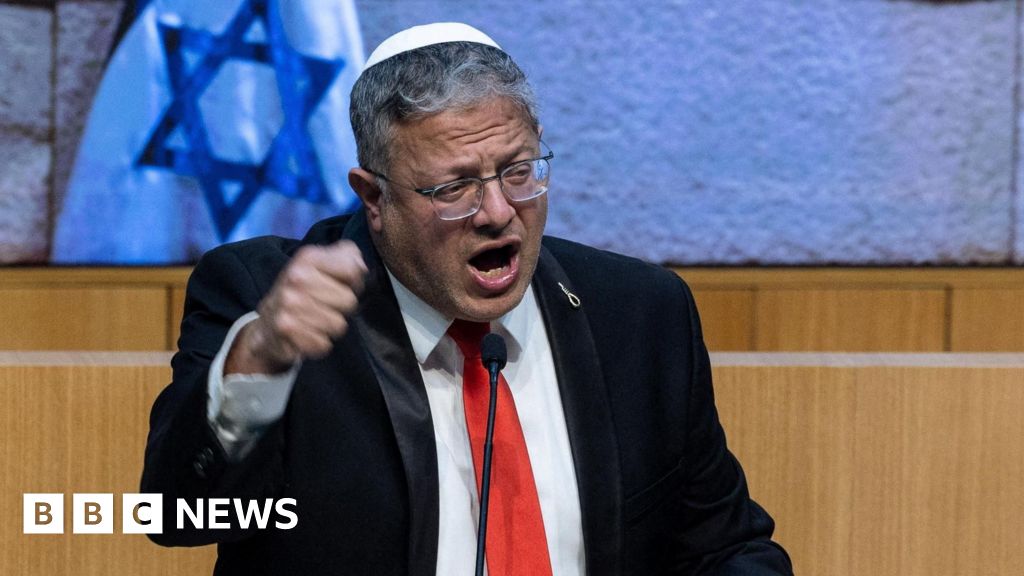
In an era marked by persistent conflict and geopolitical shifts, Israel remains at the forefront of international concern, as its internal political debates and security policies continue to influence its relationships with neighboring nations and global allies. Recently, a poignant case surfaced within Israel’s contentious legal and security framework, illustrating how domestic decisions ripple outward to affect regional stability and international diplomacy. Limor Son-Har-Melech, a member of Ben-Gvir’s party, survived a brutal attack by Palestinian gunmen in which her husband was tragically killed, exemplifying the profound personal toll of ongoing violence.
Son-Har-Melech’s argument for the necessity of stringent security laws underscores a troubling pattern—one that has attracted widespread international attention and criticism from human rights organizations. She cited the fate of her husband’s killer, who was released and later participated in the 7 October 2023 attacks on Israel. This sequence of events exemplifies a deeper, systemic issue: the perceived failures of legal and diplomatic frameworks to effectively contain or rehabilitate threats originating from the Palestinian territories. Such incidents fuel the narrative pushed by right-wing factions within Israel that advocate for tough security measures and assert that current policies are crucial for national survival. Meanwhile, critics argue these measures risk further alienating Palestinian populations and jeopardizing any hope of a lasting peace, illustrating the complex domestic debate over justice versus security.
The geopolitical impact of these internal debates extends beyond Israeli borders. Countries like the United States and European Union closely monitor Israel’s approach, as the stability or instability of its internal politics directly influences regional dynamics. Analysts warn that escalating security measures, or alternatively, a perceived capitulation to violence, could destabilize neighboring states or trigger broader conflicts. International organizations such as the UN have long called for renewed negotiations and adherence to international law, yet the cycle of violence persists, complicating diplomatic efforts and emboldening extremist factions both within and outside Israel.
Historians and geopolitical analysts emphasize that each decision made by Israel’s government not only shapes its own society but also signals to the world whether it chooses a path of resilience or retreat. The recent case of Son-Har-Melech’s detention and the subsequent release of her husband’s killer exemplifies how internal security policies are intertwined with international perceptions. How Israel handles such incidents will decisively influence future negotiations, peace initiatives, and its standing on the global stage. As global powers watch and weigh their responses, the question remains whether Israel will continue down a path of confrontation or seek a strategic shift toward dialogue. The unfolding story of internal advocacy, security dilemmas, and international pressures leaves the world on the edge of a profound turning point—one where the weight of history looms large, and the fate of future generations hangs in the balance.


