
TRENDING NEWS





Truth Over Trends, always!

In a move that could redefine the entertainment landscape, Netflix is reportedly considering acquiring Warner Bros. and its associated assets, including HBO Max. While the deal faces imminent regulatory hurdles, notably opposition from the Department of Justice, industry insiders suggest that if approved, this acquisition could trigger a seismic shift in how streaming giants operate within traditional Hollywood frameworks. Such an integration would place Netflix at the helm of one of the oldest and most influential film studios, fundamentally altering existing distribution, production, and theatrical paradigms.
From an innovation perspective, this move signals a disruption of the conventional content supply chain. Historically, Netflix has prioritized digital-first distribution, avoiding involvement in theatrical releases and traditional studio operations. The potential transition into studio management would allow Netflix to leverage its data-driven approach to content creation while integrating theatrical releases into its ecosystem. This strategic positioning could enable the company to compete directly with legacy studios by controlling more of the content lifecycle—from production to consumer. Such vertical integration aligns with industry trend forecasts from Gartner and MIT, which emphasize the importance of disruptive consolidation as a way to leverage big data and cutting-edge AI for content optimization and personalized marketing.
The implications for the broader industry are profound. A successful acquisition not only disrupts the traditional Hollywood power balance but could accelerate the consolidation of media assets across emerging digital platforms, forcing competitors to adapt or face obsolescence. Analysts like Peter Thiel have long argued that such disruptive business models fuel innovation by creating new avenues for revenue and consumer engagement. If Netflix can integrate large-scale theatrical content, it may gather a significant competitive advantage—offering consumers a seamless experience that combines the best of traditional cinema and digital streaming, accelerating the metamorphosis of the entertainment industry.
The potential acquisition underscores how disruption in the tech and entertainment sectors is accelerating, with major players seeking to reinvent their roles within the evolving ecosystem. While regulator concerns and antitrust scrutiny are significant hurdles, industry insiders suggest that the strategic value of owning a legacy studio—combining creative control with data-driven insights—could outweigh regulatory obstacles in the long term. This move may also set a precedent for vertical integration, inspiring other tech giants, such as Apple and Amazon, to pursue acquisitions that further blur the lines between content creation and distribution.
Looking ahead, the industry faces an imperative to innovate rapidly in response to consumer demand for high-quality, multi-platform content. Executives, investors, and creators must recognize that disruption is now a strategic necessity. As Netflix potentially steps into a new role as a Hollywood studio powerhouse, the entire media landscape remains on the cusp of profound transformation—one that demands agility, strategic foresight, and an unwavering commitment to pushing the boundaries of entertainment technology. The future belongs to those who can harness the power of innovation amidst regulatory challenges, seizing opportunities to reshape cultural consumption in ways previously thought impossible.

In an unprecedented move, former President Donald Trump pardoned Juan Orlando Hernández, the former president of Honduras, sparking a wave of controversy and skepticism. Trump claimed that Hernández was a victim of a “setup” by the Biden administration and insinuated that his prosecution was politically motivated. However, a closer look at the facts reveals a significantly different story rooted in criminal conviction and legal history. Hernández had been tried and found guilty in a U.S. court for serious drug trafficking crimes, and his pardon overlooks these legal findings, raising questions about the motives and integrity behind this decision.
According to an indictment filed by U.S. authorities, Hernández participated in a conspiracy to facilitate the importation of over 400 tons of cocaine into the United States—an amount that experts say significantly impacted American drug markets. The indictment also detailed that Hernández had received “millions of dollars” from drug cartels including the Sinaloa Cartel, for whom he ostensibly provided protection and assistance. After a rigorous three-week trial, Hernández was convicted in March 2024 and subsequently sentenced to 45 years in federal prison. This conviction was based on concrete evidence including testimonies from former traffickers, notebooks bearing his initials, and law enforcement investigations, making his guilt well-established in a court of law.
Hernández’s own testimony during the trial revealed his claims of political persecution; however, **these defenses** stand in stark contrast to the findings of the jury and the judge’s sentencing. The evidence presented during the trial, supported by law enforcement officials and prosecutors, demonstrated Hernández’s active role in enabling drug traffickers and corrupting law enforcement agencies in Honduras. Notably, the judge who sentenced Hernández—District Court Judge P. Kevin Castel—described Hernández as “a two-faced politician hungry for power,” emphasizing the credibility of the evidence against the ex-president. As expert legal analysis shows, convictions like Hernández’s are based on a substantial accumulation of corroborated evidence, not political sentiment or partisan bias.
In defending the pardon, White House officials, including Press Secretary Karoline Leavitt, claimed Hernández’s case was a case of “over-prosecution” and “lawfare” orchestrated by the Biden administration. Yet, when pressed for concrete evidence supporting such claims, the White House provided no official documentation or legal rationale beyond the statements made publicly. This approach has led many critics to characterize the pardon as politically motivated rather than rooted in justice. The White House’s reaction appears to hinge on Hernández’s opposition to the Biden administration, as Hernández himself had sent a letter before his pardon, alleging that he was targeted for his political stance rather than any actual wrongdoing.
Furthermore, an independent review of the case reveals that Hernández’s conviction was supported by multiple witnesses, including former traffickers – some of whom sought leniency by cooperating with authorities. Critics argue that the evidence was extensive and legally sufficient, undermining Hernández’s claims of being “set up.” Legal experts emphasize that the justice system’s role is to evaluate evidence impartially, and Hernández’s conviction was the result of a comprehensive legal process, not a conspiracy or political bias.
The decision to pardon Hernández has sparked bipartisan criticism and concerns about the message it sends regarding justice and accountability. Democratic lawmakers expressed outrage, pointing out that Hernández’s crimes resulted in hundreds of American overdose deaths, and that his release could be perceived as legitimizing illicit activity at the highest levels of government. Conversely, critics from the right argue that the case underscores the importance of scrutinizing whether political motives are clouding justice. As legal and security experts assert, maintaining the integrity of the justice system is essential to holding powerful figures accountable, especially when drug traffickers threaten public safety and undermine democratic institutions.
In conclusion, the facts demonstrate that Hernández’s criminal activities were well-documented and legally established, and his conviction served as a death knell to his political career. Trump’s assertion of a “setup” is unsupported by evidence and appears to be a distortion of the legal process. As citizens committed to safeguarding democracy, it becomes paramount that we rely on factual, transparent justice rather than narratives driven by political expediency. Only through adhering to legal facts and accountability can the principles of democracy be preserved and the rule of law upheld.

The Faroe Islands, a remote archipelago nestled between Scotland and Norway, has taken a historic step that signals a broader shift towards the protection of women’s rights and bodily autonomy in a region characterized by its conservative cultural values. On Thursday, the parliament narrowly approved legislation to legalize abortion until the 12th week of pregnancy, overturning decades-old restrictions rooted in laws dating back to 1956. This decision marks a significant departure from previous legislation, which permitted abortion only under restricted circumstances—such as cases of rape, incest, or severe fetal health issues—and involved rigorous medical assessments that could lead to criminal penalties for both women and doctors.
The legislative debate was fierce and closely contested, with just a one-vote margin—17 to 16—in favor. This razor-thin victory highlights the intense societal divide over reproductive rights on the islands, known for their distinct cultural identity and strong Lutheran traditions. As Ingilín Didriksen Strømm, one of the bill’s sponsors, proclaimed, “This is truly an historic day in the Faroe Islands,” emphasizing the move as a victory in the ongoing struggle for gender equality and human rights. Campaigners for reproductive freedom, such as Bjørt Lind of the advocacy group Fritt Val, have long argued that the previous legislation was outdated and infringed upon women’s right to make autonomous health decisions. According to international organizations like Amnesty International, this legal reform signifies a “huge step” toward securing safe, legal, and accessible abortion services—an essential component of bodily integrity that women across Europe have fought hard to defend.
Historically, the islands’ restrictive policies meant that women seeking abortions often had to travel abroad—most frequently to Denmark, where the law permits abortion on request up to 18 weeks. Since the 1973 law in Denmark, liberalized further in June this year, European nations have gradually broadened reproductive rights; however, only a handful—such as Andorra, Malta, Liechtenstein, Poland, and Monaco—preserve highly restrictive laws. The Faroese government’s move to align with neighboring Denmark’s more liberal stance underscores a broader trend: as societal attitudes evolve, so too do legal frameworks, often driven by international pressure and internal advocacy. Yet, opponents of the legislation, invoking the rights of the fetus, remain vocal. MP Erhard Joensen expressed skepticism, fearing that the pro-choice legislation might be rolled back in the future—a concern that echoes across many regions where tradition and religion continue to influence policy.
The decision in the Faroese parliament has profound geopolitical impact. As a self-governing territory within the Kingdom of Denmark, the islands serve as a microcosm of the broader cultural and political tensions that characterize Europe’s ongoing debate over moral values, sovereignty, and human rights. European analysts and historians warn that this shift signals a potential redefinition of societal norms in historically conservative territories. With international organizations increasingly advocating for women’s reproductive rights as fundamental human rights, the Faroese move could inspire similar legislative efforts elsewhere—yet it also risks backlash from conservative factions. Such internal conflicts highlight the delicate balance that nations and territories must strike between respecting cultural identities and adhering to a universal notion of human rights.
As this chapter in Faroese history concludes, the words of defenders of the new law ring with a renewed call for progress: “This change affirms the fundamental rights of women and all pregnant individuals,” yet the real weight of this victory rests in how it challenges the entrenched norms of a society rooted in tradition. The thin margin of approval leaves uncertain whether future political shifts may threaten this hard-won victory. Meanwhile, the echoes of this decision ripple across Europe’s moral landscape, where debates over life, autonomy, and sovereignty continue to shape the destiny of nations. The unfolding story of the Faroe Islands—a land caught between tradition and reform—reminds the world that history is never static, and the fight for justice often begins with the smallest of votes, shimmering as a testament to what can and should be changed.

In a pivotal match that could shape the future of both teams, the Detroit Lions decisively defeated the Dallas Cowboys this past weekend. This victory not only enhanced the Lions’ playoff chances but also dealt a significant blow to the Cowboys’ postseason aspirations. With each passing week, every game becomes crucial, and this recent clash was no exception.
From the outset, the game showcased the intense competitive spirit that characterizes both franchises. The Lions established their dominance early, with key plays that set the tone. Undefeated at home this season, the Lions exhibited a ferocious defense that stifled the Cowboys’ offensive attempts. Coach Dan Campbell expressed his pride, commenting, “This was a statement game for us. We proved we are not just contenders; we are here to compete for the title.” Indeed, the Lions’ performance was marked by lightning-quick offensive drives and an impenetrable defense.
The Cowboys, under pressure to perform, struggled to find their rhythm. According to statistics, they managed only a scant two touchdowns throughout the game, illustrating a failure to capitalize on scoring opportunities. Coach Mike McCarthy acknowledged the team’s challenges, stating post-game that, “We need to regroup and refocus. The playoffs are still in reach, but we have to take this one game at a time.” The defeat leaves the Cowboys with a daunting path ahead as they fight to regain their footing in the playoff race.
As fans reflect on this compelling matchup, one fact remains clear—sports transcend the scoreboard. Football, in its essence, represents far more than just wins and losses; it is a unifying force that brings together communities, families, and friends. In the heat of competition, players and coaches alike embody resilience, demonstrating that every setback builds character, and every triumph ignites hope. Whether cheering for the Lions or the Cowboys, the spirit of the game continues to inspire and connect us all.

In an era marked by intense geopolitical realignments, the United States under President Donald Trump has once again sent shockwaves through immigrant communities and international relations alike. Trump’s biting rhetoric targeting the Somali-American community in Minnesota has ignited fears that ripple beyond the local level, illustrating how domestic rhetoric can influence America’s standing on the world stage. His recent comments at the White House, where he declared, “I don’t want them in our country, I’ll be honest with you… their country is no good for a reason,” have been condemned locally and internationally, with community leaders describing his words as dangerous and stigmatizing. Such language not only jeopardizes the safety and integration of immigrant communities but also undermines the moral authority of the U.S. as a leader advocating for human rights and inclusion.
Furthermore, the escalating rhetoric has intensified fears among Somali-Americans, particularly in Minnesota, where the community constitutes a significant demographic. Aj Awer, a community leader, criticized the comments as “not becoming of a president” and warned of the potential for increased radicalization or violence. Analysts from institutions like the International Crisis Group warn that such rhetoric may embolden extremist groups and foster division among societies, ultimately weakening the social fabric of a nation built on diversity. Meanwhile, reports of aggressive immigration enforcement tactics, including federal operations targeting undocumented residents, have added to the climate of anxiety. Observers argue this stance risks alienating immigrant communities and fueling social fragmentation, thereby complicating America’s efforts to project stability and leadership in a turbulent world.
The internal domestic fallout mirrors a troubling trend of recurring accusations of fraud and corruption that the Trump administration has leveraged to justify these hardline policies. In Minnesota, allegations of charity fraud involving Somali immigrants and claims of broad-based “money laundering” have been politicized, leading to an investigation by congressional oversight. Such actions mirror a broader pattern where national security concerns are intertwined with political narratives, complicating efforts to differentiate between real threats and inadvertent stigmatization. Historians like Dr. Kevin B. MacDonald suggest that such policies, if unchecked, could accelerate societal polarization and heighten tensions within immigrant enclaves. Meanwhile, the ending of Temporary Protected Status (TPS) for Somali residents signals a shift toward stricter immigration enforcement, raising questions about the long-term geopolitical impact of these inward-looking policies.
As the world watches, this unfolding chapter underscores the fragility of global stability. The aggressive stance taken by the U.S. not only alienates minority communities but also signals a retreat from its traditional leadership role. International organizations like the United Nations have expressed concern, warning that such divisive policies could destabilize regions already grappling with crisis. The deepening shadows cast by rhetoric, enforcement tactics, and political manipulation threaten to transform domestic discord into an international crisis, rewriting the narrative of American exceptionalism. With history hanging in the balance, the true consequence of these choices remains yet to be written—an enduring testament to the power of words and policies in shaping the course of nations for generations to come.

The recent arrest of Brian Cole Jr, a 30-year-old man from Virginia, marks a pivotal breakthrough in the ongoing quest for justice surrounding the infamous 2021 Capitol riot. The FBI’s airtight investigation, stretching over two years, underscores both unwavering law enforcement resolve and the dangerous undercurrents of political violence seeping into the corridors of American power. Authorities confirmed that Cole was apprehended without incident early on Thursday, yet the case’s implications ripple beyond the borders of the United States, signaling a decisive moment in the global fight against domestic extremism.
While the details of Cole’s motives remain under seal, the evidence assembled paints a stark picture of premeditated sabotage. Court documents detail that he purchased components for constructing the pipe bombs—metal end caps, wires, timers, and steel wool—supplied from retail giants such as Home Depot, Lowes, and Walmart. Using sophisticated data analysis, investigators traced his movements and purchases, revealing that he was in the vicinity of both bombs during their placement on the night of 5 January 2021. Such meticulous law enforcement work highlights the importance of data-driven investigations, especially in a climate where threats of violence against democratic institutions remain high. As FBI officials emphasized, the effort to locate Cole was relentless, exemplified by the processing of three million lines of data, the analysis of cellphone movements, and surveillance footage that captured the suspect close to the scene.
Authorities and analysts argue that the case demonstrated the seriousness with which U.S. law enforcement treats threats to its constitutional order. FBI Director Kash Patel declared that “when you attack American citizens, when you attack our nation’s capital, you attack the very being of our way of life.” This framing echoes broader concerns about the rise of political violence within the context of internal divisions and misinformation. The incident also prompted discussions on how domestic radicals can pose a threat comparable to foreign adversaries, necessitating international cooperation and intelligence sharing. Moreover, the case’s resolution serves as a stark warning to those who believe they can evade justice by blending into the political fabric—a lesson reinforced by the FBI’s determination to “track you down to the end of the earth,” as Deputy Director Dan Bongino stated.
Historically, incidents like these have underscored the fragility of democratic institutions, especially in turbulent times marked by political polarization and social upheaval. Many analysts, including reputable historians and security experts, point to the need for vigilant safeguarding of constitutional norms. At the same time, this case reveals how global institutions must remain agile, adapting laws and tactical responses to the evolving nature of threats—domestic or foreign. The public, meanwhile, must grapple with the reality that the fight against extremism is ongoing, with no room for complacency. As the story unfolds, the weight of history continues to press down—reminding each generation that the resilience of a nation depends on relentless justice and the unyielding defense of its core values. The battle lines are drawn anew, and the outcome remains unwritten, left to the actions and resolve of those entrusted to safeguard the future amidst the chaos of an uncertain world.

In recent weeks, Washington has found itself under mounting scrutiny after a series of military operations in the Caribbean and Eastern Pacific regions. Allegedly aimed at dismantling drug trafficking networks, these strikes have sparked intense debate both domestically and internationally. Admitted by US military officials, the recent incident involving a second attack on a suspected drug boat has stirred controversy over the legality and morality of the use of force. A closed-door briefing before members of the House and Senate revealed testimonies from Admiral Frank Bradley that raised questions about the chain of command and the rules governing the US military’s engagement in these high-stakes operations.
During the briefing, multiple lawmakers, regardless of party affiliation, expressed concern over the decision-making process. Democratic Representative Jim Himes emphasized the respect owed to Adm Bradley but admitted that what was witnessed was “troubling.” Meanwhile, Republican Senator Tom Cotton defended the actions, asserting that the strikes aligned with the expected conduct of military personnel in such operations. The critical point in this narrative lies in the revelation that a second strike was ordered after survivors of the first had attempted to salvage the vessel—a move that legal analysts suggest could violate international law and the Geneva Conventions, which prohibit targeting wounded combatants or civilians. This raises a fundamental turning point: the legitimacy of the US’s emerging blueprint for combating narcotics in international waters versus the principles of humanitarian law.
Venezuela, along with other regional actors such as Colombia and various Latin American nations, has condemned these operations, accusing Washington of provoking regional instability with aims extending beyond drug interdiction. The Venezuelan government explicitly contends that the US is fueling tensions to justify greater intervention, an allegation that echoes concerns from analysts about a possible shift in U.S. foreign policy towards Latin America. Experts from the International Criminal Court have noted that if such strikes are considered unlawful — especially when targeting survivors and wounded individuals — they could be classified as crimes against humanity. Such a designation would drastically impact the US’s international standing, casting a shadow over its military assertions of legality.
Furthermore, these operations signal a broader strategic recalibration for the US, which is expanding its presence in the Caribbean under the guise of fighting drug trafficking but may be sowing the seeds for long-term regional discord. The controversy is further compounded by allegations that Hegseth, the Defense Secretary, potentially ordered the second attack, an assertion quickly dismissed by the White House, which insists Adm Bradley acted within his lawful authority. These conflicting narratives reveal a multifaceted battle over accountability, with international organizations and legal experts warning that such actions threaten to undermine established norms of warfare and human rights. The unfolding debate underscores how U.S. decisions in these maritime conflicts directly impact regional stability and the rule of law.
As the dead toll from these operations continues to climb—over 80 lives lost and ongoing reports of survivors—historians warn of the dangerous precedent being set. The presence of survivors and the case of Colombia’s Alejandro Carranza, whose family is pursuing legal action before the Inter-American Court of Human Rights, highlight the fragile boundary between military necessity and legal morality. Critics, including former prosecutors from the ICC, argue that these strikes may constitute unjustifiable violations of international law, transforming what was purported to be a law enforcement effort into a series of covert, unaccountable acts.
In this crucible of geopolitics, justice, and law, America’s foreign policy is at a crossroads. As President Trump and his administration grapple with defining the limits of military authority, global eyes remain fixed on how the US will navigate this complex terrain. The truth, buried beneath a maelstrom of conflicting claims and classified footage, remains elusive—yet the weight of history presses heavily upon the shoulders of those in power. With each decision, the lines between legality, morality, and effective strategy blur, leaving the world to ponder: are we witnessing the dawn of a new blueprint for global conflict, or the unraveling of international norms that have held sway for generations? The story is still being written, and the pages of history are turning fast, leaving societies to confront what lies ahead in the shadows of unresolved justice and sovereignty.

In a move that underscores the evolving landscape of corporate innovation and regulation, Apple Inc. has announced significant leadership changes set to unfold through early 2026. Jackson, currently serving as vice president for Environment, Policy, and Social Initiatives, is slated to retire in late January 2026, marking the end of an era for Apple’s environmental and social policy niche. His departure paves the way for Newstead, the current chief legal officer of Meta, to assume the role of general counsel starting March 1st, 2026. This transition highlights Apple’s ongoing focus on aligned, strategic leadership at the intersection of policy, legal compliance, and corporate responsibility.
The organizational reshuffle extends beyond individual appointments, reflecting Apple’s broader strategic emphasis on disrupting traditional corporate governance models—particularly in the realms of government relations and sustainability. As Apple articulates, the Government Affairs organization will transition under the oversight of Adams until her retirement, before shifting to Newstead, whose title will incorporate both general counsel and government affairs responsibilities. Meanwhile, Sabih Khan, acting as COO replacement for Williams, will oversee the environment and social initiatives teams. This consolidation indicates a deliberate move towards integrated governance, ensuring that Apple’s innovation trajectory aligns precisely with regulatory expectations and sustainability commitments.
Looking deeper into the backgrounds of these key figures reveals a strategic intention to bolster Apple’s disposal of innovative tools with formidable policy and legal acumen. Jackson’s experience leading the EPA under President Obama and subsequent role as policy lead at Apple exemplifies the company’s emphasis on environmental leadership, even as regulatory scrutiny on technology giants intensifies globally. His strategic focus on environmental initiatives has been part of a broader trend among tech companies positioning themselves as climate-conscious leaders—a narrative supported by institutions like MIT and Gartner, which emphasize the importance of integrating sustainability into core innovation strategies.
The leadership shift arrives at a time of intensified disruption in the tech landscape, where regulatory landscapes are shifting rapidly, especially on issues like data privacy, environmental impact, and social responsibility. Industry analysts warn that companies ignoring these trends risk being left behind in the wake of rising government intervention and public scrutiny. For instance, the integration of environmental initiatives into corporate governance could be a novel front for Apple to leverage its innovation prowess—a move that might set a standard for other tech giants to follow in a burgeoning era of responsible innovation and disruption.
These milestones are likely to redefine competitive dynamics, especially as younger consumers and investors prioritize climate-conscious corporate practices.
Looking to the future, Apple’s strategic leadership transition symbolizes more than just internal reshuffling; it embodies a larger industry-wide push toward innovative disruption of traditional corporate paradigms. With the increasing convergence of regulation, social responsibility, and technological innovation, companies must accelerate their efforts or risk obsolescence. As Peter Thiel and other tech visionaries highlight, adaptation to these forces is not optional—it’s essential for future growth and resilience. Tomorrow’s tech giants will be those that harness innovation as a tool to navigate both competitive markets and complex societal expectations. Given the speed at which policy and market shifts are happening, proactive leadership—like Apple’s strategic staffing—will be critical in maintaining technological dominance while advancing sustainable, socially responsible growth. The race for innovation leadership is intensifying, and those who act decisively now will shape the industry of tomorrow.
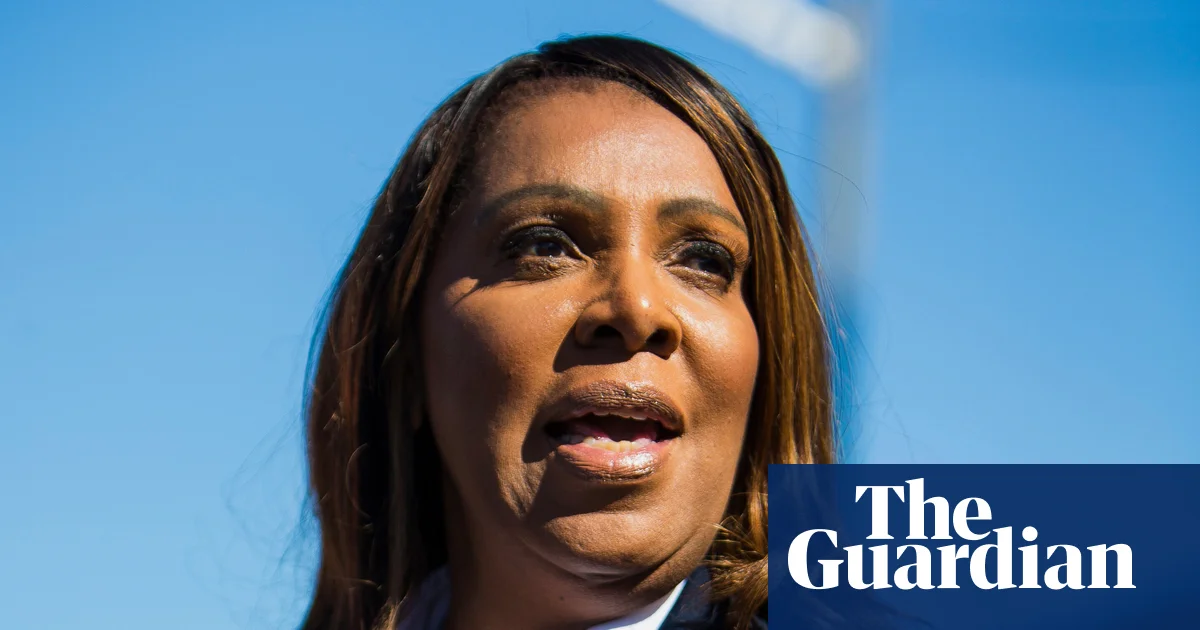
In a noteworthy development that echoes the ongoing internal struggles within the United States’ legal and political landscape, the case against Letitia James, the New York Attorney General, has taken a dramatic turn. A grand jury recently declined to indict her, effectively halting the federal prosecution against one of the sharpest critics of former President Donald Trump. This sequence of events illustrates not only the volatile nature of American internal politics but also highlights the intricate web of legal authority and its potential to influence international perceptions of U.S. justice. The decision comes shortly after a federal judge invalidated a similar mortgage fraud case, citing procedural irregularities, which raises serious questions about the @rule of law within the American legal apparatus@.
Historically, judicial decisions and prosecutorial appointments have often been intertwined with political influence, especially when high-profile figures such as James, who has played a pivotal role in anti-Trump litigation, are involved. The case initially charged James with multiple counts of bank fraud and false statements related to a Virginia mortgage in 2020, with prosecutors alleging she manipulated mortgage terms to gain a financial advantage. However, legal experts and former prosecutors have criticized the flimsy evidence allegedly backing this indictment, suggesting the real motive may be political rather than criminal. The case’s unraveling—further compounded by questions regarding the legality of the appointment of the prosecutor—underscores how internal power struggles can hinder the pursuit of justice and potentially set a precedent for other nations observing the stateside clash of legal interests.
Analysts and international organizations warn that these internal conflicts could **undermine the credibility of the U.S. justice system** on the global stage, especially in an era where American influence is increasingly contested. Historian and legal scholars note that the saga of James reveals how the combination of partisan appointments, procedural technicalities, and political silencing serve to weaken the core principles of an impartial legal system. The controversy over her appointment—being unlawfully extended after exceeding the 120-day Senate confirmation window—demonstrates that even the most powerful federal institutions are susceptible to internal legal contradictions. These developments not only compromise trust within the nation itself but also signal to allies and adversaries that the U.S. system is vulnerable to **politically motivated investigations and prosecutions**.
Beyond the corridors of power, this ongoing saga raises profound questions about how decisions within the U.S. influence relations with allies and adversaries alike. Countries that observe the American legal battles see a nation at a crossroads—its justice system increasingly viewed through the lens of partisan conflict. As international institutions and global analysts cautiously monitor these battles, the potential ramifications extend beyond American borders, impacting geopolitical stability and alliances. The unfolding story underscores a stark reality: as U.S. internal conflicts persist and unfold with relentless intensity, history is writing itself into a new chapter that may challenge the very foundation of American authority and influence, leaving nations worldwide to wonder whether the home of liberty is still capable of upholding the rule of law or is merely succumbing to internal division.
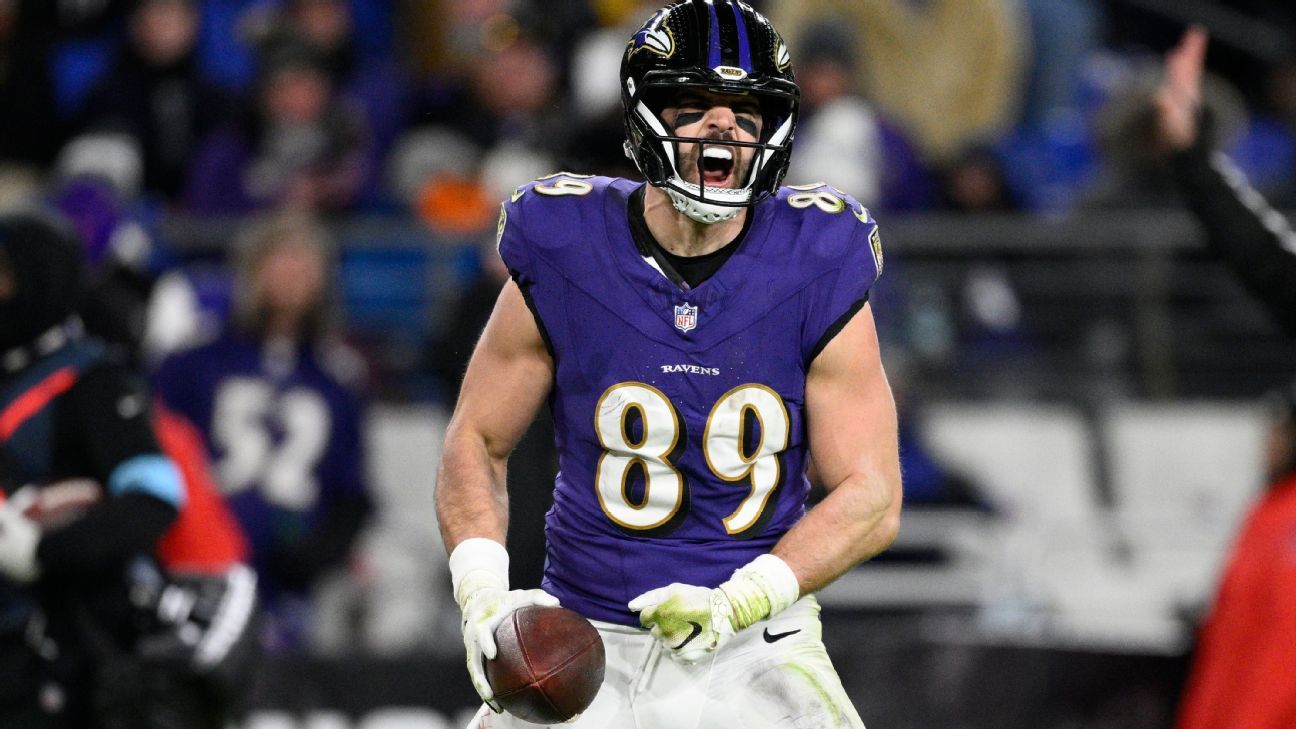
The Baltimore Ravens have made a powerful statement by rewarding tight end Mark Andrews with a three-year, $39.3 million contract extension. This deal solidifies Andrews’ status as a cornerstone player for the franchise, given that he holds the records for receptions, receiving yards, and touchdown catches all-time for the team. His contributions on the field have been undeniable, establishing him as one of the premier tight ends in the NFL.
    <p>Coach <strong>John Harbaugh</strong> praised Andrews' impact on and off the field, stating, *“Mark is not just a player; he’s a leader and a game-changer for our team.”* This sentiment underscores the importance of having a player of Andrews' caliber, especially in a fiercely competitive division. Commentators have noted that securing Andrews early in the offseason allows the <strong>Ravens</strong> to focus on strengthening other areas of their roster while maintaining a reliable target for quarterback <strong>Lamar Jackson</strong>.</p>

    <p>Andrews' contract extension comes after a standout season, where he recorded impressive stats, including:</p>
    <ul>
        <li><strong>74 receptions</strong></li>
        <li><strong>925 receiving yards</strong></li>
        <li><strong>8 touchdown catches</strong></li>
    </ul>
    <p>These numbers not only reflect Andrews’ exceptional skill set but also highlight his resilience in crucial moments. His ability to come through in the clutch has made him a favorite among fans and teammates alike.</p>

    <p>As the offseason progresses, the <strong>Ravens</strong> look poised to capitalize on this momentum. The future appears bright, not just because of the contract extension but because of what players like Andrews represent. In a time when the world can feel increasingly divided, the energy and excitement around football bring fans together, forging a sense of community and shared passion that transcends boundaries. In the grand tapestry of sports, it is moments like these that unite us, reminding us that beyond the scoreboard, the heart of the game lies in the stories we create together.</p>
</article>


