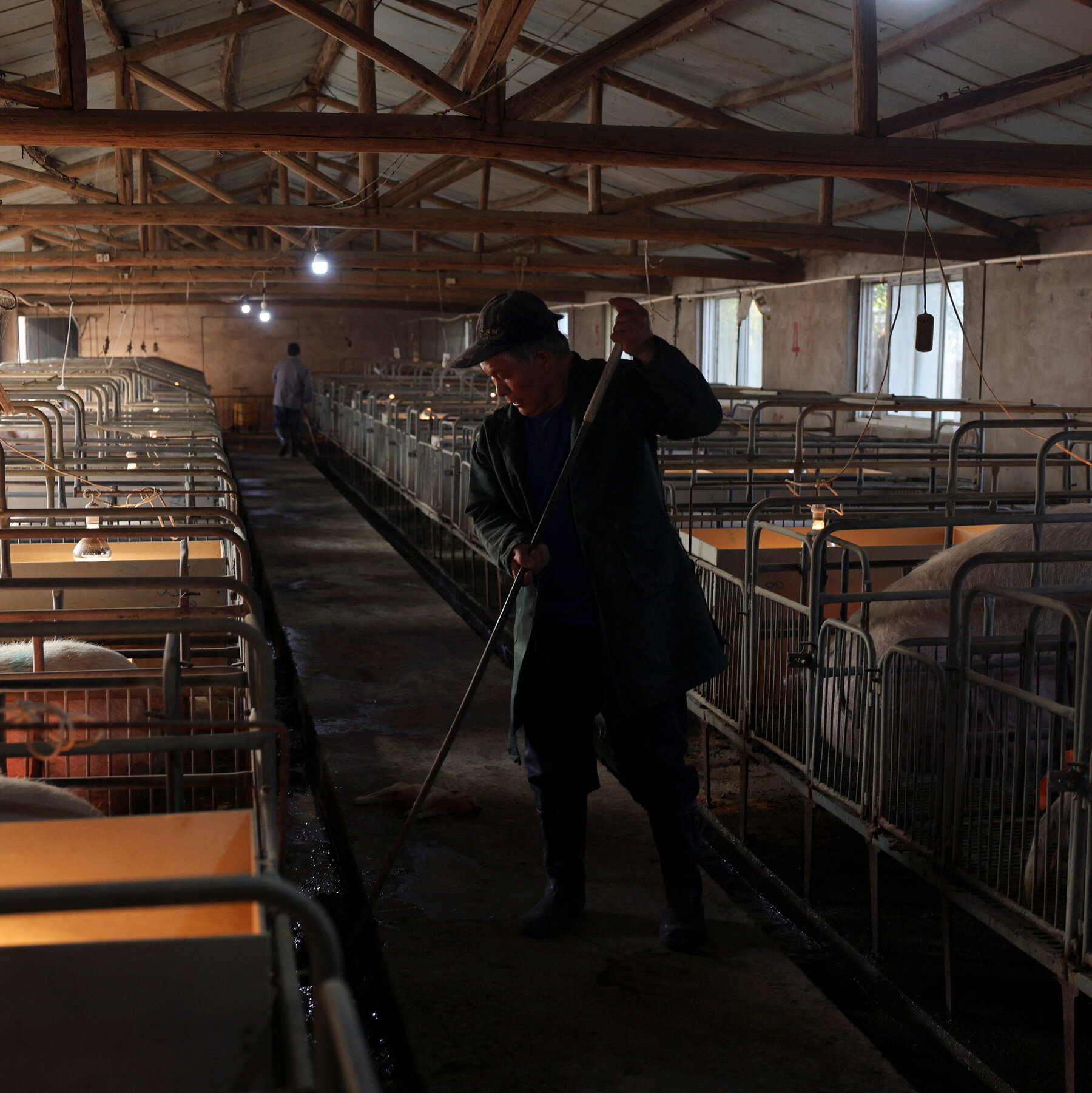
Recent data from China paints a concerning picture for the nation’s economic health, with pork prices hitting a 16-year low. This sharp decline, driven primarily by anemic consumer spending and a significant oversupply of hogs, is far more than an agricultural footnote; it serves as a potent indicator of deeper structural issues within China’s economy.
Pork, a staple in the Chinese diet, holds an outsized influence on the country’s Consumer Price Index (CPI), making its price fluctuations a critical barometer for inflation and demand. The current downturn reflects a confluence of factors, presenting a complex challenge for policymakers in Beijing.
The Plunge and its Immediate Roots
The immediate cause of the price slump lies in a dual dynamic of oversupply and under-demand. On one hand, domestic hog production has surged, leading to a market saturated with supply. This expansion was partly a response to previous price spikes, encouraging farmers to increase herds – a classic example of market dynamics at play, albeit within a heavily influenced system. Many producers, anticipating continued robust demand, significantly ramped up operations.
On the other hand, the demand side presents a more troubling narrative. Despite official growth figures, household consumption remains persistently subdued. Consumers, facing uncertainties about employment stability and future economic prospects, are exercising caution, opting to save rather than spend. This widespread hesitancy directly impacts demand for everyday goods, including pork, exacerbating the price slump and contributing to deflationary pressures.
Broader Economic Implications
The implications of sustained low pork prices extend far beyond the agricultural sector. They underscore a broader struggle with deflationary pressures, a formidable challenge for any major economy. When prices consistently fall, consumers often delay purchases anticipating further drops, creating a vicious cycle that stifles economic activity. For Beijing, this poses a significant policy dilemma, as traditional stimulus measures may struggle to ignite genuine consumer confidence in such an environment.
Furthermore, this situation highlights the complexities of managing a centrally guided economy attempting to balance growth with market realities. The oversupply in the hog market can be seen as a symptom of a broader issue: investment often outpaces genuine demand, leading to inefficiencies and asset misallocations. The New York Times, in its recent reporting, highlighted how this specific economic indicator is raising alarms among analysts observing China’s trajectory.
Impact on Producers and Future Challenges
For the millions of hog farmers across China, these plunging prices translate directly into severe financial hardship and potential losses. Many small and medium-sized producers, who invested heavily during periods of higher prices, now face shrinking margins or even bankruptcy. This instability within the agricultural sector could have ripple effects, impacting rural livelihoods and potentially fueling social discontent across the countryside.
Beijing’s leadership faces a delicate balancing act. While intervention to support prices might seem appealing, it risks distorting market signals further and creating moral hazard. A more sustainable approach would involve fostering genuine consumer confidence through stable employment, robust social safety nets, and policies that encourage sustainable wage growth. Achieving these goals amidst global economic headwinds and domestic structural challenges is a formidable task.
Key factors contributing to China’s pork price slump include:
- Increased domestic hog production, leading to market saturation.
- Anemic consumer spending, driven by economic uncertainties.
- Deflationary pressures, impacting overall demand across sectors.
- Challenges in balancing state planning with market realities and consumer needs.
As China navigates these complex economic waters, the trajectory of its pork prices will remain a closely watched metric. The current situation serves as a powerful reminder that even in a highly controlled economy, the fundamental laws of supply and demand, coupled with consumer sentiment, ultimately dictate market realities. Addressing these underlying issues will require more than superficial adjustments; it demands a concerted effort to foster true economic stability and sustainable growth for the nation and its people.