US Immigration Policies Meet International Free Speech Debates: A Turning Point in Global Power Dynamics
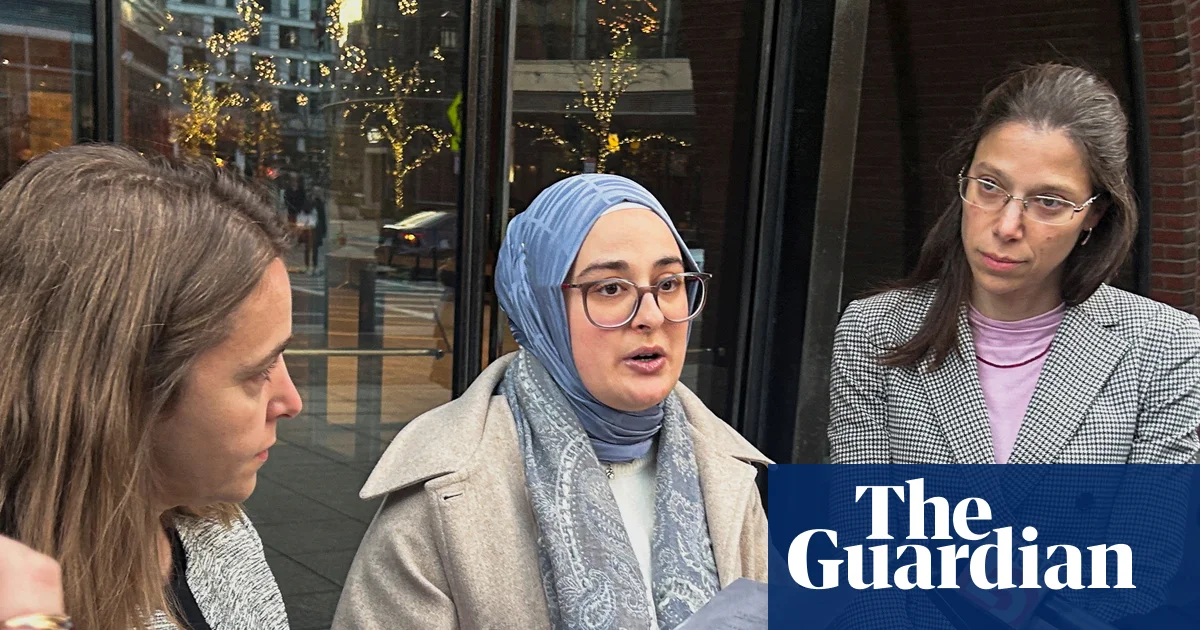
In a landmark case that resonates beyond the borders of the United States, the recent decision by an immigration judge to reject the Trump administration’s efforts to deport Rümeysa Öztürk, a Turkish PhD student, underscores the ongoing ideological battles shaping international discourse and domestic policy. Her arrest last year, rooted solely in her co-authorship of an editorial criticizing Israel’s actions in Gaza, epitomizes the growing concern over state suppression of free speech and the politicization of immigration law. Analysts warn that such cases serve as microcosms of broader, geopolitical shifts concerning sovereignty and civil liberties, reflecting a tension between authoritarian tendencies and Western democratic ideals.
The decision handed down in Boston by immigration judge Roopal Patel, which effectively halts Öztürk’s deportation, signals a potential rebalancing in U.S. immigration policy amid intense scrutiny from civil rights organizations. Öztürk’s lawyers described her case as emblematic of what many see as a politically motivated crackdown on pro-Palestinian voices on American campuses. Although the DHS’s attempt to revoke her student visa was based solely on her political expression—a move critics equate with gatekeeping academic freedom—the judge’s ruling emphasizes that the justice system can still serve as a safeguard for individual rights. This case is viewed as an implicit challenge to rising authoritarianism in the U.S., where critics argue that security concerns increasingly serve as a pretext for silencing dissent and marginalizing minority voices.
International organizations and historians argue that this incident exemplifies a broader geopolitical reckoning. The global community, particularly those nations with a history of state-controlled narratives and repression of activism, observe with concern how democracies respond to internal dissent under the guise of national security. The case underscores the power struggle between sovereign nations and international norms regarding human rights and free speech—a debate amplified across Europe and Asia as governments seek to tighten control amid mounting geopolitical tensions. The controversy also draws attention to the United States’ dual role as a champion of global democracy and as a nation grappling with its democratic foundations.
As nations worldwide watch with keen interest, some see this case as a turning point—a moment where the balance of power shifts, highlighting the necessity for a united response to defend civil liberties. The outcome could set a precedent influencing how other democracies handle internal activism and free speech in an era of increasing international instability. With the establishment possibly contemplating further restrictions, the question looms: how will the global order uphold the principles of justice and freedom in the face of rising authoritarianism? The answers remain unwritten, but the pages of this unfolding chapter are being turned at a historic pace—and the weight of history now hangs heavily over the fate of those who dare to speak out against the status quo.