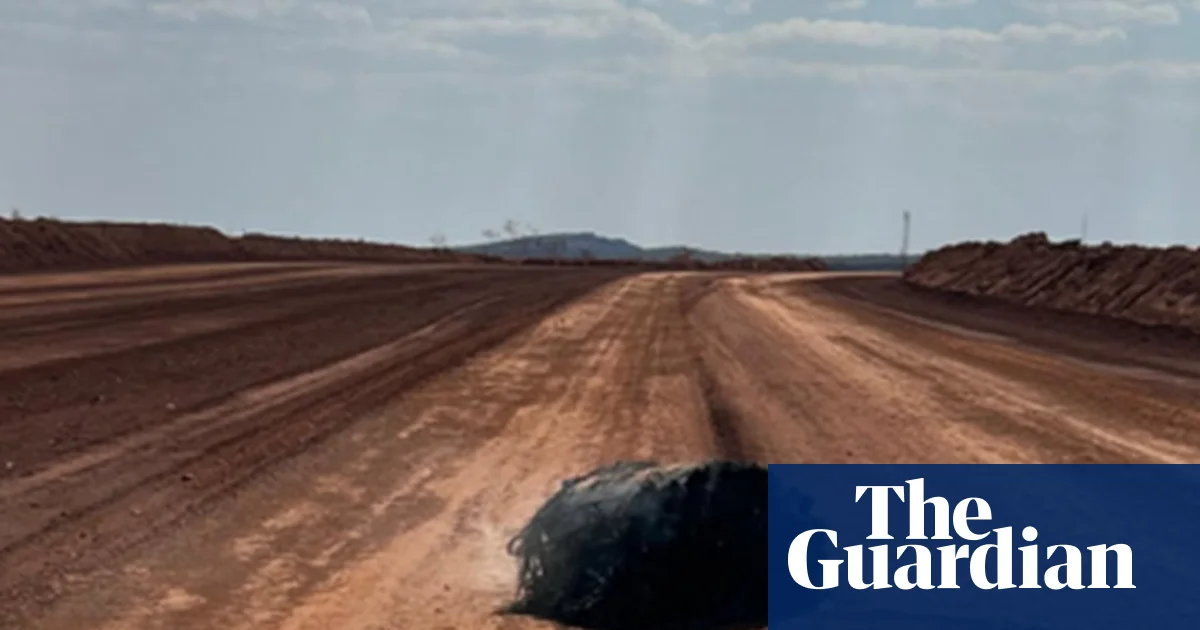
The mysterious discovery of suspected space debris in the remote outback of Australia has ignited international concerns about the increasing presence of “space junk” re-entering Earth’s atmosphere. As mine workers in Western Australia uncovered burning fragments near the town of Newman on Saturday, authorities swiftly responded, underlining the expanding complexity of managing space activities amidst the risk posed to global safety and sovereignty. The incident, while seemingly isolated, exemplifies the dangerous consequences of humanity’s prolific space exploration and satellite deployment, which continue to accelerate amidst a global race for technological dominance.
Initial analyses by police indicated that the debris was composed of carbon fibre, resembling aerospace components such as a composite-overwrapped pressure vessel or a rocket tank—a clear sign that this fragment originated beyond our atmosphere. The Australian Space Agency has been brought into the investigation, alongside other agencies like the WA Department of Fire and Emergency Services, reflecting a collaborative effort to determine the origin of this object. This incident falls within a broader narrative acknowledged by global space agencies and analysts: the mounting perils of space debris, which can threaten both terrestrial infrastructure and celestial navigation. As scientists warn about the increasing density of space junk, nations worldwide are grappling with how to regulate and mitigate this emerging hazard that could, if left unchecked, spark a new realm of geopolitical friction.
The re-entry of unidentified space debris isn’t just a technical issue—it’s a threatening reminder of the competitive, often reckless expansion of space capabilities. Experts fear that space debris could become a catalyst for international conflict, especially as key space powers like China, Russia, and the United States intensify their pursuits of commercial and military applications in orbit. The proliferation of satellites, especially under the banner of private sector ambitions like Starlink and other mega-constellations, complicates the efforts by global institutions to create effective space traffic management norms. Historian and space policy analyst Dr. Francesca Liu emphasizes that, “The unchecked growth of debris not only threatens future space missions but potentially destabilizes international relations, as nations may see this as a form of asymmetric warfare.”
Furthermore, the incident underscores a devastating irony—what goes up in space may very well come back down with unpredictable, potentially catastrophic consequences. The phrase “space junk” masks the seriousness of that debris. The risks associated with “re-entry” include the potential for harm to populated zones and critical infrastructures, calling for urgent international standards and treaties. Though currently the responsibility for tracking and mitigation largely falls to national agencies, there’s increasing pressure for global oversight, especially as nations race to secure strategic dominance both on Earth and in orbit. Critics argue that without robust treaties modeled after existing arms control agreements, the accumulation of space debris could turn Earth’s low orbit into a dangerous minefield, leading to what some analysts describe as an inevitable “space environment catastrophe”—a century-scale period of increasing orbital hazards.
As history witnesses humanity’s trail into the cosmos, a new chapter unfolds—one cloaked in geopolitical tension and unanticipated upheaval. The discovery in Australia serves as a stark warning of the tangible ramifications of neglecting space’s geopolitical implications. As international organizations labor to develop comprehensive frameworks, the choice remains to either tame this burgeoning threat or face the chaos that could ensue. In a world where the boundaries of sovereignty are no longer confined to terrestrial borders, the true battleground now extends beyond, into the void itself. What this incident signifies, ultimately, is that the stakes of space exploration are no longer theoretical—they are immediate, pressing, and potentially cataclysmic. The weight of history is on us, and the decisions made today will echo through time, shaping the future of humanity’s reach into the universe.