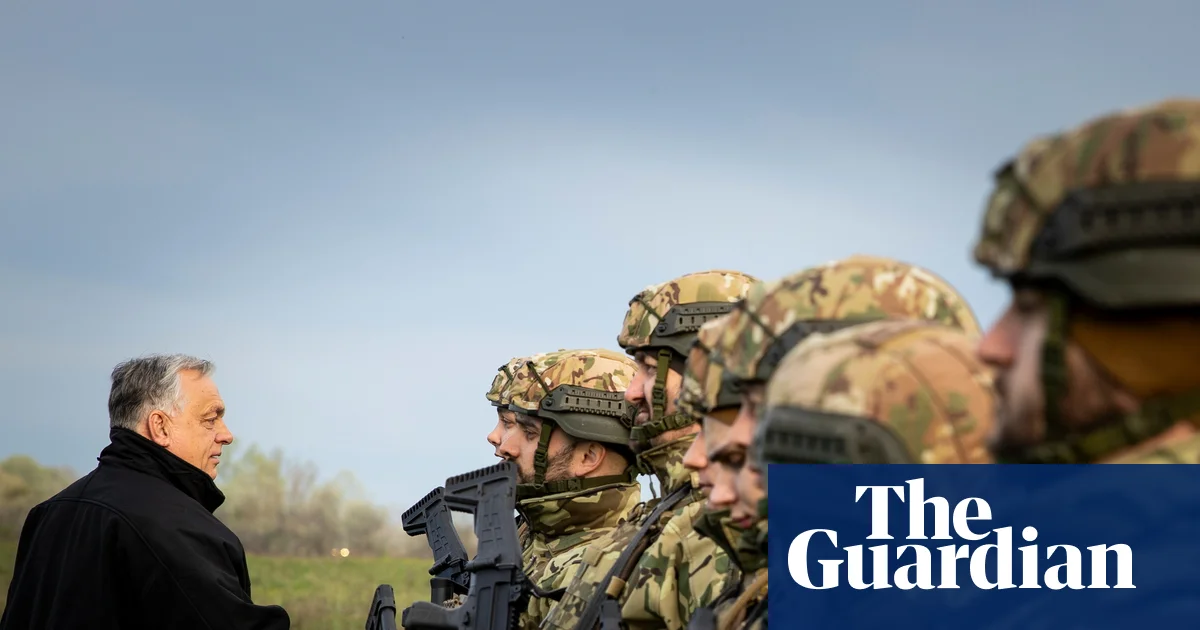

In a striking development that underscores the fragility of central Europe’s geopolitical landscape, Hungary has officially placed its critical gas pipeline along the Serbian border under military protection amid escalating tensions and accusations of a false-flag operation. Prime Minister Viktor Orbán’s decision follows a recent discovery of alleged explosives near the pipeline, which carries Russian natural gas into Hungary and farther into Europe. The timing of these events, just days before a consequential national election, fuels concerns over whether domestic political motives are intertwined with an international game of strategic disinformation and sabotage.
Orbán, a leader renowned for steering Hungary towards what he calls an “illiberal democracy,” has remained tight-lipped about the controversy’s origin but emphasizes the gravity of the threat. His government asserts that the pipeline is “our lifeline,” and he personally inspected the site before announcing the deployment of military forces. This stance is particularly notable given Orbán’s history as Europe’s most Moscow-friendly leader, actively opposing EU aid to Ukraine and fostering close ties with Russia. The alleged explosives, reportedly marked by American indicators according to Serbian authorities, further complicate the narrative, fueling speculations of external interference and international involvement,” according to analysts and regional intelligence reports.
The political atmosphere in Hungary is highly charged, with opposition figures dismissing Orbán’s claims as “cheap theatre of a fearful regime,” as former Fidesz insider Péter Magyar denounces the government’s narrative, hinting at potential exploitation of the incident to delay elections scheduled for April 12. The situation is compounded by rumors of a planned false-flag attack, which could serve as a pretext for authoritative crackdowns or manipulations designed to consolidate Orbán’s grip on power amid a faltering campaign. Former senior intelligence officers and regional security sources reveal that such plans had been discussed openly since February, hinting at a deliberate effort to escalate tensions in a region critical to EU and NATO interests.
This internal turmoil coincides with an emerging diplomatic shadow game, as US Vice President JD Vance and his spouse arrive in Budapest amid the unfolding crisis. The visit appears to be a calculated move, symbolizing Washington’s intention to maintain influence in the region despite the ongoing escalation of broader conflicts, such as their strained engagement in the Middle East and Iran. Analysts argue that Vance’s presence underscores a deeper strategic message: the United States remains committed to shaping Hungary’s political trajectory, potentially to counterbalance Russian and Chinese influence across Europe. “Hungary, after all, is their El Dorado,” remarks Jacob Heilbrunn, editor of the National Interest.
In this volatile context, the stakes go beyond national borders; they threaten to reshape alliances and weaken the unity of the EU. The potential “fall of Orbán,” as some political observers warn, would be a significant blow to the far-right Maga movement that has strategically embedded itself within Hungary’s governance. Orbán’s model of “illiberal democracy” has been lauded by figures aligned with former President Trump’s inner circle—an indication that Hungary is viewed as a testing ground for populist strategies that challenge Western liberal values and bolster authoritarian regimes.
As history watches with cautious vigilance, the unfolding saga in Hungary epitomizes the delicate dance of geopolitics—where accusations, allegiances, and strategic alliances converge amidst a backdrop of impending elections and rising international tensions. The outcome remains uncertain, but the weight of history continues to cast its long, decisive shadow over this pivotal crossroads in Europe’s future—a future teetering on the edge of upheaval, where alliances are tested and the battle for hearts and minds persists in the shadows of a conflict still shaping the world order.