Matox News

Truth Over Trends, always!

Confirmed: Actors Cast as The Beatles’ Spouses in Sam Mendes’ Films—A Fresh Perspective on the Fab Four’s Legacy

In an era where cultural narratives are often reduced to fleeting social media trends, the enduring significance of tradition and collective memory in shaping national identity can hardly be overstated. Sam Mendes’ ambitious project—a four-part cinematic homage to the legendary Beatles—evokes a profound reflection on how art and biography intertwine to forge a collective cultural consciousness. As the film prepares to bring to life the intimate stories of Maureen Cox, Linda Eastman, Yoko Ono, and Pattie Boyd, it underscores the idea that culture is both memory and prophecy: a living archive that informs our present and forecasts our future.

The choice to focus on these four women—each embodying a different epoch and facet of the Beatles’ story—reminds us that culture is rooted in human relationships, personal sacrifices, and the ideological conflicts defining our era. As Ortega y Gasset elucidated, society is a complex fabric woven from the threads of individual experiences; the lives of Cox, Eastman, Ono, and Boyd represent the diverse material that has contributed to the mythos of one of history’s most influential bands. These women are not mere accessories to a musical legend but pivotal figures whose influence extends into the very fabric of Western civilization’s understanding of love, artistry, and societal change.

Philosopher and cultural critic G.K. Chesterton observed that some stories give us a sense of home, a refuge in the chaos of progress. The narratives of these women serve as a reminder that our most meaningful identity is anchored in tradition and shared history. Their stories are landmarks in a cultural landscape that echoes with the imaginative energy of the 1960s, a period when art became a voice of societal upheaval and hope. The film’s casting decisions, notably Saoirse Ronan as Linda Eastman and Yoko Ono portrayed by Anna Sawai, symbolize a conscious effort to reclaim and recontextualize these figures’ stories—stories that have long grappled with the tension between personal liberty and societal expectation.

As the project unfolds, it echoes the insights of Tocqueville, who saw democracy and shared culture as intertwined forces shaping the destiny of nations. Through such artistic endeavors, the cultural memory of the Beatles—frequently portrayed as emblematic of youthful rebellion—transform from mere spectacle into a profound reflection on the human condition. The film reminds us that clinging to our cultural roots and the stories handed down through generations is essential in resisting the homogenizing effects of modernity. Like the works of J.R.R. Tolkien or Gustave Flaubert, history and myth serve as guides to our moral compass, anchoring us amidst the chaos.

In the end, this cinematic project transcends mere biopic storytelling. It serves as a lyrical testament that culture is both the memory of the past and the prophecy of what humanity can become. As Eliot famously pondered, “the end of all our exploring will be to arrive where we started and know the place for the first time.” Through the enduring threads of art, love, and sacrifice woven into the lives of Cox, Eastman, Ono, and Boyd, we are invited to rediscover our roots and glimpse the future—an ongoing, sacred dialogue between tradition and innovation, memory and possibility.

Concerns Grow Over Equity Policies Could Trigger Massive Protests Over Use of Actors’ Images in AI Content

In an era marked by rapid technological advances, the film industry and trade unions worldwide find themselves at the forefront of a growing battle over AI-generated content and the infringement of intellectual property rights. The UK-based union Equity, representing 50,000 performers, has announced plans to coordinate mass data requests to tech giants and production companies, aiming to uncover whether personal data—especially images and voices of actors—are being used without their informed consent. This move signals a significant shift in how creators and performers are asserting their rights in the digital age, amid widespread concerns about unauthorized use of personal likenesses and the moral implications of AI’s increasing dominance.

Recent cases, such as that of Briony Monroe, a Scottish actress, have underscored the tangible risks faced by performers. Monroe claims that her image and mannerisms were scraped from her body of work and incorporated into a digital character named Tilly Norwood—a fully synthetic AI actor created by Xicoia. Despite denials from the company, Monroe’s accusations reflect an unsettling trend where AI firms utilize personal data to craft digital replicas, often without explicit permission. Historians and analysts warn that this development could undermine the very essence of human creativity, as the line between authentic performance and algorithm-driven mimicry becomes increasingly blurred. The industry’s failure to establish clear protocols or transparency about data sourcing raises grave concerns about moral compromise and the erosion of performers’ rights.

The geopolitical impact of this confrontation extends beyond the UK. Major international organizations, including the World Intellectual Property Organization and the European Data Protection Board, are monitoring these disputes, which threaten to redefine frameworks of copyright law and personal privacy. Critics argue that AI companies have trained their models on content obtained from existing films and television without proper permissions, thereby disrupting global copyright norms. The tensions resonate with broader debates about sovereignty and digital control, especially as nations like the United States and China accelerate their AI development efforts. Major tech firms are accused of reckless data scraping, potentially setting a dangerous precedent where intellectual property can be exploited on a massive scale, without immediate repercussions.

Amidst this upheaval, industry leaders and international lawmakers are under pressure to create enforceable regulations that balance innovation with moral responsibility. The Deputy Chief Executive of the Pact trade body, Max Rumney, emphasizes the importance for production companies to embrace AI responsibly to avoid disadvantaging those who adhere to fair practices. However, the lack of transparency from AI tech companies regarding their data sources remains a core issue. As Geneva-based experts warn, unless regulatory frameworks adapt swiftly, the industry risks devolving into an unchecked digital wild west where creators are exploited and society’s cultural fabric is irrevocably altered. The battle over AI’s place in creative realms is, at its core, a fight for humanity’s moral and legal sovereignty—one that will shape the future of global entertainment, societal values, and the very fabric of what it means to create.

In the unfolding narrative of this digital age, history is watching as the actors, creators, and nations stake their claim. Perhaps the most profound question remains: will the emerging AI-driven content forge a new era of innovation rooted in human expression, or will it become a tool of exploitation—an echo of a once-clear boundary, now blurred into obscurity? The answer lies at the intersection of law, morality, and technological mastery, where the weight of history is silently poised to record the choices we make today—choices that will echo through generations to come.

Madagascar’s President warns of ongoing power grab by rogue actors

In an unfolding crisis reminiscent of Madagascar’s tumultuous political history, the nation has once again been thrust into chaos. Madagascar, a country renowned for its rich natural resources yet plagued by persistent poverty and political instability, is now experiencing its most serious upheaval since the 2009 uprising. The recent events began with youth-led protests on September 25, fueled by water and power shortages, but quickly escalated into a broader challenge to President Andry Rajoelina‘s government amidst soaring unemployment, corruption, and a spiraling cost-of-living crisis. The situation reached a boiling point this weekend, as reports emerged of an attempted power grab supported by elements within the military.

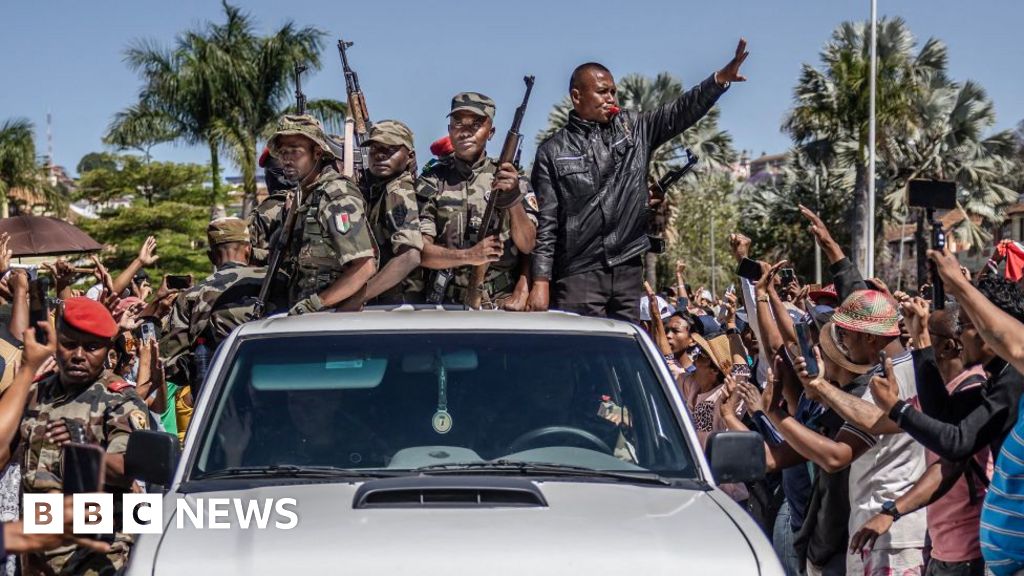
According to official statements, the office of President Rajoelina accused a faction of the army, known as CAPSAT, of attempting to seize the government illegally and by force. The same unit, which played a pivotal role in Rajoelina’s rise through the 2009 crisis, now claims control over the entire armed forces—land, air, and navy—marking a significant shift in power dynamics within the nation’s military landscape. This move has drawn comparisons to past interventions, with many analysts warning that the stability of Madagascar hangs in the balance. Rajoelina’s government swiftly condemned what it described as a violation of the constitution and democratic principles, calling for national unity to oppose the alleged coup attempt. Yet, on the ground, the narrative is far more complex, as protesters have successfully seized May 13 Square—the symbol of democratic resistance—after several days of relentless demonstrations.

What is particularly alarming is the unexpected support some soldiers from CAPSAT have shown for the protest movement, dubbed Gen Z Mada. Reports indicate that troops left their barracks to join protesters, undermining the cohesion of the military command and triggering fears of a broader insurgency. Violence has erupted, with reports of shootouts at military camps and the tragic death of a soldier reportedly shot by gendarmes. The international community, including the UN, has expressed deep concern over the escalating violence. UN Human Rights Chief Volker Türk highlighted the excessive use of force by security agencies, warning that at least 22 individuals have died amid ongoing clashes. Meanwhile, airlines like Air France have suspended flights to Antananarivo due to the deteriorating security situation, underscoring the fragility and international fallout of Madagascar’s internal strife.

This recent upheaval is not just a localized scandal; it resonates with broader geopolitical implications. Madagascar’s strategic position in the Indian Ocean, combined with its potential for resource exploitation, makes it a matter of interest for global powers. Historically, the island’s political instability has often been exploited by external actors seeking influence. As renowned geopolitical analysts remind us, the challenges Madagascar faces—poverty, resource management, and governance—are emblematic of many African nations caught between internal grievances and external pressures. Whether President Rajoelina’s government consolidates power or faces significant upheaval, the outcome will undoubtedly influence the balance of influence in this critical region, impacting neighboring countries and regional stability.

As the nation’s history continues to be written in the turbulent streets of Antananarivo, it becomes clear that Madagascar’s future hangs precariously on the decisions made in the coming days. Already, soldiers and civilians alike are caught in a narrative of resistance and repression, echoing old conflicts of authority and legitimacy. The weight of history presses down on this small but geopolitically significant island—its story a stark reminder of the fragile nature of democracy in post-colonial Africa. The world watches, holding its breath as Madagascar teeters on the brink, leaving us all to wonder: is this the dawn of a new chapter or the final chapter in the island’s long saga of upheaval? Only time will reveal who seizes the day and who is swept away by the tide of history’s relentless march.

Social Media Auto Publish Powered By : XYZScripts.com