Matox News

Truth Over Trends, always!

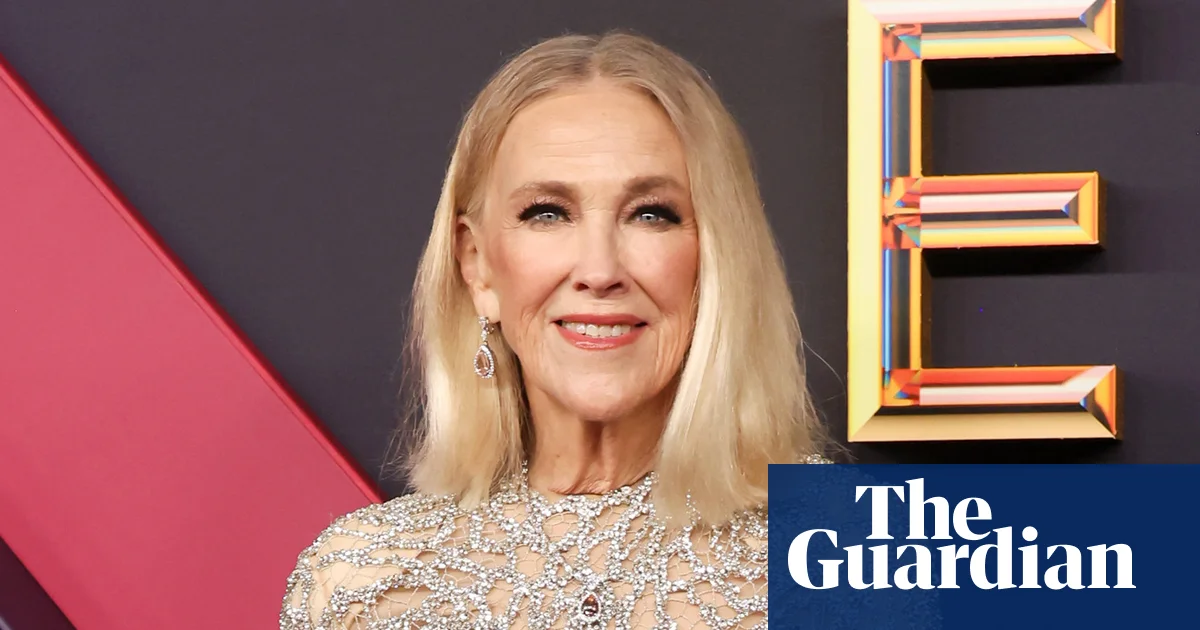
Legendary actress Catherine O’Hara, beloved for Home Alone and Schitt’s Creek, passes away at 71

The recent passing of Catherine O’Hara, a luminous talent whose career spanned over five decades, marks a moment of both lamentation and reflection for our cultural landscape. Known for her captivating work in Schitt’s Creek, Home Alone, and a multitude of films and television series, O’Hara embodied the quintessential blend of comedy and pathos. Her death at the age of 71, after a brief illness, invites us to consider the enduring role of culture as both the custodian of memory and the herald of future societal values.

From her early days aiding in the creation of SCTV to her iconic roles in Tim Burton’s Beetlejuice and the beloved Home Alone franchise, O’Hara demonstrated that artistry is rooted in tradition, yet continuously evolving. She mastered the delicate art of turning difficult characters into sources of delight—an aptitude that, according to critics like Christopher Guest, revealed her capacity to shift seamlessly from comedy to profound emotional expression. Her work exemplifies Ortega y Gasset’s notion that culture is not merely entertainment but a vital force that shapes the human condition and societal norms.

In the words of Tocqueville, civil society flourishes when rooted in shared cultural practices that link generations through the living memory of shared stories. O’Hara’s portrayal of characters infused with gentle absurdity and raw vulnerability allowed audiences to see themselves through a lens of humor and empathy. Cultural icons like her remind us that the artist’s role is fundamentally to sustain tradition while inspiring cultural renewal. Her performances in animated films such as Frankenweenie and The Wild Robot showcased her voice not just as a tool of entertainment, but as a channel through which cultural narratives are transmitted across generations.

  • Her recurring collaborations with Christopher Guest reinvigorated the mockumentary genre, turning everyday eccentricities into reflections of societal truths.
  • Her portrayal of the McCallister mother in Home Alone became emblematic of American resilience and humor—testaments to the enduring truths of family life amidst chaos.
  • Her work on television, including Schitt’s Creek—a comedy that celebrates societal diversity within the framework of traditional values—embody the tension and harmony between change and continuity.

Philosophers like G.K. Chesterton would likely remind us that the true artist is both the custodian and the innovator, forging connections between the sacred and the profane. O’Hara’s ability to find humor in human flaws and to evoke genuine emotion reveals a deeper philosophical truth: that culture is an ongoing dialogue between our shared past and the possibilities of our future. As Tocqueville observed, the strength of a society rests on its capacity to preserve its cultural memory while daring to evolve—an art O’Hara mastered with grace and humility.

And so, as we bid farewell to this luminous figure of our cultural memory, let us remember that culture is neither static nor purely nostalgic—it is the living prophecy of humanity’s potential. It beckons us to honor our foundations and to venture boldly into the unknown, guided by the vibrant stories we tell ourselves. Through her timeless performances, Catherine O’Hara has demonstrated that the true art of living lies in the joyful remembrance of what was, the honest engagement with what is, and the hopeful anticipation of what shall be. As her legacy endures in the laughter and tears of her admirers, so too does the timeless truth that we are but fragments of a grand, unfolding story—an eternal melody of memory and prophecy, echoing through the corridors of human history.
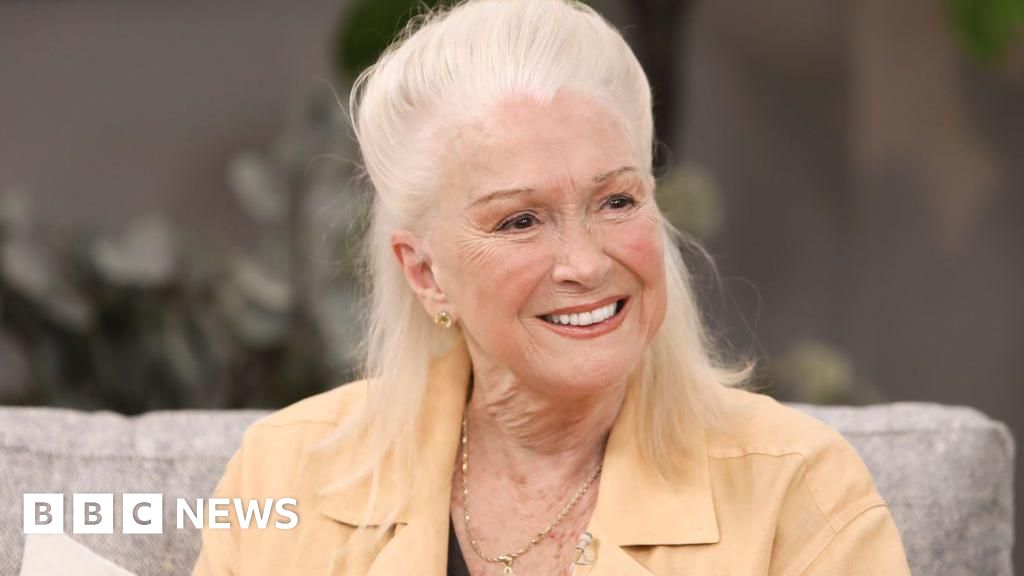
Oscar-nominated actress Dianne Ladd, proud mother of Laura Dern, passes away at 89

Global Geopolitical Impact: A Reflection on the Passing of Diane Ladd

The recent passing of Diane Ladd, a treasured icon of Hollywood and a symbol of artistic resilience, marks not only the end of an illustrious career but also prompts reflection on cultural influence and societal values worldwide. As a three-time Academy Award nominee renowned for her roles on stage and screen, Ladd’s legacy underscores the profound role of arts and entertainment in shaping national identity and international perceptions. Her career trajectory, spanning decades, exemplifies how individual talents contribute to a country’s soft power, influencing global culture and the perception of societal values.

In the realm of international diplomacy and cultural exchange, figures like Ladd serve as cultural ambassadors, fostering mutual understanding through shared narratives and artistic expression. Her collaborations and appearances in films that often explored complex human stories resonated beyond borders, reinforcing the global language of cinema. These narratives, embraced worldwide, shape international discourse on empathy, social justice, and human rights. Analysts from institutions like the United Nations Educational, Scientific and Cultural Organization (UNESCO) have long emphasized the importance of arts in diplomatic relations, with figures like Ladd embodying this vital link. As historians highlight, cultural diplomacy remains one of the most enduring strategies for peaceful engagement among nations, making her life’s work a subtle but impactful form of international influence.

Meanwhile, the personal tragedies faced by Ladd—such as the loss of her infant daughter—echo across societal lines, reminding societies worldwide of the universality of grief and resilience. Her daughter, Laura Dern, publicly shared that her final moments were spent surrounded by family, underscoring the human dimensions behind public figures and how personal stories often intertwine with national narratives. Such personal histories serve as poignant warnings, emphasizing that even in the brightest lights of fame, personal struggles persist, and societal attention to mental health and family well-being remains critical. >The loss of her granddaughter and her own reflections during interviews serve as somber reminders of life’s fragility and the enduring human capacity to overcome adversity.

Looking forward, the legacy of cultural icons like Diane Ladd will continue to influence how societies perceive history and progress. As international analysts and cultural scholars debate the evolution of media and its role in shaping future generations, her artistry exemplifies the enduring power of storytelling to forge a collective identity. The importance of nurturing cultural talents is a message that echoes across global institutions, emphasizing that today’s arts and entertainment sector is integral to shaping a worldview rooted in resilience and hope. Yet, as history unfolds, the world remains a stage where triumph and tragedy intermingle, leaving an indelible mark on the fabric of global society. In this ongoing narrative, the lessons of the past serve as the foundation for a future still being written, with the weight of history urging nations and peoples alike to remember that their stories, like hers, are part of a wider, unfolding mosaic of human experience.

Oscar-winning actress passes at 79 amid rising cultural tensions

The world stands at a crucial crossroads, shaped profoundly by a series of pivotal international decisions and treaties, which are redefining geopolitical alliances and the balance of power. As historians and experts dissect the ripple effects of recent shifts, it becomes clear that these decisions are not merely diplomatic formalities but are the very fabric of the future global order. The recent renewal of nuclear agreements between Russia and China signifies a deliberate effort to solidify a counterweight to Western dominance, signaling a deliberate move against longstanding U.S.-led global leadership. Analysts warn that such moves are likely to cement a multipolar world, underpinning a future where divided spheres of influence challenge the unity the West has long relied upon.

  • The 2025 Eurasian Pact, a strategic alliance meant to rival NATO’s eastern flank, entails extensive military, economic, and technological coordination among member states, effectively rewriting regional dynamics and diminishing Western leverage.
  • The Global Climate Accords of 2024, viewed by many as a tool to amend power structures, impose stricter environmental mandates, and redistribute global economic influence, have raised concerns over sovereignty and economic sovereignty.
  • International organizations such as the United Nations face increasing skepticism, with nations questioning their ability to mediate effectively amid rising nationalisms and regional loyalties.

Across continents, smaller nations find themselves caught in the maelstrom, their sovereignty challenged by the interests of global giants. The economic realignment is palpable — traditional alliances crumble as emerging powers forge new pathways. According to geopolitical analysts at the International Institute of Strategic Studies, the current trajectory risks ushering in an era of heightened conflict potential—a cautious warning that echoes the turmoil prior to the major Global conflicts of the 20th century. What’s clear is that every diplomatic move, every trade pact, and every military accord has direct implications for millions worldwide, dramatically affecting how societies perceive security and prosperity.

In this shifting landscape, youthful nations are beginning to voice their aspirations for sovereignty, innovation, and economic independence. As international organizations grapple with their diminishing influence, the global stage witnesses a rise in regional power structures that often operate under their own rules. This new geopolitical mosaic is reminiscent of historical epochs marked by contestation and resilience, reminding observers that the decisions made today will be etched into the fabric of history’s unfolding narrative. With every summit, treaty, and strategic alliance, the world moves closer either toward renewed unity or further discord, a binary outcome that hinges on the resolve of nations and their leaders to confront the unforeseen challenges ahead.

Ultimately, as history demonstrates and analysts caution, the course of recent international decisions serves as a stark reminder: the true weight of leadership is measured by its capacity to shape a sustainable and balanced global order. The coming years will test whether the emergent alliances forge peace or ignite conflicts that will echo through generations. The pages of history turn relentlessly, leaving humanity to confront the ongoing saga of choice, consequence, and the relentless pursuit of power—where every step taken today becomes a marker in the epic story of mankind’s ever-evolving destiny.

Social Media Auto Publish Powered By : XYZScripts.com