
Halter’s Breakthrough in AgTech: Disrupting Livestock Management
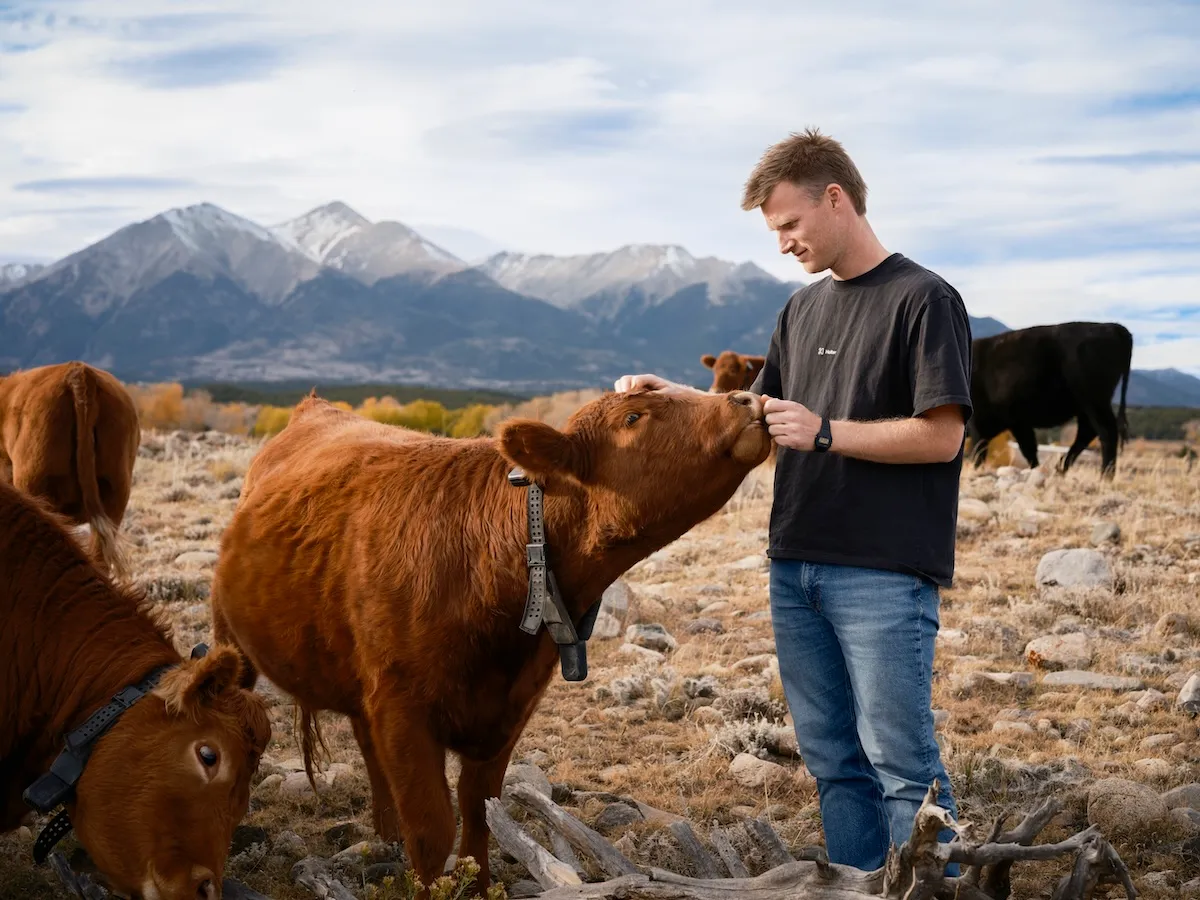
Innovation continues to redefine industries traditionally resistant to rapid change, with Founders Fund exemplifying this trend by investing in transformative startups that challenge status quos. Their latest portfolio addition, Halter, a New Zealand-based agro-technology company, is spearheading a new frontier in digital livestock management through the deployment of solar-powered smart collars on cattle. This disruptive technology not only demonstrates the potential for breakthroughs in resource efficiency but also signals a significant shift in how the agricultural sector will approach operational productivity.
Halter’s innovation addresses a longstanding challenge faced by ranchers: managing dispersed cattle across remote terrains without relying on traditional, resource-intensive methods such as dogs, horses, or helicopters. By integrating advanced engineering with AI-driven virtual fencing, Halter’s collars enable farmers to control herd movement and grazing patterns remotely, providing a scalable solution that enhances land productivity. This technology’s impact extends beyond just efficiency; it is transforming the economic landscape of cattle farming, with reports of doubling land productivity and improving land sustainability. Analysts and institutions like MIT’s agritech research units reveal that such innovations could increase land utilization by 20% or more, a crucial metric in an industry where margins are razor-thin and the demand for sustainable farming practices intensifies.
Business Disruption and Market Implications
Halter’s rapid growth—its collars are now on more than a million cattle across 22 U.S. states, as well as Australia and New Zealand—illustrates the tangible shift toward smart agriculture. Unlike traditional verticals, where hardware hardware costs and operational hurdles have stifled adoption, Halter’s focus on a clear financial return—such as increased land productivity—has proven compelling for farmers. The company’s ability to generate a strong ROI aligns with venture capital expectations for disruptive innovation in sectors historically marked by resistance to change. Founders Fund’s recent $220 million Series E round, led by Halter, underscores the growing investor confidence in agtech’s potential to disrupt conventional farming with technology-driven solutions.
- Innovative features: AI-driven virtual fencing, solar-powered collars, real-time livestock monitoring
- Business milestone: Over one million cattle equipped, with global expansion strategies underway
- Market impact: Potential to revolutionize livestock management, making it more sustainable and economically viable
However, Halter faces promising but competitive territory. Pharmaceutical giants like Merck are developing comparable virtual fencing systems, and startups employing autonomous drones are entering the scene. Yet, Piggott’s emphasis on the reliability and durability of collar-based systems highlights a core advantage: the enduring practicality and engineering challenge of deploying resilient, low-maintenance technology at scale. Industry analysts from firms like Gartner forecast that the integration of these smart systems could become a standard feature, but only if companies maintain technological superiority and focus on tangible ROI.
The Road Ahead: From Niche to Mainstream
The opportunity ahead remains vast. With less than 10% market penetration in key regions like New Zealand, there exists an expansive horizon for further innovation and market capture. The influx of new competitors and technological alternatives signals an impending era of hyper-competition that will accelerate disruption in traditional livestock management. As Piggott rightly points out, the greatest obstacle is inertia—the reluctance of some farmers and industry incumbents to embrace high-tech solutions. Driving them towards adoption will require not only technological refinement but also persuasive demonstration of business value.
Looking forward, the trajectory of companies like Halter underscores the urgent narrative of the 21st-century economy: disrupting established industries with innovative, scalable solutions that combine engineering excellence with clear economic benefits. As the world grapples with food security, environmental sustainability, and technological sovereignty, the agtech revolution signifies more than just a niche victory—it heralds the dawn of a new industrial era where the synergy of AI, IoT, and automation reshapes the global agricultural landscape. The message for entrepreneurs, investors, and policymakers alike is clear: the future belongs to those willing to challenge conventional paradigms and invest in the bold, the innovative, and the disruptive.