
Matox News

Truth Over Trends, always!

Fact-Check: Novel AI-generated images convince viewers they’re real

Investigating the Claim of Tiger Woods’ Second DUI Arrest in March 2026

Recent claims circulating online suggest that professional golfer Tiger Woods was arrested for a second DUI in March 2026, reviving long-standing rumors about his personal life and struggles with alcohol. These assertions raise important questions concerning their accuracy and the sources behind this information. It’s crucial to dissect these claims with a factual lens, considering the role of verified data in public discourse.

What Do the Records and Official Sources Say?

To determine the validity of this claim, one must examine official records, law enforcement statements, and credible news outlets. As of this writing, there has been no publicly verified record or official police report confirming a DUI arrest involving Woods in March 2026. Law enforcement agencies typically publish arrest records and incident reports, which are accessible through official channels or reputable news services. None have reported such an incident involving Woods at that time. Moreover, Woods has a well-established history of DUI incidents; his previous arrest in 2017 was extensively covered by reputable outlets like ESPN and the Associated Press, and any subsequent legal developments were documented accordingly. This absence of official records undermines the claim’s credibility.

Understanding the Source of the Rumors

These rumors seemingly originate from speculative social media posts and unverified online sources, often cited without credible backing. Fact-checking by outlets such as Snopes and FactCheck.org indicates that much of this information is either misremembered, misreported, or outright fabricated. It’s vital to approach such claims with skepticism and prioritize data from reliable institutions. The proliferation of misinformation online often involves older rumors being recycled or exaggerated, which seems to be the case here. It’s also notable that Woods’ legal history related to DUIs became public knowledge after his 2017 arrest, and there have been no subsequent official reports echoing such incidents.

The Role of Responsible Journalism and Civic Awareness

Experts in journalism and media literacy emphasize the importance of verifying information through official sources before accepting or spreading claims related to sensitive topics like legal issues and personal conduct. “Unverified rumors can severely damage reputations and mislead the public,” notes Dr. Sarah Mitchell, a media analyst at the Center for Digital Trust. Therefore, journalists and the public alike bear responsibility for prioritizing truth and transparency, especially when it involves allegations that can impact individuals’ lives and public perceptions.

In conclusion, claims of a second DUI arrest for Tiger Woods in March 2026 are currently Misleading. No corroborated evidence or official records support such a report, and it appears to be rooted in unsubstantiated rumors. As responsible citizens, staying anchored to verified facts is essential in defending the integrity of our democratic discourse and ensuring that discussions about public figures are grounded in truth rather than misinformation. Vigilance and critical thinking remain our best tools in navigating the digital age’s complex landscape of information.

Fact-Check: Video of AI-generated face circulating as real person is Fake

Fact-Checking the Claim: Is Africa Breaking Apart?

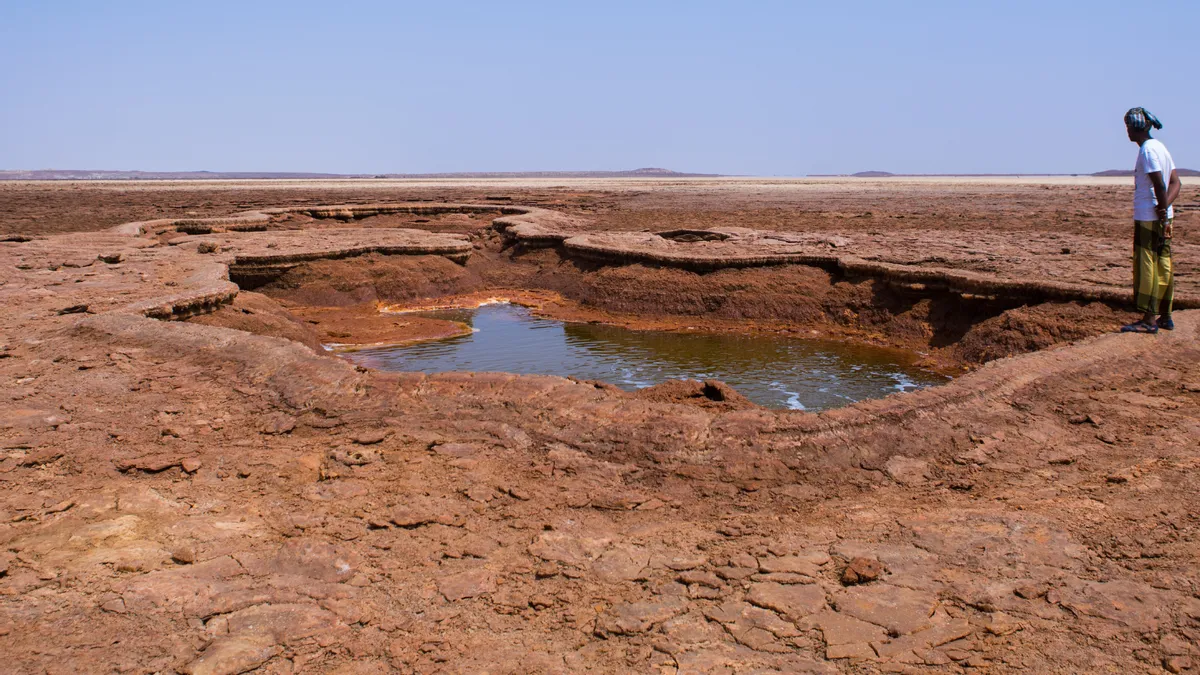
Recently, some outlets have claimed that the African continent is “gradually splitting apart” and that a new ocean may form as a result. This statement deserves a thorough, evidence-based examination. To understand the reality of Africa’s geological activity, we need to delve into plate tectonics, geological processes, and expert insights.

The claim that Africa is “gradually splitting apart” is based on the understanding of tectonic plate movements, particularly in the East African Rift System. This rift zone, spanning countries like Ethiopia, Kenya, and Tanzania, is an active continental plate boundary characterized by volcanic activity and seismic events. According to the United States Geological Survey (USGS), these rifts are manifestations of tectonic plates slowly pulling away from each other, similar to other well-documented divergent plate boundaries such as the Mid-Atlantic Ridge. However, this process occurs on geological timescales of millions of years and is not indicative of an imminent continental split or ocean formation.

Theoretical models suggest that if the East African Rift system continues its current activity over the next few million years, it could indeed lead to the formation of a new ocean basin. This process is comparable, albeit on a much longer timescale, to the separation of North America from Eurasia, which took hundreds of millions of years. Geologists like Dr. John Dewey of Columbia University highlight that such rifting is a natural and ongoing part of Earth’s geology but emphasizes that “a new ocean forming here will take far longer than human history.”

To substantiate the claim that the continent is “gradually splitting apart” in a manner that will rapidly create a new ocean, significant geological evidence showing rapid rifting or imminent ocean formation is lacking. Seismic activity, volcanic eruptions, and crustal movements are monitored worldwide, and experts confirm that current activity in East Africa, while noteworthy, does not predict immediate or even near-term global transformation. The African plate is indeed moving apart in some regions, but at a rate of just a few millimeters per year—far too slow for any dramatic geographic change within a human lifetime.

The scientific consensus, as provided by organizations such as the United States Geological Survey (USGS) and the African Geological Research Council, is clear: While Africa’s rifting is a fascinating and active process, it is a slow, natural feature of Earth’s tectonics that unfolds over millions of years. The idea that a new ocean will form tomorrow or even in the next few million years is misleading.

Conclusion: The Importance of Scientific Rigor

When evaluating claims about natural phenomena like tectonic movements, it is critical to rely on reputable scientific sources and understand the scale at which these events occur. The notion that Africa is “splitting” in a way that will soon reshape the continent is an oversimplification that ignores complex geological processes. Accurate information is vital for responsible citizenship and informed debate. Recognizing the difference between natural geological activity and urgent crisis helps us maintain a rational perspective and appreciate the long-term forces that continue to shape our planet.

Aid Groups Use AI-Generated Fake Poverty Images to Push Their Agenda

AI-Generated Poverty Imagery Sparks Ethical Debate in Society

In recent years, the landscape of global development and humanitarian advocacy has been inadvertently transformed by the rise of artificial intelligence-generated imagery, a development that many sociologists and social commentators view as a double-edged sword. Stock photo giants like Adobe and Freepik are now flooded with AI-created images depicting extreme poverty and human suffering, such as children in refugee camps or victims of violence, often accompanied by captions that reinforce stereotypes. According to Noah Arnold of Fairpicture, these images are being used extensively, not just for their low cost but because they circumvent issues of consent and ethical considerations. This raises profound moral questions about how society visualizes and commodifies the suffering of vulnerable populations.

This shift in imagery is not merely a matter of aesthetics but has profound impacts on families, education, and community perceptions. Sociologists like Arsenii Alenichev argue that such images replicate a “visual grammar of poverty,” often portraying stereotypical scenes—children with empty plates, cracked earth—that shape public perceptions in ways that can deepen social stigmas and misconceptions. For families living in poverty, these images risk turning their real struggles into simplistic visual narratives, stripping away the nuances of resilience and community strength. Furthermore, educators and policymakers must grapple with the ideological influence of such “poverty porn,” which risks reinforcing societal divides rather than fostering informed empathy.

In the realm of global health and humanitarian outreach, organizations like the UN have historically used images — and now AI-generated visuals — to raise awareness and mobilize support. However, the ethical implications have become increasingly contentious. For instance, in 2023, the UN posted a video featuring AI-generated re-enactments of sexual violence, which was swiftly removed amid concerns over the manipulation of truth and the potential for misinformation. As social critics and historians highlight, this blurring of fact and fiction threatens to undermine trust and distort public understanding of real crises. Meanwhile, some NGOs, such as Plan International, have taken steps to adopt guidelines explicitly discouraging the use of AI in portraying individual children, to protect their dignity and privacy. Yet, the proliferation continues, fueled by the economic incentives to supply compelling visuals without the moral obligation to authenticity.

Ultimately, the societal consequences of AI-mediated suffering are profound, threading through every layer of community life—from families to institutions. As social commentator and historian Yuval Noah Harari warns, our society faces a critical juncture where images of hardship may do more harm than good if they lack authenticity and ethical oversight. Despite these challenges, hope remains that with deliberate restraint and moral clarity, technology can be harnessed not to exploit or distort, but to illuminate and empower. Society must forge a path where technology serves justice and dignity—a future where compassion is rooted in truth and respect, and where the human spirit endures amidst adversity, illumined by genuine hope rather than manipulated images.

Social Media Auto Publish Powered By : XYZScripts.com



