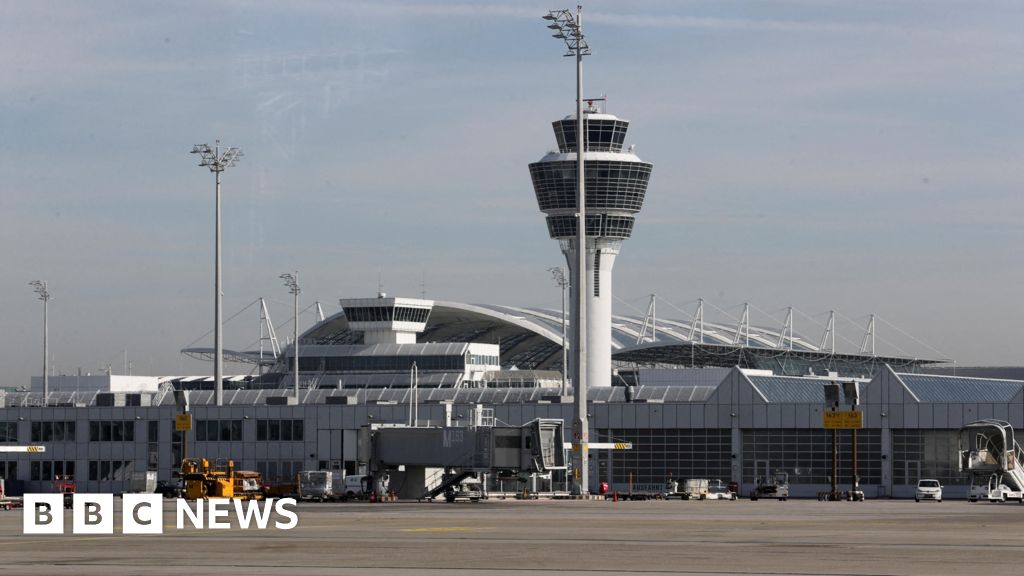

In a clear reflection of the geopolitical tensions simmering across Europe, recent drone sightings have disrupted vital infrastructure, exposing vulnerabilities in regional security and sovereignty. Munich airport’s second consecutive day of shutdowns due to unidentified drone activity highlights the delicate balance between technological advances and national defense. As dozens of flights have been diverted or canceled, impacting thousands of passengers, experts warn that these incidents are more than mere nuisances—they are strategic signals from a shifting international security landscape. Authorities in Denmark, Norway, and Poland have also suspended flights, while Romania and Estonia directly linked recent aerial incursions to Russia, which vehemently denies any involvement, dismissing allegations as hysteria designed to inflate military budgets. This pattern indicates a troubling escalation—one that could redefine how nations defend their airspace and sovereignty.
An analysis from military historians and security experts emphasizes that these drone incursions are increasingly sophisticated and politically motivated. German Interior Minister Alexander Dobrindt called the first night’s drone activity a “wake-up call” for Europa’s defensive capabilities, explicitly noting the growing difficulty in policing and defending against small, yet potentially devastating, unmanned aerial threats.
- Germany is already preparing legislative changes to authorize the military to shoot down drones if necessary
. The situation is compounded by recent statements from Bavarian officials, including Markus Söder, advocating for immediate drone destruction capabilities. Meanwhile, larger concerns loom over the role of Russia, with Poland, Estonia, and Ukraine highlighting that these incursions could be preludes to broader escalation in Ukraine or even hybrid conflicts spilling beyond traditional battlegrounds. The pattern of drone activity, particularly over military and industrial sites, aligns with Russia’s documented tactics of unconventional warfare and information destabilization.
International organizations and analysts warn that these developments threaten to plunge Europe into an era of uncertainty and heightened confrontation. The European Union, along with NATO, faces mounting pressure to adapt swiftly. The recent surge in drone activity coincides with financial cycles of escalating military spending across the continent, seen as necessary by many governments to counteract new-age threats. Meanwhile, the United States closely monitors the situation, with experts warning that unchecked drone escalation could alter the balance of power, especially if it incites an *accidental confrontation* or sparks a regional arms race. The global stage is witnessing a scenario not dissimilar to the early Cold War—where technological advances are fueling new conflicts and alliances are testing their resilience.
As the world watches with cautious trepidation, the ongoing drone saga signals more than a regional security scare. It marks a critical epoch—where the lines between peace and war are increasingly blurred by rapid technological evolution and geopolitical rivalry. The history books will remember this period as one of dangerous transition, where a series of small incursions could ignite the sparks of a larger conflict. The decisions made today—whether to escalate, negotiate, or militarize—will echo loudly through the corridors of history, forging a future that remains uncertain but undeniably imminent. In a world on the brink, every drone’s buzz becomes a reminder: the era of traditional warfare is fading into a new realm, where the prices of complacency could be paid in blood and history’s darkest shadows.